


KEY TAKEAWAYS
- Section 19c(2) lets you hire experienced non-EU professionals without formal German degree recognition, saving 4–8 weeks on ZAB.
- The 2026 minimum salary threshold under 19c(2) is €45,630 gross per year; candidates over 45 need €55,770.
- Section 19c(1) is a broader catch-all route enabling employment under the Employment Ordinance or bilateral agreements, including the Western Balkans regulation.
- BA (Federal Employment Agency) approval is required for most 19c cases; it happens during visa processing and does not require a separate employer submission.
- Employer notification obligation under §45c AufenthG (since January 2026) requires that you must inform new non-EU hires about advisory services on the first day of work.
- Jobbatical handles all blue collar visas in full compliance with the German authority requirements.
Section 19c: Skip the Degree Recognition Bottleneck
If your candidate has 5+ years of experience but their degree isn't in the ZAB database, waiting 4–8 weeks for formal recognition can stall your onboarding.
Section 19c(2) is designed for this exact scenario. It is an experience-based route that skips German degree recognition entirely, cutting weeks off your hiring timeline.
This guide covers:
- Section 19c(2): Fast-tracking experienced professionals.
- Section 19c(1): Navigating special employment pathways.
- Employer Obligations: Your legal responsibilities as a visa sponsor.
What Is Section 19c AufenthG? Alternative Work Visa Routes
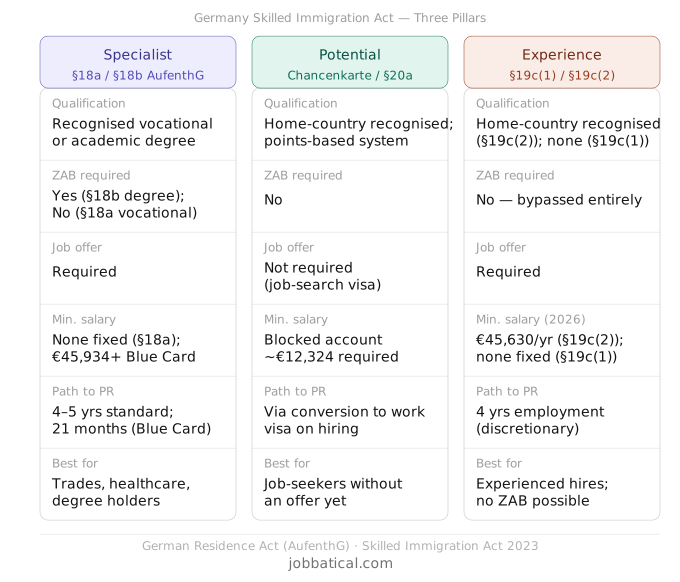
Section 19c of the German Residence Act covers employment options outside the standard Skilled Worker or Blue Card tracks. There are two main pathways for employers:
- Section 19c(1) – Special Regulations: Covers specific legal pathways or bilateral agreements, such as the Western Balkans regulation and sector-specific work permits.
- Section 19c(2) – Work Experience: The experience-based route. This allows you to hire professionals who have 2+ years of relevant experience and a qualification recognized in their home country. No formal German degree recognition is required.
Essential Facts for HR:
- Approval: Both routes require Federal Employment Agency (BA) approval, which is handled automatically during the visa application process.
- Discretionary: These visas are not a legal entitlement; approval is entirely at the discretion of the immigration authorities.
Section 19c(2): The Experience-Based Route
When hiring "without ZAB", this is the most common route. Here's how it works and who it applies to.
Who Qualifies
Your candidate must meet all four conditions:
📌 The key phrase is "non-regulated profession."
- If the role falls under German professional licensing, doctors, nurses, pharmacists, lawyers, engineers in certain contexts, this route does not apply.
- For those roles, full professional recognition is mandatory regardless of the visa pathway.
Eligibility and Salary Thresholds, 2026
Section 19c(2) Quick Reference
Section 19c(1): Special Employment Cases
Section 19c(1) is a broad category for hiring workers who do not meet standard qualification requirements, but fall under specific legal exceptions or bilateral agreements. It is highly useful for blue-collar, trade, and industry-specific roles.
Three Common Scenarios for HR:
- Western Balkans Regulation: Citizens of Albania, Bosnia, Kosovo, Montenegro, North Macedonia, and Serbia can work in any sector. They only need a job offer and BA approval—no formal qualifications required.
- Sector-Specific Permits: Designed for shortage sectors (like construction, agriculture, and hospitality). This allows you to hire talent without waiting for full vocational recognition.
- Local Hires ("Privileged Nationals"): Candidates already in Germany who hold a home-country degree and 2 years of relevant experience can apply for their residence permit locally.
HR Takeaway: Use Section 19c(1) as a fallback when the experience-based route (19c(2)) isn't an option, or when a country-specific agreement offers a faster, simpler pathway for your hire.
19c(1) vs 19c(2): Which Route Applies?
Comparison: 19c(1) vs 19c(2)
IT Roles: Where Section 19c(2) and the Blue Card Overlap
IT specialists have two viable no-degree routes. Since November 2023, experienced IT professionals can also access the EU Blue Card via Section 18g(2), which requires three years of relevant ICT experience in the last seven years. The Blue Card offers a faster path to permanent residency, 21 months with B1 German, 27 months without. It is a legal entitlement when requirements are met.
Section 19c(2) remains the right route when:
- The candidate has two years of experience but not three (ineligible for the Blue Card IT route).
- The offered salary falls below the Blue Card floor (€45,934.20) but above the 19c(2) floor (€45,630).
- The candidate's practical experience clearly qualifies them for the role, but university-level theoretical IT knowledge is harder to document.
If your IT candidate has three or more years of experience and meets the €45,934.20 salary threshold, the EU Blue Card for IT specialists will almost always be the stronger route, thanks to its faster PR pathway and legal-entitlement status.
IT vs Non-IT Under Section 19c(2): How Requirements Differ
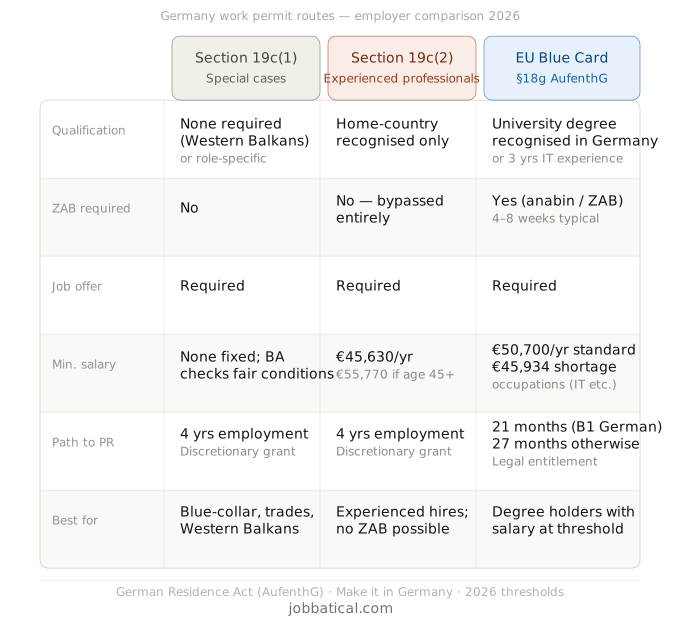
If you're hiring construction workers, electricians, or tradespeople from Western Balkans countries, 19c(1) via the Western Balkans regulation is likely your fastest route.
For the full picture of blue-collar visa options, see Jobbatical's Germany Blue-Collar Visa service page.
Which Healthcare Roles qualify for experienced route
This is where HR teams most frequently make compliance errors. The experience pillar does not apply to regulated healthcare professions. Doctors, nurses, pharmacists, physiotherapists, and most clinical roles require full professional recognition, a separate process from ZAB degree comparability, managed by the relevant state authority.
Healthcare Role Classification for Section 19c(2) Eligibility
Always verify a role's regulatory status using the Federal Employment Agency's BerufeNet database before choosing a route. If in doubt, consult an immigration specialist before extending a conditional offer.
The Application Process: Step by Step
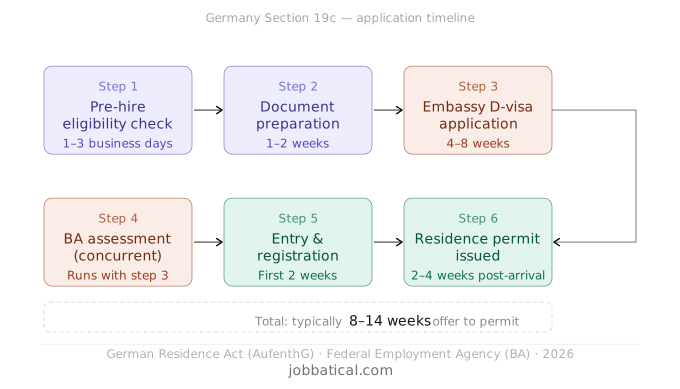
Both 19c(1) and 19c(2) applications follow the same broad sequence. The critical path item is BA approval, but this runs in parallel with the embassy process, not before it.
Application Timeline
Total: 8–14 weeks from offer to permit in hand. With the Beschleunigtes Fachkräfteverfahren (fast-track procedure), some employers bring this closer to 6–8 weeks. It's not magic, it just prioritises your case at the Ausländerbehörde and embassy queue.
Documents Your Employee Needs
What Counts as Proof of Professional Experience?
This is the most common sticking point for experience-based applications. Unlike a degree, work experience has no single official document — you build the picture from multiple sources. The BA and the embassy assess the totality of your evidence.
Documents You Need to Provide as Employer
Fees and Costs
The direct visa fees are straightforward. The real costs are in time, delayed start dates, rejected applications, or compliance failures months down the line.
Section 19c, Fee Overview 2026
There are no recognition costs for 19c(2), that's one of its main advantages. The absence of a ZAB assessment (€200–485 and 4–8 weeks) is where the real saving lies compared to the standard qualified employment permit routes.
Compliance: What You Must Do After Hiring
This is where most HR teams get caught out. The permit is issued, and then the compliance clock starts.
New 2026 Obligation: Section 45c AufenthG
- From 1 January 2026, if you recruit a non-EU national from abroad, you must inform them in writing about the free advisory services available to foreign workers in Germany.
- Should happen by the first day of work, by email, letter, or attachment to the employment contract.
- If you use an immigration specialist who handles this as part of their mandate, you may be exempt.
- Hiring from within Germany is excluded from this obligation.
Ongoing Employer Obligations
- First 2 years: Notify the Ausländerbehörde of any material changes to the employment relationship (change of role, significant salary change, reduction in hours). Failure to do this puts the permit at risk.
- Job-qualification match: The role must continue to match the qualification and experience that justified the permit. Promotions that move the employee into a regulated profession require review.
- Renewal tracking: Permits are valid for up to 4 years. Your employee must apply for renewal before expiry. Automated tracking significantly reduces the risk of lapses, the Jobbatical renewals platform handles this automatically.
- Section 45c advisory notice: Required for all new non-EU hires from abroad from January 2026 onward.
Where This Route Can Still Go Wrong
- Discretion-based approval: Unlike the EU Blue Card, 19c(2) permits are granted at the immigration authority's discretion, not as a legal entitlement.
- Risk of rejection: Authorities may reject applications where the candidate's experience doesn't clearly align with the offered role.
- Documentation must be specific: Generic experience letters are insufficient; documentation must show that work history directly matches the job duties in the contract.
- Higher bar for candidates over 45: Applicants above 45 must meet the higher salary threshold (€55,770 gross/year) and provide proof of adequate pension provision.
- Early HR intervention needed: Identify and address these requirements at the offer stage, not after contract signing.
- Operational complexity: Managing multiple cases across different qualification tracks and seniority levels increases compliance workload.
How Section 19c Compares to Other Germany Work Visa Routes
Understanding where 19c fits in the wider system saves time at the offer stage. Here's the practical decision rule:
Most common mistake is defaulting to the wrong route because it's the one you used last time. A 10-minute eligibility check before extending an offer saves weeks of rework.
For candidates who want to enter and job-hunt before committing to a route: Germany Opportunity Card (Chancenkarte): HR & employer guide 2026
How Jobbatical Manages Section 19c Cases
Jobbatical assigns a dedicated immigration case manager to every hire.
Once you share the candidate details:
The Jobbatical immigration platform gives your team real-time visibility on every case, document deadline, and renewal window, so compliance gaps don't surface as surprises.
If you are managing multiple hires across different permits, 19c(2), §18a, and EU Blue Card, Jobbatical platform helps track them together and make sure you stay compliant and never miss a renewal window.
Disclaimer: Immigration rules change quite frequently; please verify with official sources or contact us for the latest info before making any decisions.
Frequently Asked Questions: Germany Section 19c Experience-Based Work Visa
What is the Germany Section 19c(2) work permit?
Section 19c(2) of the German Residence Act (AufenthG) is a residence permit for experienced professionals who want to work in a non-regulated profession in Germany. It allows employment without formal ZAB degree recognition, provided the candidate holds a home-country-recognised qualification and has at least 2 years of relevant professional experience in the last 5 years.
What is the salary threshold for Section 19c(2) in 2026?
The minimum gross annual salary is €45,630 (approximately €3,802.50 per month) as of 2026. For employees aged 45 or over, the threshold rises to €55,770 gross per year, unless adequate pension provision is demonstrated. Alternatively, if your company is bound by a collective bargaining agreement, that rate may satisfy the requirement.
Is ZAB degree recognition required for Section 19c(2)?
No. Section 19c(2) specifically bypasses ZAB equivalency. The candidate's qualification only needs to be recognised by the government of the country where it was obtained. Germany does not require a comparability certificate under this route, which removes 4–8 weeks from the typical hiring timeline.
What is the difference between Section 19c(1) and 19c(2)?
Section 19c(1) is a broad permit that allows employment where a specific legal regulation or bilateral agreement provides for it, for example, the Western Balkans regulation (Section 26 BeschV). No formal qualification is required. Section 19c(2) is a narrower route for experienced professionals: it requires 2+ years of experience and a home-country-recognised qualification, but skips ZAB. They serve different hire profiles and sectors.
Does 19c(2) apply to regulated professions like nursing or medicine?
No. Regulated professions, doctors, nurses, pharmacists, physiotherapists, require full professional recognition by the relevant state authority, regardless of the visa route. Section 19c(2) is limited to non-regulated professions. Non-clinical roles in the same sector (e.g. health IT manager, medical data analyst) can qualify.
How long does the Section 19c(2) application process take?
Total end-to-end processing typically takes 8–14 weeks. Document preparation takes 1–2 weeks; the German embassy processes the national D-visa in 4–8 weeks; and post-arrival conversion to a residence permit at the local Ausländerbehörde takes another 2–4 weeks. Fast-track processing (Beschleunigtes Fachkräfteverfahren) can reduce embassy wait times to 4–6 weeks total.
What are my obligations as an employer for Section 19c(2) hires in 2026?
From January 2026, under Section 45c AufenthG, you must inform all new non-EU hires in writing about the free advisory services available to them, no later than their first day of work. You must also ensure the job role matches the candidate's qualification level and notify the Ausländerbehörde of any material employment changes during the first two years of the permit.

.svg)
.svg)