

- Eligibility: Degree/3+ years’ experience, qualifying job offer, clean record, and health insurance.
- Employer: No specific size or sector requirements.
- Salary: €54,142 for directors/managers; €41,356.36 for other professionals.
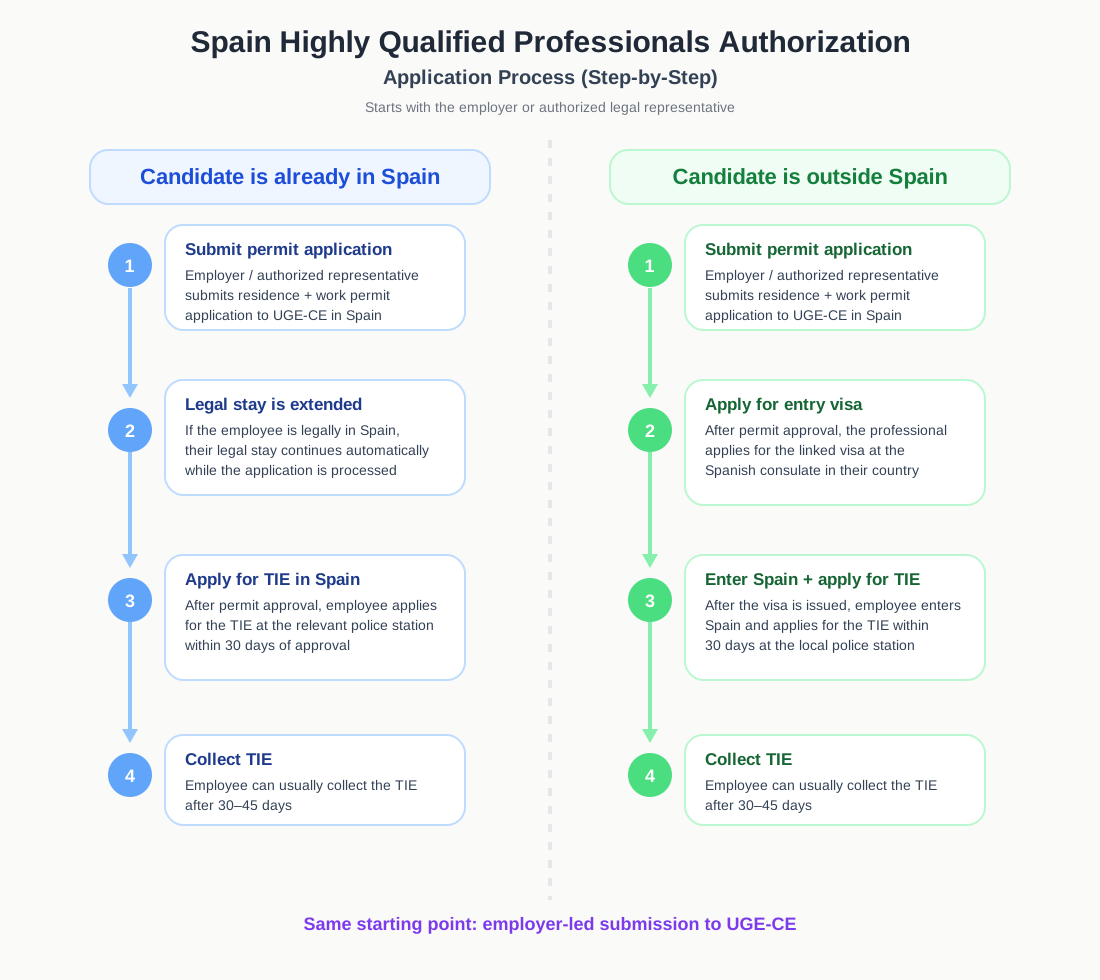
- Application: Employer applies to UGE-CE, followed by visa and TIE applications.
- Duration: Up to 3 years or contract duration.
- Long-term residence: Available after 5 years of continuous legal residence.
Spain's highly qualified worker visa, officially the residence authorization for highly qualified professionals (known in Spain as the PAC) and often called the permit for highly qualified personnel, or by its English acronym HQP is a fast-tracked work and residence authorization for non-EU professionals in high-responsibility, specialized or high-level technical roles.
What is the highly qualified worker visa in Spain (HQP)?
The Spain highly qualified worker visa, officially the Highly Qualified Professional (HQP) permit, is a fast-track work and residence authorisation for non-EU professionals in high-responsibility, specialist, or senior technical roles. HQP stands for Highly Qualified Professional. In Spanish it is the autorización de residencia para profesionales altamente cualificados.
It is filed by the employer through the UGE-CE, Spain's central unit for large companies and skilled workers. Unlike a standard work permit, it carries no labour market test and processes in roughly 20 working days. if you are hiring a degree-level specialist and the salary clears the threshold, this is almost always your fastest legal route.
Main advantages for employers and employees:
- Faster Processing: The HQP visa processing time is significantly expedited. Administration typically processes the authorization application within 20 working days, with the associated visa for highly qualified employees usually taking 10 working days. This efficiency greatly benefits top professionals and companies needing rapid onboarding.
- Extended Initial Validity: The permit is initially valid for up to 3 years (or for the duration of the contract if shorter), offering stability for both the employer and the employee.
- Family Inclusion: The HQP visa status allows immediate family members (spouses, children, dependent relatives) to apply to join the main employee in Spain, often with permission to work. This makes these authorizations attractive for international moves.
- Employer-Specific, yet Flexible: The employee’s authorization ties to their role with the sponsoring company. However, it offers nationwide permission to work, providing flexibility in job location within Spain.
- No Labor Market Test: Unlike some other work permits in Spain, the HQP permit isn't subject to a national labor market test, meaning companies don't need to prove that no suitable local employee is available.
- Pathway to Long-Term Stay: After 5 years of continuous legal residency under the HQP permit, employees can apply for long-term status through a Spanish residence permit, granting them unrestricted permission to work throughout Spain.
The HQP visa is most commonly used for positions in fields such as technology, engineering, renewable energy, and finance. It's one of the main options among Spanish authorizations for attracting high-skilled employees.
Spain highly qualified worker visa salary threshold 2026
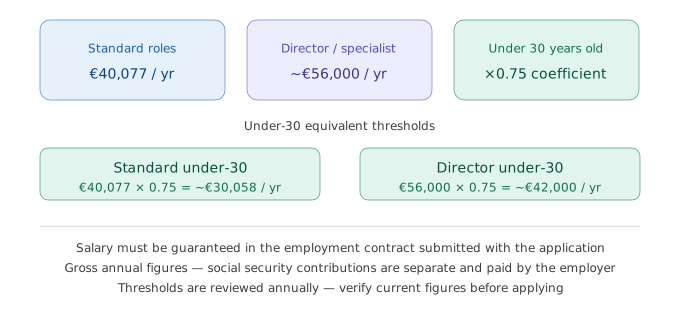
The 2026 HQP salary threshold depends on the role. Two figures apply, set against the employee's gross annual salary in the employment contract.
HQP permit salary thresholds by role (2026)
The 0.75 reduction coefficient applies to applicants under 30 at the time of filing. Salary is the single most common reason a borderline file is rejected, so confirm the contract figure before you submit.
Not sure if your offer clears the line? Check it in seconds with the free Spain HQP visa calculator.
Who is considered highly qualified personnel (personal altamente cualificado) in Spain?
Highly qualified personnel are foreign workers who hold a managerial position or a specialized role requiring a higher-education qualification or, exceptionally, at least three years of equivalent professional experience. In practice, the highly qualified personnel category covers directorial, scientific, technical and intellectual profiles, and it is the route companies use to bring this talent on board through the PAC/HQP permit.
Who qualifies for the HQP permit?
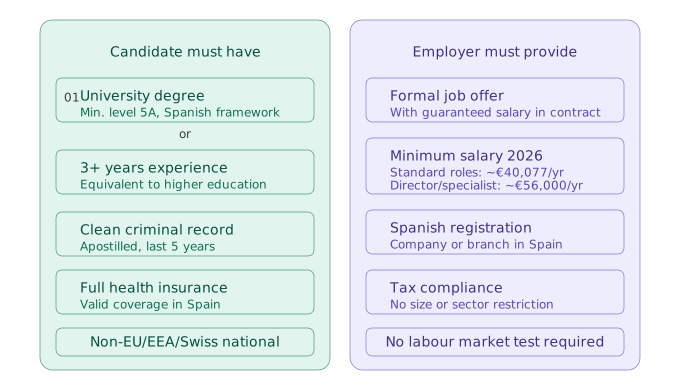
To secure an HQP permit, both the candidate and the hiring company need to meet specific criteria. The conditions for the HQP visa ensure this authorization is granted to top international professionals.
Application process for the Highly Qualified Professionals
Even when applicants meet the eligibility criteria, small documentation or procedural mistakes can delay approval. Learn how to avoid them in our guide on Spain HQP Visa: 3 Critical Errors Global Mobility Teams Make.
Related:
If an HQP application is refused, weigh appeal against refiling in our Spain EU Blue Card refusal and UGE-CE appeal guide.
Required Documents for Employers and Employees
For a smooth HQP permit application in 2026, companies and candidates should prepare the necessary documents beforehand.
What is the cost of highly qualified worker visa
Understanding the financial implications and timelines is crucial for highly qualified professionals and employers considering this type of authorization in Spain. Some of the fees to consider are:
- Permit Application Fee: €73.26
- Visa Fee: Approximately €90 (may vary by consulate)
- Residence Card (TIE) Fee: €16.08
Once submitted to the UGE-CE, the HQP permit application usually takes about 20 business days to process. After that, the visa process at the consulate typically takes another 10 working days. However, delays can happen if extra documents are needed during the work permit process.
The initial Spanish permit is valid for up to 3 years. Renewals are typically granted for 2-year extensions, provided the conditions continue to be met.
Check whether your candidate and salary offer qualify for the HQP route with Jobbatical free Spain HQP visa calculator.
Spain highly qualified worker visa requirements
To qualify for the Spain highly qualified worker visa, the candidate and the hiring company both need to meet set conditions. Here is the short version HR teams ask for most.
Candidate requirements:
- University or postgraduate degree, or 3+ years of equivalent professional experience.
- A job offer that meets the 2026 salary threshold for the role.
- A clean criminal record certificate, apostilled or legalised.
- Full private health insurance valid in Spain.
Employer requirements:
- A registered company in good standing with tax and social security authorities.
- An employment contract and detailed job description for the qualified role.
- A legal representative with a digital signature (FNMT) to file at the UGE-CE.
Spain highly qualified worker visa processing time
The UGE-CE decides the authorisation in about 20 working days. The consular visa then takes roughly 10 working days, followed by the TIE card appointment after arrival. Plan for 6 weeks end to end as a realistic buffer, longer if documents need legalising abroad.
Before committing to a relocation timeline, check the latest Spain consulate backlog processing times by city to anticipate potential delays.
Renewal and long-term residence for Employees
To maintain status in Spain through this authorization, employees need to follow renewal procedures:
- Renewal: The permit is renewable every 2 years, as long as the conditions that led to the initial permit (e.g., employment with the sponsoring company, salary thresholds) continue to be met.
- Long-Term Residence: After 5 years of continuous legal residency in Spain, employees and their eligible family members can apply for long-term residence via a residence permit Spain, granting them unrestricted permission to work throughout Spain.
Note: If employment ends, the employee’s authorization status typically expires unless they obtain another permit or meet other specific requirements.
Related Reads:
For the full requirements, absence rules and filing window, see our Spain permanent residence process guide.
Renewing an EU Blue Card instead of an HQP permit? The UGE-CE process differs: Spain EU Blue Card renewal guide
Highly Qualified Professional Visa Spain: PR Timeline, Difficulty & Approval Rates
The Highly Qualified Professional visa Spain route is designed to move top non-EU talent into the country quickly, but employers and candidates often have practical questions about permanence, difficulty, and approval odds. Below are clear answers to the most common queries about the Spain Highly Qualified Professional visa.
- Permanent residence timeline: Spain does not grant PR in two years; long-term residence becomes available after five years of continuous legal residency, while the HQP permit itself renews in two-year cycles until that threshold is reached.
- Difficulty of securing PR: Permanent residence is straightforward for HQP holders who maintain continuous legal residence, keep their absences within permitted limits, and meet the salary and employment conditions throughout the five-year period.
- Spain's overall rejection rate: Spain's Schengen short-stay refusal rate was roughly 14.6% for 2025, though this statistic covers tourist and short-stay visas rather than the employer-sponsored HQP work permit, which is assessed on separate criteria.
- What strengthens an application: Complete documentation, a compliant employment contract meeting the salary threshold, and properly legalised or apostilled certificates are the strongest factors in securing a fast, clean approval.
If your candidate's profile or salary offer is borderline, you can quickly confirm eligibility using the free Spain HQP visa calculator on Jobbatical before you begin the application.
High Skilled Visa Spain: In-Demand Roles & Residency Path
The high skilled visa Spain pathway is the practical choice for companies hiring specialists, managers, and senior technical staff from outside the EU. This section addresses the questions HR and global mobility teams ask most often about the Spain high skilled visa.
- Roles in highest demand for high skilled visa : The high skilled route is used most heavily for positions in technology, engineering, renewable energy, and finance, where specialist expertise is scarce and hiring urgency is high.
- Difficulty of securing PR: Reaching long-term residence is manageable for high skilled permit holders who stay continuously employed, meet salary conditions, and observe the permitted absence rules across the five-year qualifying period.
- High Skilled Visa validity period: The high skilled visa is initially valid for up to three years, or for the duration of the employment contract if shorter, and is then renewable in two-year extensions provided the conditions continue to be met.
- Key advantages of high skilled visa route: It carries no labour market test, is processed in roughly 20 working days at the authorisation stage, and allows immediate family members to join, making it one of the fastest options for onboarding international talent.
For a full comparison of Spain's skilled-worker routes, see how this permit stacks up against the Spain EU Blue Card guide on Jobbatical before deciding which fits your hire.
Which roles qualify for the Spain highly qualified worker visa?
The HQP permit is role-agnostic on paper, but it is used most for degree-level specialist and senior positions where hiring urgency is high. There is no fixed government job list; eligibility turns on the qualification, the salary, and the seniority of the role.
In practice, the profiles we see approved most often are:
Common roles approved on the Spain HQP permit
A role usually qualifies when it needs a degree or proven expertise, sits at a specialist or management level, and pays above the threshold. Standard operational, support, or administrative roles below the salary floor do not qualify and take the general employment route instead.
Borderline case? Run the profile through the Spain HQP visa calculator before you commit to the route.
How Jobbatical supports employers in Spain
Hiring through Spain’s Highly Qualified Professional (HQP) Visa is one of the fastest ways to recruit top global talent, but getting it right means having the right documents, legal precision, and a clear understanding of the process. Jobbatical’s expert team knows the system inside out and helps companies and their highly qualified employees through every step.
Our team assists companies managing applications for the HQP permit by:
- Assessing eligibility for the HQP permit or other Spain visa types.
- Managing document preparation, translations, and communications with authorities.
- Guiding employees through every step, from application to their TIE appointment, ensuring regulatory adherence.
- Supporting family members in their applications and renewals when needed.
- Providing specialized support for highly skilled talent permits, ensuring a smooth process for both HR teams and international employees.
Disclaimer: Immigration rules change quite frequently; please verify with official sources or contact us for the latest info before making any decisions.
Frequently Asked Questions About the Spain Highly Qualified Professionals (HQP) Permit

.svg)


.svg)