
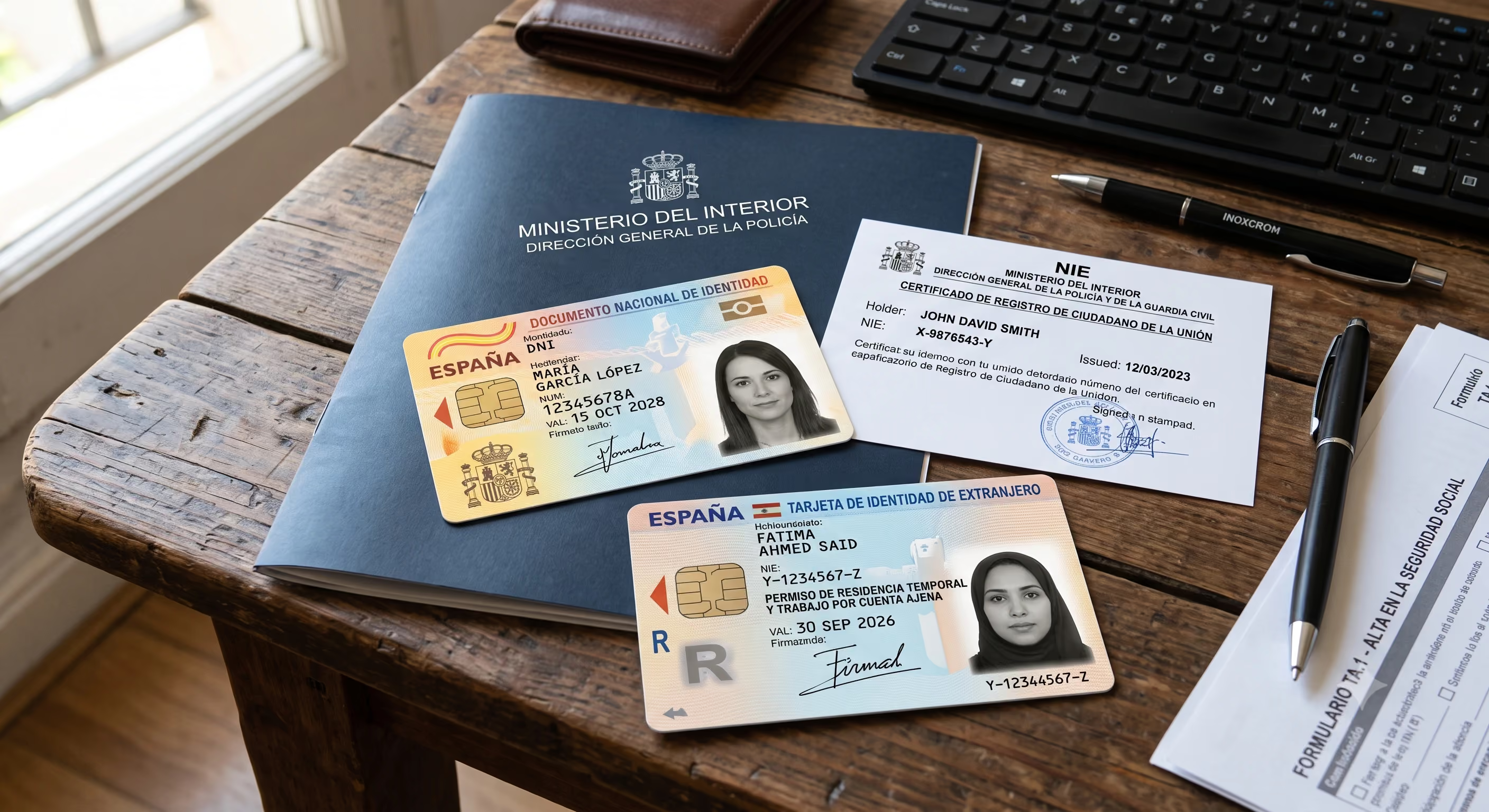
- The NIE (Número de Identidad de Extranjero) is the identification number foreigners need to legally work or engage in economic activities in Spain.
- The NIF (Número de Identificación Fiscal) is the tax ID used for financial and tax-related purposes.
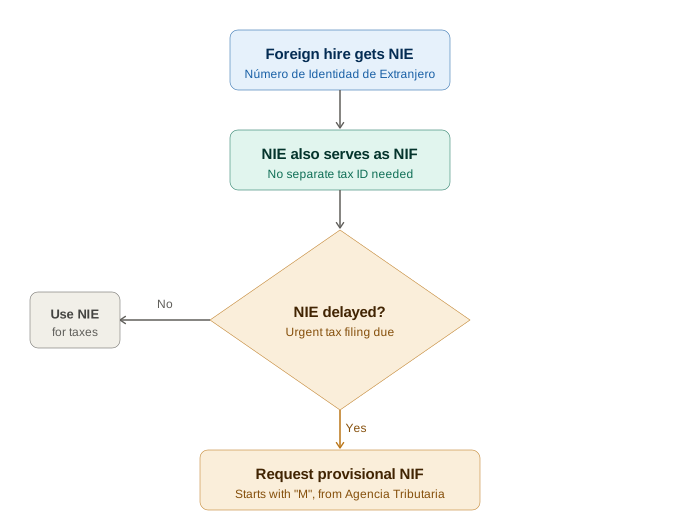
- Most foreign employees only need an NIE, as it also functions as their NIF for tax filings and transactions.
- If an NIE is delayed, employers can request a provisional NIF (starting with “M”) from the Spanish Tax Agency for urgent filings.
Without an NIE, your new hire in Spain can’t legally work. Without proper NIF setup, they can’t get paid. However, what many employees and employers don’t know is that international hires do not need both an NIE and NIF to start working. Spain’s system has a hidden efficiency: for foreign employees, one number generally does the job of two.
Here’s a quick view of the differences between these two numbers and how the system works.
What Is an NIE?
The Número de Identidad de Extranjero (NIE) is an identification number for non-resident or resident foreign employees engaging in legal or economic activities in Spain. For full details on the NIE, read our article What is the NIE? A Guide for Employers Hiring International Talent in Spain.
NIE Blanco vs NIE Verde: What's the Difference?
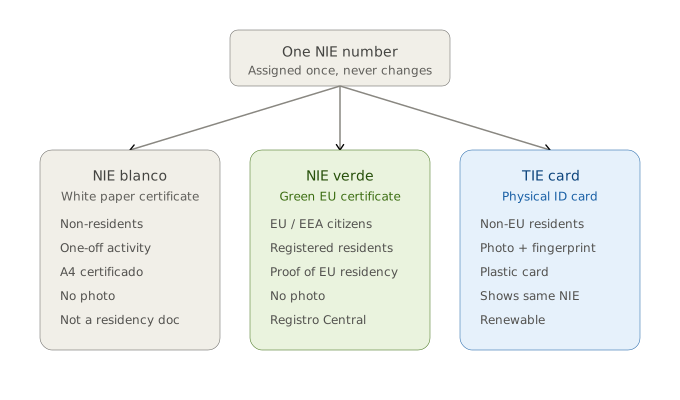
Many international hires get confused when they hear about a "white NIE" and a "green NIE", but these aren't two different numbers. They refer to two different documents that carry the same NIE number, issued depending on the applicant's status and length of stay in Spain.
- NIE blanco (white NIE): A single A4 paper certificate (the certificado de NIE) showing the assigned number. It confirms the NIE but is not a residency document and has no photo, so it's typically issued to non-residents or for one-off economic activities.
- NIE verde (green NIE): A green card or paper certificate issued to EU/EEA citizens who register as residents, confirming both the NIE and registration on the Registro Central de Extranjeros. It doubles as proof of EU residency but, again, carries no photo.
- Neither is the TIE: Non-EU nationals who become residents receive a physical TIE card (with photo and fingerprint) instead of the green NIE. The TIE displays the same NIE number. For the full breakdown, see NIE vs TIE: What are the differences?.
- The number never changes: Whether it appears on a white certificate, a green certificate, or a TIE card, the underlying NIE stays the same for life, only the supporting document changes with the person's residency status.
What Is a NIF?
The Número de Identificación Fiscal (NIF) is a tax ID used for filings, contracts, and financial transactions.
Who Needs It:
- Spanish citizens: Their NIF matches their DNI (national ID).
- Foreigners: Typically use their NIE as their NIF.
- Companies: Receive a unique NIF (e.g., for invoicing).
Important Details:
- Format: Similar to NIE for individuals; varies for entities.
- Issued by: Spanish Tax Agency (Agencia Tributaria).
NIE vs NIF: Differences at a Glance
NIF or NIE: which one do you need?
For a foreign employee in Spain, NIF and NIE are not two separate numbers. The NIE is the identification number the police assign to a foreign national; the NIF is simply the name that same number takes when it's used for tax purposes. So in most cases your employee's NIE is their NIF there's no second number to obtain.
What Is the Número de Soporte on a DNI or NIE?
The número de soporte is a security code printed on Spanish ID documents. It confirms the document itself, not the person, which is why Spain's tax authority asks for it separately from the DNI or NIE number.
Your employees will run into this field the moment they try to log into the Agencia Tributaria's Sede Electrónica or file a renta declaration online. Skip it and the portal won't let them through, so it's worth flagging in your onboarding checklist alongside the NIE itself.
Where to Find Número de Soporte by Document Type
If the number on the card has fewer than 8 digits, pad it with zeros on the left. Nationality doesn't change the logic here: Spanish employees look for it on their DNI, foreign employees look for it on their TIE or residence card.
Why It Matters for Your HR Team
In practice, the número de soporte only becomes urgent once, usually during an employee's first Spanish tax season. Save your team a support ticket by including it in your Spain relocation checklist, right next to the NIE and TIE steps.
Disclaimer: Immigration rules change quite frequently; please verify with official sources or contact us for the latest info before making any decisions.
Frequently Asked Questions About NIE vs. NIF in Spain
What is the main difference between NIE and NIF in Spain?
The NIE (Número de Identidad de Extranjero) is the identification number assigned to foreign nationals for legal and administrative purposes in Spain. The NIF (Número de Identificación Fiscal) is the tax identification number used for tax filings and financial transactions. For most foreign individuals, the NIE also serves as their NIF.
Do foreign employees need both NIE and NIF?
Usually not. Most foreign nationals use their NIE as their NIF for tax purposes, so they do not receive a separate tax identification number.
Who issues the NIE and NIF?
The NIE is issued by the Spanish National Police through the immigration authorities, while the NIF is administered by the Spanish Tax Agency (Agencia Tributaria).
What is a provisional NIF and when is it used?
A provisional NIF, typically beginning with the letter M, may be issued by the Spanish Tax Agency when a foreign national urgently needs to complete tax procedures before obtaining an NIE.
Who requires a separate company NIF?
Companies and other legal entities operating in Spain must obtain their own company NIF for tax reporting, invoicing, and other business obligations. It is separate from the identification numbers issued to individuals.
Can delays in obtaining an NIE affect payroll?
Yes. Delays in receiving an NIE can delay payroll registration and tax reporting. In some situations, employers may use a provisional NIF to help complete essential tax procedures while the NIE application is being processed.
What is the número de soporte on a Spanish ID document?
The número de soporte is a security code printed on Spanish identity documents such as the DNI, NIE, and TIE. It identifies and verifies the physical document itself and is requested separately from the document number for certain official online procedures, including tax filings.
Where is the número de soporte on a TIE card?
On a TIE card, the número de soporte appears on the front in the upper-right corner. It begins with the letter E followed by eight digits. If necessary, leading zeros are used to complete the eight-digit number.
Is the número de soporte the same as the IDESP?
Yes. IDESP is the name previously used for the same document support number on older DNI electrónico cards. On newer DNI 3.0 cards, it is labelled "Núm soporte".
When do employees need their número de soporte?
Employees most commonly need their número de soporte when accessing the Agencia Tributaria’s Sede Electrónica, filing their annual income tax return (renta), or completing other online government procedures that require verification of the physical identity document.

.svg)


.svg)