


- The NIE (Número de Identificación de Extranjero) is a permanent tax identification number required for all foreigners conducting legal or financial activities in Spain. It does not grant residency rights.
- The TIE (Tarjeta de Identidad de Extranjero) is a biometric ID card that serves as proof of legal residency for non-EU nationals staying in Spain for more than six months.
- The NIE identifies the individual for administrative purposes, while the TIE confirms their residence status, the two are related but not interchangeable.
- Employers can streamline the process by helping employees gather documents, book appointments, and cover application fees to ensure smooth, compliant onboarding for international hires.
When hiring and relocating international talent to Spain, the NIE and TIE are two documents bound to come up. While both are important, they’re not interchangeable and serve different purposes depending on the employee’s situation. The NIE is required for administrative tasks, while the TIE proves legal residency for non-EU nationals staying longer than six months.
This guide explains what the NIE and TIE are, when they’re required, and how employers can support their teams through the application process.
What is the NIE?
The NIE (Número de Identificación de Extranjero) is a tax identification number assigned to foreigners in Spain. It is required for multiple administrative, financial, and legal activities, likeopening a bank account, signing a rental contract, or paying taxes.
- Who needs it? All foreign nationals who need to conduct financial or legal transactions in Spain, including EU and non-EU citizens.
- Does it expire? The NIE number itself is permanent and stays linked to the individual for life. However, the physical NIE certificate (the white A4 document) has no legal expiry but is often treated by banks, notaries, and some authorities as valid for only around 3 months, meaning employees may be asked to obtain a freshly issued certificate even though their number never changes.
- Does it grant residency? No, having an NIE does not mean you have the right to live in Spain.
Read our NIE application guide for a step-by-step breakdown of the application process.
What is the TIE?
The TIE (Tarjeta de Identidad de Extranjero) is a biometric ID card for non-EU nationals living in Spain. It serves as proof of legal residency and includes the holder’s NIE number, photo, and residency permit details.
- Who needs it? Non-EU nationals staying in Spain for more than six months under a residence permit or visa. Some dependents of EU citizens may also be eligible.
- Does it expire? Yes, but it's the card, not an underlying number, that expires. The TIE is valid only for the duration of the visa or residence permit it's tied to, and must be renewed each time that permit is renewed. The NIE number printed on it stays the same across every new card.
- Does it grant residency? Yes, the TIE confirms the holder’s legal right to live in Spain.
What about EU citizens? The Certificado de Registro (Green Certificate)
EU/EEA and Swiss nationals staying in Spain for more than three months don't receive a TIE, instead they register on the Central Register of Foreigners and are issued a Certificado de Registro de Ciudadano de la Unión, commonly called the "green certificate" or tarjeta verde.
- Who needs it? EU, EEA, and Swiss citizens residing in Spain for longer than three months (for work, study, or self-sufficiency). Non-EU family members of EU citizens receive a TIE instead.
- What does it contain? It's a small green paper document (or credit-card-sized card in some provinces) showing the holder's name, address, nationality, date of registration, and their NIE number.
- Does it expire? No fixed expiry, though a permanent version can be requested after five years of continuous residence. It is not a biometric card.
- How it differs from the TIE: It confirms an EU citizen's right of residence but carries no biometric data and no photo, reflecting that EU nationals have freedom of movement and don't need a residence permit in the way non-EU nationals do.
NIE vs TIE vs Tarjeta Verde: Main Differences
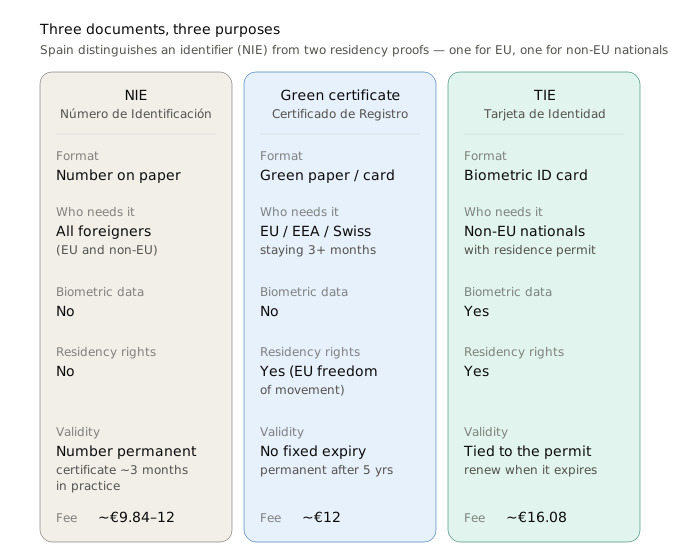
How Employers Can Help with NIE and TIE Applications
Employers play an important role in making the NIE and TIE process easier for international hires. Helping your employees gather the right documents and schedule appointments can prevent delays and compliance issues. To make their transition easier, companies can also coverapplication fees or offer relocation support.
For a full breakdown of employer responsibilities, see our Employer Guide to NIE & TIE.
Disclaimer: Immigration rules change quite frequently; please verify with official sources or contact us for the latest info before making any decisions.
Frequently Asked Questions About NIE vs TIE Differences
What is the NIE and why do employers need to support it?
The NIE (Número de Identidad de Extranjero) is a lifelong identification number assigned to foreign nationals in Spain. It is required for administrative tasks such as payroll, tax registration, social security, banking, and signing employment contracts. Employers should help employees obtain an NIE to ensure compliant onboarding.
Who needs a TIE as part of the hiring process?
Non-EU nationals who hold a residence permit or visa valid for more than six months must obtain a TIE (Tarjeta de Identidad de Extranjero). The TIE serves as the employee’s physical proof of legal residence in Spain.
What types of NIE exist for different employees?
The most common NIE-related documents include the white NIE certificate for administrative or short-term purposes, the green EU registration certificate for EU citizens staying longer than three months, and temporary NIE assignments issued for specific one-off activities.
How can employers assist with NIE applications?
Employers can support the process by providing employment documents, helping employees book a cita previa appointment, assisting with application forms and government fees, and using available digital platforms where online submissions are permitted.
What are the typical costs for NIE and TIE applications?
Government fees are paid using Modelo 790 (Código 012). The NIE assignment fee is generally around €9.84–€12, the TIE card fee is approximately €16.08, and the EU registration certificate costs around €12. Applicants should also budget for passport photos, photocopies, and any required translations. Always check the latest official fees before payment.
What digital changes affect NIE and TIE processes?
Spain has introduced more digital immigration services, allowing online submissions for certain procedures, appointment management, real-time application tracking, and reducing the number of in-person visits required for many applicants.

.svg)



.svg)