
Key takeways
- Sweden work permits are employer-initiated and tied to a specific role, salary, and collective agreement; any mismatch triggers automatic rejection.
- Employers must advertise vacancies on the EURES portal for at least 10 days before sponsoring a non-EU hire.
- Salary must meet sector thresholds (e.g. SEK 27,000/month for IT roles) and full insurance coverage, health, life, pension, and workers' comp, must be active from day one.
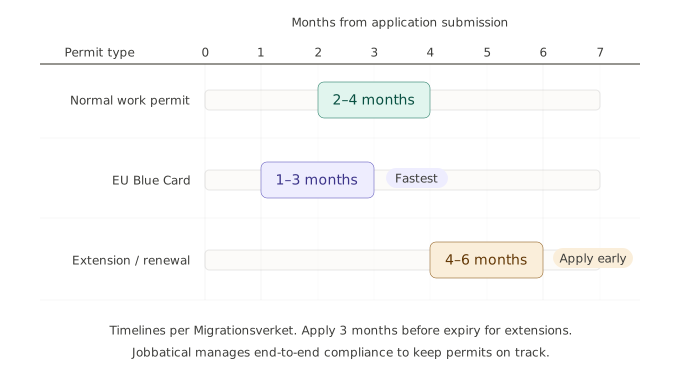
- Standard permits take 2–4 months; EU Blue Cards process in 1–3 months; extensions take 4–6 months.
- Biometric enrolment at an embassy is required after initial approval and the permit card must be collected before the employee can start work.
- Jobbatical manages the full employer-side compliance workflow, from job-offer preparation and EURES filing to document verification and Migrationsverket liaison.
What Is the Sweden Work Permit?
The arbetstillstånd is a residence permit for employment, issued by the Swedish Migration Agency (Migrationsverket).
- It binds your employee to a specific employer, role, and salary that must meet Sweden's collective bargaining agreement standards.
- Applications are managed entirely online through Migrationsverket's portal.
- Update: From June 1, 2026, the minimum monthly salary for all new applications and renewals is SEK 33,390 gross, set at 90% of Sweden's updated median wage.
- If you're hiring highly qualified professionals earning SEK 52,000+/month, the EU Blue Card offers faster processing and a longer initial permit.
See our detailed guide on the June 2026 salary threshold increase if you have renewals or pending offers affected by this change.
Eligibility Requirements
Your employee must be a non-EU/EEA national taking a role under a local Swedish employment contract. Your company must satisfy all of the following:
- Salary threshold: The offer must meet or exceed SEK 33,390/month and align with the relevant sector collective agreement rate.
- EURES job posting: The role must be advertised on the EURES portal for at least 10 days before hiring a non-EU/EEA candidate, this confirms genuine EU-wide recruitment efforts.
- Trade union opinion (utlåtande): The relevant Swedish trade union must review the employment terms and submit a written opinion. This is mandatory for every application, missing it causes automatic delays or refusal.
- Comprehensive insurance: Your company must provide health, life, occupational injury, and pension insurance from day one of employment.
- Registered Swedish employer: Your company must hold valid Swedish business registration with Migrationsverket. Unregistered entities are automatically disqualified.
Required Documents
Both your company and your employee contribute to the documentation package:
- Standardised Migrationsverket job offer form (employer-submitted)
- Detailed employment contract (role, salary, duration, and benefits)
- Trade union opinion (utlåtande) from the relevant union
- Insurance certificates, health, life, occupational injury, and pension
- EURES advertisement evidence (screenshots or logs from the 10-day posting)
- Employee passport copy (valid beyond the permit term)
- Academic credentials and CV (translated into Swedish or English if needed)
- Family documents, if dependents are applying at the same time
Step-by-Step Application Process
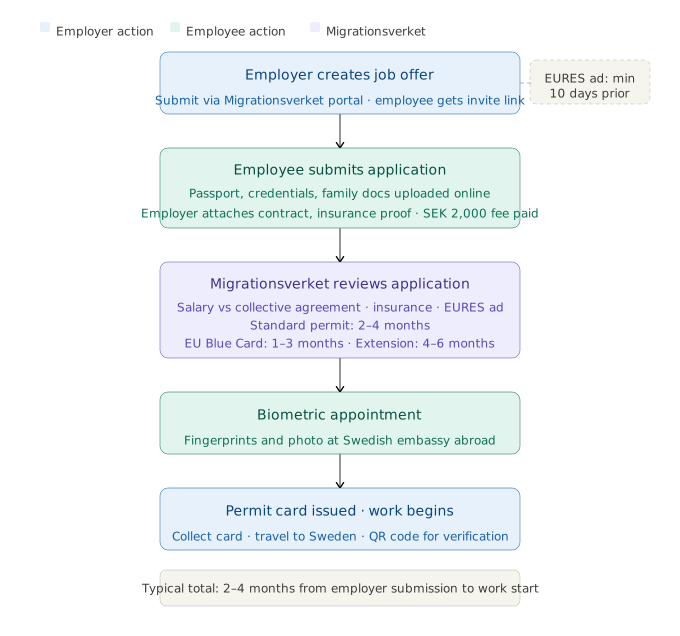
- Employer creates the job offer, Submit role details through Migrationsverket's portal. The system generates an invitation link for your employee to begin their part of the application.
- Employee uploads documents and pays the fee, Your employee submits their personal documents and pays the SEK 2,000 application fee online.
- Trade union consultation, The relevant union reviews the employment terms and submits their opinion to Migrationsverket. Build this step into your planning timeline, it's not instant.
- Migrationsverket review, Officials verify salary compliance, EURES advertising, insurance coverage, and employer financials. They may request additional documentation during this stage.
- Biometrics at a Swedish embassy, Once preliminary approval is granted, your employee visits a Swedish embassy or consulate for fingerprints and a photo. This step is required before the permit card is issued.
- Permit card issued, Your employee receives the card, which enables travel to Sweden and activates their right to work upon arrival.
5-step Application process for Sweden Work Permit for Employers
Processing Timelines
Timelines depend on application complexity, employer certification status, and Migrationsverket caseload volumes. Submitting during quieter periods (typically autumn) can reduce waiting times.
Sweden Work Permit Application timelines per Migrationsverket for HR teams
- If your company hires international talent in Sweden regularly, the certified employer fast-track route is worth exploring, it can cut standard timelines down to around four weeks.
- For renewals, compliance requirements are stricter than most HR teams expect; read our Sweden work permit renewal guide to understand what Migrationsverket checks.
Employer Obligations
Your responsibilities don't end once the permit is approved. Sweden places significant ongoing compliance duties on sponsoring employers:
- Maintain salary compliance: Pay must stay at or above SEK 33,390/month throughout the full permit period. Migrationsverket audits historical payroll during renewals, even a single month of underpayment in prior years can lead to refusal.
- Keep insurance active: All four insurance policies must stay current and be renewed annually. Any gap creates a compliance exposure.
- Archive your documentation: Keep EURES advertisement evidence and all application records on file for audit purposes.
- Manage renewals proactively: Start renewal preparation at least 3 months before the permit expires. Your employee cannot legally continue working if the permit lapses before a renewal is filed.
- Employer changes within 2 years: If your employee moves to a different employer within their first two years in Sweden, a new work permit is required before the new role begins. This catches many HR teams off guard.
- Long-term retention: After 4 years of continuous work permit residence, your employees may qualify for permanent residency. Worth communicating at onboarding to support retention planning.
Common Application Pitfalls
Even carefully prepared applications run into problems. The most frequent issues include :
- Salary mismatches against collective agreement rates
- Missing or incomplete trade union consultations
- Gaps in insurance documentation
- And, EURES posting periods that fall short.
For a full breakdown of where Sweden work permit applications fail, and how to prevent each issue, see our guide on common Sweden work permit pitfalls for HR teams.
How Jobbatical makes Sweden Work Permit Process Smoother
Managing Sweden work permits for a growing international team takes more time than most HR teams budget for.
What Jobbatical handles end-to-end process on your behalf:
- Pre-offer salary and eligibility assessment
- Document preparation, verification, and translation
- Trade union consultation management (utlåtande)
- Application submission and real-time case tracking
- Renewal alerts and payroll compliance monitoring via the Jobbatical platform
- Dependent and family permit coordination
Jobbatical manages Sweden work permit service for your employees from start to finish, in 100% compliant way. Talk to us.
Disclaimer: Immigration rules change quite frequently; please verify with official sources or contact us for the latest info before making any decisions.
Frequently Asked Questions about Sweden Work Permits: Application, Eligibility, and Requirements
What is the minimum salary for a Sweden work permit in 2026?
From June 1, 2026, the minimum is SEK 33,390/month gross. This applies to all new applications and renewals filed on or after that date. It replaces the previous SEK 29,680/month threshold.
How long does it take to process a Sweden work permit?
Standard applications typically take 2–4 months. The EU Blue Card route runs 1–2 months. Certified employers can access a fast-track lane with processing around 4 weeks. Extensions and renewals take 4–6 months.
Is a trade union opinion required for every application?
Yes. A trade union opinion (utlåtande) on the employment terms is mandatory for every work permit application without exception. Failing to include it is one of the most common causes of delays and refusals.
What is the application fee for a Sweden work permit?
Your employee pays a SEK 2,000 processing fee when submitting documents via Migrationsverket's online portal.
What is the job advertising requirement for a Sweden work permit?
To comply with regulations in 2026, all positions must be advertised on the EURES portal for a minimum of 10 days before hiring a non-EU/EEA professional.
What insurance coverage must employers provide for a Sweden work permit?
Employers must provide comprehensive coverage including health, life, worker's compensation, and pension insurance from the first day of employment to meet legal standards.
Can my employee change employers while on a Sweden work permit?
If they are within the first two years of their permit, a new work permit is generally required before they can start with a different employer. After two years, greater flexibility applies, speak to an immigration adviser to confirm the exact rules for your employee's situation.

.svg)
.svg)