


KEY TAKEAWAYS
- No Local Hiring Process Required: Transfer non-EU managers, specialists, or trainees directly to your German entity. Skips the labour market test, job postings, and degree requirements for specialists. Valid up to 3 years (1 year for trainees); requires 6+ months of prior employment outside the EU.
- Two-Stage Application (Plan for 3+ Months): Secure a national D visa at the German embassy (4–10 weeks), followed by a residence permit at the local Ausländerbehörde within 3 months of arrival. HR Tip: Federal Employment Agency pre-approval can cut consulate processing to 10 days.
- Salary Parity, No Fixed Floor: No statutory minimum salary for the ICT Card, but pay must match German market rates for comparable roles. Budget €75 for the visa, €100–€113 for the permit, plus translation and apostille costs.
- EU Mobility with a Hard Stop: Allows short-term work across EU countries after 6 months. Once the ICT Card expires, a mandatory 6-month cooling-off period applies. For long-term or permanent assignments, choose the EU Blue Card instead.
If you need to transfer a key employee from your global team to your German office, the ICT Card Germany is likely the right route. The ICT Card (in German, the ICT-Karte) is a temporary residence permit designed specifically for intra-corporate transfers with no local job posting, no labour market test, and no degree requirement if the role qualifies as a specialist. It covers managers, specialists, and trainees moving within the same corporate group, and the typical Germany ICT visa processing time runs from 10 days (with pre-approval) to 10 weeks. Here's what your HR team needs to know before you start
What Is the Germany ICT Card?
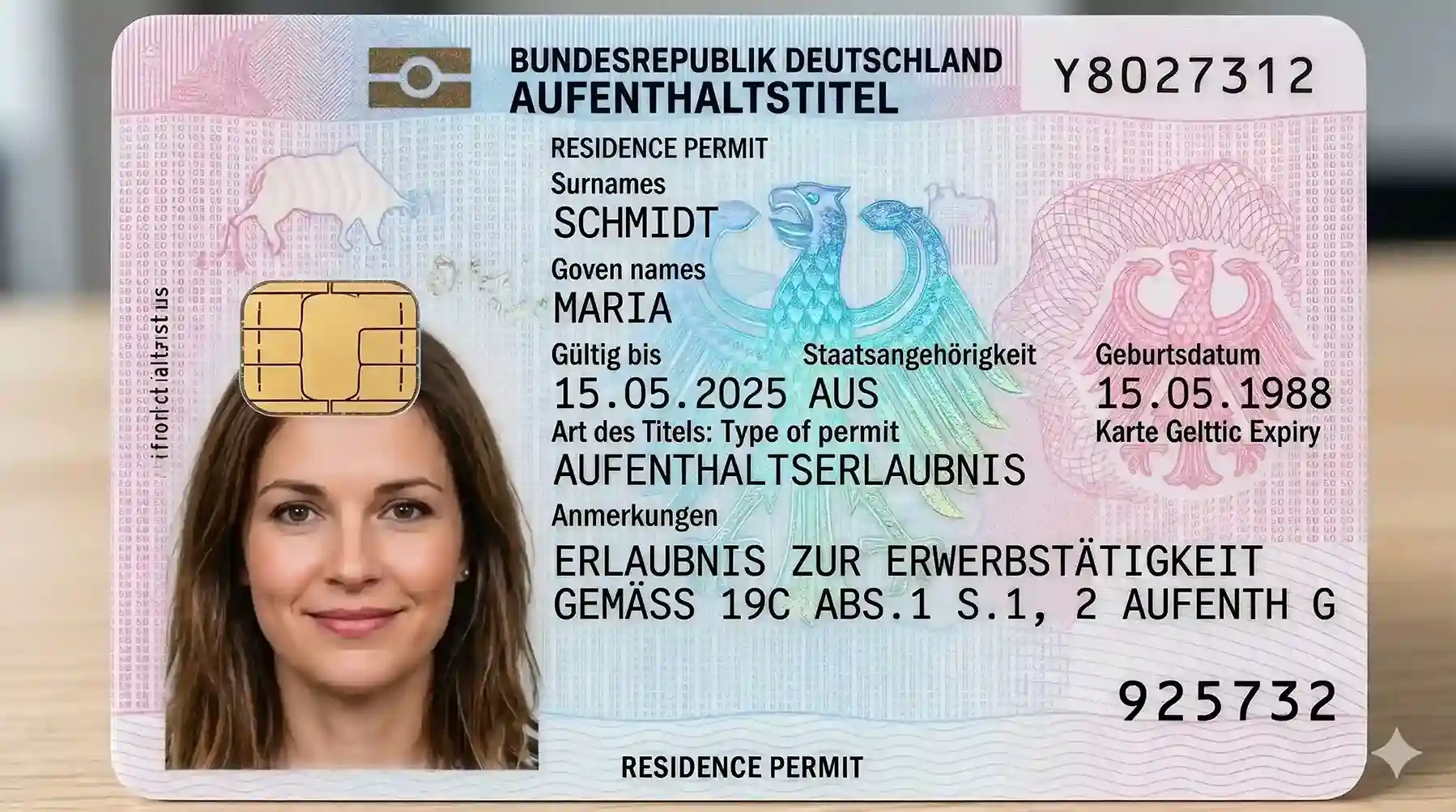
The ICT Card (Intra-Corporate Transfer) is a temporary residence permit for non-EU employees transferred within the same company or corporate group to a German entity. It's governed by the EU ICT Directive (2014/66/EU) and applies to three role categories:
- Managers, responsible for directing operations or departments
- Specialists (Spezialisten), employees with expertise that is critical and specific to the company
- Trainees (Auszubildende), graduates in a supervised, structured training programme
The permit is valid for up to 3 years for managers and specialists, and 1 year for trainees. Unlike standard Germany work visas, no academic degree is required for specialist roles, relevant, company-specific expertise is what counts.
Who Needs the ICT Card?
The ICT Card is the right option when your employee is a non-EU/EEA/Swiss national, they'll be working at your German branch for more than 90 days, and the transfer is within the same corporate group. Some nationalities (UK, US, Canada, Australia, Japan) can enter Germany visa-free and apply for permits after arrival, but for assignments over 90 days, the ICT Card is still typically required unless another route, such as the Germany EU Blue Card, applies.
EU/EEA/Swiss employees don't need the ICT Card, they can live and work in Germany freely. Their non-EU family members may still need a residence permit.
Not sure which permit fits? Use Jobbatical's Germany visa eligibility checker before you start the process.
Eligibility Requirements
To qualify, your employee must meet all of the following:
Switching from ICT Card to Blue Card in Germany
ICT vs EU Blue Card, a quick note:
- If your employee has a university degree and meets a fixed salary threshold (€50,700 in 2026 general / €45,934 for shortage occupations), the EU Blue Card may be worth comparing, it offers a faster path to permanent residency.
- The ICT Card is better for temporary assignments where the transfer relationship is the key factor, not long-term settlement.
Ready to make the switch? Here is how to convert an ICT Card to an EU Blue Card in Germany, including contract, payroll and timing.
Application Process for ICT work permit Germany
The ICT Card involves two stages: a visa abroad, then a residence permit once your employee arrives in Germany. Start the process at least 3 months before the intended start date.
- Pre-approval (optional but recommended), Your company requests pre-approval (Vorabzustimmung) from the Federal Employment Agency (Bundesagentur für Arbeit). Not mandatory, but it significantly speeds up the consulate stage, in some cases to around 10 days. Worth using whenever your timeline is tight. Read how pre-approval works and when HR teams should use it.
- National D visa application, Your employee applies at the German embassy or consulate in their home country. Book via the Federal Foreign Office portal 2–3 months ahead due to appointment backlogs.
- Arrival and address registration, Within 14 days of arrival, your employee registers their address (Anmeldung) at the local residents' office (Meldebehörde).
- Residence permit (ICT Card), Apply at the local Ausländerbehörde within 3 months of arrival. Book early, wait times vary significantly between cities.
this embassy step applies regardless of nationality, and for high-volume origin countries like India, appointment waits can be especially long, so booking early is essential.

What are the Documents Required for ICT Visa in Germany?
Missing or incorrectly prepared documents are the most common cause of delays. Prepare the following for both the visa and permit stages:
Use Jobbatical's Germany ICT Card document checklist to track every item required for your employee's specific case.
What is the Germany ICT Visa Processing Time?
Plan conservatively, consulate backlogs, incomplete documents, and city-specific Ausländerbehörde wait times all affect real start dates.
- D visa abroad: 4–10 weeks from submission; with pre-approval, can be as fast as 10 days
- ICT Card in Germany: 2–4 weeks at the Ausländerbehörde after arrival
- Peak periods: Allow up to 3 months total end-to-end
What is the Germany ICT Visa Fees?
- National D visa: €75
- ICT Card residence permit: €100–€113
- Additional costs: translations, apostilles, any VFS Global service fees

What is the salary requirement for ICT Visa Germany?
- The ICT Card has no fixed statutory minimum salary, unlike the EU Blue Card or some skilled worker routes.
- What's required is that your employee's pay matches German market standards for comparable roles in the same industry and region.
- This is assessed against actual German salary benchmarks, not a published threshold.
In practice: underpaying relative to local peers is a common reason for delays or scrutiny.
- Make sure the salary stated in the assignment letter is genuinely competitive.
- The 2026 updates to Germany's social security contribution ceilings can shift what's considered "market rate" in benchmark calculations, worth checking when preparing contracts.
For a broader overview of 2026 employer obligations under Germany's updated immigration framework, see Jobbatical's guide to employer duties for hiring skilled workers in Germany.
EU Mobility and the Mobile ICT Card Germany
One practical advantage of the ICT Card is built-in EU mobility. After 6 months in Germany, your employee can work short-term in other EU member states under the ICT Directive, without a separate permit for each country, subject to a notification process.
- Short stays (up to 90 days in any 180-day period): covered by the standard ICT Card; employer must notify BAMF in advance
- Longer EU assignments (over 90 days): require a Mobile ICT Card, applied for at least 20 days before the assignment starts
This makes the ICT Card particularly useful if your team operates across multiple European markets.
If you're also managing transfers to Spain, note that Spain's ICT permit follows the same EU directive but has different national implementation rules.
Compliance: What to Track After Arrival?
Once your employee lands, your HR team needs to track a few compliance steps:
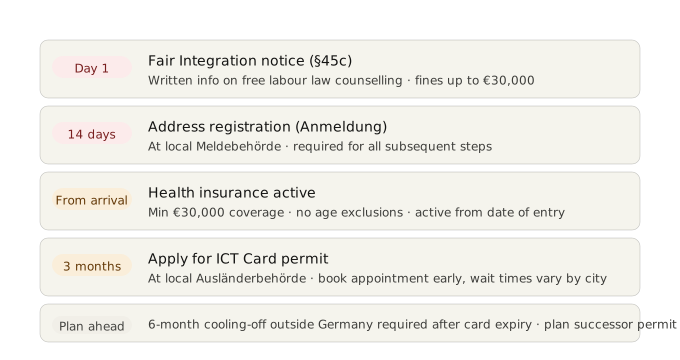
- Address registration (Anmeldung), within 14 days of arrival
- Health insurance, must be active from the date of entry; minimum €30,000 coverage
- ICT Card application at Ausländerbehörde, within 3 months of arrival
- §45c Fair Integration notice, from January 1, 2026, employers must provide every new non-EU hire with written information about free independent labour law counselling services by their first working day
- Cooling-off period, once the ICT Card expires, a 6-month gap outside Germany is required before reapplying. Plan succession timelines or consider an alternative permit if the assignment needs to continue beyond the maximum 3-year period.
Bringing Family Members
- Your employees can bring their spouse and children under 18 to Germany under the ICT Card.
- Spouses can work without restrictions once their permit is issued, which often makes a real difference to employee acceptance rates for international assignments.
- Family permits are issued for the same duration as the employee's ICT Card.
- Include family documents in the initial visa application to keep timelines aligned. If your company has secured fast-track pre-approval, make sure family members are included in that submission, visas are then issued simultaneously, saving weeks.
For a full breakdown of the process, documents required, and housing conditions, see Germany family reunification visa requirements.
ICT Card vs Other Germany Work Permits
The ICT Card isn't the only route for bringing non-EU talent to Germany. Here's a quick comparison to help you choose the right track:
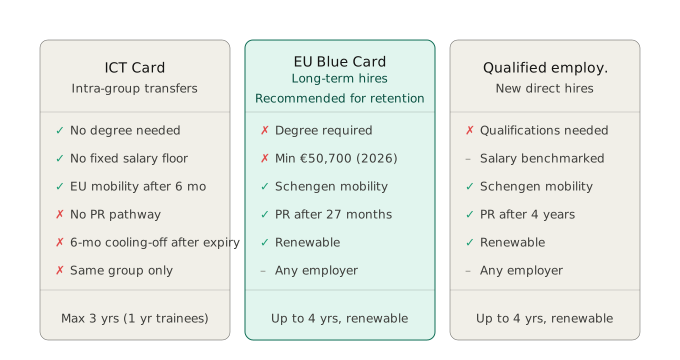
- ICT Card, best for temporary intra-group transfers; no degree required; no fixed salary minimum; no path to permanent residency; 6-month cooling-off after expiry
- EU Blue Card, requires a degree and meets a fixed salary threshold (€50,700 in 2026); leads to permanent residency after 27 months; better for long-term or permanent hires
- Qualified Employment Permit, for employees with a job offer from a German employer and recognised qualifications; standard route for new hires not covered by ICT
If the employee is likely to stay in Germany long-term, starting on an ICT Card may limit their options. The ICT Card does not count toward permanent residency timelines, so if retention is a goal, consider whether the Germany talent retention and PR pathway factors into the permit decision from the outset.
For the Blue Card route specifically, see our side-by-side ICT Card and EU Blue Card conversion comparison.
Common Mistakes That Cause Delays
- Booking embassy appointments too late, aim for 2–3 months ahead
- Assignment letter that doesn't clearly reflect the intra-corporate transfer purpose or match the actual role
- Salary below market rate for the role and region, even without a fixed floor, this gets flagged
- Missing or invalid health insurance documentation
- Documents not legalised or translated by a certified translator
- Wrong role classification, trainee requirements differ substantially from specialist requirements
- Not planning for the 6-month cooling-off period in multi-year assignment planning
- Forgetting the §45c counselling notice for new non-EU hires from January 2026 onward
How Jobbatical Supports ICT Card Applications
Managing ICT Card applications in-house means coordinating multiple agencies, chasing appointment slots, and staying current on regulatory changes, all on top of your core HR responsibilities. Jobbatical handles the full process:
Disclaimer: Immigration rules change quite frequently; please verify with official sources or contact us for the latest info before making any decisions.
Frequently Asked Questions About the ICT Card Germany for HR Professionals

.svg)
.svg)