.svg)


KEY TAKEAWAYS
- Visa categories: Germany offers five main work permits, including the EU Blue Card, §18a vocational, §18b academic, §19c experience-based, and the ICT Card.
- Selection criteria: Choose the right German work permit based on the candidate's education, salary offer, and whether they are a new hire or internal transfer.
- EU Blue Card priority: Default to the Blue Card for eligible hires to fast-track German permanent residency to 21-27 months. Avoid using the §18b permit for these hires, as it needlessly delays their residency.
- 2026 salary thresholds: The standard EU Blue Card minimum salary is €50,700, lowering to €45,934 for shortage occupations and recent graduates. First-time applicants over 45 require €55,770 or proof of pension.
- Fast-track processing: Employers can trigger the Beschleunigtes Fachkräfteverfahren to cut visa wait times from up to six months down to just 4-6 weeks.
Germany has over 600,000 open job positions and requires no employer sponsorship license, making it easy to hire international talent from outside the EU. However, choosing the wrong visa route causes long onboarding delays and compliance risks.
This guide helps HR teams select the right Germany skilled worker visa track, undersatand the requirements and application process
Which track fits your German hire?
To choose the correct Germany skilled worker visa track, evaluate your candidate's qualifications, gross salary, and role type.
- EU Blue Card (§18g): EU Blue card is best for university degree holders and IT specialists earning at least €50,700, or €45,934 for shortage roles and recent graduates. It fast-tracks permanent residency to 21-27 months and usually skips Federal Employment Agency approval.
- §18b academic route: Best for degree holders earning below the EU Blue Card salary threshold. It requires market-rate pay, takes 3-4 years for permanent residency, and usually requires agency approval.
- §18a vocational route: Best for trades, healthcare, or logistics workers with recognized training. It requires market-rate pay and agency approval, with permanent residency taking 3-4 years.
- §19c experience-based track: Experience based track (section 19c) is best for professionals with two or more years of experience but no recognized degree. It requires market-rate salaries, agency approval, and grants permanent residency eligibility in 3-4 years.
- ICT Card: For intra-company transfers from a non-EU office, the Germany ICT card is the best option. Salaries must match German standards, it requires no agency approval, and it does not directly lead to permanent residency.
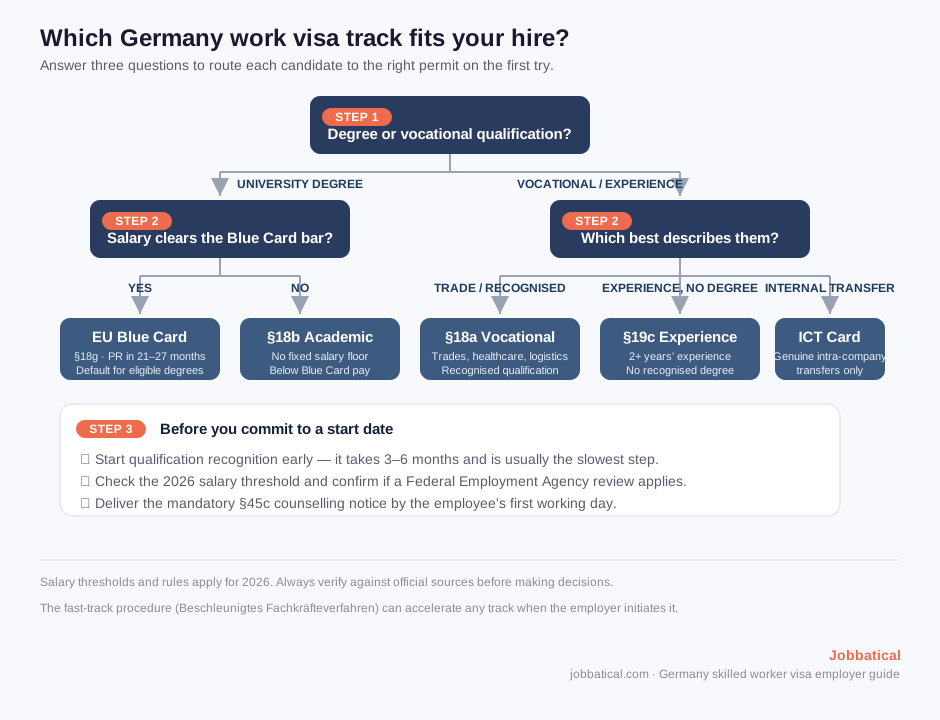
The five Germany skilled worker permit tracks at a glance
The tracks differ most in two places : how fast the employee reaches permanent residence, and whether the Federal Employment Agency runs a labour-market review. The Blue Card wins on both, which is why it's the default for any eligible degree holder.
2026 Salary Thresholds by track
- EU Blue Card (§18g), standard: €50,700 gross per year.
- EU Blue Card, shortage occupations / recent graduates: €45,934 gross per year.
- First-time applicants aged 45+: €55,770 gross per year, or proof of retirement provision.
For the §18a, §18b and §19c routes there is no fixed salary floor; the salary must match the going German market rate for the role, and the Federal Employment Agency checks it.
For a clear breakdown of the costs involved, see our guide to Germany visa fees, including application fees and costs by visa type.
Germany’s EU Blue Card salary thresholds are updated annually, so employers should check the latest 2026 salary requirements before making an offer. Read the latest Germany EU Blue Card salary thresholds.

Germany work visa requirements 2026 (for non-EU citizens)
Every non-EU hire needs the same core set of documents, whatever track you pick. The differences sit in the qualification proof and the salary evidence. Get these ready at the conditional-offer stage, not after.
Document Checklist for a Germany work visa in 2026
Compliance Duties
Germany doesn't make you apply for a sponsorship licence, but you still carry obligations on every non-EU hire. The essentials things include:
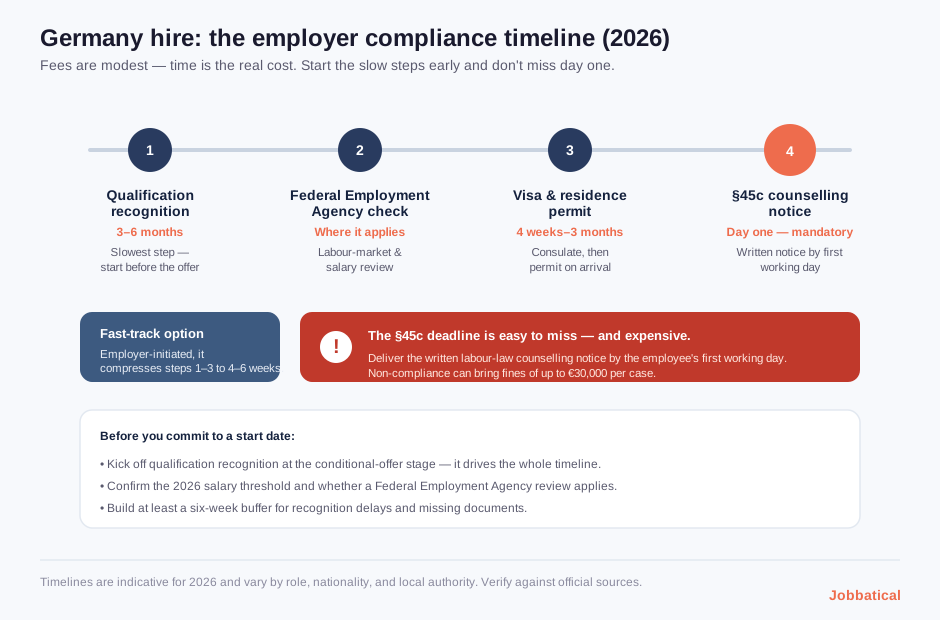
- Germany skilled worker visa compliance: Confirm foreign qualification recognition via Anabin, ZAB, or IHK early, as this step takes 3 to 6 months.
- Salary thresholds and approval: Match the candidate salary with the target visa track and submit the required employment declaration to the Federal Employment Agency.
- Section 45c counselling notice: Issue the mandatory written labor law notification to your non-EU hire by their first day of work to avoid compliance fines up to €30,000.
- Accelerated skilled worker procedure: Initiate the employer-led fast-track system to compress your corporate hiring timeline from six months down to 4-6 weeks.
- Visa pre-approval advantages: Secure an official pre-approval through parallel institutional processing to bypass standard consulate appointment bottlenecks.
Our breakdown of employer obligations under §45c covers exactly what the notice must say and who provides the counselling.
The Fast-track Route
The accelerated skilled worker procedure (Beschleunigtes Fachkräfteverfahren) is the one lever that reliably compresses a 4–6 month timeline into 4–6 weeks.
Two things that are needed the most to make it work for you:
- HR should file it, not the employee, and the immigration office then runs recognition, the labour-market review and the consulate coordination in parallel rather than one after another.
- The Federal Employment Agency has a one-week window to respond; if it doesn't, approval is automatic.
Also note that it isn't a separate visa it accelerates whichever track your candidate already qualifies for (Blue Card, §18a, §18b or §19c). Pair it with a pre-approval (Vorabzustimmung) and the consulate has almost nothing left to assess. If you run several German hires a quarter, read our fast-track procedure guide before your next case.
How the Online Application works (Berlin LEA & the Consular Portal)
Germany has moved most work-permit filing online. Where your employee applies from decides which portal they use. Two systems matter.
Which portal to use
The online filing steps
The wait for a biometrics slot in high-demand offices like Berlin is what eats your timeline, which is another reason to file at least eight weeks before any permit expires. For the current phased rollout, check the official Berlin.de Service Portal or LEA announcements.
Costs and Timeline
- Official government fees are modest:
- the national visa is €75,
- the residence permit €100,
- qualification recognition roughly €100–600 depending on the profession,
- and the fast-track procedure €411 where you choose to use it.
- The bigger cost is actually the time.
- Recognition delays and missing documents cause most slippage, so build at least a six-week buffer before your target start date. Each track's full cost and timeline breakdown lives in its dedicated guide, linked in the table above.
Mistakes that quietly delay German hires
Managing more than one German hire?
Routing a single case is manageable. Running qualification checks, Federal Employment Agency coordination and §45c compliance across a whole pipeline is a full-time job. Jobbatical's Germany skilled worker visa service handles the recognition, agency coordination and compliance tracking across every case, and the platform shows eligibility and progress in real time.
Disclaimer: Immigration rules change frequently. Please verify with official sources or contact us for the latest information before making decisions.
Frequently Asked Questions : Germany Skilled Worker Visa for Employers
What is the minimum salary for standard occupations under the EU Blue Card in Germany (2026)?
The minimum gross annual salary for standard occupations under the EU Blue Card in Germany in 2026 is €50,700.
What is the salary threshold for shortage occupations in Germany (2026)?
Shortage occupations — including IT, engineering, healthcare, and childcare management — qualify for a reduced EU Blue Card salary threshold of €45,934 in 2026.
What salary applies to new graduates applying for the EU Blue Card in Germany?
New graduates who obtained their degree within the last 3 years can qualify for the EU Blue Card at the reduced salary threshold of €45,934 in 2026.
What are the salary requirements for applicants over 45 entering Germany for the first time?
Applicants over 45 must earn at least €55,770 per year in 2026 or provide proof of adequate pension provision to qualify for a Germany work permit.
Can IT specialists without a degree qualify for the EU Blue Card in Germany?
Yes. IT specialists without a university degree can qualify if they have at least 2 years of relevant professional experience and meet the salary threshold of €45,934 in 2026.
Is there a minimum salary requirement for §18a and §18b visa routes in Germany?
No fixed minimum salary applies to §18a and §18b routes. However, the offered salary must align with German market standards for the role. The Federal Employment Agency reviews this as part of the labour market approval process.

.svg)
.svg)