
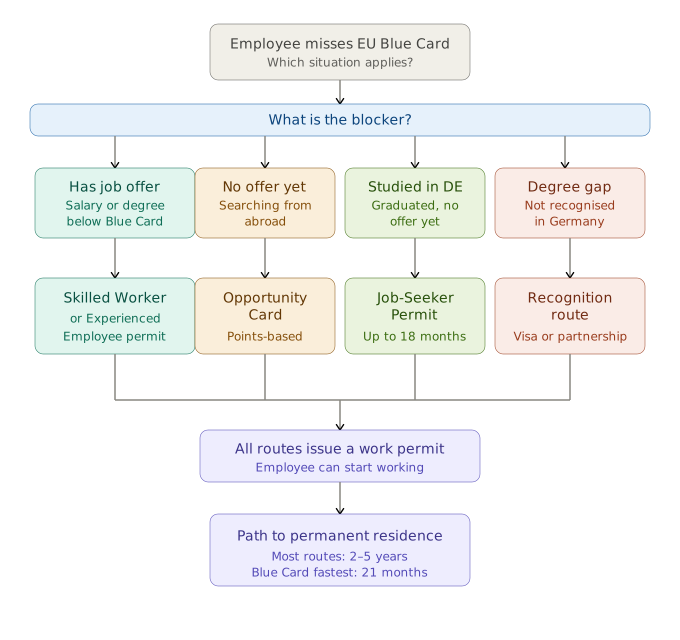
- Flexible permit alternatives: Germany offers multiple pathways beyond the EU Blue Card, including Skilled Worker, Opportunity Card, and Experienced Employee permits-tailored to different qualifications and experience levels.
- Employer coordination essential: Most options require a confirmed job offer and verification or recognition of qualifications-HR teams must liaise closely with the Federal Employment Agency or local authorities.
- Language and compliance readiness: German language proficiency (A2 or higher) often applies to training, recognition, and upskilling permits; early assessment supports smoother application processing.
- Strategic long-term planning: Many permits serve as stepping stones toward permanent residency or future Blue Card eligibility, enabling companies to retain global talent sustainably.
As an HR professional, if your relocating employee doesn’t fulfill the EU Blue Card requirements in Germany, there are multiple alternative work and residence permits to consider. The EU Blue Card is ideal for highly skilled professionals, but Germany’s immigration framework provides flexible options for various skill levels and job roles. Below are the best alternatives to support your employee’s relocation, including eligibility, processes, and HR-relevant insights.
Which Germany Work Permit Fits When an Employee Doesn't Qualify for the EU Blue Card?
1. Residence Permit for Qualified Professionals (Skilled worker permit)
- Best For: Employees with either recognized vocational training (e.g., 2-3 year programs), or university degrees not matching the position in the intended employment.
- Eligibility:
- A job offer or contract in Germany that presumes highly qualified employment.
- Recognition of foreign qualifications by German authorities aimed to estimate the equivalence to German degrees
- Application Process: File at the German embassy/consulate or foreigners’ authority (Ausländerbehörde) if the employee is in Germany.
- HR Takeaway: Flexible for skilled employees in non-regulated professions; ensure qualifications are pre-checked for recognition.
2. Job-Seeker Permit for after studies in Germany
- Best For: Employees who have successfully completed their university degree, research work or vocational training in Germany
- Eligibility:
- A German university or a vocational degree or successfully completed research activity in Germany.
- Duration: Up to 18 months to secure employment, convertible to a work permit.
- Application Process: Coordinate with the employee to apply at the German Foreigner's office
- HR Takeaway: Useful for candidate; assist with conversion of student permit to job seeker permitwilling to stay in Gemany to expedite placement.
3. Opportunity Card (Chancenkarte)
- Best For: Skilled employees without a job offer, part of Germany’s 2023 Skilled Immigration Act updates.
- Eligibility:
- Recognized degree or vocational qualification.
- Minimum 6 points (based on qualifications, experience, language skills, age, and German connections).
- Financial proof (e.g., €13,092 in a blocked account for 2025).
- Duration: allows trial full-time employment for a max period of two weeks or, alternatively, up to 20 hours/week employment for the whole duration of stay.
- Application Process: Guide the employee to apply at the German embassy/consulate.
- HR Takeaway: Lowers entry barriers; ideal for employees needing trial full-time employment for a maximum of two weeks.
4. Experienced employee Residence Permit (recognized degree not required)
- Best For: Any skilled professionals with experience and without a formal recognition degree
- Eligibility:
- 2+ years of relevant IT experience in the last 5 years.
- University or vocational training degree recognized in the country of issue
- Job offer with a salary of at least €43,470.00 (2025).
- Federal Employment Agency approval.
- Application Process: Facilitate application via the German embassy or foreigners’ authority.
- HR Takeaway: Perfect for talent in high-demand sectors; verify experience documentation; get positive assessment results of the degree / vocational qualification before the application.
5. Work Permit for Other Employment
- Best For: Employees in less-skilled roles or those not qualifying for skilled worker permits.
- Eligibility:
- A specific job offer from your company or another German employer.
- Federal Employment Agency approval (often waived for short-term stays and specific occupations)
- Relevant or unique company-specific knowledge and qualifications or unique company-specific knowledge and experience for the role.
- Limitations: Ties the employee to the specific job and employer.
- Application Process: Collaborate with the employer to liaise with the Federal Employment Agency; assist with visa filing.
- HR Takeaway: Practical for lead positions and specialists in narrow areas of expertises; ensure job stability to avoid permit issues.
6. Visa for the Recognition of ForeignTraining or university Degree Recognition
- Best For: Employees whose qualifications need additional German certification or training to obtain a comparability to a German degree.
- Eligibility:
- Partial recognition of qualifications by German authorities.
- German language skills at A2 level or higher
- Proof of registration for qualification measure
- Proof of financial support during the period.
- Duration: Up to 2-3 years, based on training needs.
- Application Process: Support the employee in applying at the German embassy.
- HR Takeaway: Long-term investment; plan for eventual transition to a work permit.
7. Visa for Recognition Partnership
- Best For: Employees needing to upskill to meet future permit criteria.
- Eligibility:
- Foreign university or vocational training degree
- German language skills at A2 level or higher
- Job offer from the appropriate employer (embassy decides about the appropriateness)
- Recognition partnership agreement between the talent and employer
- Benefits: Allows 12 months period to complete recognition procedure, potentially qualifying for a Blue Card EU or any other employment permit type later.
- Application Process: Get sure talent owns a degree and German skills. Assist with securing admission and applying at the German embassy.
- HR Takeaway: Strategic for highly motivated and/or talent; aligns with talent development goals.
HR Considerations for Relocation
- Language Requirements: The Blue Card doesn’t require German, but alternatives like the Opportunity Card or training visas may need atleast A2 proficiency.
- Employer Involvement: Many permits require a job offer, so coordinate with hiring teams or external recruiters.
- Family Reunification: Options like the skilled worker permit experienced employee permit allow dependents, but require basic German language skills from the dependent.
- Path to Residency: Most permits offer a settlement permit after 2-5 years (Blue Card is the fastest at 21 months and B1 German skills)
Disclaimer: Immigration rules change quite frequently; please verify with official sources or contact us for the latest info before making any decisions.
Frequently Asked Questions About Germany Work Permit Alternatives to the EU Blue Card
What are the main work permit alternatives to the EU Blue Card in Germany?
The main alternatives to the EU Blue Card include the Residence Permit for Qualified Professionals (Skilled Worker Permit), the Opportunity Card (Chancenkarte), the Experienced Employee Residence Permit, and the Job-Seeker Permit available after completing studies in Germany.
What is the main difference between the EU Blue Card and the Opportunity Card (Chancenkarte)?
The EU Blue Card requires a confirmed job offer that meets a defined minimum salary threshold. In contrast, the Opportunity Card is designed for skilled professionals who do not yet have a job offer and wish to enter Germany to search for employment under a points-based system.
Who is the Residence Permit for Qualified Professionals (Skilled Worker Permit) best suited for?
This permit is ideal for individuals with recognized vocational training or university degrees who already have a job offer in Germany but whose salary does not meet the higher EU Blue Card threshold.
Can experienced professionals without a formal, recognized university degree still get a work permit in Germany?
Yes, the Experienced Employee Residence Permit provides a pathway for professionals without a recognized degree. For example, IT specialists with at least two years of relevant experience within the last five years may qualify based on their practical expertise.
What is the fast-track path to permanent residency with the EU Blue Card?
EU Blue Card holders may apply for permanent residency after 21 months of qualified employment if they provide a B1 German language certificate. Without B1 proficiency, eligibility is possible after 33 months of employment and social security contributions.

.svg)



.svg)