.svg)



KEY TAKEAWAYS:
- Time on the GBM route does not count toward ILR- the five-year (now ten-year) settlement clock only starts when the Skilled Worker visa is granted.
- The 12-month "cooling off" period was abolished in December 2020 and does not apply to GBM-to-Skilled Worker switches.
- The earlier you switch your employee to Skilled Worker, the sooner their ILR clock starts
- The B2 English language requirement must be planned for before the switch point, not at application time.
The Problem:
Many employers and employees assume that time spent in the UK on a Global Business Mobility (GBM) visa counts toward permanent residency (Indefinite Leave to Remain, or ILR). It does not.
Every day an employee spends on a GBM visa is time that does not count toward settlement. When they finally switch to a Skilled Worker visa, their residency clock resets completely to zero. Following the April 2026 rule changes, they will then face a full 10-year clock to achieve ILR.
The Solution:
Because most standard immigration guides overlook this massive hurdle, we’ve broken down exactly how to strategically transition your employees. This guide covers:
- When to switch your employee to a Skilled Worker visa to minimize delays.
- What you actually need to pay them to qualify.
- How recent salary threshold changes might disrupt your current assignment plans.
- Which previous immigration policies your team might still be following that are no longer valid.
Why the GBM Route Has a Settlement Problem
The Global Business Mobility (GBM) route specifically the Senior or Specialist Worker route is strictly a non-settlement visa. This means any time an employee spends on this visa does not count toward Indefinite Leave to Remain (ILR).
If an employee spends three years on a GBM visa and then switches to a Skilled Worker visa, their settlement clock resets to zero.
Because the UK moved to a 10-year settlement framework in April 2026, delaying the switch drastically extends an employee's time to permanent residency:
- Time on GBM: 3 Years
- Time needed on Skilled Worker (from zero): 10 Years
- Total time to settlement: 13 Years
If an individual has 10 years of continuous, lawful stay in the UK under any combination of visas, they can apply for settlement. For long-tenured employees who have already spent several years on a GBM visa, you should model two scenarios to see which path is faster and more cost-effective:
| Scenario | Recommended Approach | Settlement Impact |
|---|---|---|
| Scenario A: The Skilled Worker Reset | Switch the employee to a Skilled Worker visa as soon as possible. | Time spent on the GBM route does not count toward Skilled Worker settlement. The employee must complete the full qualifying period from the date the Skilled Worker visa is granted before becoming eligible for settlement under that route. |
| Scenario B: The Long Residence Exception | Keep the employee on the GBM route (or switch later if needed) and track their total lawful residence in the UK. | Lawful residence across different immigration categories may be combined toward the long residence route, allowing the employee to qualify for settlement once they reach the required long-residence threshold, subject to meeting all eligibility requirements at the time of application. |
Fact Check: The Cooling-Off Rule
The Myth:
Many HR and mobility teams still believe that an employee must leave the UK, wait out a 12-month "cooling-off" period, and reapply from abroad if they want to move from an intra-company visa (GBM) to a Skilled Worker visa.
The Reality:
This rule was completely abolished in December 2020. Today, there is absolutely no cooling-off period and no requirement for the employee to leave the country.
An employee on a GBM Senior or Specialist Worker visa can switch directly to a Skilled Worker visa from inside the UK at any time, as long as they meet the current Skilled Worker criteria (such as salary and sponsorship requirements).
Key Takeaway: You can initiate an in-country switch from GBM to a Skilled Worker visa today. No gaps, no travel required.
What the Salary Rules Actually Require on Switch
This is where most mid-assignment switches go wrong. The assumption is often that if an employee meets the GBM salary threshold, they'll meet the Skilled Worker threshold. That's not reliably true, and the July 2025 threshold changes made the gap more pronounced.
Current Salary Thresholds: GBM vs Skilled Worker
| Route | General Threshold (from July 2025) | Going Rate Requirement | High Earner Level |
|---|---|---|---|
| GBM – Senior or Specialist Worker | £52,500 | Higher of £52,500 or the applicable GBM going rate for the occupation. | £73,900 — enables the extended 9-in-10-year maximum stay and removes the 12-month overseas employment requirement. |
| Skilled Worker (Standard) | £41,700 | Higher of £41,700 or 100% of the applicable Skilled Worker going rate for the SOC occupation code. | No equivalent high-earner category. |
Always run the going-rate check for the specific SOC code before planning the switch timeline. Do not assume GBM compliance transfers. The worker must meet the higher of the general Skilled Worker threshold and 100% of the going rate for the role on the Skilled Worker salary tables which are different from the GBM salary tables.
When to Switch: The Practical Decision Framework
Honestly, most companies wait too long. The default position tends to be: use GBM for the assignment, revisit the switch if and when the employee wants to stay permanently. But because ILR time only accrues on Skilled Worker, every month of delay is a month added to the employee's path to settlement and under the new 10-year baseline, that matters considerably.
The framework for deciding when to switch is straightforward:
| Recommendation | What to Do | Why It Matters |
|---|---|---|
| Switch as Early as the Role Qualifies | Move the employee to the Skilled Worker route once the role meets the required skill level, salary threshold, and English language requirements. | Time spent on the GBM route does not count toward Skilled Worker settlement, so delaying the switch can significantly extend the path to ILR. |
| Check the Sponsor Licence Position | Confirm that the UK entity holds a Skilled Worker sponsor licence before planning the switch. | A GBM sponsor licence does not authorise Skilled Worker sponsorship. If a Skilled Worker licence is needed, the application process can add approximately 8 weeks to the timeline. |
| Factor in the English Language Requirement | Allow time for the employee to book and complete an approved English language test where required. | The GBM route has no English language requirement, but Skilled Worker applicants must meet the applicable English standard. Test availability and results can add several weeks to the process. |
| Model the Long Residence Route | Calculate whether the employee may qualify for settlement through long residence based on their total lawful stay in the UK. | For employees with substantial time already spent on GBM or other visa categories, the long residence route may produce an earlier settlement outcome than switching and starting a new Skilled Worker qualifying period. |
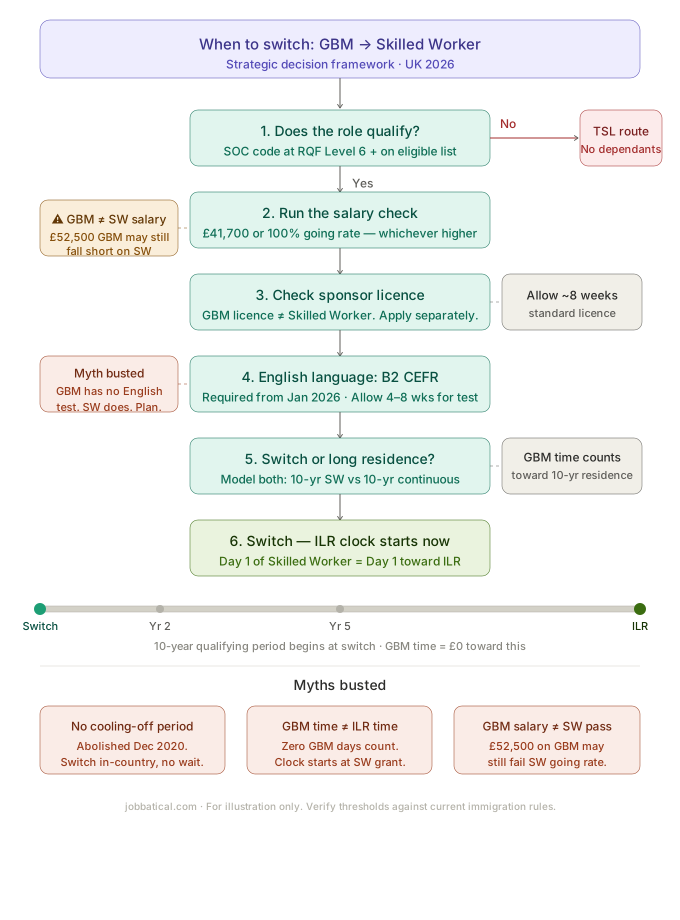
The Dependant Position During and After the Switch
Dependants can safely remain in the UK while the main employee's Skilled Worker visa application is being processed. However, once the employee’s new visa is approved, dependants must file their own separate applications to link their visas to the new Skilled Worker permission. This does not happen automatically.
Under the UK's Earned Settlement model (introduced in April 2026), the rules for permanent residency (ILR) have fundamentally changed for spouses and partners:
- Dependant partners no longer automatically get permanent residency just because the main employee qualifies.
- Adult dependants must now meet their own strict eligibility requirements to settle. They cannot simply rely on the main applicant’s status.
- They are required to demonstrate their own English language proficiency and independent economic or social contribution to the UK.
Disclaimer: Immigration rules change quite frequently; please verify with official sources or contact us for the latest info before making any decisions.
Frequently Asked Questions : Switching from Global Business Mobility to Skilled Worker Visa UK
Does time on a Global Business Mobility visa count toward ILR?
No. Time spent on any Global Business Mobility (GBM) route, including the Senior or Specialist Worker visa, does not count toward UK settlement. The ILR qualifying period begins only from the date a Skilled Worker visa is granted. There is no carry-over of GBM time, regardless of how long the employee has been in the UK.
Is there still a cooling-off period when switching from GBM to Skilled Worker?
No. The 12-month cooling-off period was abolished on 1 December 2020 and does not apply to GBM-to-Skilled Worker switches. Employees can switch from within the UK without leaving the country, provided they meet the Skilled Worker salary, SOC code, and English language requirements at the time of application.
What salary does an employee need to switch from GBM to Skilled Worker?
From 22 July 2025, the general Skilled Worker salary threshold is £41,700 per year or 100% of the going rate for the relevant SOC code, whichever is higher. This is separate from the GBM Senior or Specialist Worker minimum salary of £52,500. An employee earning £52,500 on a GBM visa may still fall below the required going rate for their occupation, so each role must be assessed individually.
Can an employee switch to Skilled Worker from within the UK while on a GBM visa?
Yes. Both former Tier 2 ICT holders and GBM Senior or Specialist Worker visa holders can switch to the Skilled Worker route from within the UK. The employer must hold a valid Skilled Worker sponsor licence, assign a Certificate of Sponsorship, and the employee must satisfy all Skilled Worker requirements, including the applicable English language requirement.
Does the employer need a different sponsor licence to switch an employee to Skilled Worker?
Yes. A Global Business Mobility sponsor licence does not automatically cover the Skilled Worker route. If the organisation only holds a GBM licence, it must obtain a Skilled Worker sponsor licence before assigning a Certificate of Sponsorship for the switch. Standard processing for a sponsor licence application is typically around 8 weeks.
How does the new 10-year ILR qualifying period affect GBM-to-Skilled Worker switch planning?
Under the proposed earned settlement framework, most Skilled Worker visa holders may face a 10-year qualifying period for settlement. Because time spent on a GBM route does not count toward ILR, every year spent on GBM before switching effectively delays settlement eligibility. Switching earlier allows the Skilled Worker qualifying period to begin sooner.
What English language test does an employee need for the GBM-to-Skilled Worker switch?
From 8 January 2026, applicants switching to the Skilled Worker route must demonstrate B2 CEFR English language proficiency through a Secure English Language Test (SELT), unless exempt due to nationality or qualifications. Since the GBM route does not require an English test, employees should allow sufficient time for test booking and results before the planned switch date.

.svg)
.svg)