


KEY TAKEAWAYS
- The UK ICT visa (Senior or Specialist Worker route) is for existing employees being temporarily transferred to your UK entity, not new hires.
- Your UK entity must hold a valid Sponsor Licence and issue a Certificate of Sponsorship before any application can proceed.
- The 2026 salary threshold is £52,500/year for the Senior or Specialist Worker route (or the going rate, whichever is higher).
- Total employer cost for a 3-year assignment can exceed £165,000 per employee including salary floor, ISC, IHS, and CoS fees.
- Ongoing compliance obligations, record-keeping, SMS reporting, audit readiness, continue throughout the entire assignment, not just at application stage.
Most companies start the UK Intra-Company Transfer (ICT) process too late. Between verifying your Sponsor Licence, issuing a Certificate of Sponsorship (CoS), and waiting for Home Office approval, 12 weeks is the realistic minimum timeline. If you need an employee in the UK next quarter, you must act now.
Formally known as the Global Business Mobility (GBM) Senior or Specialist Worker route, this visa allows you to transfer existing international staff to your UK entity.
What This Guide Covers:
- Eligibility: Who qualifies for an intra-company transfer.
- Timelines & Costs: How to budget and plan your onboarding schedule.
- Sponsor Compliance: Your legal requirements once the visa is approved.
ICT or Skilled Worker? Get This Decision Right First
The ICT visa UK is right when:
- The employee already works for your company overseas and is being temporarily assigned to your UK entity.
- The role is senior management or requires specialist skills that cannot easily be sourced locally.
- The assignment is time-limited: up to 5 years for most employees, or 9 years for those earning above £73,900.
It is ideal for tech, finance, and engineering sectors needing to deploy critical talent to the UK quickly.
No Settlement Path: This is a temporary visa route and does not lead directly to permanent residency (ILR).
Consider the UK Skilled Worker Visa instead when:
- You are making a new, permanent hire rather than transferring an existing employee.
- The employee wants to settle in the UK, the ICT route has no direct pathway to Indefinite Leave to Remain (ILR).
ICT vs Skilled Worker visa decision flowchart for UK transfers
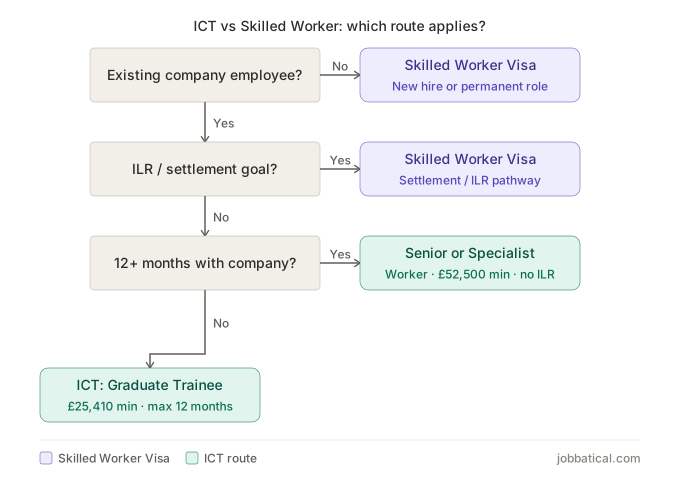
That ILR limitation matters for retention planning. If an ICT employee turns out to be someone you want to keep long-term, a route switch to Skilled Worker needs to be planned well before the 5-year ceiling, ideally at year 3.
Eligibility: What Your Company and Employee Must Both Satisfy
Employer side:
- Your UK entity must hold a valid Home Office Sponsor Licence before a Certificate of Sponsorship (CoS) can be issued. No licence, no CoS, no visa.
- If your company does not yet have one, factor in approximately 8 weeks for the licence application before any transfer timeline can begin.
- The role must also appear on the approved Skilled Occupation list at RQF Level 6 or above.
Employee side:
- Two distinct routes apply under the GBM framework:
Senior or Specialist Worker vs Graduate Trainee: Key Differences
The Graduate Trainee route is often overlooked. It only requires 3 months of prior employment, a much lower bar. If your company runs a structured international programme for early-career staff, this route is worth planning around.
Both routes require the employee to demonstrate:
- English language at B1 level via an approved SELT (unless exempt by nationality or degree language).
- £1,270 in savings, or a maintenance letter from your company confirming financial support.
- A TB test certificate from an approved clinic, required for certain nationalities listed on GOV.UK.
Before assigning a CoS, use Jobbatical's UK Visa Assessment tool to confirm eligibility and flag potential issues early.
ICT visa UK Application Process: A Realistic Timeline for Your Team
- Weeks 1–2: Confirm Sponsor Licence status; assign CoS via the Sponsor Management System (SMS).
- Weeks 2–3: Employee compiles documents, passport, payslips, employment contract, English language evidence, TB test if required. The UK ICT Visa Document Checklist covers everything needed.
- Weeks 3–4: Online application submitted on GOV.UK; fees paid including the Immigration Health Surcharge.
- Weeks 4–5: Biometric appointment at a VAC or UKVCAS. Book 4–6 weeks ahead, slots fill quickly.
- Weeks 5–12: Home Office processing. Standard: 3–8 weeks. Priority service: 5–7 working days (additional fee, subject to availability).
UK ICT visa application timeline
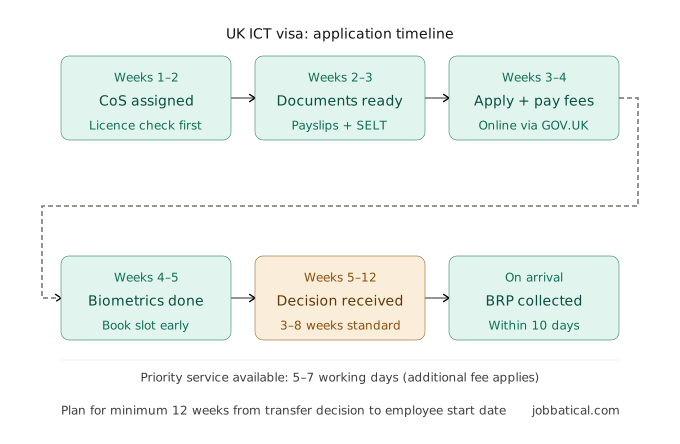
After approval, your employee collects their Biometric Residence Permit (BRP) within 10 days of arriving in the UK. Some nationalities must also register with the police within 7 days. Plan for 3 months minimum from the transfer decision to start date. Jobbatical's UK ICT Visa managed service covers CoS assignment through to post-arrival support.
ICT visa UK Fees: What the Transfer Will Cost Your Company
UK ICT Visa Cost Breakdown 2026
Related reads:
For a 3-year assignment, total employer cost exposure can exceed £165,000 per employee once the updated salary floor of £52,500 is included. For scenario-based budget planning across assignment lengths, see the 2026 UK GBM Sponsorship Costs guide.
A three-year CoS produces three years plus 14 days of leave, which adds £517.50 per person. The maths: UK Immigration Health Surcharge (IHS) Fees 2026
Benefits of the Senior or Specialist Worker (ICT) Visa
🏢 Key Advantages for the Company
- Speed & Simplicity: Skips the English language testing requirement, significantly reducing onboarding administrative delays.
- No Local Recruitment Tests: Transfer your international personnel to support UK operations or expansions without needing to advertise the role locally first.
- Retain Institutional Expertise: Avoid local hiring costs by seamlessly moving existing talent who already know your business.
👥 Key Advantages for the Employee
- Generous Timelines: Stay up to 5 years (or up to 9 years for high earners making £73,900 or more).
- Family Relocation: Bring eligible dependants (spouse and children) with full work and study rights in the UK.
- Healthcare Access: Gain full access to the National Health Service (NHS) via the Immigration Health Surcharge (IHS).
HR Action Item: Feature these unique perks in your global mobility packages to encourage senior leadership rotation and boost international talent retention.
ICT visa UK Compliance: Your Ongoing Obligations as a Sponsor
Visa approval is not the finish line. The Home Office expects you to actively manage every sponsored worker throughout their assignment. Many companies underestimate how much ongoing work this involves.
Your duties throughout the assignment:
- Maintain employment records for every sponsored worker: contracts, payslips, and right-to-work verification.
- Report changes to role, salary, location, or working pattern within 20 working days via the SMS portal.
- Report unauthorised absences of 10 or more consecutive working days.
- Notify the Home Office if the assignment ends early, your employee then has 60 days to secure a new sponsored role or leave the UK.
Home Office compliance visits happen unannounced. A licence rating downgrade restricts your ability to issue new CoS; revocation means every sponsored employee loses their right to work. Jobbatical's Sponsor Management System service and compliance training for HR teams keep your company audit-ready year-round.
Planning Beyond the Transfer: Retention and Route Switches
The ICT route has a hard ceiling: 5 years for most employees, 9 years above £73,900. No settlement pathway exists from this route alone. If you want to keep a transferred employee in the UK permanently, a switch to the Skilled Worker visa must be planned in advance, year 3 is the time to act, not year 5.
- Dependants can join on a UK Family (Dependant) Visa with work and study rights; budget for their IHS costs separately.
- Extensions within the stay limit are possible, see UK Visa Renewals and Extensions.
- Settlement path: once on a Skilled Worker visa, your employee begins the qualifying period toward UK Indefinite Leave to Remain.
For a deeper look at the Senior or Specialist Worker route requirements, see the Senior or Specialist Worker Visa guide.
Disclaimer: Immigration rules change quite frequently; please verify with official sources or contact us for the latest info before making any decisions.
Frequently Asked Questions: UK Intra-Company Transfer Visa
Is the UK ICT visa the same as the Senior or Specialist Worker visa?
Yes. The ICT visa was rebranded as the Senior or Specialist Worker route under the Global Business Mobility framework in April 2022. New applications go through the updated GBM route. Eligibility criteria are similar, but salary thresholds have been updated, the 2026 minimum for the Senior or Specialist Worker route is £52,500/year.
Do I need a Sponsor Licence before applying for a UK ICT visa?
Yes. Your UK entity must hold a valid Home Office Sponsor Licence to issue a Certificate of Sponsorship. Without a CoS, no application can proceed. If your company does not yet have a licence, factor in approximately 8 weeks for the application process before any transfer timeline can begin.
How long does the UK ICT visa application take to process?
Standard Home Office processing takes 3–8 weeks after biometrics are submitted. Priority service takes 5–7 working days (subject to availability). During peak periods, standard processing can stretch to 12 weeks. Plan for a minimum 12-week lead time from the transfer decision to the employee's first working day in the UK.
Can an employee on a UK ICT visa switch to a Skilled Worker visa?
Yes. Employees can apply to switch to the Skilled Worker visa from within the UK if they meet the requirements, including a valid job offer from a licensed sponsor. This is the most common route for employees wanting to remain in the UK long-term, since the ICT route has no direct pathway to Indefinite Leave to Remain.
What happens if a UK ICT assignment ends early?
You must report the early end of assignment to the Home Office via the Sponsor Management System within 20 working days. The employee then has 60 days to find a new sponsored role or leave the UK. Failing to report this is a compliance breach that puts your Sponsor Licence at risk.
Can family members join an employee on a UK ICT visa?
Yes. Spouses, civil partners, and dependent children under 18 can apply for a UK Family (Dependant) Visa with the right to work and study. The Immigration Health Surcharge applies separately per dependant (£1,035/year), so include these costs in your overall transfer budget.

.svg)
.svg)
