

KEY TAKEAWAYS
- An ECS check is a Home Office verification used only when standard right to work checks (share code, manual, digital identity) are not possible.
- You must use ECS for pending in-time applications, EUSS Certificates of Application, Application Registration Cards, and pre-1988 arrivals.
- Do not use ECS as a fallback; misuse is logged and can trigger Home Office scrutiny.
- A Positive Verification Notice gives a 6-month statutory excuse; wait 14 days post-application, expect a response in 5 working days.
- Getting right to work wrong exposes you to civil penalties of up to £45,000 per worker for a first breach, £60,000 for repeat breaches.
- Jobbatical helps with UK immigration including Sponsor license, CoS, Skilled worker Visa, ILR and Right to work check in a fully compliant way.
This is exactly the situation the Employer Checking Service exists for, and getting the timing wrong can cost you up to £45,000 per worker.
What is an ECS check?
For HR teams establishing a statutory excuse, understanding the ecs check meaning is critical. The Employer Checking Service is a UK Home Office facility. An ecs check right to work verification is a request to the Home Office to confirm whether a named person has the right to work in the UK when they cannot prove it through the usual methods.
It sits alongside the three standard right to work checks, not above them:
- Online share code check: for anyone with digital status or an eVisa
- Manual document check: List A or List B documents
- Digital identity check: via a certified provider, for British and Irish passport holders
The ECS is a fourth route. You only reach for it when none of the three standard checks are possible. Since Biometric Residence Permits stopped being valid on 31 December 2024, most workers now prove status with a share code, so genuine ECS cases are rarer than many HR teams assume.
When you must use the Employer Checking Service
You need an ECS check in a small set of defined situations. In some of these, using ECS is mandatory, not a choice.
Use the Employer Checking Service when your employee or candidate:
- Has an in-time application, appeal, or administrative review pending, and cannot show current status
- Holds a Certificate of Application under the EU Settlement Scheme that tells you to verify with the Home Office
- Holds an Application Registration Card, typically asylum seekers permitted to work in restricted roles
- Arrived in the UK before 1988 and has limited documentary evidence of status
- Genuinely cannot complete an online check because of a Home Office system or technical fault
In practice, the pending application scenario is the one HR teams meet most. Someone applied to extend their visa before it expired, their old status has lapsed on the system, but section 3C of the Immigration Act 1971 keeps their permission alive while the case is decided.
The pending-application scenario is most common when an employee files an in-country switch to a Skilled Worker visa before their current visa expires.
Quick reference: use ECS or not
When not to use ECS
Here is where employers get into trouble. ECS is not a catch-all for any awkward case. Every request is logged by the Home Office, and using it outside the defined scenarios can draw scrutiny you do not want.
Do not use ECS when:
- The person can generate a share code. f your candidate or employee can provide a standard right to work share code, your team must use the online checking service instead of incorrectly triggering a duplicate employer checking service share code request.
- You simply find manual documents inconvenient. That is not a valid reason to escalate.
- The visa has expired and no in-time application was made. A late application does not restore the right to work, and a notice issued in error will not protect you.
- You are checking a British or Irish citizen. They cannot get a share code, so check their passport.
Honestly, most teams complete the standard checks correctly and never need ECS at all. Treat it as a defined escalation step, not a default setting.
How long does an ECS check take?
An ECS check typically takes 5 working days once the Home Office accepts your request. However, you can't submit it the moment an application goes in. You must wait 14 days after the person's application or appeal is lodged before requesting ECS, so plan for roughly 3 weeks total from application to verification notice in a straightforward case. If a Positive Verification Notice is issued, it's valid for 6 months before you need to re-check.
The ECS process, timing, and the 28-day grace period
- Wait 14 days after the person submits their application or appeal before requesting ECS. The Home Office needs time to register it.
- Expect a response within 5 working days.
- A Positive Verification Notice gives you a statutory excuse for 6 months.
- Existing employees keep a statutory excuse for 28 days after their visa expires, giving you a window to obtain a notice. This grace period does not apply to new hires.
The reality is that these windows overlap awkwardly. If you wait the full 14 days and the response takes 5 working days, you are already close to the edge of the 28-day grace period. Start early, and do not treat the grace period as spare time.
What Positive and Negative Verification Notices mean for you
PVN versus NVN: outcome and your next step
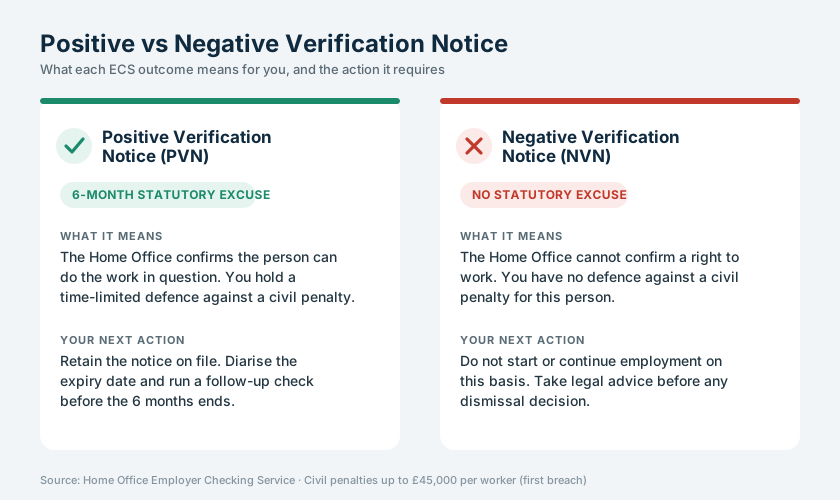
A PVN is time-limited, so put the expiry date into your tracking system the day it arrives. If the visa is granted within those six months, switch to a standard online share code check. If it is not, you need a fresh ECS check for the next six months.
Where ECS fits in your wider compliance duties
An ECS check is one piece of a larger duty. If you hold a UK sponsor licence, right to work failures feed directly into licence risk, and the Home Office can suspend or revoke over exactly this kind of gap. Reporting and check obligations also run through your Sponsor Management System duties, so a missed follow-up rarely stays contained.
You must keep evidence of every check, including ECS requests and verification notices, for the length of employment and two years after it ends. If you are unsure where your gaps are, a sponsor licence compliance assessment is a fast way to surface them before an audit does.
Get the sequence right before the offer goes out
Before your next offer letter reaches someone with a pending application, ask one question. Can they prove their right to work today, or do you need a Positive Verification Notice first? Getting that sequence right is the difference between a compliant hire and a £45,000 exposure per worker.
DBS Check vs. Home Office Employer Checking Service
Do not confuse the home office employer checking service with a dbs employer checking service during your onboarding process. They serve entirely different HR compliance purposes. While a DBS check handles criminal background screening, the ecs check home office system strictly verifies an individual's legal right to work to protect your business from civil penalties when standard checks fail.
Disclaimer: Immigration rules change quite frequently; please verify with official sources or contact us for the latest info before making any decisions.
Frequently Asked Questions : ECS Check UK
What is an ECS check?
An ecs check (also known as the employer checking service uk) is an official online query submitted by businesses to the Home Office. HR teams use it to confirm for an employee (worker) right to work and secure a statutory excuse when standard options—like an online share code or physical passport check—are unavailable due to a pending visa application, extension, or appeal.
When do I need to use the Employer Checking Service?
Use the Employer Checking Service when a worker has an in-time immigration application, appeal, or administrative review pending, holds an EU Settlement Scheme Certificate of Application or an Application Registration Card, arrived in the UK before 1988 with limited evidence, or when a technical issue prevents an online right-to-work check.
How long does an ECS check take?
The Home Office aims to respond to a valid Employer Checking Service request within 5 working days. Employers should normally wait at least 14 days after the worker submits their immigration application or appeal before requesting an ECS check, allowing time for the case to appear on Home Office systems.
How long is a Positive Verification Notice valid?
A Positive Verification Notice (PVN) provides a statutory excuse against a civil penalty for 6 months from the date it is issued. Employers should record the expiry date and complete a follow-up right-to-work check before it expires. If the worker receives a visa decision during this period, an online share code check should be completed instead.
Do I need a share code for an ECS check?
No. Unlike a standard online right-to-work check, an ECS request does not require a share code. Instead, the employer submits the worker’s personal details and supporting information directly to the Home Office. ECS should only be used where a share code cannot be provided.
What is the 28-day grace period for right-to-work checks?
For existing employees who have submitted an in-time immigration application, your statutory excuse normally continues for 28 days after their previous permission expires, giving you time to obtain a Positive Verification Notice through the Employer Checking Service. This grace period does not apply to new recruits before employment begins.
What happens if I receive a Negative Verification Notice?
A Negative Verification Notice means the Home Office cannot confirm the individual’s right to work, so you do not have a statutory excuse against a civil penalty. The person must not start or continue employment on that basis. Because employment law considerations may also apply, employers should seek appropriate legal advice before taking action.

.svg)
.svg)