.svg)


Key Take aways: ILR vs Settled status
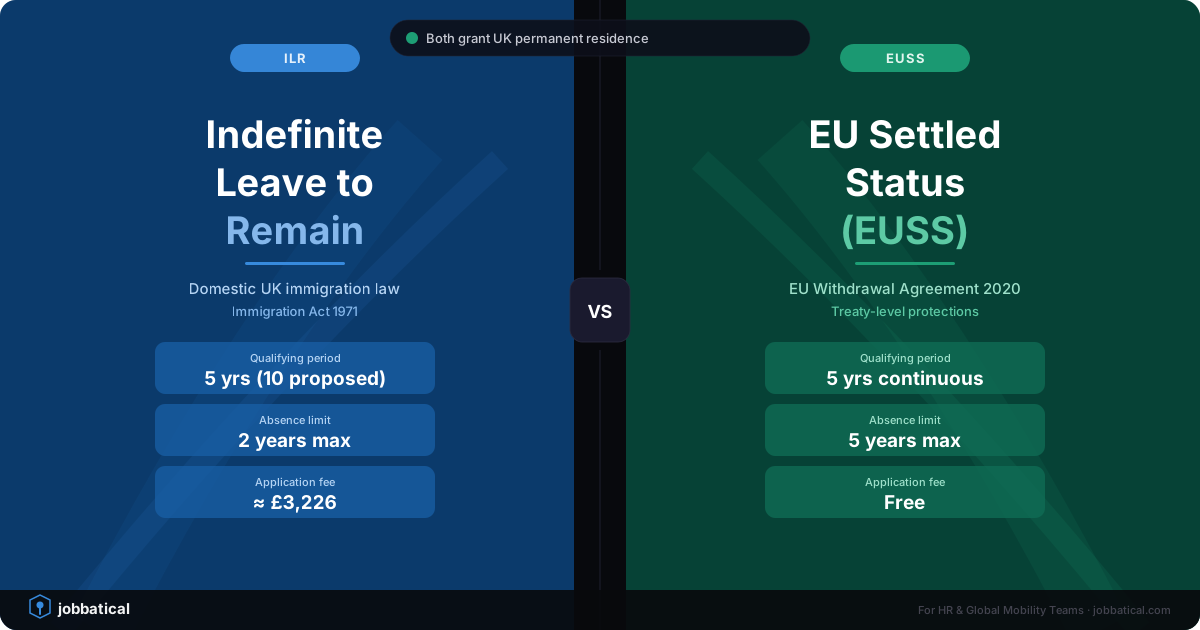
- ILR and EU Settled Status both grant permanent UK residence, but they come from different legal frameworks and apply to different employee groups.
- The biggest operational difference for HR: ILR lapses after 2 years abroad; Settled Status allows up to 5 years, a critical distinction for internationally mobile employees.
- Settled Status is completely digital (no BRP card); ILR has transitioned to eVisa, right-to-work checks need to be handled differently for each.
- ILR costs £3,226 (in 2026) per applicant. Settled Status remains free both are employer-relevant when budgeting relocation packages.
- Under the proposed Earned Settlement model, most Skilled Worker visa holders now face a 10-year baseline for ILR HR teams must update workforce planning timelines now.
- For the settlement step that comes before citizenship, see our full guide: How UK employers can support employees through their ILR journey.
ILR is permanent residence granted under the Immigration Rules; settled status is its EU Settlement Scheme equivalent for EEA/Swiss citizens and family. The biggest practical difference: ILR lapses after 2 continuous years outside the UK, settled status after 5.
For HR teams managing international workforces, getting this distinction wrong has real consequences: failed right-to-work checks, status lapses during long overseas assignments, or workforce planning built on outdated settlement timelines.Here's what you need to know.
What Is ILR (Indefinite Leave to Remain)?
Indefinite Leave to Remain is the UK's long-established form of permanent residence under the Immigration Act 1971. It is available to non-UK nationals who have spent a qualifying period in the UK on an eligible visa most commonly the Skilled Worker visa, Global Talent visa, or Spouse/Partner route.
- ILR removes immigration time limits entirely. Once granted, an employee can work for any UK employer without visa restrictions, with no requirement for continued sponsorship from your business.
- The standard qualifying period has been 5 years for most routes but under the UK Government's proposed Earned Settlement framework, most Skilled Worker visa holders will face a 10-year baseline. This is one of the most significant immigration changes in years and directly affects how HR teams should plan long-term workforce retention.
Related reads:
Definitive ILR guide for UK Employers and HRs: Your Step-by-Step Action Guide
Check any employee's absence position instantly: use our free UK ILR eligibility calculator to track the 180-day annual and 540-day total absence limits.
What Is EU Settled Status?
EU Settled Status was created post-Brexit under the EU Settlement Scheme (EUSS) to protect the residence rights of EU, EEA, and Swiss citizens who were living in the UK on or before 31 December 2020. It is granted under the EU (Withdrawal Agreement) Act 2020 -a separate legal framework from domestic UK immigration law.
- Applicants need 5 years of continuous qualifying residence in the UK. Those with fewer than 5 years receive Pre-Settled Status, which converts to full Settled Status once the 5-year threshold is met - provided the employee remains resident in the UK.
- Settled Status applications are free and fully digital. The Home Office verifies residence automatically through HMRC and DWP records in most cases.
Related Reading :
EU Settlement Scheme holders are exempt from the new 10-year baseline: here's how the ILR qualifying period is shifting from 5 to 10 years.
ILR vs Settled Status: The Key Differences at a Glance
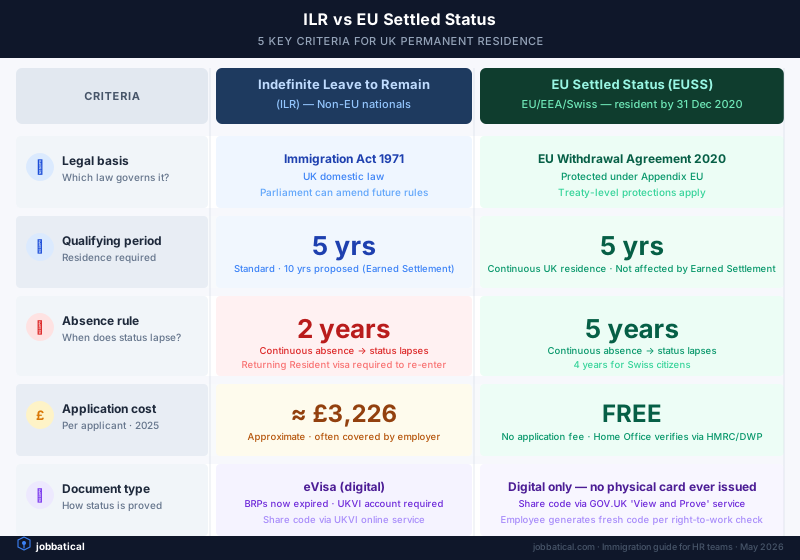
ILR vs EU Settled Status - Comparison Table
The Absence Rule: Why This Matters for Mobile Employees
An ILR holder who spends more than 2 continuous years outside the UK automatically loses their status. To return and live in the UK, they would need to apply for a Returning Resident visa - a complex application with no guarantee of success.
An employee with EU Settled Status faces a 5-year absence threshold before status lapse. This makes Settled Status far more resilient for employees on extended international assignments, secondments, or those who take career breaks abroad.
If you have ILR-holding employees in globally mobile roles, absence tracking is not optional. Build it into your immigration compliance programme.
Read more about UK ILR earned settlement rules.
How long can an employee stay outside UK before their status lapses?
.svg)
Right-to-Work Checks: What has Changed
EU Settled Status has always been digital-only. Employees generate a share code via the GOV.UK 'View and Prove' service, which the employer uses to verify their right to work. There is no physical card or document.
ILR was historically evidenced by a Biometric Residence Permit (BRP) card. The Home Office ihas replaced BRPs with eVisas across the board. All ILR holders need a UKVI digital account to prove their status. All BRPs are now expired.
Action for HR: Update your right-to-work procedures now. Ensure hiring managers know how to process share codes and eVisa confirmations, and do not ask for physical BRP cards as the primary evidence. Doing so creates compliance risk.
For the exact post-grant workflow, see our checklist: how to redo the right-to-work check after ILR is granted.
Background on the digital shift: the UK eVisa transition and UKVI account requirements for employers.
The Earned Settlement Reforms: What HR Needs to Know
In May 2025, the UK Government published its Immigration White Paper, proposing a major overhaul of the path to ILR. The headline change: most Skilled Worker visa holders will face a 10-year baseline qualifying period for ILR, up from 5 years.
Reductions are possible under an "Earned Settlement" model based on economic contribution, integration, and conduct but these are discretionary, not automatic.
Crucially, EU Settled Status holders are protected under the Withdrawal Agreement and are not subject to this change. Pre-Settled Status holders still transition to Settled Status after 5 years of residence.
For HR teams sponsoring Skilled Worker visa holders, the implications are significant:
- Sponsored employees will remain dependent on your licence for longer, increasing your compliance obligations and costs.
- The Immigration Skills Charge, which employers pay annually per sponsored worker, is rising by 32% - a longer road to ILR means higher cumulative costs.
- Retention strategies need updating. Employees previously expecting ILR eligibility in 5 years may now be looking at 10.
Read more:
Understand Eligibility and Salary Requirements for ILR Eligibility: 5 vs 10 Year Route
Practical Steps for HR Teams
Understanding the ILR vs Settled Status distinction directly shapes how you support, retain, and plan for international talent.
- Audit your workforce. Know which employees hold ILR vs Settled Status vs Pre-Settled Status. Their timelines, absence limits, and documentation needs are different.
- Update right-to-work procedures. Ensure your team can handle digital-only verification for both Settled Status share codes and ILR eVisas.
- Track absences for ILR holders. A 2-year continuous absence lapses ILR this risk is manageable with proper tracking systems in place.
- Prepare for 10-year ILR timelines. If you sponsor Skilled Workers, update your retention plans and budget for extended sponsorship costs under the proposed Earned Settlement model.
- Communicate changes to employees. Many employees are unaware of the differences between their statuses and what the recent reforms mean for their settlement plans.
Next milestone after settlement: ILR vs British citizenship: what UK employers need to know.
When employees are ready to file: our step-by-step UK ILR SET(O) form guide for HRs.
How Jobbatical Service and Platform Help UK Employers with ILR service and Right to Work checks
Jobbatical's immigration platform helps HR and global mobility teams track employee settlement timelines, manage right-to-work documentation, and stay ahead of compliance changes - all in one place.
- If an ILR-eligible employee is facing a visa expiry or a fixed start date, our ILR priority and super priority service guide explains how to cut the standard wait to five working days or next-day.
- Need the full settlement service? Explore Jobbatical's UK Indefinite Leave to Remain (ILR) support.
Disclaimer: Immigration rules change quite frequently; please verify with official sources or contact us for the latest info before making any decisions.
Frequently Asked Questions: ILR vs EU Settled Status UK
What is the main difference between ILR and EU Settled Status?
ILR (Indefinite Leave to Remain) is a domestic UK immigration status available to non-EU nationals and some EU nationals on qualifying visa routes. EU Settled Status was created post-Brexit under the EU Settlement Scheme for EU, EEA, and Swiss citizens resident in the UK by 31 December 2020. Both grant permanent residence rights, but they follow different rules on absence, documentation, and cost.
Can an employee with EU Settled Status lose their status if they travel abroad?
Yes, but the absence threshold is generous. EU Settled Status lapses after 5 continuous years outside the UK (4 years for Swiss citizens). This makes it significantly more travel-friendly than ILR, which lapses after just 2 continuous years abroad — an important consideration for employees on long international assignments.
How do right-to-work checks differ for ILR vs Settled Status holders?
Settled Status is entirely digital — employees must generate a share code via the GOV.UK 'View and Prove' service for every right-to-work check. ILR holders are transitioning to eVisas by end of 2025, meaning both groups will eventually use digital verification. HR teams should ensure their right-to-work processes are adapted for the digital-only environment.
Does EU Settled Status require employer sponsorship?
No. Employees with EU Settled Status or ILR have the right to work for any UK employer without sponsorship. This removes the compliance burden of Skilled Worker visa sponsorship for your business — no Certificate of Sponsorship, no sponsor licence obligations, and no salary threshold requirements tied to the role.
How does the proposed 10-year ILR route affect EU Settled Status holders?
EU Settled Status holders are protected under the Withdrawal Agreement and are not subject to the new 10-year baseline introduced by the Earned Settlement proposals. The 10-year route primarily affects Points Based System migrants such as Skilled Worker visa holders. Pre-Settled Status holders still transition to full Settled Status after 5 years of qualifying residence.
What does ILR cost and who pays for it?
The ILR application fee is £3,226 per applicant as of April 2026. EU Settled Status applications remain free of charge. Many employers choose to cover ILR fees as part of their immigration benefit package to support retention of long-serving international employees. This is worth including in your global mobility policy review.
Can ILR holders apply for British citizenship?
Yes. Both ILR and Settled Status holders can apply for British citizenship after 12 months of holding their permanent status, subject to meeting additional requirements including English language, Life in the UK Test, and good character criteria. Citizenship removes the immigration compliance risk for employers entirely, as the employee no longer requires any immigration permission to work.

.svg)
.svg)