

Key Takeaways: Saudi Work Permit Suspension
- Saudi Arabia now automatically suspends work permits when monthly GOSI payments don't match the job title registered in Qiwa — payroll and immigration must be fully aligned.
- A mismatch between what your employee's Qiwa profile says and what your GOSI filings show can trigger a suspension without any warning.
- As an HR team, you must audit every employee's Qiwa job title against their GOSI registration before the next payment cycle.
- Fixing a suspended permit is time-consuming and costly — prevention through monthly cross-checks is far simpler.
- Jobbatical automates compliance monitoring across Qiwa and GOSI so your team catches mismatches before they become a crisis.
If your employees are on Saudi work permits, there is a compliance check running in the background every single month — and most HR teams don't know it's there until something breaks.
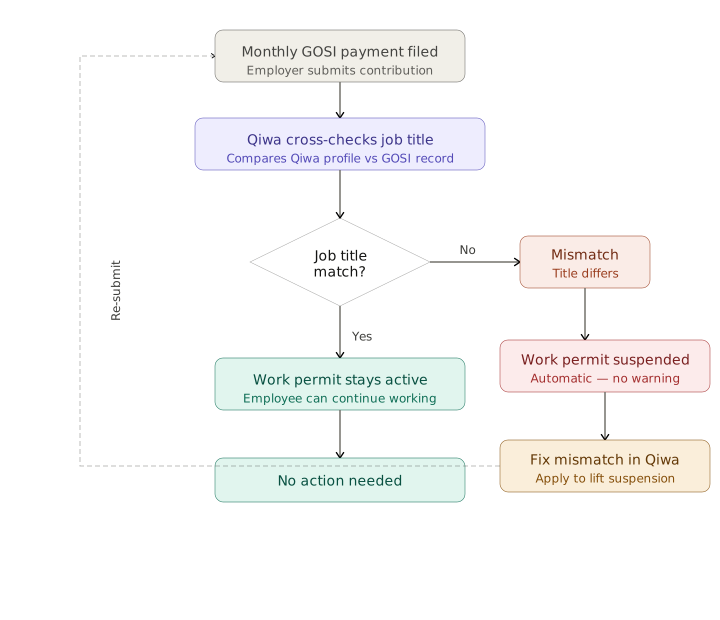
Saudi Arabia's Qiwa platform is now directly linked to GOSI (General Organization for Social Insurance). Every month, when you file your GOSI contributions, the system checks whether the job title on your employee's work permit matches the occupational category in your GOSI report. If they don't match, the work permit can be automatically suspended.
No warning. No grace period. Just a suspended permit.
How Saudi Arabia Qiwa GOSI link triggers automatic work permit suspension
Why This Matters for Your Company
Saudi Arabia has spent the last two years tightening the link between immigration records and employment data. The Qiwa-GOSI integration is part of that push. It ensures that the role your employee was sponsored to do — the one on their work permit — is actually the role they're being paid and insured for.
In theory, this sounds reasonable. In practice, it creates a serious compliance risk for companies that manage job titles loosely or use generic occupation codes when filing GOSI each month.
A common example: your employee is registered on Qiwa as a "software engineer" (under a specific SSCO code), but your payroll team files GOSI contributions under a broader "IT technician" category. That mismatch is enough to trigger a suspension.
Another common case: an employee gets an internal promotion or a title change, the Qiwa profile is updated, but the GOSI filing still reflects the old occupation. One missed month is all it takes.
What Happens When a Permit Gets Suspended
A suspended work permit means your employee cannot legally work in Saudi Arabia until the issue is resolved. Depending on their Iqama status, it can also affect their residency and their ability to leave and re-enter the country.
Resolving the suspension isn't quick. You need to correct the mismatch — either by updating the job title on Qiwa (subject to the profession change restrictions introduced in early 2026) or by correcting the GOSI record — and then apply to lift the suspension. This can take weeks. During that time, your employee is in legal limbo.
The faster path is making sure it never happens. See how Jobbatical helps HR teams stay ahead of Saudi Arabia's work permit and Iqama compliance requirements.
What You Need to Check Right Now
If you have employees on Saudi work permits, run through this audit before your next GOSI payment cycle:
Note: if your employee's job title has changed recently, verify whether the new title is still open to expatriates under the current Qiwa rules. Some roles — including certain senior commercial titles — now require additional justification or Commercial Registration alignment. Our FAQ on how GOSI compliance affects your employees' social insurance in Saudi Arabia covers the specifics.
The Bigger Compliance Picture
The Qiwa-GOSI link is one piece of a much larger compliance framework. As of April 2026, how Qiwa now links contracts, GOSI, and Nitaqat in one compliance check means that a GOSI mismatch doesn't just risk a work permit suspension — it can knock Saudi nationals off your Nitaqat score, affecting how your Nitaqat band affects your ability to sponsor new work permits for the next hiring cycle. And if your team is growing, Saudi Arabia's 2026 skill tier system on Qiwa means the Tier 1–3 classification of each role must be consistently reflected in both Qiwa and GOSI — another source of mismatch most HR teams don't know to check.
For companies with a handful of employees in Saudi Arabia, this is manageable with careful monthly checks. For companies with 20, 50, or 100+ employees on Saudi permits, it becomes a full-time monitoring task.
That's the gap Jobbatical fills. Our platform tracks each employee's permit status, monitors GOSI alignment, and flags discrepancies before they become suspensions. Your team doesn't need to manually cross-check Qiwa and GOSI every month — the system does it for you.
If your employees are due for Iqama renewals or you're onboarding new hires to Saudi Arabia, this is the right moment to get your Qiwa and GOSI records fully aligned.

Disclaimer: Immigration rules change quite frequently; please verify with official sources or contact us for the latest info before making any decisions.
Frequently Asked Questions — Saudi Arabia Qiwa GOSI Link and Work Permit Suspension
What is the Qiwa GOSI link in Saudi Arabia?
The Qiwa GOSI link is a live data connection between the Ministry of Human Resources' Qiwa platform and the General Organization for Social Insurance (GOSI). It allows the system to automatically check whether your monthly GOSI contributions match the job title registered on your employee's work permit. If they don't match, the permit can be suspended automatically.
Why would my employee's work permit get suspended through the Qiwa GOSI link?
A suspension happens when the job title listed on your employee's Qiwa work permit does not match the occupation category recorded in your monthly GOSI filing. This mismatch signals to the system that the employee may be working outside the role they were sponsored for. The suspension is automatic — you may not receive advance notice.
How do I check if my employee's Qiwa job title matches their GOSI filing?
Log in to your company's Qiwa employer dashboard and view each employee's registered profession under their work permit. Then compare this against the occupation code submitted in your most recent GOSI monthly report. Both must use the same Saudi Standard Classification of Occupations (SSCO) code. If they differ, you need to correct one or both records before your next GOSI payment cycle.
Can I fix a suspended work permit after the Qiwa GOSI mismatch?
Yes, but it requires correcting the underlying mismatch first — either updating the Qiwa job title (if the profession change rules allow it) or correcting the GOSI filing. Once the records are aligned, you can apply to lift the suspension through Qiwa. This process takes time and can leave your employee unable to work legally during the resolution period, which is why prevention is critical.
Does the Qiwa GOSI link affect all work permit holders in Saudi Arabia?
Yes. All private-sector foreign employees sponsored through Qiwa and registered with GOSI are subject to this cross-check. It applies regardless of nationality, skill tier, or how long the employee has been in Saudi Arabia. Companies with large teams should treat this as a monthly compliance task rather than a one-time check.
What is the contribution rate for GOSI in Saudi Arabia?
For expatriate employees, the total GOSI contribution is 2% of salary — covering occupational hazard insurance only. For Saudi nationals, the total is 21.5%: the employer contributes 9% and the employee contributes 12.5% toward pension and other social insurance branches. These must be filed monthly through the GOSI portal and must reflect the correct occupational classification.

.svg)
.svg)