


KEY TAKEAWAYS
- German-based employers relocating staff to Saudi Arabia must navigate two separate immigration systems — German exit formalities and KSA’s employer-sponsored work permit process via Qiwa and MOFA.
- Saudi Arabia’s 2026 skill-based classification (High-Skilled, Skilled, Basic) directly determines the work permit tier, required salary, and Iqama eligibility for German employees.
- Nitaqat (Saudization) compliance is mandatory — European HR teams must check their company’s Nitaqat band before initiating any new foreign hire quota in KSA.
- German credential attestation (Apostille + Arabic translation + MOFA legalisation) is a critical bottleneck — starting this process early reduces relocation delays by 3–4 weeks.
- End-to-end timelines for a Germany-to-KSA relocation typically run 6–12 weeks; professional immigration support cuts that significantly
As Saudi Arabia accelerates its Vision 2030 transformation, demand for European professionals — particularly from Germany — is rising in sectors like engineering, energy, healthcare, and finance. For HR and global mobility teams based in Europe, relocating employees from Germany to Saudi Arabia involves managing two distinct immigration frameworks simultaneously: German exit formalities and Saudi Arabia’s employer-sponsored work permit system.
This guide is written specifically for European HR professionals who need a practical, actionable roadmap for Germany-to-KSA employee relocations in 2026.
Why Germany-to-Saudi Arabia Relocations Require a Dual-System Approach
Unlike intra-EU moves, a Germany-to-KSA relocation triggers compliance obligations in both countries. On the German side, the departing employee must complete address deregistration (Abmeldung), manage health insurance termination or continuation, and resolve tax residency status. On the Saudi side, the sponsoring employer — not the employee — drives every step of the work permit process.
European HR teams unfamiliar with Saudi Arabia’s Kafala (sponsorship) system often underestimate the employer’s central role. Every work authorisation must be initiated by the Saudi-registered entity, approved by the Ministry of Human Resources and Social Development (MHRSD), and managed through the Qiwa platform.
Step 1: Verify Your Company’s Nitaqat Band Before Anything Else
Before committing to a hire or issuing an employment offer, your Saudi-registered entity must confirm its Nitaqat (Saudization) compliance band. Nitaqat assigns companies to one of four bands — Platinum, Green, Yellow, or Red — based on the ratio of Saudi nationals in the workforce. Companies in Yellow or Red bands are blocked from sponsoring new foreign worker visas.
European HR teams managing a Saudi entity for the first time are frequently surprised by this requirement. Log in to the Qiwa platform and check your Nitaqat score before starting any relocation planning. If your band is at risk, consult an immigration specialist on strategies to improve it before proceeding.
Qiwa platform Nitaqat compliance dashboard for employers.

For detailed guidance on Qiwa’s electronic contract requirements and how they affect Nitaqat scores, see Jobbatical’s 2026 Qiwa Nitaqat compliance update.
Step 2: Classify the Role Under Saudi’s Skill-Based System
Since 2025, Saudi Arabia classifies all foreign work permit applications under the Saudi Standard Classification of Occupations (SSCO). European HR teams must assign the correct tier before applying for a block visa quota. Incorrect classification leads to fines, hiring restrictions, or permit suspensions.
Saudi Arabia SSCO Skill Tiers for Work Permit Applications
Saudi Arabia SSCO skill classification tiers for European HR teams
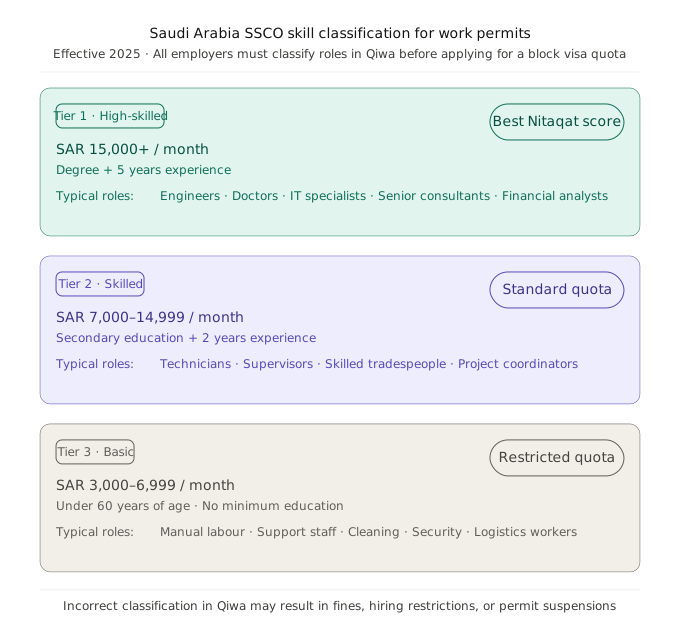
Most German professionals relocating for Vision 2030 projects fall into the High-Skilled tier. Correctly classifying roles in Qiwa before block visa application is non-negotiable. For senior or executive roles, see Jobbatical’s high-skilled Saudi work visa processing services.
Step 3: Initiate the Block Visa Quota and MOFA Authorisation
With Nitaqat compliance confirmed and the role classified, the employer applies for a block visa quota through MHRSD via Qiwa. This quota authorises the company to sponsor a set number of foreign workers in that skill tier. Once approved, the employer then obtains visa authorisation from the Ministry of Foreign Affairs (MOFA) and issues a formal invitation letter to the employee.
The MOFA invitation letter must include the employee’s skill classification details. The employee then uses this letter to apply for visa stamping at the Saudi Embassy in Germany (typically in Berlin or other German cities with Saudi consular representation).
Step 4: German Document Attestation — The Critical Bottleneck
This is the step that most commonly delays Germany-to-KSA relocations. German documents submitted for Saudi visa and Iqama processing must meet strict authentication requirements. Skipping or rushing any layer causes rejections and resets the clock.
German Document Attestation Requirements for Saudi Arabia
HR teams should start the attestation process as soon as the employee’s offer is accepted — ideally 6–8 weeks before the intended start date. A complete document checklist is available in Jobbatical’s Saudi visa document checklist for 2026.
Step 5: Work Permit Issuance and Entry Visa Stamping
Once MOFA authorisation is granted and documents are attested, the employee applies in person at the Saudi Embassy in Germany. Processing typically takes 2–4 weeks. Upon visa approval, the employee travels to Saudi Arabia as a work visa holder.
It is important to note that the work visa is not the final permit. It authorises entry for the purpose of employment. The Iqama — the mandatory residency card — must be applied for and issued within 90 days of arrival.
Step 6: Iqama Issuance — The Foundation of Legal Employment in KSA
The Iqama is the legal identity document for all foreign employees in Saudi Arabia. Without it, employees cannot open bank accounts, rent accommodation, obtain a driving licence, or access healthcare as a resident. The employer is legally responsible for applying for the Iqama via the Muqeem platform within 90 days of the employee’s arrival.
For a full breakdown of Iqama requirements, timelines, and renewal obligations, refer to Jobbatical’s Saudi Iqama residency permit guide.
Employer Compliance Checklist for European HR Teams
European HR teams managing Saudi relocations for the first time should work through this compliance checklist before and during each relocation. Missing any step risks permit delays, fines, or blocked quota access.
Germany-to-Saudi Arabia HR Compliance Checklist
Total Cost and Timeline Estimate
European HR teams budgeting for a Germany-to-KSA relocation should plan for both direct immigration fees and the time cost of the process. The figures below are indicative for a single High-Skilled tier employee.
Indicative Cost and Timeline for Germany-to-Saudi Arabia Work Permit
Germany to Saudi Arabia employee relocation timeline for Employer teams
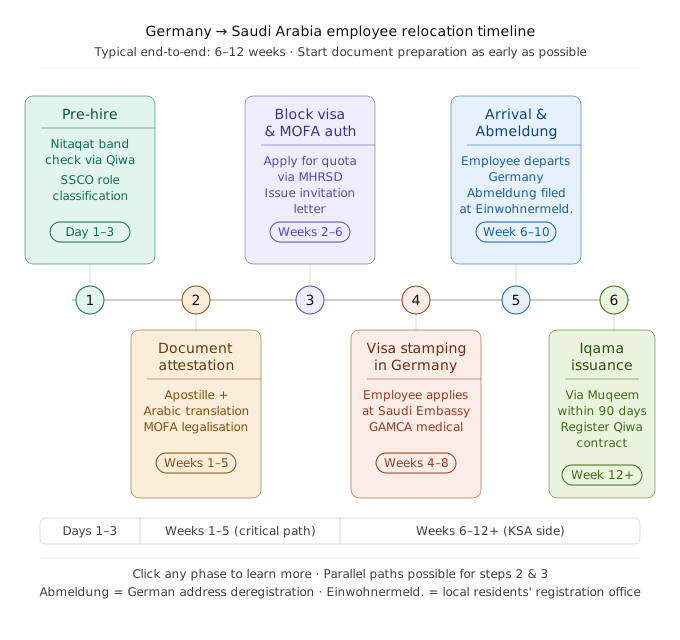
How Jobbatical Supports Germany-to-Saudi Arabia Relocations
Managing a Germany-to-KSA relocation across two regulatory systems is complex. Jobbatical’s global mobility platform combines immigration expertise with automation to handle every step: Nitaqat compliance checks, document attestation coordination, Qiwa and MOFA applications, Iqama issuance, and ongoing permit renewal tracking.
With 15,000+ successful relocations and a guaranteed compliance model, Jobbatical helps European HR teams move talent into Saudi Arabia faster and with significantly less administrative burden. Book a demo to see how the platform handles your KSA mobility programme end to end.
For broader context on hiring and relocating employees to KSA, see Jobbatical’s HR-focused guide to relocating employees to Saudi Arabia and the Saudi Arabia work visa and residence permit guide for 2026.
Disclaimer: Immigration rules change quite frequently; please verify with official sources or contact us for the latest info before making any decisions.
Frequently Asked Questions — Germany to Saudi Arabia Employee Relocation Work Permit
Can a German-passport holder apply for a Saudi work visa directly without employer sponsorship?
No. Saudi Arabia operates a strict employer-sponsorship (Kafala) system. Only a registered Saudi employer can initiate a work permit application via the Qiwa platform. Individual self-sponsorship is not permitted for standard employment visas, regardless of the employee’s nationality.
Do German university degrees and vocational qualifications need to be attested for Saudi Arabia?
Yes. German academic certificates must be apostilled through the competent German authority, professionally translated into Arabic by a certified translator, and then legalised through the Saudi MOFA. For regulated professions (engineering, medicine, education), additional verification by the relevant Saudi licensing body is required.
What is the typical end-to-end timeline for relocating an employee from Germany to Saudi Arabia?
Most Germany-to-KSA relocations take 6–12 weeks in total. Document attestation alone can take 3–5 weeks. Work permit and block visa approval via MHRSD typically adds 2–6 weeks. Iqama issuance after arrival must be completed within 90 days. Starting document preparation early is the single biggest factor in reducing overall timelines.
How does the Nitaqat system affect a European company’s ability to hire foreign employees in Saudi Arabia?
Nitaqat assigns a compliance band (Platinum, Green, Yellow, Red) to each Saudi-registered employer based on their ratio of Saudi nationals to foreign workers. Companies in Yellow or Red bands cannot sponsor new work permits. European HR teams must verify their entity’s Nitaqat band via Qiwa before committing to any new KSA hire.
Does the employee need to deregister in Germany before relocating to Saudi Arabia?
Yes. Employees permanently leaving Germany should file a deregistration (Abmeldung) at their local Einwohnermeldeamt, ideally within two weeks of departure. This affects German tax residency and social insurance obligations. HR teams should coordinate payroll and benefits offboarding in Germany alongside the Saudi onboarding process.
Can an employee’s family relocate to Saudi Arabia at the same time?
Dependent visas for spouses and children can only be applied for after the primary employee’s Iqama has been issued. HR teams should plan family relocation as a second phase, typically 4–8 weeks after the employee’s arrival. The sponsoring employer must verify via Qiwa that the employee earns at least SAR 5,000 per month to sponsor dependents.
Which Saudi government platforms do European HR teams need to use for the work permit process?
European employers need accounts on three main platforms: Qiwa (MHRSD) for block visa quotas, work permit management, electronic contracts, and Nitaqat monitoring; MOFA’s visa portal (visa.mofa.gov.sa) for visa authorisation and invitation letters; and Muqeem for Iqama issuance and renewal after the employee arrives in Saudi Arabia.

.svg)
.svg)