.svg)



KEY TAKEAWAYS
- A CoS is a digital record in the Home Office SMS that must be assigned before any sponsored UK work visa can be applied for.
- Defined CoS is for overseas applicants; Undefined CoS is for in-UK switches , using the wrong type triggers automatic visa refusal.
- The 2026 CoS fee is £525 per certificate (Worker route), with total employer-side sponsorship costs typically reaching £1,500–£3,000+ per hire.
- Salary thresholds in 2026 sit at £41,700 minimum for most Skilled Worker roles, or the SOC code going rate if higher.
- HC 1691 (April 2026) brought English language upgrades, revised going rates, and a full eVisa transition deadline of December 2026.
What Is a Certificate of Sponsorship (CoS) ?
A Certificate of Sponsorship is a unique reference number generated in the Home Office Sponsor Management System (SMS). It is not a physical document. It is a digital record that links your company, the specific job role, the SOC code, and the worker being sponsored.
Which Visa Routes Require CoS?
Your company must issue a CoS when sponsoring workers under the following routes:
- Skilled Worker Visa (the most common route for corporate hiring)
- Health and Care Worker Visa
- Senior or Specialist Worker visa (formerly Intra-Company Transfer)
- Temporary Worker routes (Seasonal Worker, Creative Worker, and others)
📌 The CoS reference number goes directly into the worker's visa application. Without it, no application can be submitted to the Home Office.
CoS Eligibility Checklist for UK Sponsors
You cannot issue a CoS without a valid UK Sponsor Licence. That is the non-negotiable starting point. Beyond that, each CoS you assign must satisfy three conditions:
Explore CoS request in details in our Step-by-Step Guide for Employers on How to request Additional CoS .
What is Defined vs. Undefined CoS
When applying for a Certificate of Sponsorship (CoS), it is critical to understand whether your candidate requires a Defined or Undefined CoS, as choosing the wrong category will lead to an immediate application rejection.
For a complete breakdown of how these categories differ, who qualifies for each, and how it impacts your processing timelines, read our comprehensive Defined vs. Undefined Certificate of Sponsorship (CoS) UK guide.
UK CoS and Sponsorship Cost Summary (2026)
Sponsoring international talent involves distinct statutory fees set by the Home Office. As an employer, you must pay the standard fee to assign each individual certificate, alongside the Immigration Skills Charge (ISC) if applicable to the visa route:
- CoS Assignment Fee: For Skilled Worker visas, the CoS Assignment Fee is £525 per certificate.
- Immigration Skills Charge (ISC):
- Small/Charitable Sponsors: £480 for the first 12 months, plus £240 for each additional 6 months.
- Medium/Large Sponsors: £1,320 for the first 12 months, plus £660 for each additional 6 months.
A three-year CoS produces three years plus 14 days of leave, which adds a half-year surcharge of £517.50 per person. The maths is in our UK Immigration Health Surcharge (IHS) Fees 2026 guide
For a full analysis, read our detailed breakdown on UK Certificate of Sponsorship costs.
Certificate of Sponsorship Assignment Process and Realistic Timeline
Here is what the process looks like end-to-end for an overseas Skilled Worker hire:
Once you assign a CoS, you cannot edit it. That’s why it’s important to know which mistakes can be fixed with a sponsor note and which require you to cancel and issue a new CoS. See our guide on how to amend a Certificate of Sponsorship after it is assigned for more details
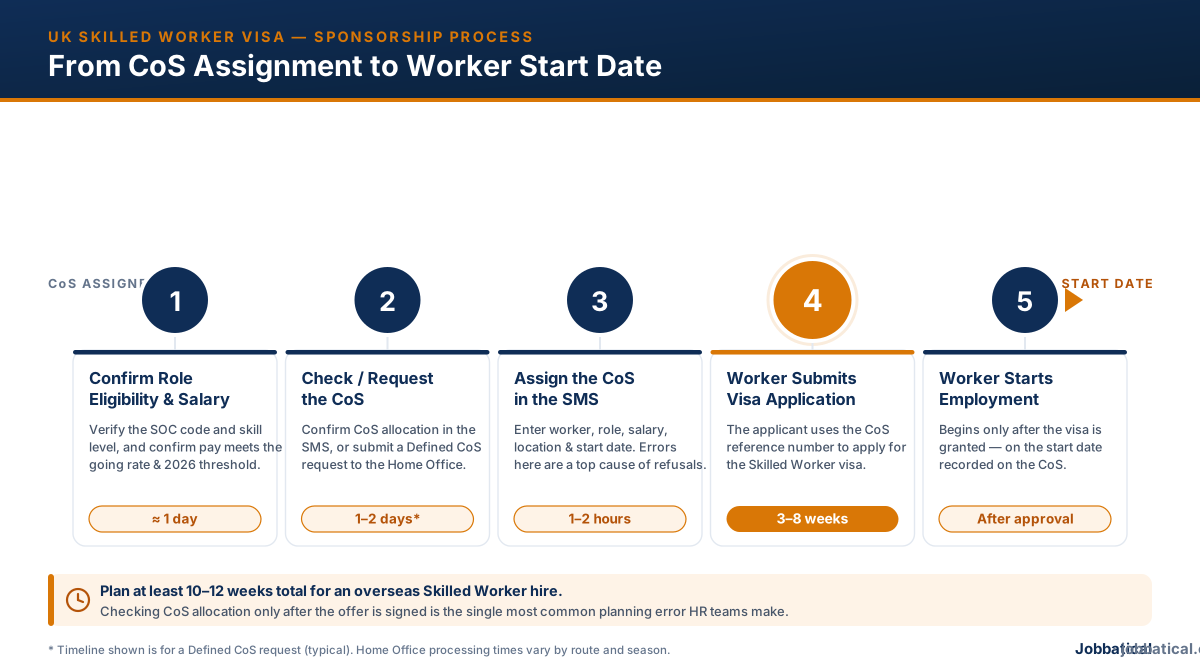
In practice, build at least 10–12 weeks into your hiring timeline for overseas Skilled Worker hires. Waiting until an offer is signed before checking CoS allocation is the single most common planning error HR teams make.
Reasons of Delay in Getting a Certificate of Sponsorship Allocation
Securing your CoS quota or obtaining approval for a Defined CoS can sometimes stall, disrupting your hiring timeline. The most frequent reasons for an allocation delay include:
- Incorrect SOC Code Selection: Choosing an occupation code that does not perfectly mirror the candidate's actual day-to-day duties triggers manual caseworker inspection.
- Failing Salary Thresholds: Not meeting the updated baseline salary thresholds or going rates for the specific role.
- Inadequate Supporting Evidence: Failing to upload requested corporate bank statements, organizational charts, or employment contract proofs via the SMS within the strict submission windows.
- UKVI Backlogs and Missing Priority Slots: High seasonal visa volumes can stretch processing times from 24 hours to several weeks if you cannot secure limited daily priority processing slots.
For deeper guidance on common causes of delay and fixes across multiple hires, see our guide on Why CoS gets delayed.
What Are Employer's Duties After Assigning a CoS?
Issuing the CoS is where your obligations begin, not end. Once a sponsored worker starts, your company must:
- Keep records of each sponsored worker's passport, right-to-work documentation, contact details, and employment terms
- Report employment changes , role, salary, work location , to the Home Office within 10 working days via SMS
- Report company-wide changes (mergers, address updates, key personnel changes) within 20 working days
- Cooperate with Home Office compliance visits, which can arrive unannounced
- Transition all right-to-work checks to eVisa share codes by December 31, 2026, as physical BRPs are being fully phased out
Nearly 2,000 sponsor licences were revoked in 2024–25. Most failures come from poor record-keeping, not intentional misconduct. The risk is operational, and it is manageable with the right processes in place.
For a practical compliance checklist, read our guide to UK sponsor compliance monitoring and common pitfalls.
Key 2026 Changes for HR Teams
Three changes from HC 1691 (effective April 8, 2026) directly affect how you issue and manage CoS:
One further change is still pending rather than confirmed. Our tracker on earned settlement and the proposed ILR reforms sets out the current status and what would follow for sponsors.
Why Hire a B2B Immigration Agency for Applying for CoS?
UK immigration rules are tightening rapidly, with strict compliance checks on pay periods and Appendix D record-keeping. Managing the Sponsor Management System (SMS) in-house drains HR resources and exposes your business to license suspension if mistakes occur.
Partnering with a B2B immigration specialist like Jobbatical simplifies the process and protects your business:
- Save 20–25 hours of HR work per case by outsourcing complex paperwork.
- Eliminate confusion between Defined and Undefined certificates.
- Ensure 100% accuracy, aligning job roles and salaries perfectly with official GOV.UK Visa Sponsorship Rules.
- Protect your sponsor license from compliance penalties while securing faster turnarounds.
Read our guide on Why Business Oursource CoS Management for more details.
Disclaimer: Immigration rules change quite frequently; please verify with official sources or contact us for the latest info before making any decisions.
Frequently Asked Questions : UK Certificate of Sponsorship (CoS) 2026
What is a UK Certificate of Sponsorship (CoS)?
A Certificate of Sponsorship is a unique digital reference number issued by a licensed UK employer via the Sponsor Management System (SMS). It confirms the job role, salary, SOC code, and worker details needed for a sponsored UK work visa application. It is not a physical document.
What is the difference between a Defined and Undefined CoS?
A Defined CoS is for Skilled Worker applicants applying from outside the UK; each one requires individual Home Office approval. An Undefined CoS is for workers already in the UK switching or extending their visa, and comes from your pre-allocated annual SMS quota. Issuing the wrong type results in automatic visa refusal.
How much does a UK CoS cost in 2026?
The CoS assignment fee for the Worker route (including Skilled Worker) is £525 per certificate in 2026. This does not include the Immigration Skills Charge (£480–£1,320 per year depending on employer size) or the worker's visa application fee. Total employer-side costs typically run £1,500–£3,000+ per sponsored hire.
What salary does a Skilled Worker need to meet for CoS to be valid in 2026?
In 2026, the general salary threshold for most Skilled Worker roles is £41,700 per year. However, if the SOC code "going rate" for that specific occupation is higher, that going rate applies instead. Employers must check the going rate for each role before assigning a CoS, not just the general floor.
How long does the CoS and visa process take?
For an overseas Skilled Worker hire, expect 1–2 days for Defined CoS Home Office approval, then 3–8 weeks for visa processing. In practice, most HR teams should build 10–12 weeks into their hiring timeline to account for preparation, document gathering, and standard processing times.
What are the main compliance duties after issuing a CoS?
After issuance, sponsors must maintain worker records (passport, contact details, work status), report employment changes to the Home Office within 10 working days via SMS, and cooperate with compliance visits. From December 2026, all right-to-work checks must use eVisa share codes, as physical BRPs are being phased out.
Do we need a sponsor licence before we can issue a CoS?
Yes. A valid UK Sponsor Licence is the prerequisite for issuing any CoS. Without it, you cannot sponsor overseas workers. Sponsor licences are applied for through the Home Office and typically take 8–12 weeks to process. Once granted, you can begin assigning CoS through the Sponsor Management System.

.svg)
.svg)