

Key Takeaways UK ILR Fast-Track 2026
- Under the UK's earned settlement model, employees earning £125,140+ can qualify for ILR in just 3 years.
- Those earning £50,270–£125,139 qualify for the 5-year fast-track halving the old 10-year baseline.
- Salary alone isn't enough, employees must also meet the Contribution Pillar (£12,570+ personal income for 3–5 years).
- C1 English certification and volunteering credits can shave up to one additional year off the qualifying period.
- HR teams should audit employee salaries now to identify who qualifies for accelerated ILR routes.
UK Earned Settlement Fast-Track: Who Qualifies for 3–5 Year ILR?
The UK's earned settlement model has replaced the automatic 5-year ILR route with a tiered system. For most employees, the baseline is now 10 years. But high-earning Skilled Workers can qualify significantly faster in as little as 3 years.
Here's exactly which employees qualify for accelerated ILR, and what HR teams need to track.
The Fast-Track Tier Framework
The earned settlement model evaluates applicants across residence, contribution, and integration pillars. High earners receive significant timeline reductions from the 10-year baseline based on their taxable annual income over a continuous three-year assessment window.
Salary is the primary qualifier but it's not the only one. All fast-track applicants must also pass the mandatory Contribution Pillar check.
Read here ILR Application Timeline for Skilled Workers: Employment and Residence Requirements in 2026
What is Salary-Based Fast-Track Breakdown
Tier 1 (3-Year Route): High-Earner Criteria
To qualify for the 3-year fast-track, an employee must earn a sustained taxable income of at least £125,140 annually for three consecutive years immediately prior to applying.
- Target Roles: Senior executives, tech leaders, specialized engineering directors, and senior financial officers.
- Evidence Required: 36 consecutive months of PAYE records, P60 forms, and matching personal bank statements confirming salary credits.
- Key Considerations: Bonuses and equity realization can count toward taxable income, but fluctuations that dip below the £125,140 floor during the 3-year window will disqualify the applicant from the 3-year route.
Tier 2 (5-Year Route): Mid-Tier Earner Criteria
Employees earning between £50,270 and £125,139 preserve a 5-year route to ILR, effectively halving the 10-year baseline.
- Target Roles: Mid-to-senior software engineers, healthcare specialists (RQF 6+), management consultants, and experienced sponsored staff.
- Evidence Required: Continuous employer sponsorship records and annual P60s reflecting gross earnings above the higher-rate tax threshold.
UK ILR fast-track salary tiers infographic for HR teams

The Contribution Pillar Checklist
High salary alone will not guarantee fast-track processing. Under the mandatory Contribution Pillar, every fast-track applicant must demonstrate an individual personal income of at least £12,570 per year across their entire qualifying period.
- Individual Income Only: Household or spousal income cannot be combined to meet this threshold.
- No Earnings Gaps: An employee earning £150,000 in Year 3 but who took unpaid leave or had income gaps in Year 1 or Year 2 risks failing the Contribution Pillar check.
- Clean Tax Record: Zero outstanding National Insurance or HMRC debts.
Additional Timeline Reductions: C1 English & Volunteering
Applicants on the 5-year route can achieve further reductions by demonstrating advanced integration.
- C1 English Language Credit: While B2 level English is the new mandatory baseline for standard settlement, obtaining a certified C1 English qualification shaves 1 additional year off the qualifying period.
- Volunteering & Community Contributions: Formally verified volunteering activities with registered UK charities can grant incremental timeline credits.
Example: A Tier 2 employee on a 5-year route who holds a certified C1 English qualification can reduce their ILR timeline down to 4 years.
UK ILR qualifying period timeline with English language credit reduction
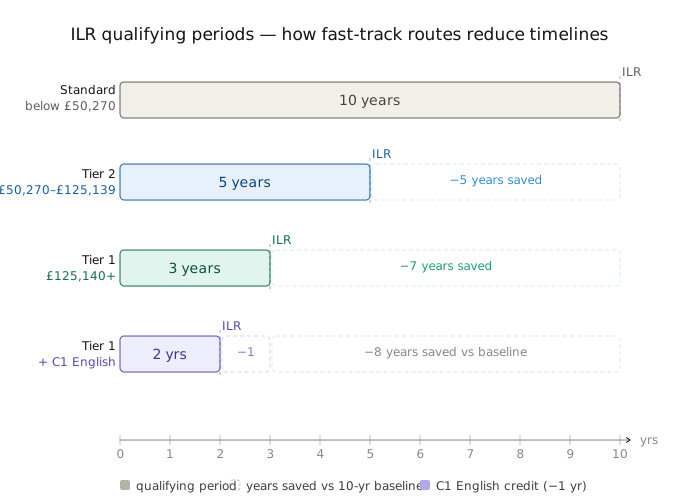
For a Tier 2 employee on a 5-year route, a C1 English credit could bring the qualifying period down to 4 years. It's worth encouraging eligible employees to pursue certification early.
What About ICT Visa Holders?
Fast-track routes are currently structured for Skilled Worker visa holders. Intra-Company Transfer (ICT) visa holders face different qualifying criteria and should be assessed individually. HR teams managing mixed visa cohorts must map each employee to the correct route.
See our ILR priority and super priority service guide for 5-day and next-day processing options.
Actionable Steps for HR Teams & High Earners
To maximize employee retention and eliminate settlement friction, global mobility teams should take four immediate steps:
- Audit Compensation Tiers: Review current sponsored employees against the £50,270 and £125,140 benchmarks. Adjust salary structures where minor increases can unlock 3- or 5-year eligibility.
- Track PAYE Consistency: Maintain continuous payroll records from day one of sponsorship to ensure no dips occur below the £12,570 Contribution Pillar threshold.
- Sponsor C1 Language Certification: Encourage and sponsor employees on the 5-year path to complete C1-level English tests early to accelerate their settlement date.
- Monitor Absence Limits: Ensure high earners do not exceed the strict continuous residence absence caps (maximum 180 days in any 12-month period).
Need to understand general baseline rules, continuous residence limits, or penalty extensions? Read our complete guide to the UK ILR eligibility: 5-year vs 10-year routes.
Disclaimer: Immigration rules change quite frequently; please verify with official sources or contact us for the latest info before making any decisions.
Frequently Asked Questions : UK ILR Earned Settlement Fast-Track

.svg)
.svg)