

KEY TAKEAWAYS
- Spain work permits and residence permits are legally distinct — most non-EU employees need both, not one or the other.
- The correct permit combination depends on the employee's role, salary, and company size — one wrong choice delays the hire by months.
- The EU Blue Card, Intra-Company Transfer, and Digital Nomad Visa each follow different permit pathways with different timelines.
- Employers bear the application responsibility in most Spanish work authorisation routes — HR errors are a leading cause of rejections.
- Jobbatical's eligibility checker maps your hire's profile to the right permit route in minutes, removing costly guesswork.
Spain Work Permit vs Residence Permit: The Core Difference
These two documents serve different legal purposes and are often confused because they're frequently processed together.
- A work permit (autorización de trabajo) is issued by Spanish authorities and gives a foreign national the legal right to perform paid employment on Spanish soil. It's tied to a specific employer, job type, and duration.
- A residence permit (autorización de residencia) gives that same person the right to legally live in Spain for longer than 90 days. Without it, they can't stay in the country to do the job the work permit authorises.
Most routes combine both into a single "residence and work permit" (autorización de residencia y trabajo). But some specialist routes — like the EU Blue Card or the ICT permit — have their own structures. And the Digital Nomad Visa is technically a residence-only permit, because the work is for a non-Spanish employer.
┈┈┈┈┈┈┈┈┈┈┈┈┈┈┈┈┈┈┈┈┈┈┈┈┈┈┈┈┈┈┈┈┈┈┈┈┈┈┈┈┈┈┈┈┈┈┈
Which Permit Does Your Employee Actually Need?
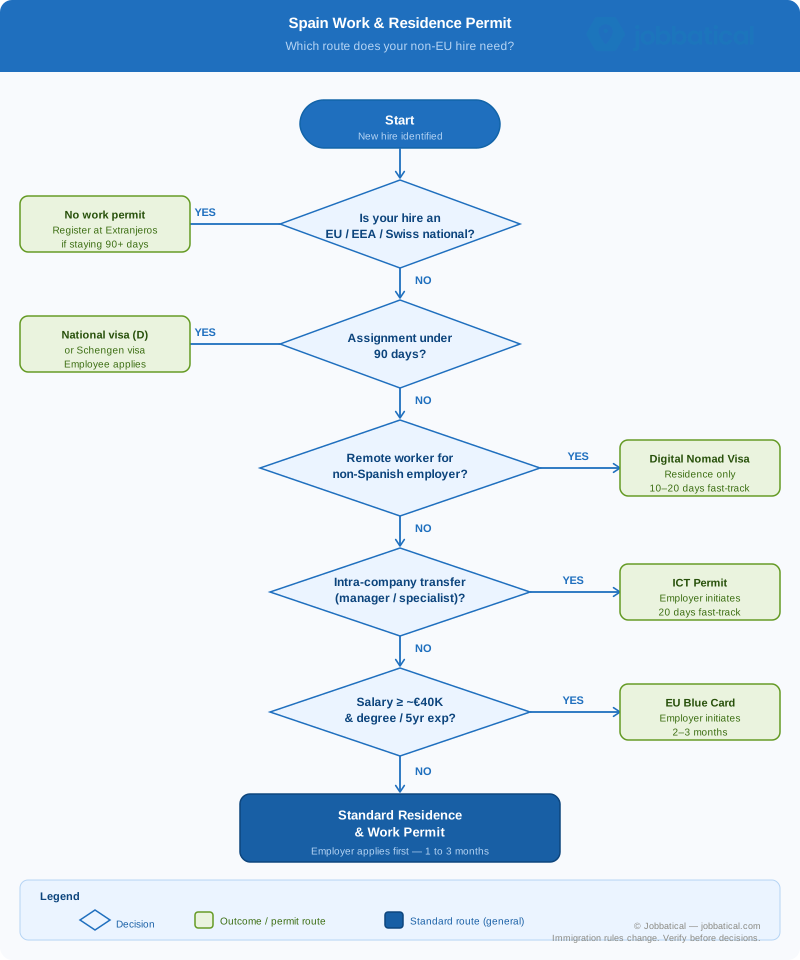
The right route depends on four things: nationality, role type, salary, and whether your company is transferring or hiring new. Use the table below as your first decision filter.
Spain Permit Route by Employee Profile
┈┈┈┈┈┈┈┈┈┈┈┈┈┈┈┈┈┈┈┈┈┈┈┈┈┈┈┈┈┈┈┈┈┈┈┈┈┈┈┈┈┈┈┈┈┈┈
Choosing The Correct Spain Work and Residence Permit route by Employee Profile.
┈┈┈┈┈┈┈┈┈┈┈┈┈┈┈┈┈┈┈┈┈┈┈┈┈┈┈┈┈┈┈┈┈┈┈┈┈┈┈┈┈┈┈┈┈┈┈
Common Mistakes that Employer make in Deciding the Permit type (Spain Work Permit & Residence Permit)
- Applying for the wrong route — costs months and misses Beckham Law tax benefits
- Letting employees start before permit approval is confirmed in writing
- Submitting incomplete document packages
- Missing the 30-day TIE registration window after the employee enters Spain
- Using outdated Blue Card salary thresholds
┈┈┈┈┈┈┈┈┈┈┈┈┈┈┈┈┈┈┈┈┈┈┈┈┈┈┈┈┈┈┈┈┈┈┈┈┈┈┈┈┈┈┈┈┈┈┈
The Full Sequence: How Both Permits Get Issued Together (Spain Work Permit & Residence Permit)
For most non-EU hires the work permit and residence permit aren't two separate applications. They move through one linked chain that starts with your company, not the employee. Knowing the order tells HR exactly when the hire can legally travel, land, and start.
- Employer files first, in Spain: Your company (or its representative) lodges the combined residence-and-work authorisation at the provincial Oficina de Extranjería or the UGE-CE, and the employee does nothing at this stage.
- Consular visa comes second, abroad: Once the authorisation is granted, the employee applies for the work visa at the Spanish consulate in their home country, usually within one month of the approval notice.
- Entry then TIE, within 30 days: After arriving in Spain the employee books a cita previa and applies for the TIE card within the first month to convert the visa into a physical residence card.
- Social Security registration on day one: The employer must register the worker with Social Security before their first working day, a step separate from the permit itself.
- Where routes diverge: Fast-track profiles like the EU Blue Card and the ICT permit run through the UGE-CE and skip parts of this chain, which is why their timelines are shorter.
┈┈┈┈┈┈┈┈┈┈┈┈┈┈┈┈┈┈┈┈┈┈┈┈┈┈┈┈┈┈┈┈┈┈┈┈┈┈┈┈┈┈┈┈┈┈┈
What This Costs and Who Pays: An Employer Snapshot (Spain Work Permit & Residence Permit)
Government fees for the two permits are modest and mostly land on the employer, but the real budget line is time, not tasas. Build the buffer in early so an onboarding date doesn't slip.
- The processing fee (Tasa 790): The residence-and-work authorisation is paid via Form 790, with the employer covering the fee tied to the offered salary; Blue Card and HQP routes use a different code within the same form.
- The employer usually pays the work portion: Under Spanish rules the work authorisation fee is the company's responsibility, while the employee typically covers their own TIE card fee.
- Get exact figures before filing: Amounts change with the annual state budget, so confirm the live rate on the Sede Electrónica. Our Spain change of permit guide breaks down the current 790-052 versus 790-062 split.
- The bigger cost is delay: A wrong route or an incomplete pack can add months, so the practical spend to manage is timeline risk, not the fee itself.
- Check the profile before you budget: Run the hire through Jobbatical's Spain work and residence permit eligibility checker so you're pricing the correct route from the start.
┈┈┈┈┈┈┈┈┈┈┈┈┈┈┈┈┈┈┈┈┈┈┈┈┈┈┈┈┈┈┈┈┈┈┈┈┈┈┈┈┈┈┈┈┈┈┈
How Jobbatical Removes the Guesswork
Spain's permit landscape is complicated because the right answer depends on many variables that interact with each other: nationality, salary, role level, company structure, and timeline. Jobbatical's immigration platform maps all of those variables automatically. Our experts have managed thousands of Spain relocations and know exactly which route applies, which documents to prepare first, and how to keep the process on track.
Not sure which route fits your hire? Book a demo to use our Spain Work & Residence Permit Eligibility Checker and get a route recommendation in minutes.
Disclaimer: Immigration rules change quite frequently; please verify with official sources or contact us for the latest info before making any decisions.
Frequently Asked Questions — Spain Work Permit vs Residence Permit
Do employees in Spain need both a work permit and a residence permit?
In most cases, yes. Non-EU employees relocating to Spain for work need both a work authorisation and a residence permit. In practice, these are often combined into a single application — the residence and work permit (autorización de residencia y trabajo) — but they remain legally distinct documents with separate requirements.
What is the difference between a work permit and a residence permit in Spain?
A work permit (autorización de trabajo) grants the legal right to perform paid employment. A residence permit (autorización de residencia) grants the right to live in Spain for more than 90 days. Most hired employees require both. Some categories — like the Digital Nomad Visa — are structured as residence-only permits because the work is performed for foreign employers.
Who applies for the Spain work and residence permit — the employer or the employee?
For the standard work and residence permit route, the employer applies for the work authorisation from Spain. The employee then applies for the visa at the Spanish consulate in their home country. For the EU Blue Card and Intra-Company Transfer routes, the employer also initiates the process. The Digital Nomad Visa is employee-initiated.
How long does it take to get a Spain work and residence permit?
Processing times vary by route. The standard work and residence permit typically takes 1–3 months. The EU Blue Card can take 2–3 months. Intra-Company Transfers under the ICT Directive can be processed in 20 working days under the fast-track route. The Digital Nomad Visa takes approximately 10–20 working days through the fast-track process.
Can an EU citizen work in Spain without a work permit?
Yes. EU, EEA, and Swiss nationals have the right to work in Spain without a work permit. They do need to register at the Central Register of Foreigners (Registro Central de Extranjeros) if staying longer than 3 months, but they do not require work authorisation. The permit requirements in this guide apply to non-EU nationals only.
What happens if an employee starts work before the Spain permit is approved?
Working in Spain without valid authorisation is a serious infringement. The employer can face fines ranging from €10,001 to €100,000 per undocumented worker under Spain's Immigration Law. The employee risks deportation and re-entry bans. Employers should never allow a new hire to begin work before permit approval is confirmed in writing.
Does Spain's Digital Nomad Visa allow hiring by a Spanish company?
Not primarily. The Digital Nomad Visa (Visa para Nómadas Digitales) is designed for remote workers employed by or contracting with companies outside Spain. Holders may work for Spanish clients, but no more than 20% of their total income can come from Spanish-based clients or employers. If your hire is joining a Spanish entity full-time, a different route applies.

.svg)
.svg)