


Synopsis : Work permits for Spanish startups
- Spanish startups using the UGE-CE fast track get work permit decisions in 20 working days — versus 1–3 months via standard regional offices.
- The most common scale pitfalls are permit type mismatches: sending someone on a Business Visa when they need an HQP permit costs weeks and risks fines up to €187,515.
- A scalable permit operation requires three things: a permit-type decision matrix, a document checklist per profile, and a renewal calendar built from day one.
- Moving from one-off legal help to a managed service cuts HR admin time and reduces compliance gaps — especially critical when headcount grows past 10 international hires per year.
- Spain's Startup Law gives certified startups faster HQP approvals, no labour market test, and 3-year initial permits — advantages that disappear if you apply under the wrong framework.
The Real Problem with Work Permits at Scale
Scaling a startup's immigration function breaks in a predictable place, and it's rarely the law itself, it's the operational load that piles up once one-off permits become a standing caseload. This guide is for the HR and People Ops teams making the jump from reactive casework to a system that grows with headcount.
- The one-hire model works right up until it doesn't: Most Spanish startups begin with a single international hire, one lawyer, and one permit, and that setup holds until engineering goes global and the case count multiplies.
- The tipping point is caseload, not complexity: The strain shows when HR is suddenly juggling eight active cases, three upcoming renewals, and compliance questions that can't be answered without a lawyer on the line first.
- This is an operations problem wearing an immigration costume: The fix isn't more legal advice, it's a repeatable process: standardised intake, deadline tracking, and clear ownership across the Spain work visa and permit renewal workflows.
- Systemise before you scale, not after: Building the process while you're at eight cases is far cheaper than retrofitting it at thirty, when renewals and permit modifications start overlapping and gaps turn into compliance exposure.
Spain's Permit Landscape for Startups: What Actually Matters
Spain has a wide menu of permit types, but for most tech and innovation-driven startups hiring non-EU talent, the choices narrow to three: the Highly Qualified Professional (HQP) permit, the EU Blue Card, and the Intra-Company Transfer (ICT) permit. Each runs through the UGE-CE — the Unidad de Grandes Empresas y Colectivos Estratégicos — Spain's central fast-track immigration unit.
The Three Permit Types Startups Use Most
All three bypass the national employment situation test, meaning you do not have to prove no local candidate was available. That alone separates them from standard provincial permit routes, which can add months to the process.
Startups certified under Spain's Startup Law (Law 28/2022) get an additional edge: consolidated permit categories, streamlined UGE-CE processing, and access to 3-year initial permits from day one. The ENISA certification process takes up to three months, but it is a one-time investment that pays off across every subsequent hire.
How the UGE-CE Fast Track Actually Works
The UGE-CE route is one of the faster permit channels in Europe, but the headline processing figure hides the real end-to-end timeline HR needs to plan around. Knowing where the days actually go is what lets you set honest start dates for a hire.
- The 20-day rule comes with a silence clause the UGE-CE is legally bound to decide within 20 working days, and if no decision lands, administrative silence means the permit is considered granted, though you still need official confirmation before the employee starts work.
- Delays are preparation problems, not legal ones missing documents, incorrect translations, salary that doesn't clearly clear the threshold, or incomplete employer registration cause almost every holdup, and none of them are complicated to prevent.
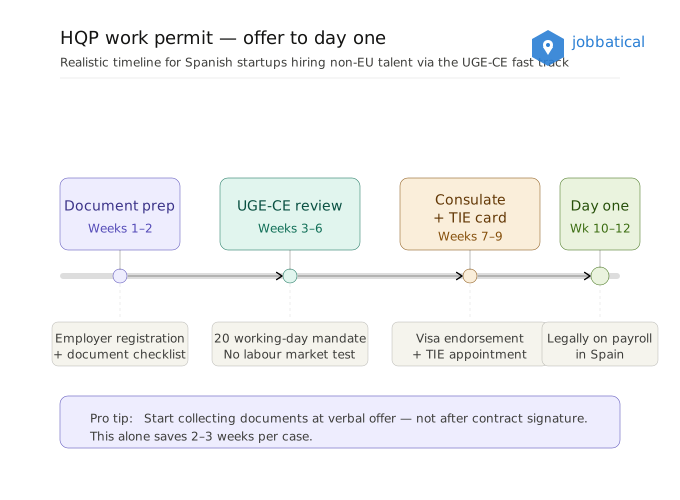
- Plan for 10–12 weeks door-to-door for an HQP hire applying from abroad: 1–2 weeks to prepare documents, 20 working days for the UGE-CE decision, 2–4 weeks for consulate visa processing, and 30–45 days after arrival for the TIE.
- Start at verbal offer, not signature beginning document collection at the verbal-offer stage rather than after the contract is signed saves 2–3 weeks on every single case.
Building a Permit Operation: The Practical Playbook
Scaling permit management isn't a hiring problem for more lawyers it's a standardisation problem. When the decisions and documents follow a predictable path, each case stops being bespoke.
- Step 1 Build a permit decision matrix before anything else, answer three questions per hire (EU or non-EU, role type, direct hire or transfer); the answers map straight to a permit type and prevent the expensive mistake of filing under the wrong category and restarting.
- Step 2 Standardise checklists by profile each permit type needs a specific mix of employer and employee documents, so build a checklist per profile and send it with the offer letter; under the Startup Law, candidates only need police clearance for countries lived in over the past two years, with a sworn declaration covering the rest.
HQP permit document checklist for Spanish startups — employer and employee requirements

- Step 3 Track renewals from day one initial HQP and ICT permits run three years and renew in two-year increments with no automatic extension, so set alerts at six and three months before expiry and confirm salary and role still meet the original conditions.
- Flag category-crossing changes early promotions or role changes that push into a different permit category must be handled proactively, not discovered when the renewal arrives.
The Five Compliance Pitfalls That Hit Growing Startups
Spain UGE-CE fast track permit timeline comparison : official vs realistic
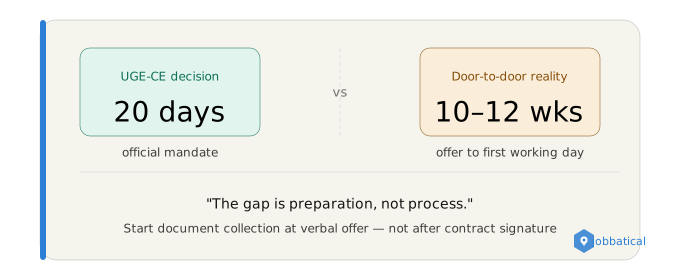
These are the mistakes that surface repeatedly once a team is managing its first 10–20 international cases. As volumes climb, small application errors stop being minor and start being expensive.
- Using business visas for productive work the Schengen Business Visa covers meetings and negotiations only; if the employee is writing code or filling a role, the correct route is a Short-Term Work Permit or Posted Worker Notification, and misuse fines reach €187,515.
- Letting permits lapse during transitions promotions, salary restructuring, or a change of legal employer entity within a group all require an amendment or renewal, and treating permits as one-time tasks is what catches teams out when a contract changes.
- Missing employer registration or the TIE deadline the company must be registered with immigration authorities before the first UGE-CE filing, and once approved, the employee has just 30 days to book a TIE appointment, which books out fast in major cities.
- Assuming family permits are automatic reunification under HQP and ICT can be filed alongside the main application but needs a separate document set, and skipping that early leaves the employee in Spain while dependents wait months.
From One-Off Legal Help to a Managed Service: When to Make the Move
A single trusted lawyer handling cases individually works fine up to a point and that point is more predictable than most teams expect. Recognising the threshold early is what keeps reactive management from turning into risk.
- The model holds to about 8–10 active cases a year below that, coordination overhead is manageable; above it, HR spends disproportionate time chasing documents, fielding status questions, and tracking renewals across spreadsheets.
- Three signals mean you've crossed over more than two permit cases running at once, at least one renewal due within six months, and an employee asking about status more than weekly; when all three are true together, reactive management becomes a liability.
- A managed model shifts the work to exception handling routing permit tracking, document management, and regulatory updates through a platform with expert oversight turns case-level firefighting into periodic reviews and approvals.
- The Jobbatical platform centralises the load automated renewal alerts, document management, and real-time case tracking across all active permits cut admin time while stopping compliance gaps before they form.
What a Scalable Permit Process Looks Like in Practice
A startup with a working permit operation isn't running a complex system it's running a repeatable one. The teams that struggle at scale aren't beaten by Spanish bureaucracy; they're beaten by treating permits as ad hoc tasks.
- The six components that define "built" a permit decision matrix embedded in hiring, a checklist sent at offer stage, employer registration on file, a maintained renewal calendar, a named owner per case, and a defined escalation path for edge cases.
- The difficulty is operational, not legal the UGE-CE fast track is among the more efficient routes in Europe, so struggles almost always trace back to workflow, not the law.
- Repeatability beats effort once the matrix and checklists exist, each new case follows the same path, which is what lets headcount grow without permit management scaling linearly alongside it.
- Structure it before you need it building the system at 8 cases is far cheaper than retrofitting it at 30, when overlapping renewals and role changes turn small gaps into exposure.
Disclaimer: Immigration rules change quite frequently; please verify with official sources or contact us for the latest info before making any decisions.
Frequently Asked Questions : Work Permits at Scale for Spanish Startups
What is the fastest work permit route for a Spanish startup hiring non-EU engineers?
The Highly Qualified Professional (HQP) permit processed via the UGE-CE is the fastest route. It bypasses the labour market test and delivers decisions in 20 working days. Eligible candidates need a relevant degree or 3+ years of specialist experience, and the role must meet a salary threshold of around €40,000 annually.
Do Spanish startups certified under the Startup Law get any immigration advantages?
Yes. Certified startups under Law 28/2022 can access streamlined HQP and ICT permits, 3-year initial permit durations (versus 1 year on standard routes), and no requirement to prove no suitable local candidates exist. The ENISA certification process takes up to 3 months but unlocks faster hiring for the long term.
What are the most common compliance mistakes HR teams make when scaling work permits in Spain?
The top mistakes are: using Business Visas for employees doing productive work in Spain, missing renewal deadlines (permits expire with no automatic extension), failing to update permits when an employee changes role or salary drops below threshold, and not registering the company with immigration authorities before submitting the first application.
How long does the full HQP permit process take from offer acceptance to first day in the office?
Realistically, budget 8–12 weeks door-to-door. The UGE-CE decides in 20 working days, but document preparation takes 1–2 weeks, the TIE residence card appointment adds 30–45 days, and consulate processing (if applying from abroad) adds another 2–4 weeks. Starting document collection at the point of verbal offer acceptance shortens this significantly.
When should a Spanish startup move from using a one-off immigration lawyer to a managed service?
The tipping point is usually around 8–10 active international cases per year. Below that, a trusted immigration lawyer per case works fine. Above it, the coordination overhead — tracking renewals, managing documents across employees, staying current on regulation changes — exceeds what a lean HR team can absorb without a platform or managed service.
Can a startup in Spain hire someone who is already in the country on a tourist visa?
Yes, in most cases. The UGE-CE fast-track routes — including HQP and ICT permits — allow applications to be submitted from within Spain, even during a legal tourist stay. The candidate's status is automatically extended during processing. This is one of the practical advantages of the Entrepreneurs Law framework over standard provincial work permit routes.

.svg)
.svg)