


Key Take aways for ILR Sponsor Letter
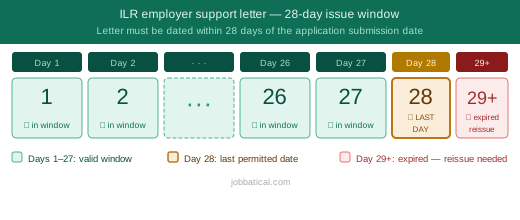
- The ILR employer support letter must be issued within 28 days of the application date not before, not after.
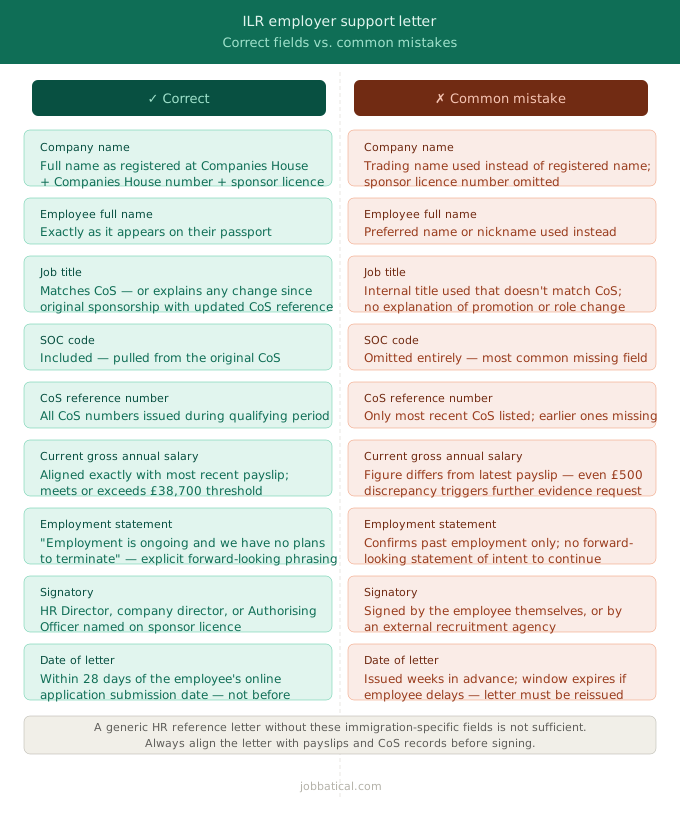
- It must include the employee's full name, job title, SOC code, CoS reference number, current gross salary, and a statement that employment is ongoing.
- If your employee changed roles or salary since their original CoS was issued, the letter must explain that change explicitly or risk a delay.
- Previous employers must also issue a letter (or provide payslips and a P45) if the employee worked for them during the five-year qualifying period.
- Missing or vague employer letters are one of the most common causes of ILR refusal on work-based routes. Getting this right protects your employee and your sponsor licence.
Most ILR applications that hit problems don't fail because of absences or the Life in the UK Test. They stall because the employer letter is wrong. A missing SOC code, a salary figure that doesn't match the latest payslip, or a letter dated a day outside the 28-day window any of these can delay settlement for an employee who has waited five years.
As the sponsor, this is firmly in your court. Here is exactly what the Home Office expects from you.
What the ILR Employer Support Letter Actually Does
The employer support letter is the primary document confirming that your employee's visa conditions are still being met at the point of application. A Home Office caseworker uses it to verify three things: ongoing lawful employment, compliance with salary thresholds, and the continuing need for the role.
For Skilled Worker and Health and Care Worker routes, the letter directly links to the Certificate of Sponsorship (CoS) on file with UKVI. Caseworkers cross-reference what you write against their own records. Vague or inconsistent letters trigger further evidence requests and that adds months to the process. For more on your broader obligations as a sponsor, see our guide to supporting employees through the UK ILR process.
What to Include: Field by Field
The Home Office does not publish a rigid template, but their settlement guidance is clear about what caseworkers look for. Your letter must cover all of the following.
Company Details
Employee Details
When to Issue the Letter
Timing is where most HR teams get this wrong. The letter must be dated within 28 days of the employee's online application submission date not 28 days before they plan to apply, not on the day you discuss it internally. Twenty-eight days from submission.
In practice, this means coordinating with your employee on their exact submission date before drafting the letter. If your HR processes mean letters take several days to approve, factor that in. Issuing it a day too early is enough to trigger a rejection. To understand the full application window and preparation timeline, our ILR application timeline guide for Skilled Workers walks through each stage month by month.
Who Should Sign It
The signatory matters to caseworkers. Acceptable options are
- HR Director or HR Manager
- Head of People or People Operations (equivalent role)
- Company Director or Managing Director (for smaller businesses)
- The Authorising Officer named on your sponsor licence, this carries the most weight
The employee cannot sign their own letter, even if they are also a company director. An external recruitment agency cannot sign it either. The letter must come from the actual employing entity, signed by someone with authority over that employment relationship.
Scenarios That Need Extra Care
Three situations require more than a standard letter.
Role or salary change. If your employee was promoted or received a salary increase that required a new CoS, the letter must explain the change, including the original role and salary, when the change happened, and the updated CoS reference. Any mismatch between your letter and Home Office records can trigger requests for further evidence.
Employee changed employers. If the employee joined your company partway through their five-year qualifying period, their previous sponsor should provide evidence covering that earlier period, such as an employer letter, payslips, and P45. Your responsibility only covers the time they were sponsored by your organisation, but employees should contact previous employers early, as obtaining documents can take longer than expected. For more detail on eligibility timelines, see our guide on when to apply for ILR in the UK.
Common HR Mistakes and How to Avoid Them
- Salary figure differs from the employee’s most recent payslip, even by a small amount
- SOC code omitted entirely
- No forward-looking statement, only confirming past employment, not ongoing intent
- Standard HR reference template used without adding the immigration-specific fields
- Letter issued too early, then the employee delays, you’ll need to redate it
If you are managing ILR applications across a team of international employees, the risk of one of these errors slipping through scales quickly. Check our ILR Service to see how we manage this at scale.
Disclaimer: Immigration rules change quite frequently; please verify with official sources or contact us for the latest info before making any decisions.
Frequently Asked Questions : ILR Employer Support Letter
What must be included in an ILR employer support letter?
The letter must include the employee's full name, current job title, SOC occupation code, Certificate of Sponsorship (CoS) reference number, current gross annual salary, employment start date, and a clear statement that employment is ongoing. It must be on company letterhead and dated within 28 days of the application submission date.
Who should sign the ILR employer support letter?
The letter must be signed by a senior HR professional, HR Director, or company director, not the employee themselves. The Authorising Officer named on the sponsor licence is also an appropriate signatory and carries particular weight with Home Office caseworkers.
How recent does the ILR employer letter need to be?
The letter must be dated within 28 days of the employee's online ILR application submission date. A letter dated outside this window is one of the most common reasons applications are delayed. Do not issue the letter until you have a confirmed submission date.
Does a previous employer need to provide an ILR support letter?
Yes, if the employee worked for a previous sponsor at any point during their five-year qualifying period, that employer must provide supporting evidence. This can be a letter covering the relevant dates and salary, or a combination of payslips and a P45. The Home Office needs a complete employment picture across the full qualifying period.
What happens if the employee’s salary or job title changed since their original CoS?
The letter must explicitly acknowledge and explain any changes. State the original role and salary, when the change occurred, and the new details including the updated CoS reference if applicable. Inconsistencies between the letter, payslips, and Home Office records are a common cause of delays and requests for further evidence.
Can the ILR employer letter be sent as an email or electronic document?
A scanned PDF of a signed, headed letter is acceptable when uploading to the UKVCAS portal. Verifiable electronic signatures are generally accepted. However, a plain email without letterhead or formal formatting is not sufficient. The document must look like an official company letter, not an informal message.
What salary figure should appear in the ILR employer support letter?
State the current gross annual salary as of the letter date. For most Skilled Worker ILR applicants in 2026, this must meet or exceed £38,700 (or the going rate for the SOC code if higher). Always align this figure with the most recent payslips — discrepancies between the letter and payslip salary are a frequent rejection trigger.

.svg)
.svg)