.svg)



Key Take aways for UK ILR:
- Advance planning and proactive HR support are critical for seamless transitions from Skilled Worker visas to UK permanent residency
- Skilled Worker visa holders become eligible for ILR after 5 years of continuous residence, with strict absence and compliance criteria.
- ILR application can begin up to 28 days before the 5-year mark, with standard processing times between 8–12 weeks; super priority service offers faster decisions.
- Required documentation includes biometric enrolment, compliance records, proof of salary, and continuous lawful residence.
- Upcoming immigration reforms may alter timeline and criteria, HR teams should monitor changes to ensure accurate advice and support.
Supporting international employees on their journey from Skilled Worker visa to Indefinite Leave to Remain (ILR) remains a cornerstone of long-term talent retention and workforce stability. This timeline guide helps HR teams and career development leaders understand the multi-year process, critical milestones, and structured support required to guide employees successfully toward permanent residence.
Understanding this timeline enables organizations to offer meaningful career planning, strengthen employee engagement, and position themselves as employers committed to long-term international talent development.
From Skilled Worker to Permanent Resident: ILR Application Timeline (2026 Update)
For skilled professionals aiming to make the UK their long-term home, achieving Indefinite Leave to Remain (ILR) remains a key career milestone. In 2026, the Skilled Worker to ILR pathway continues to follow established timelines, while placing greater emphasis on compliance, documentation accuracy, and forward planning—areas where HR teams play a critical role.
Eligibility Criteria and Qualifying Period
Standard Route: Skilled Worker visa holders may apply for ILR after completing 5 years of continuous lawful residence, provided all residence, salary, and sponsorship requirements are met.
Continuous Residence: Absences must not exceed 180 days in any rolling 12-month period during the qualifying period.
Alternative Routes: Long Residence (10 years) and Family Settlement routes remain available for individuals who do not qualify under the Skilled Worker route or who have held multiple visa categories.
Step-by-Step Application Timeline
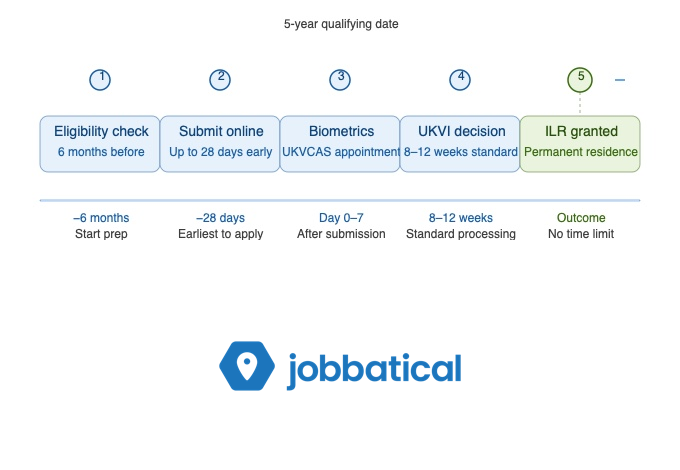
Employees who need a faster decision than the standard processing timeline should review the super priority service before submitting their ILR application.
Critical Compliance Factors Throughout the Journey of ILR
Continuous Residence Requirements
Absence Tracking System
- Daily Tracking: Maintain detailed records of all UK entry and exit dates.
- Business Travel Documentation: Retain supporting evidence for work-related travel.
- Holiday Planning: Plan annual leave strategically to avoid breaching absence limits.
- Emergency Absence Planning: Assess the impact of unplanned travel on eligibility.
Acceptable Absence Reasons
- Business travel for the UK sponsoring employer
- Annual leave and holidays
- Medical treatment abroad
- Family emergencies
- Approved educational or professional development activities
Employment Continuity Requirements for ILR Application
Documentation Requirements for ILR
- Complete employment history with the sponsoring employer
- Salary and payslip records
- Role progression documentation
- Performance and compliance records
Planning for Transitions: Allocate sufficient time for absence calculations, documentation gathering, and compliance checks ahead of eligibility.
Impacts of New Rules
HR teams should remain alert to proposed policy changes, including potential extensions of qualifying periods, increased salary thresholds, and higher English language requirements. While no definitive changes have been enacted for 2026, advance planning is strongly recommended.
Supporting Talent
Providing structured guidance on timelines, documentation, and compliance expectations enables smoother transitions and reinforces long-term employee confidence and engagement.
Read here 'UK ILR New Rules for Skilled Worker Visa in April 2026'
Conclusion
Guiding employees from Skilled Worker visa to Indefinite Leave to Remain is not an administrative formality—it is one of the highest-leverage retention decisions an organisation can make. For HR and global mobility managers operating in the UK, the multi-year ILR pathway demands the same strategic discipline as any major workforce investment: clear ownership, proactive planning, and consistent communication from Day 1 of employment through to settlement.
The stakes are real. Employees who feel unsupported through the complexities of continuous residence requirements, eVisa compliance, Life in the UK Test preparation, and evolving settlement policy are employees at risk of disengagement—or departure. Organisations that build structured, end-to-end ILR support frameworks do not just protect their immigration pipeline; they signal, credibly, that international talent is valued for the long term.
That signal matters more than ever in a UK labour market where skilled international employees have choices.
Disclaimer
Immigration laws and policies change frequently and may vary based on individual circumstances. While this guide reflects current understanding for 2026, organizations should conduct independent due diligence or consult official UK government sources. Jobbatical is not responsible for decisions made based on this information.
Frequently Asked Questions About the 2026 UK Skilled Worker Visa ILR Application Timeline
What is the proposed standard qualifying period for Indefinite Leave to Remain (ILR) from April 2026?
The standard qualifying period is expected to increase from 5 years to a baseline of 10 years for most routes under the 'earned settlement' model.
How does the 'earned settlement' model, beginning in April 2026, affect the ILR path for Skilled Workers?
The baseline ILR route for most Skilled Workers increases to 10 years, but high earners (e.g., those earning £50,270+ over 3 years) can still qualify after 5 years.
What is the maximum number of days a Skilled Worker can be absent from the UK per year while meeting the continuous residence requirement for ILR?
Absences must not exceed 180 days in any rolling 12-month period during the qualifying residence period.
What is the new minimum English language requirement for a new Skilled Worker visa application starting 8 January 2026?
The minimum English language requirement increases from B1 to B2 level (CEFR).
What will replace physical Biometric Residence Permits (BRPs) and passport vignettes for proof of immigration status by the end of 2026?
All visa holders must transition to using eVisas by 31 December 2026, as BRPs and vignettes will no longer be valid for checks.

.svg)
.svg)