

Key Take aways for German Immigration
• Immigration law firms offer personalised legal advice and case strategy but typically come with higher fees, slower turnaround times, and limited process visibility.
• Immigration platforms like Jobbatical combine licensed experts with smart automation delivering speed, compliance, and full transparency at scale.
• For German companies hiring internationally, the right choice depends on case complexity, hiring volume, and how much operational control you want.
• Platforms are increasingly handling complex cases too, making the "platform vs. law firm" distinction less clear-cut than it used to be.
• Jobbatical has supported 15,000+ successful relocations to Germany and across Europe, with guaranteed compliance.
Your company is expanding in Germany and you need to relocate international talent. The first big question most HR teams ask isn't about the visa type - it's about who should manage the process. Should you work with a traditional immigration law firm, or use a modern immigration platform?
Both options can get your employees into Germany legally. But they differ significantly in cost, speed, visibility, and scalability. Here's how to make the right choice for your business.
What Each Option Actually Offers
Understanding the structural difference between a law firm and an immigration platform is the foundation for making a smart decision.
Immigration law firm
- Provides legal representation and personalised counsel.
- Cases are managed by attorneys or solicitors who assess individual circumstances, advise on strategy, and liaise with German authorities on your behalf.
- Works well for legally complex situations but can be slow and expensive when applied to standard cases at scale.
Immigration platform
- Combines licensed immigration experts with smart automation.
- Document collection, eligibility checks, deadline tracking, and authority submissions are managed through a centralised system.
- Employees get guided through each step digitally, while experts handle the legal substance.
- Faster preparation, fewer errors, and full visibility across every relocation.
Key Differences: Law Firm vs. Immigration Platform
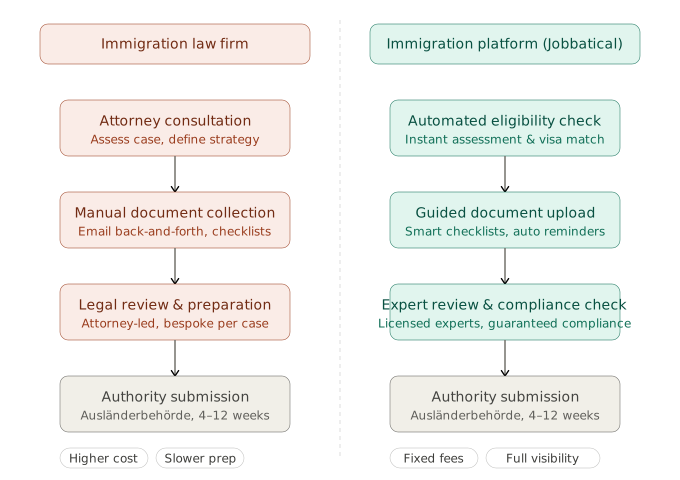
Explore in detail our Berlin and Munich guide to choosing local law firms vs benefits of established immigration companies like Jobbatical with tech platform.
When do a Law Firm Makes Sense
There are specific situations where engaging a law firm is the right call.
- If a visa is denied, a licensed attorney is best suited to handle appeals and represent you before German authorities.
- Unusual nationality or qualification combination cases may require specialised legal analysis.
- If facing a compliance audit or questions about an employee’s right to work, legal representation is essential.
For these edge cases, a law firm's deep legal expertise justifies the cost. However, these scenarios represent a small fraction of most companies' immigration caseloads.
When is a Platform the Smarter Choice
- For most German visas (EU Blue Card, Skilled Worker Visa, family reunification), platforms offer clear advantages.
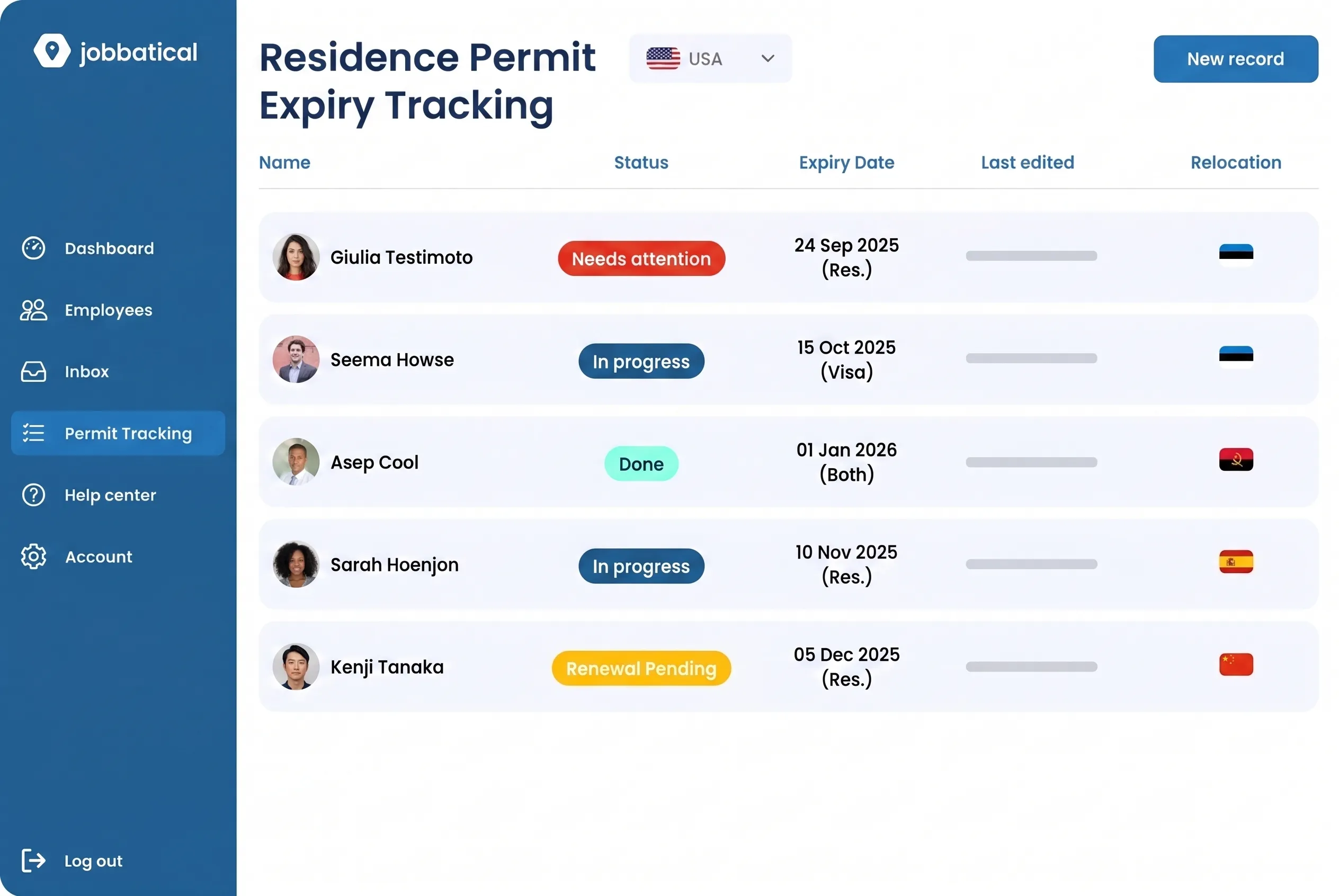
- Ideal for managing multiple relocations with a single dashboard for cases, deadlines, and documents.
- Reduces back-and-forth emails common with law firms.
- Enables faster document preparation, shortening time from offer to start date.
- Improves hiring speed and talent pipeline efficiency.
- Proven at scale-supporting 15,000+ relocations with consistent compliance.
The Compliance Question
A common concern HR teams raise is whether a platform can truly ensure legal compliance. The answer is yes, provided the platform pairs its technology with qualified immigration professionals.
Jobbatical's model does exactly this. Every case is reviewed by immigration experts who are up to date with German requirements, including the BAMF's latest guidance on skilled worker immigration. Automated compliance tracking flags missing documents or expiring permits before they become problems.
The key difference from a law firm is not the level of compliance, it's the efficiency with which that compliance is achieved.
Cost Considerations for German Companies
Law firms typically charge on an hourly or per-case basis. For standard German work permit applications, fees commonly range from €1,500 to €5,000 or more per case, depending on firm seniority and case complexity.
Platforms offer fixed, predictable fees - making budget planning significantly easier. For companies relocating five, ten, or fifty employees per year, the cost savings at scale are substantial. And when HR time savings are factored in, the total cost advantage of a platform grows further.
Making the Decision for Your Company
The right choice isn't always one or the other. Many German companies use a platform as their default approach and engage a law firm selectively for cases that require formal legal intervention.
Ask yourself three questions:
- What is our hiring volume? If you're relocating more than a handful of employees per year, a platform's scalability is a significant advantage.
- How complex are our cases? Most standard EU Blue Card and skilled worker visa applications don't require a law firm. Contested or unusual cases might.
- How much visibility do we need? If your HR or finance team needs real-time reporting on relocation status and costs, a platform provides this out of the box.
For most German companies building international teams, a platform like Jobbatical delivers the right combination of expertise, speed, and transparency without the law firm price tag.
Book a demo to see how Jobbatical manages German work permits and EU Blue Card applications end-to-end.
Disclaimer: Immigration rules change quite frequently; please verify with official sources or contact us for the latest info before making any decisions.
Frequently Asked Questions — Immigration Law Firm vs. Platform Germany
What is the difference between an immigration law firm and an immigration platform?
An immigration law firm provides personalised legal advice, typically handled by qualified solicitors or attorneys.
An immigration platform combines licensed immigration experts with technology to manage visa applications, document collection, and compliance tracking. This approach is usually faster and more cost-efficient for standard cases.
When should a German company use an immigration law firm instead of a platform?
Law firms are best suited for complex or exceptional cases, such as visa refusals, appeals, or situations involving unusual legal circumstances.
For routine or high-volume work permit applications, immigration platforms are typically faster, more scalable, and easier to manage for HR teams.
How much does it cost to use an immigration platform versus a law firm in Germany?
Immigration law firms in Germany typically charge between €1,500 and €5,000 or more per case, often with additional hourly fees.
Immigration platforms usually offer fixed pricing per case or subscription-based models, making costs more predictable and scalable—especially for companies hiring multiple employees.
Can an immigration platform handle EU Blue Card applications for Germany?
Yes. Immigration platforms can manage EU Blue Card applications end-to-end, including eligibility checks, document preparation, submissions, and employee guidance.
This is one of the most common routes for skilled non-EU professionals, and platforms are designed to handle these cases efficiently at scale.
Are immigration platforms compliant with German immigration law?
Yes. Reputable immigration platforms work with licensed experts and follow German and EU immigration regulations.
They combine legal expertise with structured processes to ensure each case meets requirements under applicable laws, including Germany’s skilled immigration framework and EU Blue Card rules.
How long does it take to get a German work permit through a platform versus a law firm?
Government processing times are generally the same regardless of who manages the application, typically ranging from 4 to 12 weeks.
However, immigration platforms can significantly reduce preparation time through automated document workflows and real-time tracking, helping avoid delays caused by incomplete or incorrect submissions.

.svg)
.svg)