.svg)



Key Take aways for ICT Permit types:
- Spain has two ICT permit types - ICT-EU for standard intra-group transfers and National ICT for service contracts, professional relationships, or post-ICT-EU-maximum scenarios
- The ICT-EU is the default for multinationals; the National ICT is a specialist route - using the wrong one means rejection and restarting from scratch
- Only the ICT-EU grants EU mobility rights - National ICT holders are restricted to Spain only
- National ICT applies when the transfer is driven by a contract between companies (CSS), a professional relationship (IP), or when an employee has already exhausted their ICT-EU duration limit
- Both types process through UGE-CE in 20 business days with no labour market test - the processing unit is the same, but the legal basis and documentation differ
- Choosing the right permit type at the start protects your company from compliance risk and avoids costly re-applications
Most HR teams filing a Spain intra-company transfer application know there are two ICT permit types. Almost none know exactly when each one applies and UGE-CE will not correct your choice for you. Filing the wrong permit type means a rejection and restarting the process from scratch.
This guide cuts through the ambiguity. It explains the exact legal trigger for each permit type, the specific scenarios where the National ICT applies, and what differs in documentation, scope, and compliance obligations between the two. By the end, your team will know which permit applies to your transfer before you file.
The Two Spain ICT Permit Types: A Structural Overview
Spain's intra-corporate transfer framework is governed by EU Directive 2014/66/EU and Spain's Entrepreneurs Law 14/2013. Both permit types sit within this framework, but they cover different transfer structures and carry different rights for the employee.
The ICT-EU permit is designed for employment-relationship-based intra-group transfers: a non-EU national working as a manager, specialist, or trainee at a company outside the EU is reassigned to a Spanish entity within the same corporate group. The ICT-EU is the default permit type for multinationals.
The National ICT permit is a residual category. It applies when the transfer doesn't fit the ICT-EU structure - primarily because the relationship between the sending and receiving entities is a commercial contract rather than a corporate ownership link, or because the employee has already exhausted ICT-EU eligibility.
Full employer guide to the ICT route end to end: eligibility, cost, documents, timeline and post-approval duties: Spain ICT Visa: Complete Employer Guide
Side-by-Side Comparison of Spain's Two ICT Permit Types
When the ICT-EU Permit Applies
The ICT-EU applies when all three of the following are true:
- The employee is a non-EU national currently employed in a manager, specialist, or trainee role.
- The sending company (outside the EU) and the Spanish host entity are part of the same corporate group meaning a parent-subsidiary, subsidiary-to-subsidiary, or branch relationship exists.
- The employee has been employed within the corporate group for at least 3 months before the transfer begins.
For the vast majority of multinationals - US headquarters to Spanish subsidiary, Asian parent to European branch, Indian holding company to Spanish entity the ICT-EU is the correct and only applicable route. If your corporate structure meets these three criteria, do not apply for a National ICT.
Not sure if your hire qualifies for the ICT at all? Use Jobbatical's Spain Work and Residence Permit Eligibility Checker to confirm the right route before starting the application.
When the National ICT Permit Applies
The National ICT applies in three specific scenarios. Each has a different documentary trigger that UGE-CE will assess.
Scenario 1: Service Contract Transfer (CSS - Contratos de Servicios)
A Spanish company has a commercial contract with a foreign company to provide services. The foreign company sends an employee to Spain to execute that contract. There is no corporate ownership link between the two companies — just a business agreement.
This is a common structure in consulting, engineering, IT services, and construction. The employee is not being transferred within a corporate group they are being deployed to Spain to deliver a contracted service. The ICT-EU does not apply here. The National ICT is the correct route.
Key documentation requirement: The service contract between the two companies must be submitted as part of the application, along with proof that the employee is being sent specifically to execute the contracted scope of work.
Scenario 2: Professional Relationship Transfer (IP - Interlocutores Profesionales)
The transfer is based on a professional relationship between the employee and the Spanish entity for example, a long-term consultancy arrangement or a specialist engagement that doesn't constitute a formal employment contract within a corporate group.
This applies in situations where the nature of the working relationship is professional and ongoing, but the EU ICT structural criteria (same corporate group, employment relationship) are not met. The National ICT accommodates these transfers under a different legal basis.
Key documentation requirement: Evidence of the nature and duration of the professional relationship, including contracts or agreements, must be submitted to demonstrate the legitimacy of the transfer and the employee's role.
Scenario 3: Post-ICT-EU Duration Exhaustion
An employee has held an ICT-EU permit and has reached the maximum duration 3 years for managers and specialists, 1 year for trainees. The assignment is ongoing. The company cannot renew the ICT-EU because the maximum has been reached.
In this scenario, the National ICT permit becomes the available intra-company transfer route to continue the assignment within Spain. It is not a renewal of the ICT-EU; it is a separate permit on a different legal basis. The employee will lose EU mobility rights for the continued period, and this change in status must be planned for in advance.
📌 If the assignment is becoming permanent rather than temporary, transitioning to the EU Blue Card or HQP permit is typically a better long-term route than the National ICT; both routes are covered in "Planning the Permit Transition" below.
The Key Compliance Difference: EU Mobility
EU mobility is the most operationally significant difference between the two permit types and the one most often overlooked in the HR planning phase.
ICT-EU holders can work in other EU member states for up to 90 days per 180-day period without applying for a new work permit in each country. For multinationals with cross-European operations, this is a material operational advantage particularly for senior managers and specialists who attend meetings, lead projects, or work across multiple EU offices.
National ICT holders do not have this right. Their permit is geographically scoped to Spain only. Working in another EU country even for a short project requires separate work authorisation in that country. This is a compliance exposure that HR teams managing cross-border assignments frequently miss.
If your employee's role involves any regular work outside Spain within the EU, the ICT-EU is not optional it is the only legally compliant route. Assign your National ICT if and only if the transfer genuinely doesn't qualify for the ICT-EU or if the employee is in a post-ICT-EU scenario.
Where EU mobility meets social security: A1 certificates for EU and EEA senders, Certificates of Coverage for treaty countries ,Spain ICT Social Security
Documentation Differences Your HR Team Must Know
Both permit types share a core document set: proof of corporate activity, employee qualifications, private health insurance, criminal records, and an assignment letter. The divergence is in the relationship-proving documentation:
Documentation Requirements by ICT Permit Type
The Posted Worker Act compliance requirement for National ICT transfers is a detail many HR teams miss. For service-contract-based transfers, the sending company is legally obligated to ensure the employee's terms meet Spanish minimum standards not just the assignment letter conditions.
For a full breakdown of what documents UGE-CE requires and how common errors lead to rejections, see the Spain ICT permit rejection guide.
Spain ICT-EU permit and National ICT permit : which applies to your Employee?

Which Route Is Right? A Decision Framework for HR
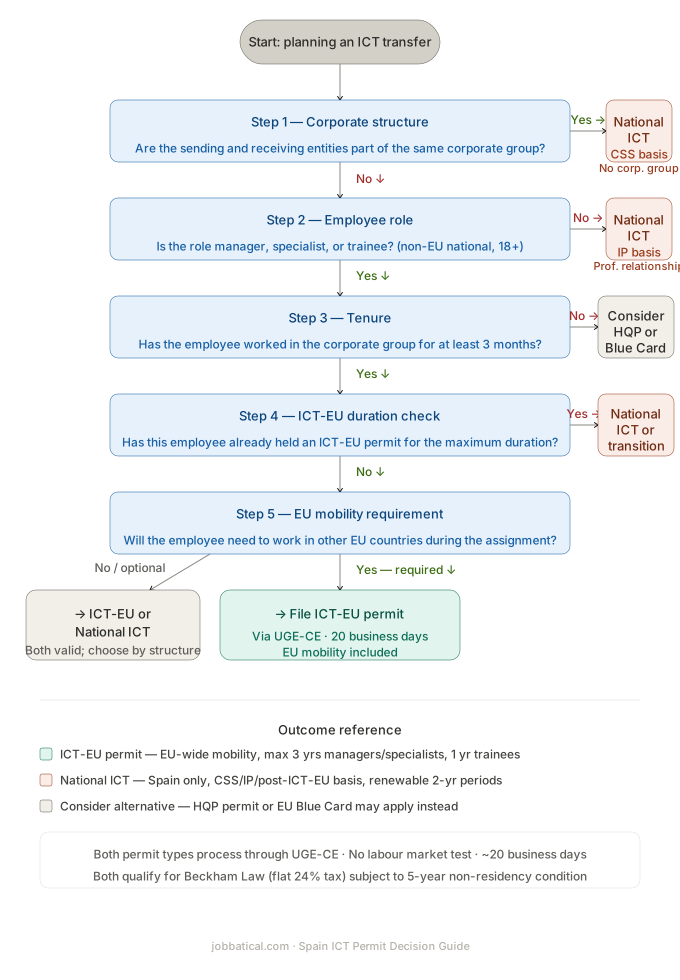
Use this framework to identify the correct permit before filing
- Is the sending company outside the EU, and is it part of the same corporate group as the Spanish host entity? If yes - and the role is manager, specialist, or trainee - file the ICT-EU.
- Is the transfer based on a commercial services contract between two legally separate companies (not in the same corporate group)? If yes - file the National ICT (CSS basis).
- Is the transfer based on a professional relationship that doesn't constitute an intra-group employment structure? If yes - file the National ICT (IP basis).
- Has the employee already held an ICT-EU permit for the maximum allowed duration? If yes, and the assignment continues in Spain - assess whether National ICT or a transition to HQP/EU Blue Card is more appropriate for the long term.
- Will the employee need to work in other EU countries during the assignment? If yes - the ICT-EU is mandatory. Do not use the National ICT if EU mobility is operationally required.
Choosing between ICT and HQP is a separate decision from choosing between the two ICT types, three questions settle it, Spain ICT or HQP Permit
If you're unsure which structure applies to your employee's transfer, book a consultation with Jobbatical's immigration experts before submitting. The filing decision is not reversible once UGE-CE processes the application.
Planning the Permit Transition
If your employee is approaching the end of their ICT-EU permit and the assignment is becoming permanent, the National ICT is rarely the best long-term solution. The two most common transition routes are:
- The HQP permit : processed through UGE-CE, no corporate group requirement, suitable for permanent employment with a Spanish entity. Covered in full in the Spain ICT vs HQP guide.
- The EU Blue Card : salary-threshold based, grants EU-wide mobility, strong long-term residency pathway. Details at the Spain EU Blue Card service page.
Both transitions can be filed from within Spain through UGE-CE. Begin the assessment process at least 6 months before the ICT-EU expires not at the renewal deadline. A gap in legal authorisation between permits disrupts your employee's residency continuity and creates right-to-work risk for your Spanish entity.
Managing permit expiry tracking, EU day counting, and transition timelines across a relocating workforce is where compliance breaks down without a dedicated system. Jobbatical's immigration platform tracks all of it - with deadline alerts, document management, and expert support from first application through permit transition.
Book a demo to see how it works for your Spain mobility programme.
Disclaimer: Immigration rules change quite frequently; please verify with official sources or contact us for the latest info before making any decisions.
Frequently Asked Questions — Spain ICT-EU vs National ICT Permit
What is the difference between the Spain ICT-EU and National ICT permit?
The ICT-EU permit is for non-EU managers, specialists, or trainees transferred within the same corporate group from outside the EU to Spain. It grants EU-wide mobility. The National ICT applies in other scenarios — primarily when a transfer is based on a service contract between two companies (CSS), a professional relationship (IP), or after an employee has exhausted their ICT-EU maximum duration. National ICT holders are restricted to Spain only.
When does a transfer require the National ICT permit instead of the ICT-EU?
The National ICT applies when: (1) the transfer is based on a contract for services between a Spanish company and a foreign company rather than an intra-group employment relationship; (2) the transfer involves a professional relationship that doesn't meet ICT-EU eligibility criteria; or (3) the employee has already reached the ICT-EU maximum duration of 3 years and the assignment continues. If none of these apply, the ICT-EU is the correct route.
Can a National ICT permit holder work in other EU countries?
No. The National ICT permit is restricted to Spain only. It does not grant EU mobility rights. Only the ICT-EU permit allows the holder to work in other EU member states for up to 90 days per 180-day period. If your employee needs to work across multiple EU countries, the ICT-EU permit is mandatory.
Do both ICT permit types process through UGE-CE?
Yes. Both the ICT-EU and National ICT permits are processed through UGE-CE (the Large Companies and Strategic Groups Unit) within 20 business days, with no labour market test required in either case. The processing unit is the same — but the legal basis, eligibility criteria, and documentation requirements differ between the two types, which is why filing with the wrong permit type leads to rejection rather than automatic reassignment.
What happens when an employee reaches the ICT-EU maximum duration?
Managers and specialists on an ICT-EU permit have a maximum duration of 3 years. Trainees are capped at 1 year. Once the ICT-EU maximum is reached, if the assignment continues, the company must either apply for the National ICT permit (for ongoing Spain-based work), or transition the employee to a different long-term route such as the HQP permit or EU Blue Card. Planning this transition at least 6 months ahead is essential to avoid a gap in legal status.
Do both ICT permit types qualify for Spain's Beckham Law tax regime?
Beckham Law eligibility is based on the employee's tax residency history, not the specific permit type. Both ICT-EU and National ICT holders who have not been Spanish tax residents in the previous 5 years can typically apply for the Special Expats Tax Regime (flat 24% rate on income up to €600,000 for 6 years). The Beckham Law application must be filed within 6 months of the employee's first Spanish Social Security registration — assess eligibility at the same time as the permit application.

.svg)
.svg)