


Key Take aways for Spain Digital role options
- Three routes, three use cases: Digital Nomad Visa for remote workers staying on foreign payroll; Highly Qualified Worker for standard Spanish employment contracts; EU Blue Card for senior hires above the salary threshold (~€39,269/year).
- Employer burden scales with seniority: DNV requires minimal employer involvement; HQW and Blue Card require active sponsorship through Spanish immigration authorities.
- Tech roles get favourable treatment: Spain's shortage occupation list includes many ICT specialisations, waiving or reducing the labour market test for HQW and lowering the Blue Card salary floor to ~€31,415.94.
- Blue Card unlocks EU mobility: For companies operating across multiple EU markets, the Blue Card enables internal transfers after 12 months a strategic advantage for regional talent planning.
- Plan for 12-week lead times: All routes have official processing windows that frequently extend; build this into hiring timelines from the first candidate conversation.
Three Routes, One Decision: Why Getting the Visa Right Matters
Hiring digital talent for Spain means choosing between three viable pathways, and the wrong pick costs time, money, and sometimes the candidate. This guide gives your global mobility team a direct comparison so you can route candidates correctly from day one.
The framework has matured. Spain's immigration system for knowledge-economy workers has developed significantly since the Startup Act created the Digital Nomad Visa, with applications opening in 2023.
Each permit fits a specific profile. The right route depends on who the candidate is and how they'll be employed, not on which permit sounds fastest or cheapest.
Employer obligations differ sharply. Knowing where your responsibilities begin and end shapes whether you need a Spanish entity, active sponsorship, or just a confirmation letter.
Wrong routing carries real cost. Misassigning a candidate can trigger delays, compliance exposure, or a lost hire late in the process.
Route from the first conversation. Deciding the pathway early, before the offer, keeps timelines and budgets under control across every case.
Digital Nomad Visa vs Highly Qualified vs EU Blue Card - 8 Key Differences
Which Permit (DNV/ HQP/Blue Card) to Use When
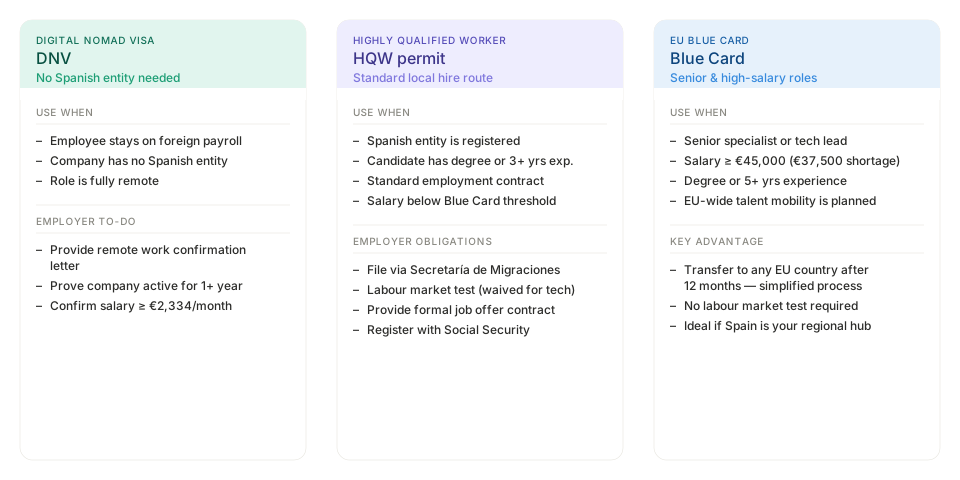
Comparision of Spain Digital Nomad Visa, Highly qualified Permit and EU Blue Card

┈┈┈┈┈┈┈┈┈┈┈┈┈┈┈┈┈┈┈┈┈┈┈┈┈┈┈┈┈┈┈┈┈┈┈┈┈┈┈┈┈┈┈┈┈┈┈
Matching the Route to Career Stage
A useful mental model for HR teams:
Note: these are default recommendations individual circumstances (degree requirements, previous permits, nationality) will affect suitability.
HQP Permit vs EU Blue Card: The Two Sponsored Routes Compared
When the candidate isn't a remote worker, the real decision narrows to two routes: the national Highly Qualified Professional permit and the EU Blue Card. They file the same way and decide on the same timeline. They part ways on qualifications, salary, and mobility.
HQP vs EU Blue Card comparison table
Intra-EU mobility : Deciding Factor
Mobility is the single clearest reason to pick one over the other. The Blue Card is built for professionals whose career may cross borders; the HQP permit is built for a role that stays in Spain.
- HQP authorises work across Spanish territory but carries no automatic right to move to another EU state.
- After a qualifying period in Spain, Blue Card holders can pursue a Blue Card in another member state under Directive (EU) 2021/1883.
- Blue Card time supports access to EU long-term residence, useful for retaining mobile senior hires.
- Choose the Blue Card when a future transfer to a group entity elsewhere in the EU is realistic, not just theoretical.
Same filing channel, same speed
At the filing stage these two behave almost identically. The differences sit in salary and mobility, not process.
- Both are filed through the UGE-CE, Spain's centralised unit for highly qualified cases.
- Neither requires the Situación Nacional de Empleo, unlike standard permits.
- Both carry a 20-working-day decision window, with positive administrative silence if no reply is issued.
- The Spanish hiring entity submits the application, so company readiness drives the timeline more than the route chosen.
Government Fees and Total Cost per Route: What HR Should Budget
Each route carries different official fees, and the sticker price is only part of the picture. Sworn translations, apostilles, and legalisation often cost more than the government charges themselves.
Digital Nomad Visa fees. The consular fee is around €90, plus roughly €9.84 for the NIE and €16.08 for the TIE card (épigrafe 4.2).
EU Blue Card fees. Official government fees are modest approximately €73.26 for the initial permit and €78.67 on renewal, plus the TIE card charge.
Highly Qualified Professional fees. The national HQP authorisation carries comparable modest government fees, filed electronically through the UGE-CE.
Hidden costs matter more than the fee. Budget separately for sworn translations, degree apostilles, and document legalisation, which frequently exceed the official charges.
Plan the full relocation spend, not just the permit. Health insurance, empadronamiento, and settling-in support all add to the true per-hire cost. For a step-by-step view of the employer side, see our guide to Spain work visa sponsorship.
┈┈┈┈┈┈┈┈┈┈┈┈┈┈┈┈┈┈┈┈┈┈┈┈┈┈┈┈┈┈┈┈┈┈┈┈┈┈┈┈┈┈┈┈┈┈┈
Qualification Requirements: Degree and Experience Thresholds by Route
The three routes test qualifications differently, and a candidate who fits one route may not clear another. Getting this wrong at the offer stage is a common cause of late-stage rejections.
EU Blue Card sets the highest bar. It generally requires a higher-education qualification at MECES Level 2 (bachelor's degree) or at least 5 years of relevant professional experience.
National HQP is more flexible on paper. The Highly Qualified Professional route accepts MECES Level 1 (higher vocational training) or a minimum of 3 years of relevant experience.
Digital Nomad Visa is qualification-light. Applicants need a university degree or at least 3 years of professional experience in the field, with no MECES-level requirement.
Regulated professions add a layer. Roles such as medicine, law, or engineering require proof of professional licensing or recognition in Spain, regardless of route.
Document the qualification evidence early. Foreign degrees usually need official translation and, in many cases, formal recognition build this into the timeline before filing. Our Spain labour market test guide explains when tech and shortage roles can skip additional employer evidence.
┈┈┈┈┈┈┈┈┈┈┈┈┈┈┈┈┈┈┈┈┈┈┈┈┈┈┈┈┈┈┈┈┈┈┈┈┈┈┈┈┈┈┈┈┈┈┈
The Real Processing Timeline: Official Windows vs. What Actually Happens
Official decision windows look fast, but the end-to-end journey from offer to legal start date is consistently longer. HR teams that plan to the official window alone tend to overpromise start dates.
The UGE decision window is short. For HQP and Blue Card, the UGE-CE has 20 working days to decide, with positive administrative silence applying if no response is issued in time.
The consular step adds time. When the applicant is outside Spain, a residence visa follows the authorisation, with a further consular decision term of around 10 working days.
The TIE deadline is easy to miss. Once in Spain on an authorisation longer than six months, the employee must apply for the TIE residence card within 30 days of arrival.
Document prep is the real bottleneck. Apostilles, sworn translations, and criminal record certificates routinely take longer than the government's own processing.
Build a realistic buffer. Plan for roughly 6 to 8 weeks end-to-end for HQP and Blue Card in clean cases, and longer where documents or consular appointments slow things down. For where delays cluster in practice, see our Spain consulate backlog processing times guide.
┈┈┈┈┈┈┈┈┈┈┈┈┈┈┈┈┈┈┈┈┈┈┈┈┈┈┈┈┈┈┈┈┈┈┈┈┈┈┈┈┈┈┈┈┈┈┈
Common Employer Mistakes to Avoid
Choosing the DNV for employees you intend to hire locally. The Digital Nomad Visa does not authorise work for a Spanish employer. Using it as a cheaper workaround creates compliance exposure.
Ignoring the labour market test. For the HQW permit, failing to document your labour market test shortage occupation exemption properly is the most common cause of delays. Digital and tech roles often qualify but this must be documented, not assumed.
Missing the Blue Card salary threshold. Some employers benchmark against base salary only. Spain's threshold includes base but the gross annual figure must be verifiable from the employment contract. Bonuses are typically excluded.
Underestimating timelines. All three routes have official windows that often extend in practice. Build a minimum 12-week buffer into your hiring plan for non-EU talent moving to Spain.
┈┈┈┈┈┈┈┈┈┈┈┈┈┈┈┈┈┈┈┈┈┈┈┈┈┈┈┈┈┈┈┈┈┈┈┈┈┈┈┈┈┈┈┈┈┈┈
How Jobbatical Helps Employers Navigate Spain's Digital Talent Visas
Managing three parallel permit types, each with different employer obligations, document lists, and authority contacts is operationally complex at scale.
Jobbatical's Spain immigration experts handle the full permit workflow: from automated candidate eligibility assessment, to document preparation, consulate liaison, and compliance tracking post-arrival. With 15,000+ successful relocations across Europe, our platform gives HR and global mobility teams real-time visibility across every active case.
┈┈┈┈┈┈┈┈┈┈┈┈┈┈┈┈┈┈┈┈┈┈┈┈┈┈┈┈┈┈┈┈┈┈┈┈┈┈┈┈┈┈┈┈┈┈┈
Disclaimer:
Disclaimer: Immigration rules change quite frequently; please verify with official sources or contact us for the latest info before making any decisions.
Read here 'How to Choose the Best EU Spain Assistance Services in Spain?'
Spain DNV, Blue Card,HQP
Can an employer in the UK or US sponsor a Spain Digital Nomad Visa?
Not exactly. The Spain Digital Nomad Visa (DNV) is generally an employee-led application, not a classic employer-sponsored work permit. However, the employer still plays an important supporting role by providing a confirmation letter stating that remote work is authorised and that the company has been operational for at least one year. A Spanish legal entity is not required.
What is the minimum salary for the Spain EU Blue Card in 2026?
The salary threshold is approximately €39,269.92 gross per year for standard roles, and around €31,415.94 gross per year for shortage occupations. In practice, many ICT, engineering, and digital roles may fall within the reduced threshold category, depending on the official criteria in force at the time of application.
Do Spain Digital Nomad Visa holders qualify for the Beckham Law tax regime?
Yes, in many cases. Spain Digital Nomad Visa holders who become Spanish tax residents may be eligible to apply for the Special Expat Tax Regime (Beckham Law). If approved, this can cap personal income tax at 24% on qualifying employment income up to €600,000, subject to eligibility and filing deadlines.
How long does it take to get a Highly Qualified Worker permit in Spain?
Official processing for a Highly Qualified Worker (HQW) permit is usually around 20–30 working days once the application is submitted. In practice, total timelines are often longer due to document collection, apostilles, translations, and consulate appointment wait times. Employers should usually plan for around 10–14 weeks from offer to legal start date.
Can a Spain Digital Nomad Visa holder later switch to a Spanish employment contract?
Not automatically. The Spain Digital Nomad Visa does not generally authorise standard employment by a Spanish company. If the individual is later hired locally in Spain, they would usually need to switch to a different permit type, such as a Highly Qualified Worker permit or an EU Blue Card, depending on the role and salary.
Is there a labour market test for digital and tech roles in Spain?
In some cases, no. For certain digital, technical, and shortage occupations, the labour market test may be waived or simplified, especially where the role appears on Spain’s official shortage occupation lists or falls under specialised immigration routes. Employers should always verify the specific role and route before relying on an exemption.
What happens to an EU Blue Card if the employee moves to another EU country?
After holding an EU Blue Card in Spain for a qualifying period, the employee may be able to move to another participating EU country and apply for a new EU Blue Card there under facilitated mobility rules. This makes the EU Blue Card especially valuable for employers managing international talent across multiple European offices.

.svg)
.svg)