



Synopsis: Germany Work Permit Renewal Tracking 2026
- Germany work permit renewals must be filed at least 3 months before expiry to avoid compliance gaps and work interruption
- HR teams managing multiple renewals face high manual workload — automation tools can cut processing time by up to 60%
- Missing a renewal deadline can lead to unlawful employment, fines, and reputational risk for the employer
- Jobbatical's compliance tracking module gives HR real-time visibility into every employee's renewal status across the team
- Automated reminders, document checklists, and expert support eliminate the guesswork from Germany permit renewals.
Why Germany Work Permit Renewals Are an HR Compliance Risk
For HR teams with international employees in Germany, work permit renewals are one of the highest-stakes compliance tasks you'll manage. Miss a deadline and the consequences aren't just administrative — your employee's right to work becomes void overnight.
Germany has strict immigration enforcement. An expired permit means unlawful employment, potential fines for the company, and serious disruption to the employee's status. And with offices like the Berlin Ausländerbehörde facing appointment backlogs of 6–8 weeks, the margin for error is smaller than most HR teams realise.
This guide covers what you need to know to manage Germany work permit renewals efficiently — and how automation can remove the manual burden entirely.
Germany Work Permit Renewal: The Basics
Most Germany work permits — including the standard Aufenthaltstitel for qualified employment and the EU Blue Card — are initially issued for 1–4 years. Renewal is not automatic. HR must initiate the process on behalf of the employee well before expiry.
The key rule: submit the renewal application before the current permit expires. If you do, the employee receives a Fiktionsbescheinigung — a fictional permit that legally allows them to keep working while the office processes the renewal. Miss that window, and the employee has no legal basis to work, even temporarily.
Timeline: When to Start the Renewal Process
Germany Work Permit Renewal — Recommended Timeline
| Months Before Expiry | Action | Why It Matters |
|---|---|---|
| 4–5 months | Start document collection | Gives buffer for missing documents or employer delays |
| 3 months | Book Ausländerbehörde appointment | Slots in major cities fill up 4–8 weeks in advance |
| 2 months | Confirm all documents complete | Time to resolve gaps before the appointment |
| Before expiry | Submit application (in person or via post) | Triggers Fiktionsbescheinigung — work continues legally |
Germany work permit renewal process timeline for HR teams
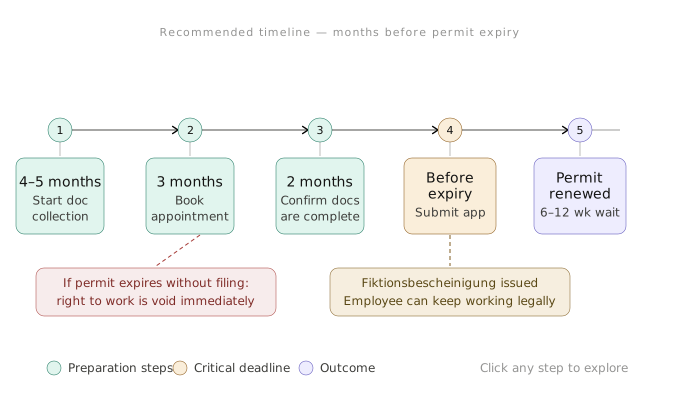
For HR teams managing multiple renewals, tracking these milestones manually across different employees and expiry dates is where things break down. A single spreadsheet won't cut it when you're handling 15+ international hires.
Documents Required for Germany Work Permit Renewal
Document requirements vary slightly by permit type, but here's what most renewals require:
- Valid passport (with at least 6 months validity beyond the intended permit period)
- Current residence permit (Aufenthaltstitel)
- Employment contract or letter confirming continued employment
- Recent payslips (typically last 3 months)
- Employer declaration (Erklärung zum Beschäftigungsverhältnis)
- Biometric passport photos
- Completed application form (available from the relevant Ausländerbehörde)
- Proof of health insurance
- Proof of accommodation in Germany
Additional Documents by Permit Type
| Permit Type | Additional Requirements |
|---|---|
| EU Blue Card | Proof salary meets current threshold (€45,300/year general; €41,041.80 for shortage occupations in 2024) |
| ICT Permit | Updated intra-company transfer agreement, evidence of continued qualifying role |
| Qualified Employment Permit | Confirmation from Federal Employment Agency (BA) if role or employer has changed |
Need expert support with Germany permit renewals? Jobbatical's team handles the full document process for your employees. Book a demo to see how it works.
The Compliance Risk HR Teams Underestimate
Most compliance failures in Germany permit renewals aren't caused by ignorance — they're caused by process gaps. HR teams are juggling a lot. Renewal deadlines get buried in shared calendars. Employees don't flag their expiry dates proactively. Documents get submitted incomplete.
The risk is real. Under German law, employers are liable for knowingly employing someone without valid work authorisation. Fines can reach €500,000 in serious cases, and reputational damage in regulated sectors can be significant.
Even a short lapse — a few days between permit expiry and Fiktionsbescheinigung issuance — can create legal uncertainty that's expensive to resolve.
How Automation Transforms the Renewal Process
This is where technology changes the equation for HR. Instead of manually tracking expiry dates and chasing documents, automation handles the monitoring and alerting — so HR acts at the right time, every time.
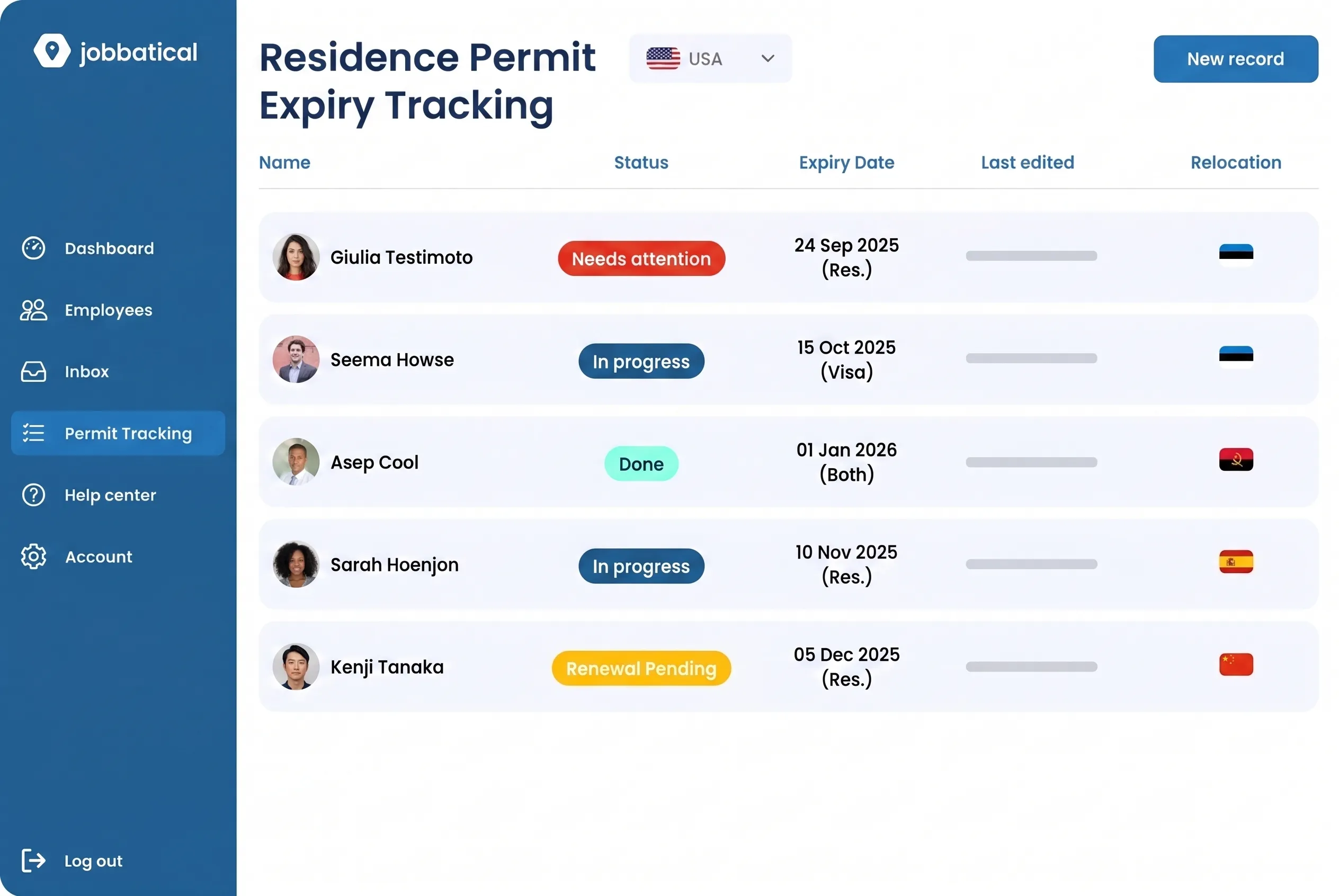
Jobbatical's Employee Renewals & Compliance Tracking Module is built specifically for this. It gives HR teams:
- Real-time renewal status dashboard — see every employee's permit expiry date and renewal stage in one view
- Automated deadline reminders — triggered at 5 months, 3 months, and 1 month before expiry
- Document checklists per permit type — so nothing gets missed before the appointment
- Expert escalation — Jobbatical's immigration specialists step in when cases need human judgement
- Audit trail — full compliance documentation in case of employer audits
For companies with 10 or more international employees in Germany, manual tracking is a liability. A dedicated platform removes that risk entirely.
EU Blue Card Renewals: Special Considerations for HR
The EU Blue Card is one of the most common permits for skilled international hires in Germany. Its renewal has one additional complexity: the salary threshold check.
At each renewal, HR must confirm the employee's current salary still meets or exceeds the minimum threshold. If the employee has had a role change or hasn't received a raise, this can create an unexpected eligibility issue.
It's worth running a salary check 4–5 months before renewal — not just before the appointment. If a raise is needed, you want time to make it happen before the application window closes.
Learn more about the Germany EU Blue Card and what Jobbatical covers end-to-end.
What Changes If the Employee Changes Jobs or Roles?
A permit renewal is not just a rubber stamp. If the employee's job title, salary, or employer has changed since the original permit was issued, the renewal may require additional approval steps — including a new Federal Employment Agency (Bundesagentur für Arbeit) check in some cases.
HR should flag any internal promotions, restructuring, or role changes to their immigration provider before filing the renewal. Discrepancies between the original permit conditions and current employment can delay processing or trigger a new full application.
Have a specific query on Permit renewals?
Our experts are ready to help. Schedule a chat with our experts.Building a Renewal Tracking System That Works
Whether you're managing 5 or 50 international employees in Germany, the fundamentals of a reliable renewal process are the same:
- Centralise expiry data — keep all permit expiry dates in one system with clear ownership
- Set automated alerts — don't rely on manual calendar reminders
- Standardise your document checklist — by permit type, so collection is predictable
- Build in buffer time — at least 3 months, ideally 5
- Partner with an expert — for high-volume or complex cases, an immigration specialist reduces risk significantly
Jobbatical combines all five of these into a single platform. Our Germany Work Permit Renewals service covers the full process — document collection, appointment booking, filing, and compliance tracking — so HR teams don't have to manage it in isolation.
Ready to take renewal management off your plate? Book a demo with Jobbatical and see the compliance tracking module in action.
Disclaimer: Immigration rules change quite frequently; please verify with official sources or contact us for the latest info before making any decisions.
Frequently Asked Questions — Germany Work Permit Renewals
When should HR start the Germany work permit renewal process?
Start at least 3 months before expiry — ideally 4–5 months.
Immigration offices (Ausländerbehörde) in major cities are heavily booked. Appointment slots fill 4–8 weeks in advance. Build in enough buffer to collect documents and resolve any issues before the deadline.
What documents are needed for a Germany work permit renewal?
Standard requirements for most permit types:
- Valid passport (6+ months validity beyond the permit period)
- Current residence permit
- Employment contract or letter confirming continued employment
- Last 3 months' payslips
- Employer declaration (Erklärung zum Beschäftigungsverhältnis)
- Biometric passport photos
- Completed application form from your local Ausländerbehörde
- Proof of health insurance
- Proof of accommodation in Germany
EU Blue Card holders must also confirm the current salary still meets the threshold at renewal.
Can an employee keep working while the renewal is being processed?
Yes — if the application is submitted before expiry.
German law issues a Fiktionsbescheinigung (fictional permit) that allows continued work during processing. This only applies if the application was filed on time. A late filing means no legal right to work during the gap.
How long does a Germany work permit renewal take?
Total lead time in major cities: 3–5 months.
- Appointment wait: 4–8 weeks
- Processing after appointment: 6–12 weeks
Berlin and Munich tend to have the longest backlogs. Starting early is essential to avoid overlap with the permit expiry date.
What happens if the work permit expires without a renewal filing?
The employee loses the right to work immediately.
Continued employment becomes unlawful. Employers can face fines of up to €500,000. The employee may also face an irregular stay status, which affects future immigration options in Germany.
Does the EU Blue Card renewal differ from a standard work permit?
The process is similar but includes a salary threshold check.
As of 2024, the minimum annual salary is €45,300 (general) or €41,041.80 for shortage occupations. HR should verify the employee's current salary before filing — not just at the appointment. If a raise is needed, plan for it 4–5 months before renewal.
What if the employee changed roles or salary since their original permit?
Flag any changes to your immigration provider before filing.
A new job title, employer, or significant salary change can trigger additional approval steps — including a new Federal Employment Agency (BA) check. Discrepancies with the original permit conditions may delay processing or require a full new application.
How can automation help HR teams manage Germany permit renewals?
Automation removes the manual tracking burden entirely.
Tools like Jobbatical's compliance tracking module provide a real-time dashboard of every employee's renewal status, automated deadline reminders, per-permit document checklists, and a full audit trail. Critical for teams managing 10 or more international hires.

.svg)
.svg)
