


KEY TAKEAWAYS
- Berlin's LEA mandated online-only submission for freelance and self-employed residence permits from March 2026 — paper applications are no longer accepted.
- HR teams sponsoring specialist contractors or managing employees transitioning to freelance status must update their onboarding and compliance workflows now.
- The Freiberufler (liberal profession) and gewerbliche Selbstständige categories are treated differently — contractors must confirm their classification before applying.Processing timelines and documentation checklists have shifted; companies relying on contractor availability windows need to build in longer lead times.
- Jobbatical's immigration platform automates document tracking and deadline alerts for contract workers across Germany, reducing compliance risk for global mobility teams.
From March 2026, Berlin's Landesamt für Einwanderung (LEA) no longer accepts paper or in-person submissions for freelance and self-employed residence permits. Every application — new or renewal — must go through the official online portal. For HR teams managing specialist contractors or supporting employees shifting to freelance arrangements, this is an operational change that cannot be deferred.
This guide explains exactly what changed, who it affects, and what your compliance workflow needs to look like now.
What the March 2026 LEA Change Actually Means
Berlin's LEA had already moved employed-worker residence permit applications online in prior years. The March 2026 expansion brings self-employed and freelance residence permits into the same mandatory digital system.
This means:
- No walk-in appointments for new freelance permit applications
- No paper submission for renewals
- All supporting documents must be uploaded in specified digital formats
- Confirmation, status updates, and decisions are communicated via the portal
The affected permit type is the Aufenthaltserlaubnis zur selbstständigen Tätigkeit (residence permit for self-employed activity) under Section 21 of the German Residence Act (Aufenthaltsgesetz).
Freiberufler vs. Gewerbliche Selbstständige: Why Classification Matters
Before any application is submitted, your contractor must confirm which legal category they fall into. This is not a minor detail - it determines the documentation, the permit subtype, and the review criteria.
Split illustration comparing Freiberufler and Gewerbliche Selbstständige classifications in Germany
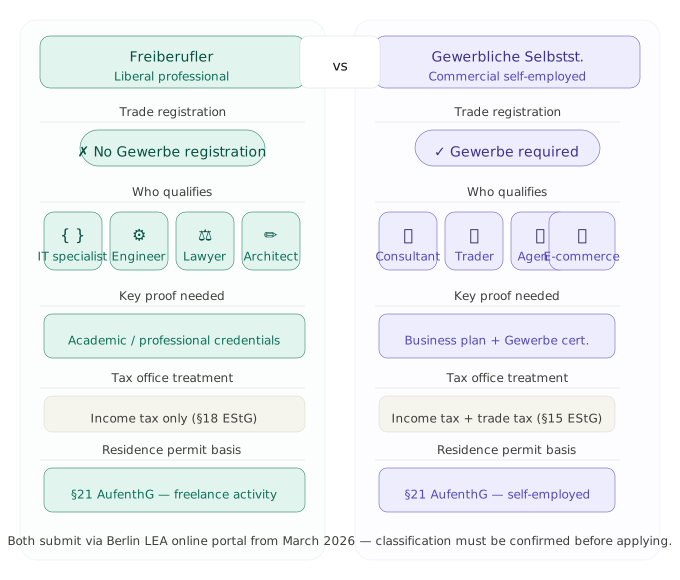
Germany Freelance Permit Classification Overview
HR teams onboarding a contractor who straddles both categories — for example, an IT consultant also running a side e-commerce operation — should seek clarification from an immigration professional before submitting. Misclassification can result in application rejection and restarts from scratch.
Need help assessing your contractor's correct category? Talk to Jobbatical's immigration experts before the application goes in.
Who This Affects in Your Workforce
The March 2026 change is directly relevant to four contractor and worker types HR teams regularly manage:
Impact by Worker Type
What the Online Application Process Looks Like
Berlin LEA online portal for freelance residence permit application 2026

The Berlin LEA online portal requires applicants to create an account, book a digital submission slot, and upload a defined document set. Here is what the core document checklist looks like for a standard Freiberufler application:
- Valid passport (all pages, digital scan)
- Current biometric passport photo meeting LEA specifications
- Proof of professional qualifications or academic credentials
- Client contracts or letter of intent from at least one client
- Business plan (for new applicants) or income evidence (for renewals)
- Proof of health insurance (public or private, Germany-compliant)
- Proof of address registration (Anmeldung)
- Evidence of financial reserves or projected income meeting viability thresholds
Incomplete submissions are returned via the portal. This does not pause the clock — it resets the queue position. HR teams coordinating contractor availability should treat a complete first submission as a compliance priority, not a formality.
For an up-to-date checklist, always verify directly with the Berlin LEA official website before submission, as required documents can be updated without notice.
What are the risks for Employee-to-Freelance Transition:
One of the most operationally complex scenarios HR teams face is when an existing employee — currently holding an employment-based residence permit — wants to transition to freelance or self-employed status with the same or a different company.
This is not a permit amendment. It is a new application under a different legal basis. The employee must:
- Continue on their current permit until the new one is granted (or a bridging status is confirmed in writing by the LEA)
- Submit a complete new Section 21 application through the online portal
- Meet the financial viability criteria for self-employment independently — employment income is not counted
- Provide evidence of professional independence (contracts with multiple clients, or a credible business plan)
The real risk is the gap in legal work status. Start this process at least three months before the planned transition date. If you are managing this across multiple team members or locations, Jobbatical's platform tracks permit status and flags transition timelines automatically.
Processing Timelines and What to Plan For
Berlin LEA processing times for self-employed permits have historically ranged from 6 to 16 weeks. The online system is expected to reduce administrative delays for clean, complete applications. However, HR teams should plan for:
- Minimum buffer: 8 weeks from submission to permit decision
- Realistic planning buffer: 12 weeks for complex profiles or incomplete first submissions
- Renewal lead time: Begin renewal process 90 days before permit expiry to avoid a lapse in legal status
Note that the legal right to continue working while a renewal is pending (Fiktionsbescheinigung) is issued by the LEA and must be requested explicitly. Do not assume work continuity is automatic during the processing period.
Timeline showing 90-day contractor permit renewal process in Germany

How HR Teams Should Update Their Contractor Compliance Workflows
The shift to online-only submission is an opportunity to centralise and standardise how your team handles contractor immigration. Here is a practical checklist for updating your processes:
- Add permit category verification (Freiberufler vs. Gewerbe) to contractor onboarding intake forms
- Build a 12-week permit lead time into all contractor project start dates for non-EU nationals
- Set 90-day automated renewal reminders for contractors holding Section 21 permits
- Replace any "submit in person as fallback" instructions with the correct portal URL and portal account setup steps
- Establish a clear internal owner — usually global mobility or HR operations — for contractor immigration queries
- For teams managing 5+ contractors in Germany, consider a dedicated immigration management platform to automate tracking
Jobbatical's platform integrates document collection, permit tracking, and deadline management into a single view — across all your contractor and employee relocations in Germany and beyond. Book a demo to see how it works for contractor-heavy teams.
What Stays the Same
The March 2026 change affects the submission channel, not the underlying legal requirements. The eligibility criteria for a Section 21 self-employed residence permit remain:
- An economic interest or regional need for the activity
- A positive impact on the German economy
- Financing secured through equity, loans, or confirmed revenue
- Professional qualifications demonstrable for the intended activity
The legal basis remains the Aufenthaltsgesetz Section 21. The standard for approval has not changed — only the mechanism for how applications reach the authority.
Key Takeaway for HR and Global Mobility Teams
Germany's freelance residence permit going online-only in Berlin is an administrative change with real operational consequences. For companies that rely on specialist contractors, manage remote part-time workers, or support employee transitions to self-employment, the risk is not the portal itself — it is continuing to rely on outdated processes that assumed in-person fallback options.
Update your workflows now. Build in lead times. Verify contractor classifications before submission. And if you are managing this at scale, talk to Jobbatical about automating the tracking so nothing falls through the cracks.
Disclaimer: Immigration rules change quite frequently; please verify with official sources or contact us for the latest info before making any decisions.
Frequently Asked Questions — Germany Freelance Residence Permits 2026
What changed for Germany freelance residence permits in March 2026?
Berlin's Landesamt für Einwanderung (LEA) extended its mandatory online submission system to cover self-employed and freelance residence permits from March 2026. All new applications and renewals must now be submitted through the official online portal — paper or in-person submissions are no longer accepted for these permit categories.
Does this affect companies sponsoring specialist contractors in Germany?
Yes. If your company retains specialist contractors who need a German residence permit for self-employed or freelance work, your HR or global mobility team will need to ensure those individuals apply through the online portal. Sponsoring companies should review their onboarding checklists and contractor compliance workflows to align with the updated process.
What is the difference between Freiberufler and gewerbliche Selbstständige in Germany?
Freiberufler (liberal professionals) include engineers, IT specialists, lawyers, doctors, artists, and similar knowledge workers. They are not required to register a trade. Gewerbliche Selbstständige are commercial self-employed individuals who must register a business (Gewerbe). The permit category and documentation requirements differ between these two classifications, so contractors must confirm their status before applying.
What documents are required for the online freelance residence permit application in Germany?
Core requirements include a valid passport, biometric photo, proof of health insurance, evidence of professional qualifications or credentials, a business plan or client contract portfolio, proof of income or financial viability, and registration confirmation (Anmeldung). Documents must be uploaded in the required digital format via the LEA online portal. Always verify the current checklist on the official LEA website before submission.
How long does it take to process a freelance residence permit in Germany after the March 2026 change?
Processing times at Berlin's LEA have ranged from 6 to 16 weeks depending on workload and application completeness. The online system may reduce administrative back-and-forth for complete applications, but HR teams should still plan contractor availability around a minimum 8-week processing buffer. Incomplete applications will be returned digitally, resetting the queue.
Can an employee on a regular work permit switch to a freelance permit in Germany?
Yes, but the transition requires a new application for a self-employed or freelance residence permit — the existing permit does not automatically convert. The employee must meet the financial viability and professional credential requirements for self-employment. HR teams should initiate this process well before the current permit expires to avoid a gap in legal work status.
Does the online-only rule apply to other German cities outside Berlin?
The March 2026 mandate applies to Berlin's LEA specifically. Other German cities and states (Länder) operate their own immigration authorities (Ausländerbehörde) and may have different digitisation timelines. Companies with contractors across multiple German cities should verify local requirements individually, as processes can vary significantly between Munich, Hamburg, Frankfurt, and smaller municipalities.

.svg)
.svg)