


KEY TAKEAWAYS
• The Schengen 90/180-day rule limits non-EU nationals to 90 days in any rolling 180-day period — not a fixed calendar quarter.
• All Schengen travel counts cumulatively: business trips, personal holidays, and short assignments across all 29 member states combine toward the limit.
• Overstays expose employees to entry bans of 1–5 years and companies to fines, legal costs, and damaged visa sponsorship standing.
• Time spent on a valid Type D national visa or residence permit does NOT count toward the 90-day short-stay limit.• With EES biometric tracking rolling out, manual overstays that previously went undetected will be automatically flagged at every Schengen border.
What Is the Schengen 90/180-Day Rule?
The Schengen 90/180-day rule is the cornerstone of short-stay compliance in Europe. It allows non-EU nationals — whether travelling visa-free or on a Schengen Type C visa — to spend a maximum of 90 days within any rolling 180-day period across all 29 Schengen member states combined.
For HR and global mobility teams, the critical word is rolling. The 180-day window is not a fixed calendar semester. It looks backwards continuously from any given date. That means the compliance calculation changes every single day — and a trip that was compliant last month may not be compliant next month.
Read all about Schengen Visa rules here.
Schengen 90/180-Day Rule: Quick Reference
Which Countries Are Covered in Schengen?
The Schengen Area covers 29 countries: 25 EU member states (excluding Cyprus and Ireland) plus Iceland, Norway, Switzerland, and Liechtenstein. Internal border controls between these countries are largely abolished, meaning authorities track cumulative stay — not individual country visits.
Check out which countries are covered in Schengen here.
A common mistake: employees who split a trip between Germany, France, and the Netherlands assume days are tracked per country. They are not. All three count toward the same 90-day total.
How the 90/180-Day Calculation Works
HR teams managing frequent business travellers must actively track these day counts. Overstaying triggers automatic flags at border crossings and can result in multi-year entry bans affecting future company travel.
The Rolling Window: Why It Trips Up HR Teams
The rolling nature of the 180-day window is where most compliance failures occur. To check remaining days before any trip, HR must look back 180 days from the proposed exit date and count every day spent in Schengen during that period.
Rolling Window Calculation Example
Diagram showing how the Schengen 90/180-day rolling window is calculated.
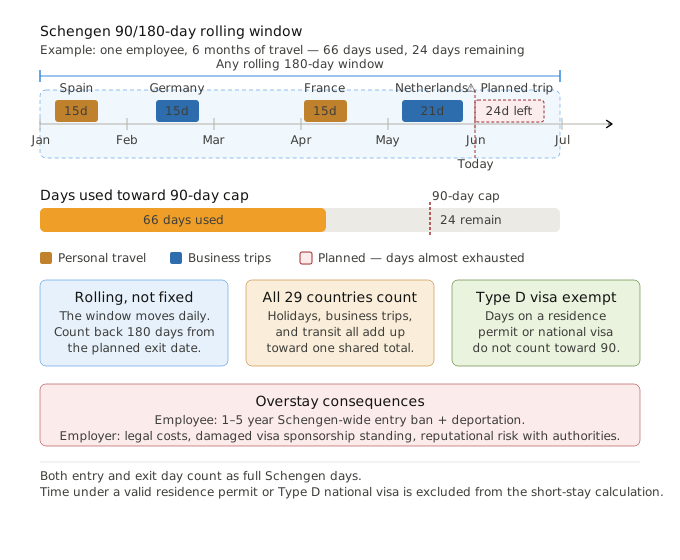
‼️ The trap: HR approved each trip individually, but nobody tracked the cumulative footprint !
What Does NOT Count Toward the 90-Day Limit
Days spent in a Schengen country under a valid long-stay (Type D) national visa or a residence permit do not count toward the 90-day short-stay limit. This is a significant planning lever for global mobility teams.
If an employee is assigned to Germany on a work visa, that entire assignment period falls outside the 90/180 calculation. However, once their residence permit expires and they revert to short-stay travel, the short-stay clock resumes — and any prior Schengen days within the rolling window count again.
Corporate Consequences of a Schengen Overstay
A Schengen overstay is not just the employee’s problem. For the sponsoring company, the consequences can be severe and long-lasting.
Overstay Consequences: Employee vs Employer
EES and the Future of Schengen Enforcement
The EU’s Entry/Exit System (EES) is already operational across Schengen borders since October 2025, replacing manual passport stamps with biometric registration. Once fully implemented, EES will automatically calculate each traveller’s Schengen day count in real time — and flag overstays instantly at every border crossing.
For global mobility teams, this means the era of undetected overstays is ending. Inconsistent manual stamping, which some frequent travellers relied on, will no longer provide a buffer. If your employee’s Schengen days are miscounted in your systems, EES will find it.
Note: France recently paused EES biometric registration at Channel crossing points beyond April 2026 due to infrastructure issues. Manual tracking remains essential during the transition. Read Jobbatical’s EES delay update for current guidance.
How HR Teams Should Manage Schengen Compliance
Managing the 90/180-day rule at scale requires more than a spreadsheet. Here is a practical framework for global mobility teams.
Schengen Compliance Management Checklist for HR
Jobbatical’s compliance platform gives global mobility teams a real-time view of every employee’s Schengen day count, automated threshold alerts, and document management — so compliance is built into your workflow, not bolted on after a problem.
Book a demo to see how it works for teams managing frequent Schengen travellers.
When a Work Visa or Residence Permit Is the Right Solution
If an employee’s project requires more than 90 days in Schengen within a six-month period, a short-stay visa is simply the wrong instrument. The right solution depends on the work type, duration, and country:
For Germany-based assignments, the EU Blue Card or a qualified employment permit provides the legal basis for extended work — and those days fall outside the 90-day count. For multi-country projects, an Intra-Corporate Transfer (ICT) permit may offer the flexibility needed.
Not sure which route fits your situation? Jobbatical’s immigration experts assess the right visa structure for each employee’s specific assignment profile. Talk to our team.
Disclaimer: Immigration rules change quite frequently; please verify with official sources or contact us for the latest info before making any decisions.
Frequently Asked Questions — Schengen 90/180-Day Rule
What exactly is the Schengen 90/180-day rule?
The Schengen 90/180-day rule allows non-EU nationals on short-stay (Type C) visas or visa-free entry to spend a maximum of 90 days within any rolling 180-day period across the 29 Schengen member states. The 180-day window is calculated backwards from any given date, not as a fixed calendar period.
Does a residence permit or Type D visa affect the 90-day count?
No. Days spent in a Schengen country under a valid long-stay (Type D) national visa or residence permit do not count toward the 90-day short-stay limit. This is a critical distinction for HR teams managing employees who move between short-stay business travel and longer project-based assignments in Europe.
What are the corporate consequences of a Schengen overstay?
An employee overstay can result in a 1–5 year Schengen-wide entry ban for the individual, immediate deportation, and significant disruption to business operations. For the employer, consequences include legal costs, reputational damage with immigration authorities, and potential loss of future visa sponsorship privileges across Schengen member states.
Does travel across multiple Schengen countries count separately toward the 90-day limit?
No. All days spent anywhere within the 29 Schengen member states are counted collectively, not per country. An employee who spends 30 days in Germany, 30 days in France, and 30 days in Spain has reached the 90-day limit and cannot re-enter any Schengen country until their rolling window resets.
How will the EU Entry/Exit System (EES) change enforcement of the 90-day rule?
Once fully operational, EES will automatically calculate each non-EU traveller’s Schengen day count using biometric registration at every border crossing, replacing manual passport stamps. Overstays that previously slipped through inconsistent manual checks will be instantly flagged. For HR teams, this makes proactive tracking tools non-negotiable rather than optional.
Can an employee reset the 90-day clock by leaving the Schengen Area briefly?
No. The 180-day window is rolling and looks back continuously from any given date. A short trip outside Schengen does not reset the counter. To calculate remaining days, you must audit all Schengen entries and exits across the previous 180 days from the intended re-entry date. Use Jobbatical’s Schengen compliance calculator to track this accurately.
What should HR teams do now to manage Schengen day counts for their workforce?
HR teams should audit the Schengen travel history of all frequent-traveller employees across the past 180 days, implement a centralised day-tracking system, and flag employees approaching the 90-day threshold before trips are approved. Jobbatical’s compliance platform automates this process, providing real-time alerts so your team never approves a non-compliant trip.

.svg)
.svg)