.svg)



EXECUTIVE SYNOPSIS
- The UK Standard Visitor Visa permits business activities like meetings, negotiations, site visits, and speeches — but only where the substantive work is performed outside the UK.
- The core test is simple: discussing and coordinating work is permitted; delivering work to a UK client or employer is not.
- HR teams most commonly err by underestimating how "providing input" can become de facto employment — especially in consulting, IT, and project delivery roles.
- When an employee is assigned to a UK entity, fulfilling a UK contract, or repeatedly travelling to perform operational tasks, a Skilled Worker or Global Business Mobility visa is required.
- A pre-trip immigration assessment is the lowest-cost compliance measure available — far cheaper than the consequences of getting it wrong.
UK Business Visitor Visa vs Work Visa: Where Is the Line?
Your employee is flying to London for a week. They'll sit in meetings, walk a client through a proposal, and review a site. Do they need a work visa — or does a standard visitor visa cover it?
This question trips up HR teams constantly. Get it wrong, and the consequences range from entry refusal at the border to serious immigration compliance violations. The UK Home Office is explicit about the boundary. Here's how to read it correctly.
What the UK Standard Visitor Visa Actually Allows
The UK Standard Visitor Visa (often called the business visitor visa) is designed for short-term, non-employment business activity. According to the UK Home Office's published visitor guidance, a visitor may:
- Attend meetings, conferences, seminars, and interviews
- Give a one-off or short series of talks or speeches, provided these are not organised as commercial events and will not generate profit for the organiser
- Negotiate and sign deals and contracts
- Attend trade fairs for promotional purposes only — not direct selling
- Carry out site visits and inspections
- Gather information relevant to their employment overseas
- Be briefed on the requirements of a UK-based customer, provided any resulting work is carried out outside the UK
- Undertake activities relating to their overseas employment remotely from within the UK, as long as this is not the primary purpose of the visit
The Three Tests for a Legitimate Business Visit
When assessing whether a trip qualifies under visitor rules, apply these three filters:
1. Is the work being delivered in the UK, or discussed?
A visitor can be briefed, consulted, updated, and informed. They cannot deliver work to a UK client or employer on UK soil. If your employee is building, implementing, coding, designing, or training during the trip — that's work, not a visit.
2. Is the activity one-off or ongoing?
The visitor rules accommodate a "short series" of talks or a defined trip. They are not designed for employees who rotate through the UK regularly to perform work that would otherwise require a local hire. Frequency and pattern matter to Home Office compliance officers.
3. Who benefits from the activity — a UK entity or an overseas employer?
A visitor may gather information or be briefed to help their overseas employer. Once the primary beneficiary of the work is a UK organisation — and the activity looks like contracted service delivery — you're outside visitor territory.
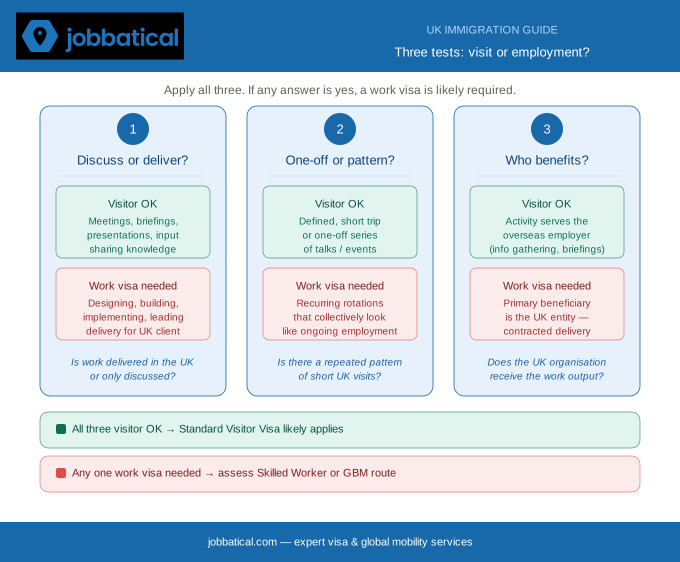
Side-by-Side: Visitor Visa vs Work Visa Scenarios
When You Need a Skilled Worker Visa or GBM Route
If the activity crosses into employment — or something that functions like employment — the two most relevant routes are:
Skilled Worker Visa
For employees taking up a role with a UK-licensed sponsor. The job must appear on the eligible occupation list, meet the salary threshold (generally £38,700 as of 2024, with some exceptions), and the employer must hold a valid sponsor licence. Learn more about Jobbatical's UK skilled worker visa service.
Global Business Mobility (GBM) Route
Designed for employees of overseas businesses who need to work in the UK temporarily. It includes several sub-categories:
If your employee is being assigned to a UK entity — even temporarily — GBM is almost always the more appropriate route than a visitor visa.
The Grey Zone: Where HR Teams Most Commonly Get This Wrong
The trickiest scenarios involve employees who are genuinely based overseas but whose UK visits start to look like employment. Here are the most common compliance traps:
"Just giving input" that becomes project ownership. A visitor attending a kick-off meeting is fine. A visitor who then leads the workstream, reviews deliverables, and directs UK staff is not — regardless of what the trip is called internally.
Remote work during a visit. The visitor rules permit remote work on overseas employment, but only where it is incidental to the visit. If the primary purpose of being in the UK is to work remotely, this falls outside permitted activities. This is especially relevant for employees of companies with UK offices who travel frequently.
Trade fair "promotion" that tips into selling. Attending a trade fair and showcasing a product is permitted. Closing sales and transacting directly is not.
Talks and speeches that are commercially organised. A speaker at an internal event is fine. A keynote at a ticketed industry event where the organiser profits may not be.
Practical Guidance for HR and Global Mobility Teams
Before approving any UK business trip, ask these questions:
- What will the employee actually do each day? A day-by-day activity breakdown is worth the effort for trips longer than two or three days.
- Is any of the work being delivered to a UK client or entity? If yes, visitor rules likely don't apply.
- Has this person made similar trips recently? A pattern of frequent short visits can attract scrutiny even if each individual trip looks compliant.
- Is there a service contract or statement of work involved? If the employee is fulfilling a commercial contract with a UK company, that points away from visitor status.
Decision flowchart comparing UK Business Trip vs Standard Visitor Visa requirements
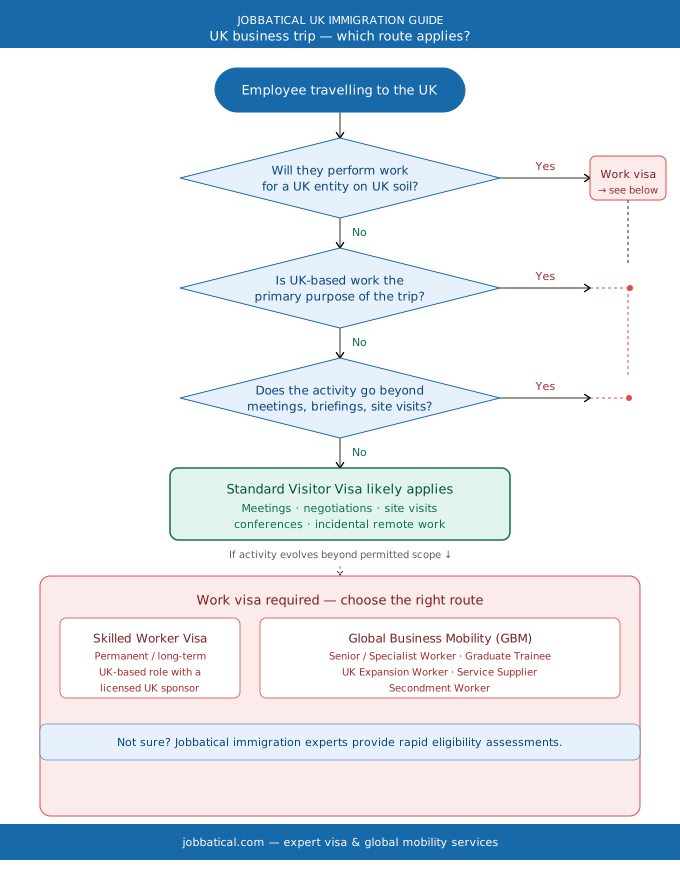
When in doubt, a quick immigration assessment takes less time and costs less than an entry refusal, a visa revocation, or — in the case of sponsored workers — a compliance action against the employer's sponsor licence.
Jobbatical's immigration experts conduct rapid eligibility assessments and can advise on the right route for your specific scenario — including whether a particular trip is safely covered by visitor rules or requires a visa application.
Disclaimer
Immigration rules change very regularly. Please do due diligence with official sources or contact us for the latest info before you make any decisions. Jobabtical is in no way responsible for the outcome based on above info.
FAQs UK business visa vs Visitor Visa difference 2026
Can an employee on a UK visitor visa attend a client meeting and present a proposal?
Yes. Attending meetings and presenting proposals are explicitly permitted under UK visitor rules. The employee must not, however, deliver contracted work or provide consulting services to the UK client during the visit.
Can a visitor sign contracts in the UK?
Yes. Negotiating and signing deals and contracts is a listed permitted activity under the UK Standard Visitor Visa. The key is that the underlying work under the contract is performed outside the UK.
What's the difference between a Skilled Worker visa and the Global Business Mobility route for UK assignments?
The Skilled Worker visa is for employees taking up a permanent or long-term role with a UK-based sponsor. GBM is for employees of overseas businesses temporarily working in the UK — making it better suited for assignments, secondments, and intra-company transfers.
Can a foreign employee work remotely on their overseas job while visiting the UK?
Yes, but only if remote work is incidental — not the primary reason for being in the UK. Travelling to the UK mainly to work remotely is outside permitted visitor activities.
How many times can someone visit the UK on a visitor visa for business?
There is no set limit on the number of visits, but the Home Office will consider the overall pattern. Frequent short visits that collectively resemble ongoing employment can result in entry refusal or visa cancellation.
Does attending a trade fair require a work visa?
Not if the employee is there for promotional purposes only. Direct selling at a trade fair is not permitted under visitor rules and would require a different immigration route.
How does Jobbatical help with UK visitor vs work visa decisions?
Jobbatical's immigration experts review the specific activities planned for a trip and advise on whether visitor rules apply or a visa application is needed — covering the full UK immigration picture, including GBM and Skilled Worker sponsor licence support. Read more about Jobbatical's Business visa guide.

.svg)
.svg)