.svg)


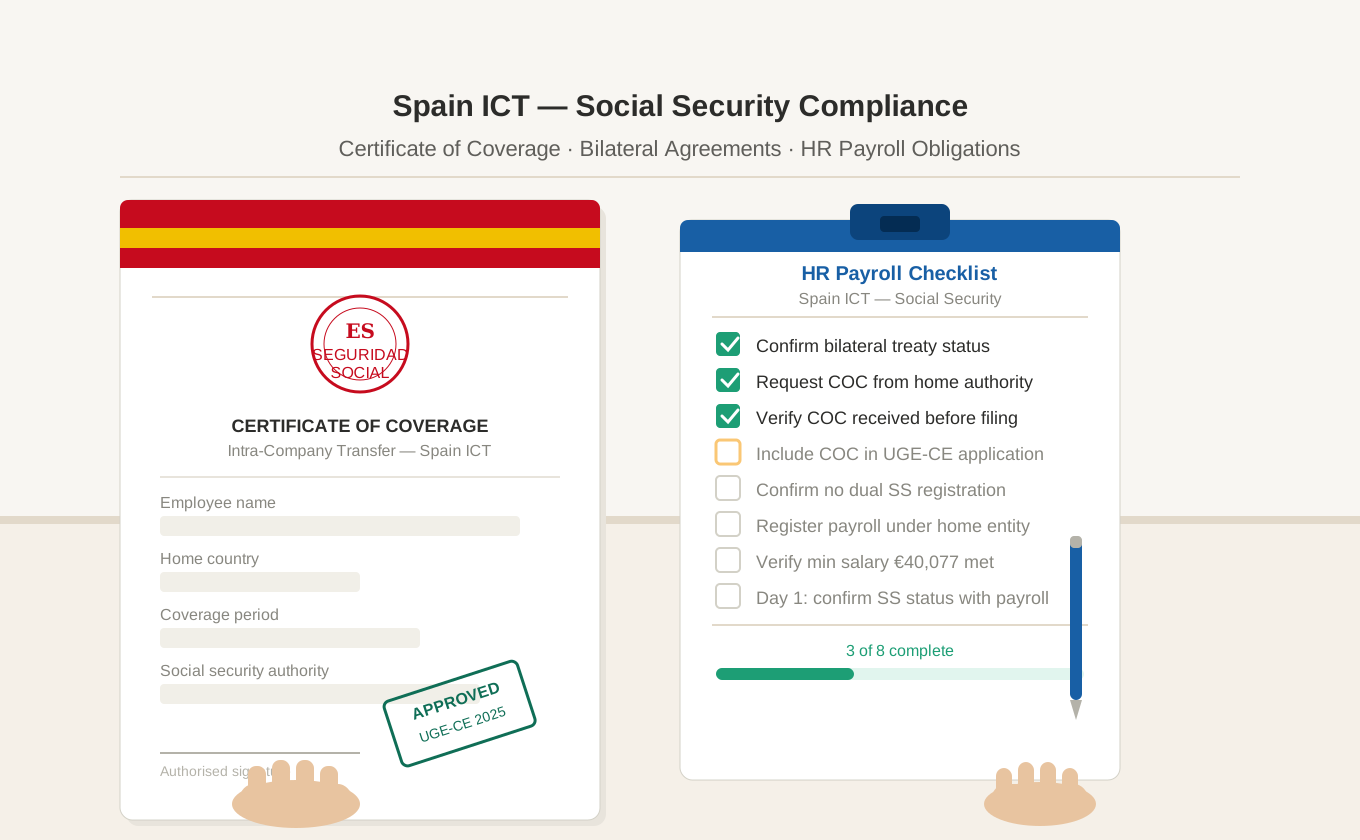
Key Take aways for Spain ICT Social Security
- Whether an ICT employee pays into Spanish social security or stays on their home country system depends on whether a bilateral agreement exists between Spain and the sending country.
- Spain eliminated the letter of commitment workaround in 2024 HR must now obtain a Certificate of Coverage before submitting the ICT application, not after.
- Employees from countries without a bilateral agreement with Spain must be registered in the Spanish social security system from Day 1.
- Certificate of Coverage processing can take several months, making early action a legal and operational necessity.
- Payroll setup, healthcare coverage, and onboarding timelines all depend on getting the social security question right before the permit application is filed.
One of the most common compliance gaps HR teams hit when transferring an <strong>ICT posted employee</strong> to Spain for a <strong>professional work placement</strong> is the social security question. For a <strong>posted worker</strong>, which system applies? Who contributes? What documents does the host entity need before the application goes in?
The answer depends on whether a bilateral agreement exists between Spain and the sending country, and since a 2024 practice change, getting it wrong means months of delay or an outright rejection.
The Core Rule: Treaty or No Treaty
Spain social security obligations for intra-company transferees split into two scenarios based on whether the sending country has a bilateral social security agreement with Spain.
Spain ICT social security decision flow: bilateral treaty versus no treaty
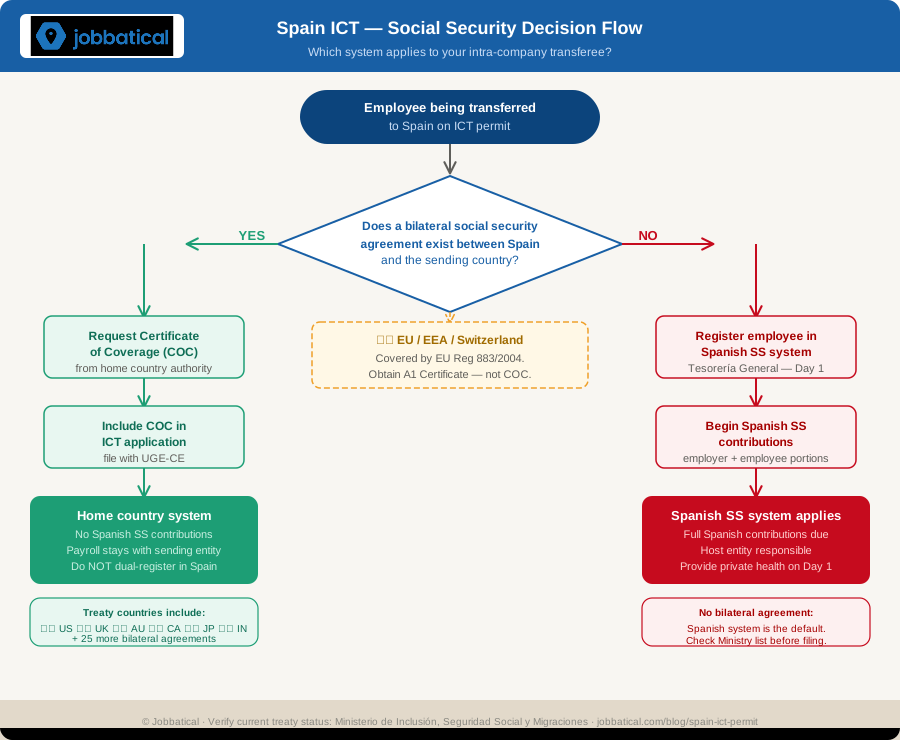
Scenario Comparison: Treaty vs. No Treaty
Spain has bilateral agreements with over 30 countries, including the United States, United Kingdom, Australia, Canada, Japan, South Korea, India, and most of Latin America. For the full in-country application workflow for Mexican nationals, see this use case.
The Spanish Ministry of Inclusion, Social Security and Migration publishes the current list. For EU-based senders, EU Regulation 883/2004 governs automatically.
For a detailed overview on the Spain ICT permit, explore the complete Spain ICT employer guide.
2024 Policy Update: The Removal of the Letter-of-Commitment Workaround
Before 2024, Spanish immigration authorities allowed companies to submit a letter confirming that the employee would be registered for Spanish social security while the Certificate of Coverage (COC) was still being processed in the home country.That is no longer accepted.
Now, employees coming from countries that have a social security agreement with Spain must submit the actual Certificate of Coverage together with the ICT application. If the COC is not ready, the ICT application cannot move forward.
This is important because getting a COC can take anywhere from a few weeks to several months, depending on the country. If HR or payroll teams wait until the immigration paperwork is being prepared, the transfer process may be delayed.
The best approach is to request the COC as soon as the employee transfer is approved, instead of waiting until the application documents are being collected.
What HR Must Prepare By Scenario
If the Sending Country Has a Bilateral Agreement with Spain
If No Bilateral Agreement Exists
Payroll During the Transfer: What the Spanish Host Entity Owes
During the ICT assignment, the employee employment contract and payroll must remain with the sending home country company. The Spanish host entity does not become the employer of record under the ICT framework. The salary is paid by the home country entity, not the Spanish company.
However, the employee must meet Spain minimum salary threshold approximately 40,077 euros gross annually in 2025 and the Spanish host entity must have documentation proving that salary is being paid.
For treaty countries, the home country entity continues handling all social security contributions. The Spanish host entity does not separately withhold Spanish contributions. For non-treaty countries, the host entity is responsible for Spanish social security registration and contributions, even though payroll originates abroad which requires careful coordination between HR and payroll teams in both jurisdictions.
The EU and EEA Case Under Regulation (EC) 883/2004: A1 Certificate Instead of COC
Employees transferred from an EU, EEA, or Swiss sending entity follow a different document path. EU Regulation 883/2004 governs social security coordination across member states. Instead of a Certificate of Coverage, the relevant document is an A1 Certificate, issued by the home country competent social security authority.
The A1 Certificate confirms which country legislation applies and must be recognized by Spanish authorities automatically under EU law. No additional Spanish registration is required when a valid A1 Certificate is in place. Processing typically takes 2 to 4 weeks for standard cases in most EU countries.
Common HR Mistakes and How to Avoid Them
A missing or late Certificate of Coverage is one of the seven standard UGE-CE denial triggers 7 Reasons Spain ICT Visa Applications Get Rejected.
Waiting too long to request the COC
The Certificate of Coverage (COC) must be ready before the ICT application is submitted.
For employees transferring from the US, the process can take at least 4 to 8 weeks. In some countries, it may take 3 to 6 months. Starting late can delay the entire transfer.
Assuming a treaty means no paperwork
A social security agreement with Spain helps employees avoid paying into the Spanish system, but documents are still required. HR teams must submit the COC or A1 certificate in advance.
If these documents are missing, Spanish authorities may treat the case as if no agreement exists, which can lead to unexpected registration and contribution costs in Spain.
Registering the employee in both countries
Some companies register employees in Spain “just in case,” even when a valid treaty applies. This can lead to duplicate social security contributions in two countries at the same time.
If the employee has a valid COC or A1 certificate, they should generally remain covered only under the home country system.
Overlooking the Spanish entity’s own compliance
The Spanish host company must also meet its own social security obligations before sponsoring an ICT permit. The company must be properly registered with the Spanish Social Security Treasury and up to date on its obligations.
Practical Timeline for HR Teams
Recommended Social Security Preparation Timeline
If your organisation is managing multiple ICT transfers, the social security step is the one most likely to compress your onboarding timeline. It should be treated as a parallel workstream to the permit application not a downstream task.
For more on how permit type affects employer obligations, see the EU ICT vs. National ICT permit comparison.
Disclaimer: Immigration rules change quite frequently; please verify with official sources or contact us for the latest info before making any decisions.
Frequently Asked Questions — Spain ICT Social Security for HR Teams
Does an intra-company transferee have to pay social security in Spain?
It depends on the sending country. If Spain has a bilateral social security agreement with the employee home country, the employee can remain covered by the home country system and avoid Spanish contributions. If no agreement exists, the employee must be registered in the Spanish social security system from Day 1 of employment.
What is a Certificate of Coverage and why does HR need it before filing the ICT application?
A Certificate of Coverage is an official document issued by the home country social security authority confirming the employee remains covered there. Since Spain eliminated the letter of commitment practice in 2024, the COC must be submitted as part of the ICT permit application. Government processing typically takes several months, so HR must request it at the very start of the transfer planning process.
What changed in Spain ICT social security requirements in 2024?
Spanish authorities previously accepted a letter of commitment from the host employer as interim proof of social security coverage while the Certificate of Coverage was being processed. That practice was eliminated in 2024. ICT applicants from treaty countries must now always include the actual Certificate of Coverage when filing. Applicants who cannot present it risk having their applications rejected.
Which countries have bilateral social security agreements with Spain?
Spain has bilateral agreements with over 30 countries, including the United States, United Kingdom, Australia, Canada, Japan, South Korea, India, and most of Latin America. All EU and EEA members are covered automatically under EU Regulation 883/2004. The Spanish Ministry of Inclusion, Social Security and Migration publishes the current full list.
What happens to payroll if the employee stays on the home country social security system?
If the Certificate of Coverage confirms home country coverage, the Spanish host entity does not withhold or remit Spanish social security contributions. Payroll continues under the sending company system. However, the employee must still meet Spain minimum salary threshold of approximately 40077 euros per year in 2025, and the host company must remain registered with Spanish immigration authorities.
Can HR register the employee in the Spanish social security system as a precaution, even if a treaty exists?
No. For employees from treaty countries, dual registration creates a dual-contribution problem. The bilateral agreement is designed precisely to prevent that. The correct approach is to obtain the Certificate of Coverage and ensure the Spanish host entity does not independently register the employee in the Spanish system.
How long does it take to get a Certificate of Coverage?
Processing times vary by country. In the US, the Social Security Administration typically takes 4 to 8 weeks for standard cases. Some countries process within 2 to 4 weeks; others can take 3 to 6 months. HR teams should request the COC as soon as the transfer decision is confirmed, not when the ICT application is being prepared.

.svg)
.svg)