


KEY TAKEAWAYS
- UK business immigration solicitors are best for complex, high-stakes, or one-off cases, not ongoing volume hiring Immigration platforms give HR teams real-time visibility, automated compliance, and lower per-case costs at scale.
- The true cost of a first sponsored hire (solicitor fees + government fees) can exceed £10,000 From December 2025, employers cannot recover sponsor licence or Skills Charge costs from workers, making cost control critical.
- For companies managing 5+ sponsored employees, a platform-led model with legal backup is the smarter operational choice
UK Business Immigration Solicitors vs. a Platform: Which Is Right for Your Company?
Sponsoring overseas workers in the UK has never been more expensive. The true cost of your first sponsored hire, legal fees, sponsor licence, Certificate of Sponsorship, and the Immigration Skills Charge, can now exceed £10,000. And since December 2024, you can no longer pass compliance costs on to your employees.
So the question most HR teams land on quickly is: do we hire a UK business immigration solicitor, or do we manage this through a platform? The honest answer depends on your hiring volume, internal capacity, and risk profile.
What UK Business Immigration Solicitors Actually Offer
A regulated UK immigration solicitor or corporate immigration lawyer brings genuine legal expertise. Where they add real value:
- Complex or high-risk visa cases
- Sponsor licence applications and compliance audits
- Home Office appeals and refusal challenges
- Strategic advice on visa route selection
- Tribunal or court representation
Typical costs: £5,000–£6,000 for a sponsor licence application; £3,000–£5,000 per Skilled Worker visa; £150–£400/hour for ad hoc advice. These are legal fees only, government fees sit on top.
The gap? Solicitors are built for casework, not operations. They don't give you a dashboard. They can't automate renewal reminders. And when you're managing 20+ sponsored employees across different visa expiry dates, a spreadsheet and a solicitor relationship isn't a compliance system.
What an Immigration Platform Gives You Instead
An immigration platform, like Jobbatical, combines in-house legal expertise with technology built specifically for HR teams managing volume. What you get:
- Real-time tracking of every application and renewal
- Automated compliance alerts before deadlines
- Document management and audit-ready records
- Pre-hire eligibility checks in minutes
- Access to immigration lawyers for complex cases
- End-to-end support: from sponsor licence to Skilled Worker visa to renewal.
In practice, this means your HR team isn't chasing solicitors for case updates. You're not rebuilding a compliance record every time the Home Office asks. The platform does the heavy lifting; the experts handle the judgment calls.
Read about best global mobility software for HR teams.
Side-by-Side: Solicitor vs. Platform
UK Business Immigration: Solicitor vs. Platform Comparison
| Factor | UK Immigration Solicitor | Immigration Platform (e.g. Jobbatical) |
|---|---|---|
| Legal expertise | SRA-regulated, court representation | In-house lawyers + OISC advisers |
| Cost model | Per-case fees (£3,000–£6,000+) | Subscription or per-case; lower at volume |
| Visibility | Email updates, manual follow-up | Real-time dashboard, all cases in one view |
| Compliance tracking | Reactive (you flag issues) | Proactive (automated alerts, deadline tracking) |
| Renewal management | You initiate; solicitor acts | Platform flags and manages automatically |
| Audit readiness | Manual document collation | Audit-ready records always on hand |
| Best for | Complex cases, appeals, one-off hires | 5+ sponsored employees, ongoing hiring |
| HR team burden | High, coordination-heavy | Low, most tasks automated |
UK immigration law firm versus digital immigration platform dashboard
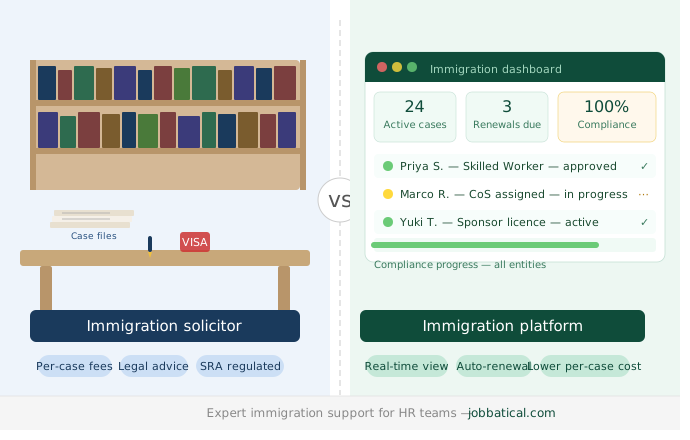
If your company also hires into Germany, see how the law firm vs platform decision plays out for German work permits.
When to Use Which
Solicitor only makes sense when:
- You're making your first-ever sponsor licence application
- You've had a refusal, audit finding, or licence suspension
- You have a genuinely complex individual case
- You need tribunal or court representation
A platform is the better fit when:
- You sponsor five or more workers and expect to keep hiring
- Your HR team manages renewals and compliance alongside other responsibilities
- You want a single view across all active cases and deadlines
- Cost control matters, especially with the 32% rise in the Immigration Skills Charge from December 2025
Honestly, most mid-sized UK companies end up needing both, but not equally. A platform handles 90% of the workload. Legal expertise steps in for the 10% that genuinely needs it.
✅ Jobbatical combines BOTH in one model: corporate immigration lawyers embedded within a platform built for HR teams managing real hiring volume.
✅ No hand-offs between a tech tool and a separate law firm.
✅ No chasing updates.
If you're evaluating providers more broadly, this guide to choosing the right global mobility provider covers what to look for across markets.
Disclaimer: Immigration rules change quite frequently; please verify with official sources or contact us for the latest info before making any decisions.
Frequently Asked Questions, UK Business Immigration Solicitors vs. Platform
What do UK business immigration solicitors do for companies?
UK business immigration solicitors advise on visa routes, prepare and submit applications, manage sponsor licence compliance, and represent companies in Home Office audits or appeals. They're regulated by the Solicitors Regulation Authority (SRA) and are best suited to complex or legally sensitive cases.
How much do UK business immigration solicitors charge?
Legal fees vary by firm and case type. Sponsor licence applications typically cost £5,000–£6,000 in solicitor fees alone. Skilled Worker visa applications add £3,000–£5,000 per case. Hourly rates range from £150–£400. When you add government fees, the true cost of a first sponsored hire can exceed £10,000.
Is an immigration platform better than a solicitor for UK companies?
For companies sponsoring multiple employees regularly, a platform offers better cost control, real-time visibility, and automated compliance, things a solicitor can't provide operationally. For one-off complex cases or appeals, a solicitor remains the right choice. Many companies use both: a platform for day-to-day management, legal experts for edge cases.
Can UK employers recover immigration costs from employees in 2026?
No. Since December 2024, employers cannot recover sponsor licence fees, Certificate of Sponsorship costs, or the Immigration Skills Charge from workers. Only visa application fees and the Immigration Health Surcharge remain recoverable. This makes reducing per-case costs through efficient processes more important than ever.
What is the difference between an immigration solicitor and an OISC adviser?
Immigration solicitors are regulated by the SRA and can represent clients in court or tribunal proceedings. OISC-registered advisers (now regulated by the Immigration Advice Authority) handle visa applications and advice but cannot provide court representation. For most corporate immigration work, sponsor licences, Skilled Worker visas, both are qualified to help.
What happens if my company fails a Home Office compliance audit?
Failures can result in sponsor licence suspension or revocation, meaning you can no longer sponsor overseas workers. Sponsored employees may lose their right to work. Home Office audit activity has increased in 2025 and 2026, making real-time compliance tracking and document management essential for any sponsor licence holder.

.svg)
.svg)