

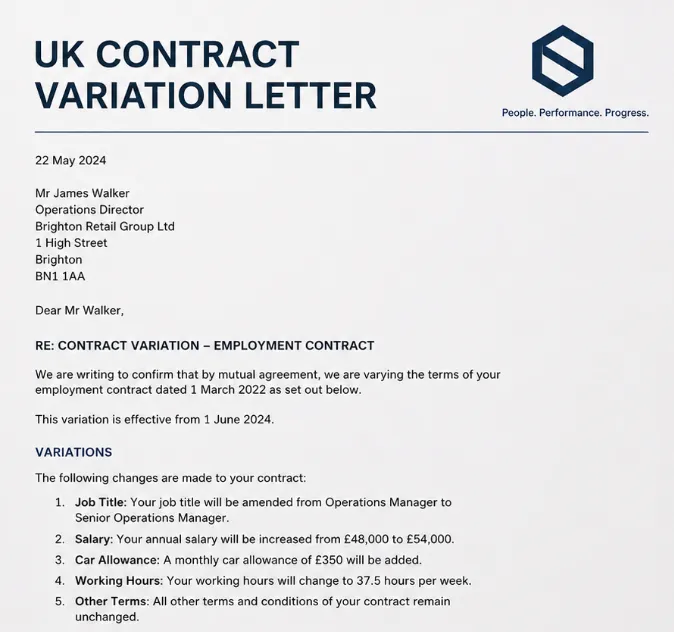
KEY TAKEAWAYS
- Contract variation UK rules require employee agreement or a valid flexibility clause before any change takes effect
- Unilateral changes carry breach of contract, constructive dismissal and tribunal risk, especially for pay, hours or location
- Written notice must be issued within one month of any change to key terms under section 4 of the Employment Rights Act
- A change of job title alone is usually low-risk, but duty changes may need consultation and updated documentation
- Sponsored workers on visas add a compliance layer: the Home Office must be notified via SMS within 10 working days
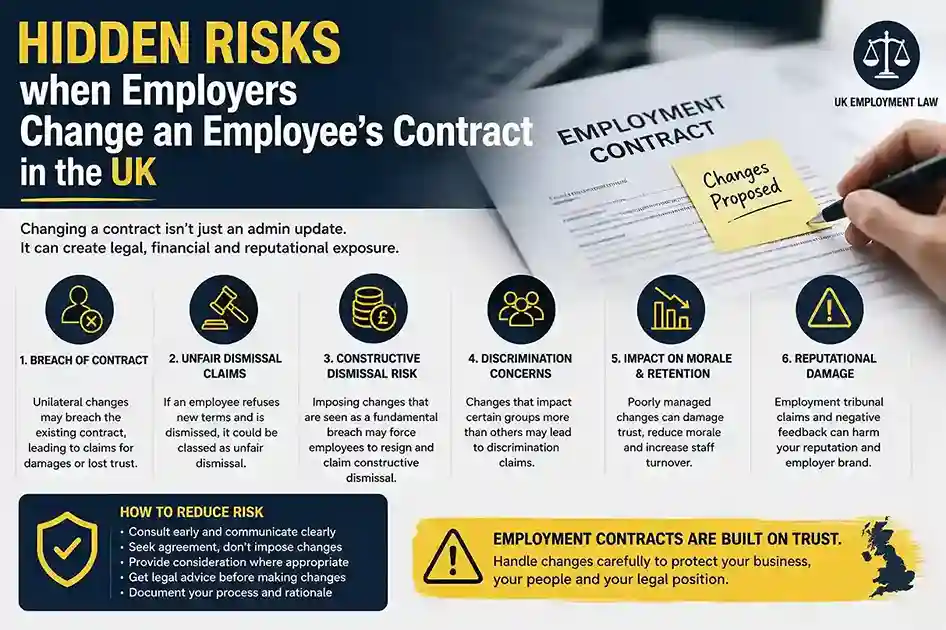
The Hidden Risks of Contract Variation in the UK
- The Restructure Trap. A line manager rewrites three job descriptions mid-restructure, emails the affected staff, and skips consultation—a common misstep that can trigger immediate compliance issues, especially for sponsored international employees.
- The Constructive Dismissal Fallout. Six weeks later, one affected employee files a constructive dismissal claim. That is the exact moment most HR teams realise contract variation UK rules are much stricter than they assumed, potentially jeopardizing your UK sponsor licence.
- Navigating 2026 Employer Rules. Here is exactly what employers can and cannot do in 2026, plus a contract variation template you can adapt. To ensure every change is tracked safely, you can centralise your records using our case management platform.
┈┈┈┈┈┈┈┈┈┈┈┈┈┈┈┈┈┈┈┈┈┈┈┈┈┈┈┈┈┈┈┈┈┈┈┈┈┈┈┈┈┈┈┈┈┈┈
Can an Employer Change Your Contract in the UK?
Only with agreement, a valid clause, or a lawful process. There's no default employer right to change terms.
- Mutual agreement. Cleanest route: you propose, the employee signs, you issue a contract variation letter.
- Flexibility clause. Only works if the clause is specific and the change is reasonable.
- Collective agreement. Where a recognised union has negotiated terms that flow into contracts.
- Statutory right. Employees can insist on some changes (flexible working, no Sunday work in retail).
- Dismissal and re-engagement. Last resort, heavily regulated under the 2024 Code of Practice.
┈┈┈┈┈┈┈┈┈┈┈┈┈┈┈┈┈┈┈┈┈┈┈┈┈┈┈┈┈┈┈┈┈┈┈┈┈┈┈┈┈┈┈┈┈┈┈
Changing Terms and Conditions of Employment: What Counts
Not every tweak is a legal variation. Some fall inside flexibility clauses; others alter the deal fundamentally.
- Material terms. Pay, hours, holiday, notice period, place of work, core duties all need agreement.
- Minor admin changes. A new line manager or reporting line usually doesn't need a signed variation.
- Policy vs contract. Non-contractual handbook policies can often be updated without formal variation.
- Implied terms. Long-standing custom (e.g. a 15-year annual bonus) can harden into contract; treat carefully.
- Detrimental changes. Anything reducing pay, hours or status needs formal consultation.
┈┈┈┈┈┈┈┈┈┈┈┈┈┈┈┈┈┈┈┈┈┈┈┈┈┈┈┈┈┈┈┈┈┈┈┈┈┈┈┈┈┈┈┈┈┈┈
How Much Notice to Change Contract Terms in the UK
There's a legal minimum and a practical minimum. They're not the same thing.
- Statutory rule. Written particulars must be updated in writing within one month of the change (ERA 1996, s.4).
- Consultation window. 30 to 45 days of genuine consultation for material changes.
- Collective consultation. Triggers at 20+ affected; 30 days minimum, 45 days if 100+ employees.
- Notice period changes. The existing notice period governs implementation.
- Practical buffer. Honestly, six weeks is the minimum for anything touching pay or location.
┈┈┈┈┈┈┈┈┈┈┈┈┈┈┈┈┈┈┈┈┈┈┈┈┈┈┈┈┈┈┈┈┈┈┈┈┈┈┈┈┈┈┈┈┈┈┈
Change of Job Title: Employment Law UK Rules
Job title changes look harmless. They aren't always.
Can an Employer Change a Job Title Without Consent?
Only if truly cosmetic. Duties, pay, seniority and reporting must stay the same. Any downward move is treated as a demotion, and demotions need consent.
- Rebranding is fine. "Customer Service Executive" to "Client Success Specialist" same job, no consent needed.
- Duty expansion needs sign-off. Adding line management or P&L responsibility changes the deal.
- Downward changes are risky. Employer change job title without consent UK claims regularly succeed when seniority drops.
- Sponsored workers need extra care. A new title with a different SOC code triggers Home Office reporting. Take our UK Sponsor Licence Compliance Assessment to ensure you remain audit-ready.
- Document everything. Even harmless changes should be captured in a short variation letter.
┈┈┈┈┈┈┈┈┈┈┈┈┈┈┈┈┈┈┈┈┈┈┈┈┈┈┈┈┈┈┈┈┈┈┈┈┈┈┈┈┈┈┈┈┈┈┈
Unilateral Change of Contract UK: The Risks
A unilateral change of contract UK employers push through without consent is a breach. Full stop.
- Breach of contract claim. Employee sues for damages, typically the value of the changed term.
- Constructive dismissal. Employee resigns and claims your breach forced them out; with 2+ years' service, it becomes unfair dismissal.
- Unlawful deduction from wages. Pay cuts without agreement mean tribunal claims for shortfall plus interest.
- Working under protest. Employees who object formally while continuing to work preserve their right to claim.
- Tribunal uplift. Failing the Code of Practice adds up to 25% to any compensation award.
┈┈┈┈┈┈┈┈┈┈┈┈┈┈┈┈┈┈┈┈┈┈┈┈┈┈┈┈┈┈┈┈┈┈┈┈┈┈┈┈┈┈┈┈┈┈┈
Contract Variation Letter Template UK
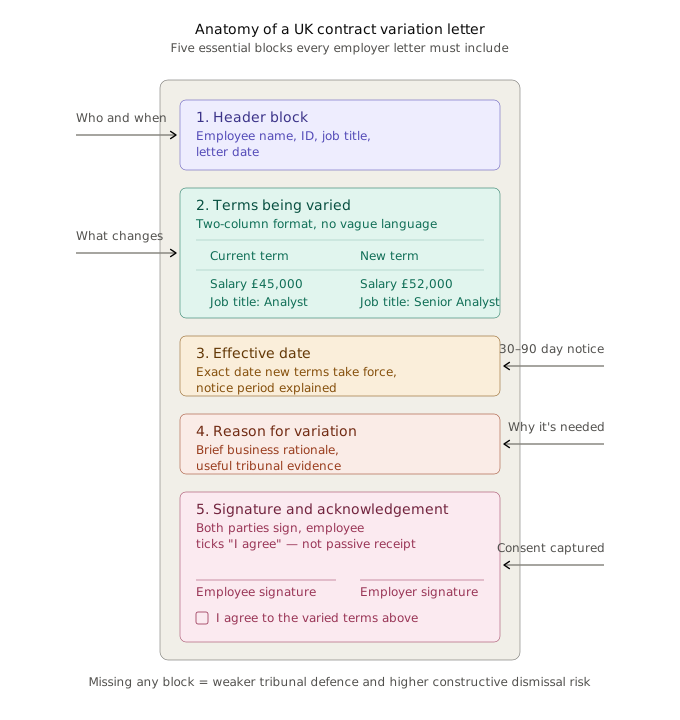
A proper contract variation letter template UK teams can adapt needs specific clauses, dates and a signature block.
- Header block. Employee name, ID, current job title, date of letter.
- Terms being varied. Each term (old vs new) in a two-column format; no vague language.
- Effective date. Exact date the new terms take force, with notice period explained.
- Reason for variation. Brief business rationale; useful evidence if later challenged.
- Signature and acknowledgement. Both parties sign; employee ticks "I agree" rather than passively receiving.
Managing contract changes for sponsored international employees? Book a demo to see how Jobbatical automates SMS reporting, protects your UK sponsor licence, and provides robust visa and immigration compliance solutions. Explore our wider business immigration services or our dedicated UK Skilled Worker Visa service page.
┈┈┈┈┈┈┈┈┈┈┈┈┈┈┈┈┈┈┈┈┈┈┈┈┈┈┈┈┈┈┈┈┈┈┈┈┈┈┈┈┈┈┈┈┈┈┈
Fire and Rehire After the Employment Rights Act 2025
Fire and rehire is still legal in 2026, but it won't stay easy. The Employment Rights Act 2025 tightens the rules sharply from 1 January 2027, so any variation strategy you build now needs to account for what's coming.
- Restricted variations become high-risk. From 2027, dismissing someone for refusing changes to pay, pensions, hours, holiday or shift patterns will usually be automatically unfair.
- New variation clauses are caught too. Inserting a clause into an existing contract that lets you unilaterally change terms is itself treated as a restricted variation.
- "Last resort" gets stricter. The current 2024 Code already demands genuine consultation and Acas contact; the 2025 reforms narrow the room to dismiss and re-engage even further.
- Review your mechanisms now. Audit existing flexibility clauses and standard variation letters before 2027 so they still work under the new regime.
┈┈┈┈┈┈┈┈┈┈┈┈┈┈┈┈┈┈┈┈┈┈┈┈┈┈┈┈┈┈┈┈┈┈┈┈┈┈┈┈┈┈┈┈┈┈┈
Contract Variation After a TUPE Transfer
When staff transfer to you under TUPE, their existing terms transfer with them and are heavily protected. Trying to "harmonise" those terms with your own workforce is where employers most often trip up.
- Transfer-related changes are usually void. A variation is generally unenforceable if the sole or principal reason for it is the transfer itself.
- Harmonisation is a trap. Aligning transferred staff to your standard contract shortly after a transfer is exactly the kind of change tribunals strike down.
- Some changes are still possible. Variations for a valid economic, technical or organisational reason, or genuinely unconnected to the transfer, may be permitted with proper process.
- Sponsored transfers add a layer. If a TUPE transfer moves a sponsored worker to a new entity or site, the change must also be reported through the Sponsor Management System.
┈┈┈┈┈┈┈┈┈┈┈┈┈┈┈┈┈┈┈┈┈┈┈┈┈┈┈┈┈┈┈┈┈┈┈┈┈┈┈┈┈┈┈┈┈┈┈
Pay-Period Salary Compliance for Sponsored Workers
For sponsored workers, meeting the annual salary threshold is no longer enough. Since 8 April 2026, the Home Office checks that the required salary is met in every single pay period, not just averaged across the year.
- Every pay period must clear the bar. A single month below the required level, even a temporary one, can put your sponsor licence at risk.
- Salary sacrifice and unpaid leave bite. Pension sacrifice, benefits deductions or a period of unpaid leave can quietly drop pay under the threshold for that period.
- Bonus-heavy structures need review. Base pay alone must meet the threshold each period; annual bonuses topping up the total won't rescue a low base.
- Cross-check before any reduction. Before cutting hours or restructuring pay, confirm the new figure still meets both the £41,700 general threshold and the going rate in each pay period.
┈┈┈┈┈┈┈┈┈┈┈┈┈┈┈┈┈┈┈┈┈┈┈┈┈┈┈┈┈┈┈┈┈┈┈┈┈┈┈┈┈┈┈┈┈┈┈
Working Under Protest: What It Means for Employers
When an employee keeps working after a change they haven't agreed to, silence can be read as acceptance. "Working under protest" is how employees preserve their right to challenge, and how employers can misjudge where they stand.
- Silence can imply agreement. If an employee carries on without objecting for a period, a tribunal may treat the change as accepted by conduct.
- A formal protest resets that. An employee who objects in writing while continuing to work keeps their breach-of-contract or constructive dismissal claim alive.
- Immediate-effect changes are clearer. Where a change has no immediate impact, courts are slower to infer acceptance from continued working.
- Document the position either way. Keep a clear record of any objection and your response, so the status of the change is never ambiguous at tribunal.
┈┈┈┈┈┈┈┈┈┈┈┈┈┈┈┈┈┈┈┈┈┈┈┈┈┈┈┈┈┈┈┈┈┈┈┈┈┈┈┈┈┈┈┈┈┈┈
Special Case: Sponsored Employee Contract Changes
For workers on a UK Skilled Worker or Global Business Mobility visa, contract variation is also an immigration question.
- Salary changes. Drops below £41,700 (or occupation going rate) can invalidate the visa; report via SMS within 10 working days.
- SOC code changes. A different role means a new Certificate of Sponsorship, sometimes before the employee starts.
- Location moves. Site changes must be reported and affect Appendix D records.
- Reduced hours. Part-time may push salary below threshold; check both first.
- Duties vs title. Home Office looks at duties, not labels. See our sponsor licence compliance guide.
For wider 2026 context, check the ILR rule changes coming April 2026 and how visa renewals interact with contract changes. Our case management platform keeps every variation, visa touchpoint, and compliance deadline in one place. Start every variation with a signed letter and a clean paper trail, or you'll be defending decisions at tribunal.
Disclaimer: Immigration rules change quite frequently; please verify with official sources or contact us for the latest info before making any decisions.
┈┈┈┈┈┈┈┈┈┈┈┈┈┈┈┈┈┈┈┈┈┈┈┈┈┈┈┈┈┈┈┈┈┈┈┈┈┈┈┈┈┈┈┈┈┈┈
Frequently Asked Questions UK Contract Variation
Can an employer change your contract without consent in the UK?
Generally no. You need the employee's express or implied agreement, or a valid flexibility clause in the existing contract. A unilateral change of contract UK employers push through without consent risks a breach of contract claim, constructive dismissal, or an unlawful deduction from wages claim at tribunal.
How much notice to change contract terms is required by UK law?
You must confirm any change to written employment particulars in writing within one month of the change under section 4 of the Employment Rights Act 1996. In practice, best-practice notice period to change contract terms is 30 to 90 days of genuine consultation before implementation, longer for major changes affecting pay or location.
Can an employer change a job title without consent in the UK?
A pure change of job title employment law UK treats as low-risk if duties, pay and status stay the same. If the new title reduces seniority or changes core duties, employer change job title without consent UK rules require agreement. Force it and you risk a demotion claim or constructive dismissal.
What is a contract variation letter and when do you need one?
A contract variation letter UK employers issue records the specific terms being changed, the effective date, and the employee's signed agreement. Use one for any change to written particulars: pay, hours, duties, job title, location, or notice period. Keep a signed copy on file for audit and tribunal defence.
What is fire and rehire and is it still legal in the UK in 2026?
Yes, but tightly regulated. Employers must follow the statutory Code of Practice on dismissal and re-engagement. Tribunals can uplift compensation by up to 25% for unreasonable non-compliance. Use it only as a last resort after genuine consultation, and document every step of the process for evidence.
Do sponsored visa holders need special handling for contract changes?
Yes. Any change to salary, SOC code, duties or work location for a Skilled Worker must be reported via the Sponsor Management System within 10 working days. Material role changes may require a new Certificate of Sponsorship before the worker begins the new duties. Miss this and your sponsor licence is at risk.

.svg)
.svg)