

KEY TAKEAWAYS: Estonia Right of Residence for EU Citizens
- EU, EEA, and Swiss employees work in Estonia from day one with no visa or permit, but must register the right of residence within three months of arrival.
- Address registration at the local government is free and often same day; it issues the personal identification code and a five-year temporary right of residence.
- The Estonian ID card costs €45 for adults (€35 online) in 2026 and must be applied for within one month of registration, with production up to 30 days.
- Permanent residence for EU citizens is available after five successive years of continuous registered residence, with a €45 state fee and a decision within one month.
- Your main compliance risks are the three-month deadline, a lapsed address registration, and the five-year permanent residence clock, all of which Jobbatical can track for your team.
While EU citizens can legally live and work in Estonia without a work visa, employers must still oversee crucial registration milestones to maintain legal compliance. This 2026 guide breaks down the essential steps from initial address registration to securing the Estonian ID card to help your HR team seamlessly onboard and retain European talent.
What is Estonia's right of residence for EU citizens, and is it a visa?
The Estonia right of residence is neither a visa nor a work permit. It is the legal status EU, EEA, and Swiss nationals secure under EU freedom of movement when relocating to Estonia. Employees simply register this status rather than applying for work authorization.
- EU Freedom of Movement: EU, EEA, and Swiss nationals legally live and work in Estonia under European treaties. Employers face no visa sponsorships or immigration quotas, unlike with non-EU talent.
- Visa & Work Permit Exemptions: Your new hires can enter Estonia and begin working immediately using a valid passport or ID card. They will not need to file a visa application at any process stage.
- Temporary Right of Residence: Registering a residential address grants a temporary right of residence valid for five years. It automatically renews while the Estonian address stays registered.
- Permanent Right of Residence: Following five consecutive years of continuous residence, employees can register for a permanent right of residence. This indefinite status is the ultimate goal for most long-term staff.
- Non-EU Immigration Contrast: While non-EU nationals require a D-visa and temporary residence permit prior to employment, the Estonia right of residence bypasses both. This guarantees highly accelerated EU onboarding.
For the non-EU side of your team, Jobbatical's Estonia temporary residence permit service explains the separate permit route that third-country nationals must follow before they can start work.
Who is eligible for the Estonia right of residence?
Eligibility for the Estonia right of residence is straightforward, as it hinges on nationality and genuine residency rather than salary thresholds or job classifications. The core requirement is simply that your employee holds a qualifying passport and establishes an actual home in Estonia.
- Qualifying Nationalities: Citizens of all 27 EU member states, alongside EEA members (Iceland, Liechtenstein, Norway) and Switzerland, qualify directly. A valid national passport or ID card serves as their primary documentation.
- Genuine Estonian Address: Your employee must secure a legitimate residential address in Estonia, such as a rented apartment or purchased property. Registering this address directly activates their right of residence.
- No Minimum Salary Threshold: There are no wage requirements or formal employer sponsorship mandates. This represents a significant advantage over the EU Blue Card and standard non-EU work permits.
- Included Family Members: Spouses and dependent children of EU employees inherit residence rights. Non-EU family members acquire derivative rights based on the primary EU citizen they join in Estonia.
- Permanent Residence Pathway: Completing five consecutive years of continuous registered residence qualifies employees for permanent status. Specific exceptions allow for earlier eligibility, such as reaching retirement age.
Jobbatical's Estonia family reunification service covers how non-EU dependants of your EU employee secure their own residence rights in Estonia.
What is the application process, and where do you apply for Estonia right of residence?
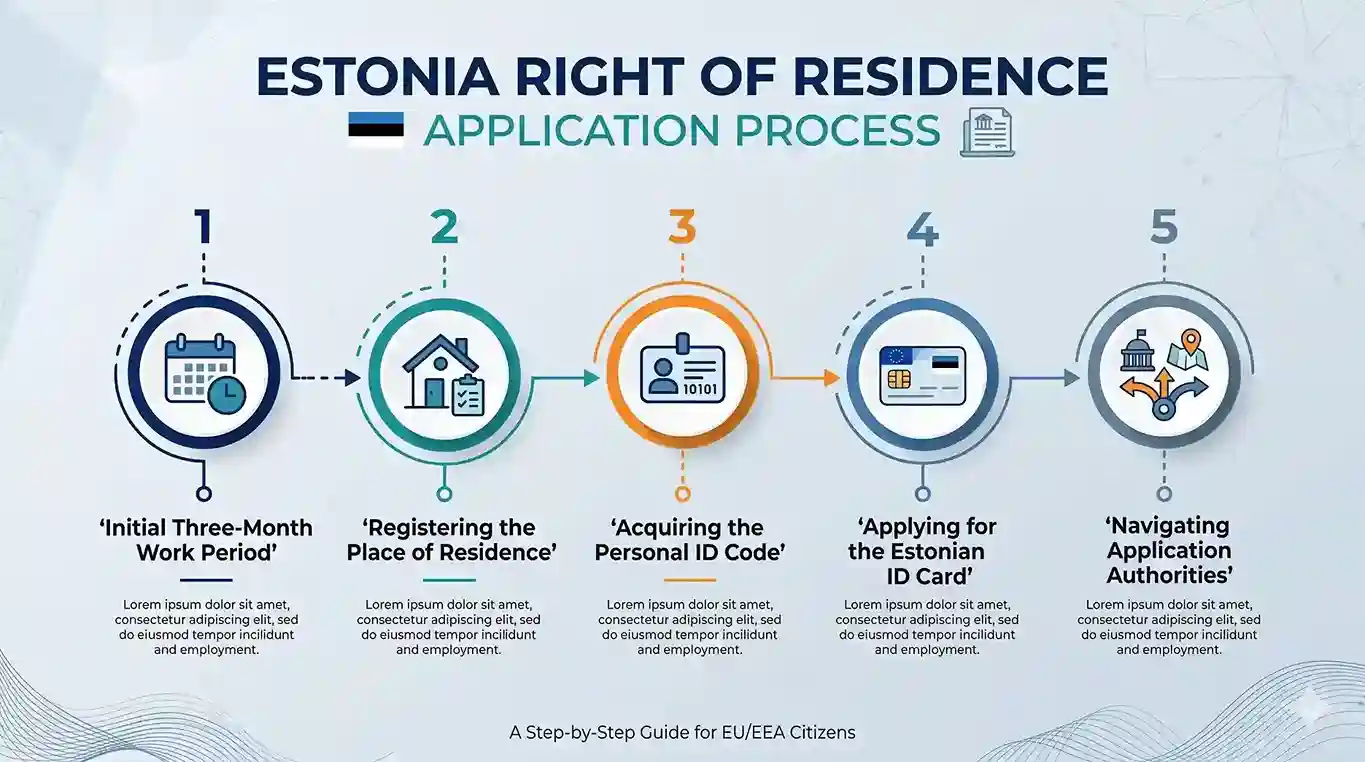
Securing the Estonia right of residence follows a strict procedural sequence. Your employees cannot formally apply for an Estonian ID card until their local place of residence is successfully registered.
- Initial Three-Month Work Period: Upon arrival, EU employees can legally live and work in Estonia for up to three months without registration, providing ample time to secure permanent housing.
- Registering the Place of Residence: Within three months of arriving, employees must register their Estonian address with local authorities. This crucial step establishes the temporary right of residence and generates a personal ID code.
- Acquiring the Personal ID Code: Issued concurrently with address registration, the personal identification code (isikukood) unlocks vital access to Estonian digital public services and the ID card application.
- Applying for the Estonian ID Card: Within one month of address registration, your employee must apply for an ID card via the Police and Border Guard Board. This card serves as physical proof of legal residence.
- Navigating Application Authorities: Address registration occurs at local city or municipal offices, whereas ID cards and permanent residence are processed by the Police and Border Guard Board. Many steps utilize Estonia's robust online e-services.
Jobbatical's guide to relocating talent to Estonia walks through the full relocation sequence for both EU and non-EU hires, step by step.
What documents does your employee need to register for Estonia right of residence?
Document preparation is where most onboarding delays originate. Securing the correct paperwork prior to appointments streamlines registration and prevents wasted trips to the local service office.
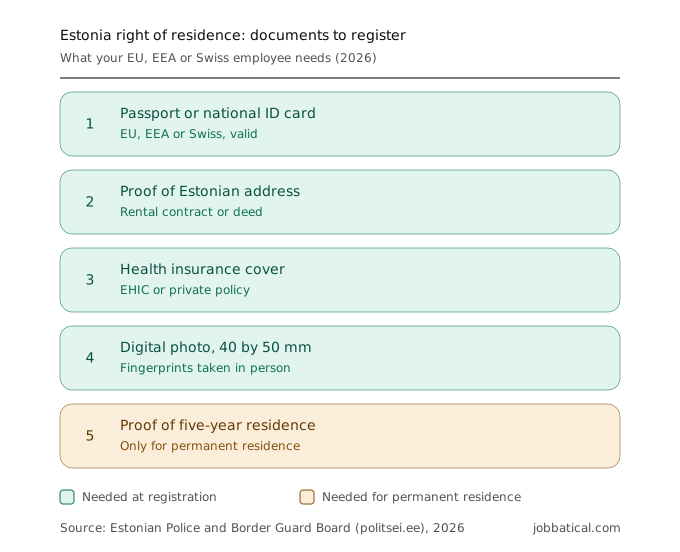
- Valid Passport or National ID: Employees require a current EU, EEA, or Swiss passport or national identity document. This officially verifies their nationality and inherent right to freedom of movement.
- Proof of Estonian Address: A formal tenancy agreement, residential lease, or property deed verifies the local residence. Without valid proof of address, the registration process cannot proceed.
- Health Insurance Coverage: Your employee must hold a European Health Insurance Card (EHIC) or a private health insurance policy. This guarantees their legal access to the Estonian healthcare system.
- Digital Photo for ID Card: A color photograph sized 40x50 mm is mandatory for the Estonian ID card and can be taken directly at the service point. Biometric fingerprints are also captured in person.
- Permanent Residence Documents: At the five-year mark, employees submit proof of continuous registered residence alongside their permanent status application. Jobbatical proactively compiles these records well in advance.
Use Jobbatical's Estonia pre-hiring eligibility check to confirm which route and documents apply before your employee books any travel.
What are the employer's responsibilities and compliance duties for Estonia right of residence?
While EU hires require less paperwork than non-EU sponsorships, employer obligations remain strict. Realistically, most compliance failures stem from missed deadlines rather than missing documents.
- Confirm Engagement & Authorize Support: Provide core employment details and sign necessary partner authorizations to manage the case. This ensures the process advances smoothly without constant HR involvement.
- Track 3-Month Registration Deadlines: Actively monitor when each EU employee hits the three-month mark. Missing this registration revokes the right of residence and directly disrupts company payroll.
- Execute Payroll & Tax Registration: The employee's personal identification code drives payroll, tax, and social security enrollment in Estonia. Configure these systems immediately once the code is issued.
- Maintain Accurate Records: Secure copies of the registration, ID card, and address details in HR mobility files. Pristine documentation safeguards your company during any compliance audit or review.
- Monitor Renewals & Address Changes: Temporary residency relies on a registered address, so all relocations must be officially reported. HR should also track the five-year timeline toward permanent residence.
Jobbatical's renewals and compliance tracking platform keeps every residence deadline and address change in one monitored dashboard, so nothing slips.
How does the appointment process work at the Police and Border Guard Board for Estonia right of residence?
Both ID card issuance and permanent residence registration require an in-person appointment. Booking early is essential, as service office slots fill rapidly in major hubs like Tallinn and Tartu.
- Book Online Reservations: Appointments at Police and Border Guard Board service offices should be reserved through their online system. Securing a slot in advance eliminates long on-site wait times.
- In-Person Biometric Capture: Employees must attend in person so their fingerprints can be captured for the ID card. This mandatory step cannot be delegated to HR or a legal representative.
- Biometric Exemption Rules: Fingerprints are not retaken if they were previously captured within the last six years (e.g., during a prior ID card application), which significantly shortens repeat visits.
- Card Collection Options: The physical ID card is collected at a service office or, in select cases, from designated partner locations if a prior valid document exists. Delivery methods may impact fees.
- Permanent Residence Processing: Applying for permanent residence is completed in person at a service office or via digitally signed email. The same biometric fingerprint regulations apply.
When cards near expiry, Jobbatical's Estonia residence permit renewal service handles the rebooking and refiling for your team.
How long does the Estonia right of residence process take?
Most administrative steps move quickly, leaving the mandatory five-year qualifying period as the primary wait time. The timelines below reflect 2026 standards and are subject to update, so verify with the Police and Border Guard Board during planning.
- Fast Address Registration: Registering a local place of residence with municipality authorities is frequently processed the same day, immediately issuing the personal identification code.
- ID Card Production Timelines: Standard processing for the Estonian ID card takes up to 30 days following application approval. Fast-track expedited processing is available for an additional fee.
- 5-Year Temporary Right Validity: Once established, the temporary right of residence remains valid for five years and renews automatically as long as local address registration remains active.
- Permanent Residence Processing: Upon completing the five-year residence requirement, the Police and Border Guard Board issues a decision within one month, followed by card issuance within 30 days.
What does the Estonia right of residence timeline look like in 2026?
For shorter non-EU assignments where a full residence permit is not needed, Jobbatical’s Estonia short-term employment registration service covers the faster route.
How much does the Estonia right of residence cost in 2026?
Direct state fees remain modest, representing a key financial advantage of the EU route. Budget per employee accordingly, noting that fees are established by the Police and Border Guard Board and subject to update.
- Free Address Registration: Registering a residential address with local municipal authorities carries no state fee. This marks the most cost-effective first step in onboarding.
- Estonian ID Card Fees: The physical ID card costs €45 for adults at service offices, or €35 via the self-service portal. Concessionary rates apply to minors and retirees.
- Permanent Residence Fees: Processing the permanent right of residence for an EU citizen incurs a €45 state fee. Dependent family member applications processed within Estonia carry an identical €45 fee.
- Budgeting Additional Expenses: Document translations, notarized copies, and legal mobility support incur costs beyond baseline government fees. Ensure these operational extras are factored into overall relocation budgets.
What are the 2026 state fees for the Estonia right of residence?
For a full breakdown of state charges across every Estonian route, see Jobbatical's Estonia immigration fees guide for 2026.
How do EU citizens get permanent residence in Estonia?
Permanent residence is the primary objective driving queries regarding Estonia PR requirements, offering EU citizens a straightforward path after five years of settled, registered living.
- Five-Year Qualification Period: Employees qualify for the permanent right of residence following five consecutive years of continuous temporary residence. Maintaining an active address registration keeps this timeline on track.
- Importance of Continuous Registration: Extended absences or lapses in residential registration can reset the qualifying period. Uninterrupted address registration remains the single most critical compliance factor.
- Accelerated Eligibility Exceptions: Under specific conditions such as reaching retirement age or experiencing permanent work incapacity permanent residence may be granted before five years. These statutory exceptions remain narrow.
- Application Submission & Processing: EU citizens register for the permanent right of residence in person at a Police and Border Guard Board office or via digitally signed email. Processing decisions typically issue within one month.
- Long-Term Citizenship Pathway: Estonian citizenship becomes an option after eight years of legal residence, requiring B1 Estonian language proficiency. This represents a distinct legal process separate from EU residence rights.
Explore right of residence route from Jobbatical's Estonia right of residence service.
The smartest move is to map each EU hire's three-month deadline the day they accept the offer, not the week it expires. Get the sequence right once, and every future European hire follows the same clean path. If you would rather hand the tracking and filings to specialists, book a demo with Jobbatical and we will manage the right of residence from first registration to permanent residence.
Disclaimer: Immigration rules change quite frequently; please verify with official sources or contact us for the latest info before making any decisions.
Frequently Asked Questions: Estonia Right of Residence for EU Citizens

.svg)
.svg)