.svg)


KEY TAKEAWAYS
- Your employee must validate their VLS-TS online through the ANEF portal within 3 months of entering France, or the visa stops working as a residence permit.
- The validation tax stamp (timbre fiscal) rose to €300 for employees on 1 May 2026; students pay a reduced €100
- After validation, OFII sends a medical visit summons by post and email. Employees on a CDI also sign the Contrat d'Intégration Républicaine (CIR)
- Talent Passport holders skip both the OFII medical visit and the CIR, which cuts weeks off their onboarding.
- The physical residence card is collected from the prefecture near the end of the first year. Build your onboarding tracker around the entry date, not the start date.
The visa sticker in your employee’s passport only lets them enter France. To make it a valid residence permit, they must validate it online after arrival. If they miss the deadline, their residence permit becomes invalid, which can cause problems opening a bank account, accessing healthcare, and renewing their stay later.
This guide explains what your employee needs to do during their first three months in France and what employers should keep track of to make sure nothing is missed.
The 3-month validation window deadline
A VLS-TS (visa long séjour valant titre de séjour) works as a residence permit only after online validation. Your employee must validate their visa within 3 months of the day they first enter France, not from their employment start date.
Use the entry date as the key date in your onboarding process. Ask your employee to keep a copy of their boarding pass or passport entry stamp, as this proves when they arrived.
Many people miss the deadline because HR tracks the job start date, while the employee focuses on their moving date. The passport entry stamp often gets overlooked. To avoid problems, collect a copy of it as soon as your employee arrives.
For a step-by-step overview of france work permit guide, see our France Work Permit Guide, which covers the key requirements and process employers need to understand.
Step 1: Validate online through the ANEF portal
Validation is fully online through the ANEF portal at administration-etrangers-en-france.interieur.gouv.fr. It takes about 20 to 40 minutes. Your employee will:
- Create an ANEF account: using a personal email they'll keep long term.
- Select first-arrival validation: of a long-stay visa, then their VLS-TS.
- Enter visa details exactly: the number and dates must match the sticker precisely. Any mismatch freezes the form.
- Enter a French address: a temporary address is accepted at this stage.
- Pay the tax stamp: electronically to finish. They receive a PDF confirmation.
That PDF is the proof of validated status. Tell your employee to save it somewhere they can find it in nine months, because they'll need it at renewal.
For employer support with france work visa services, explore our France work visa services for expert guidance on managing the immigration process.
Step 2: Pay the timbre fiscal (higher since May 2026)
You pay the timbre fiscal (tax stamp) by card while completing the online ANEF validation form. If the payment doesn’t work, your employee can buy the tax stamp online and enter the stamp code in the form instead.
The validation fees increased on 1 May 2026, so make sure you budget for the new amounts before your employee arrives.
France VLS-TS Validation Tax Stamp (2026 Rates)
Rates are set by annual finance laws and can shift, so confirm the live figure on the ANEF portal before your employee pays. If your relocation package reimburses these costs, note the €100 jump for standard holders in your 2026 cost model.
For the full employer-side tax picture, see our guide to foreign employee hiring costs in France.
Step 3: Attend the OFII medical visit
After online validation, OFII sends a medical visit summons (convocation) by post and email to the address your employee entered. This is where using a temporary address can cause problems. If your employee moves before receiving the appointment letter, it may be sent to their old address and they could miss it.
The visit is free and covers a chest X-ray, basic checks, and a short medical consultation. It runs 1.5 to 3 hours.
- Wait times vary widely: 4 to 8 weeks in the regions, up to several months in Île-de-France.
- A delayed summons is fine: as long as online validation was done in the 3-month window, the medical scheduling delay does not affect visa status.
- Bring the convocation: arriving without it means being sent home and a fresh wait.
The OFII medical visit is the only one that counts here. A certificate from a local GP does not replace it.
Step 4: Sign the CIR (unless your employee is exempt)
Employees with a CDI (permanent contract) must sign the Contrat d’Intégration Républicaine (CIR), an integration agreement with the French government. As part of this, they may need to attend up to four days of civic training. Keep the completion certificate, as it may be required when they renew their residence permit.
Talent Passport holders do not need to attend the OFII medical examination or sign the CIR. This makes their onboarding process much shorter. If your employee qualifies for a Talent Passport, this can save time and reduce administrative work.
For more detailed guidance on france dministrative penalties, see our France employer fines and administrative penalties, which explains the key requirements and process.
OFII Obligations by Route
Step 5: Renew and collect the residence card
The validated VLS-TS covers the first year. The physical residence card (titre de séjour) comes later, when your employee renews at the prefecture. Set that France residence permit renewal application for roughly two months before the VLS-TS expires; late applications can be refused by some prefectures.
For dependents arriving alongside your employee, the family flow runs separately through OFII. Our France family reunification guide covers that track in detail.
For eligibility, requirements, and application guidance, see our France work visa renewal rules resource for navigating this France visa route.
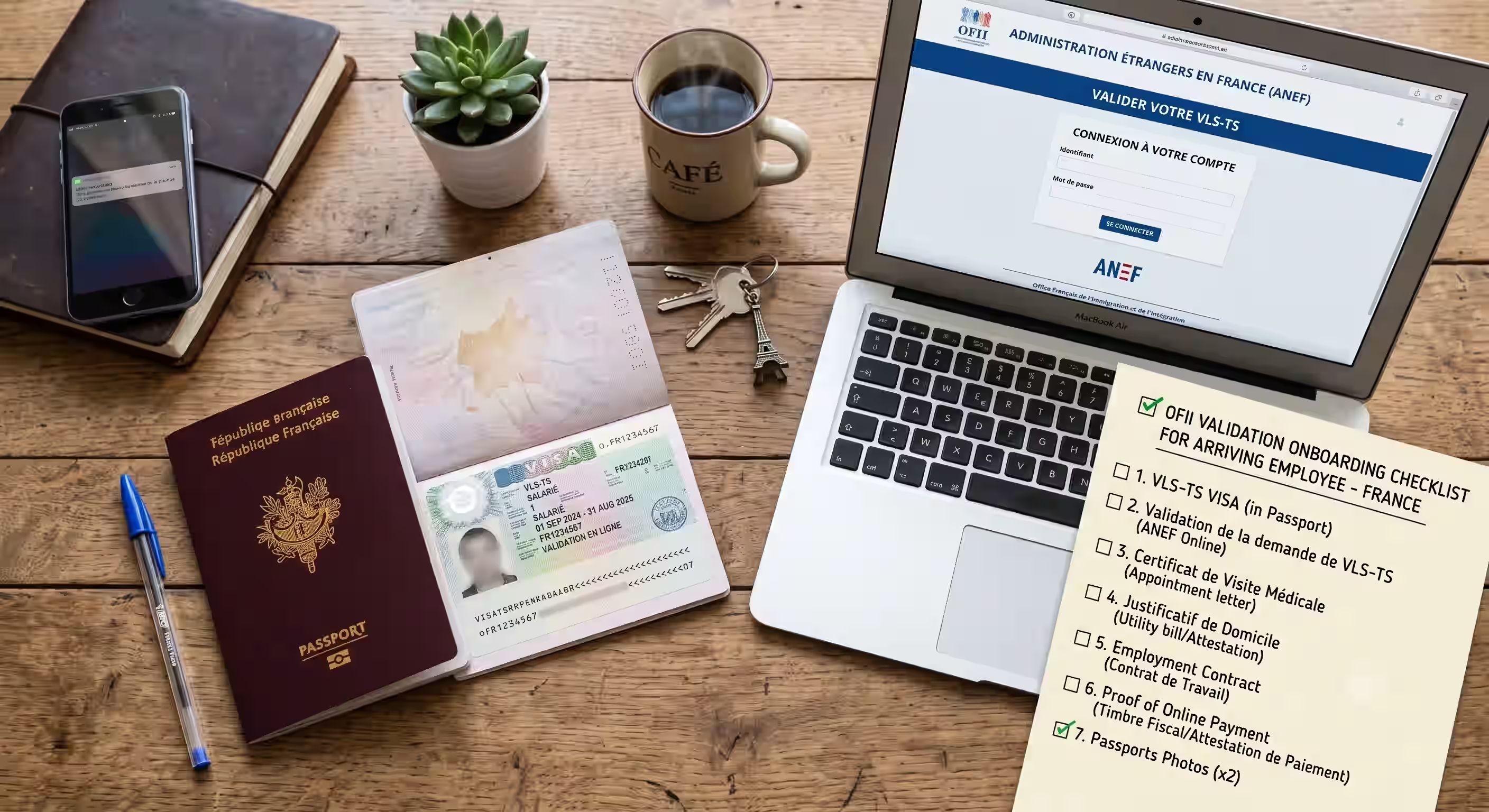
France Onboarding Checklist: First 3 Months
- Capture the entry date: photo of the entry stamp or boarding pass on day one.
- Validate on ANEF: within 3 months, tax stamp paid, PDF saved.
- Confirm the address: so the medical summons reaches the right place.
- Attend the medical visit: convocation in hand, unless Talent Passport.
- Sign the CIR: if on a CDI; track the attestation.
- Diarise the renewal: two months before VLS-TS expiry.
Disclaimer: Immigration rules change quite frequently; please verify with official sources or contact us for the latest info before making any decisions.
Frequently Asked Questions : France OFII Validation After Arrival

.svg)
.svg)