


KEY TAKEAWAYS
- Only Media Representatives can make new applications in 2026; the sole representative route closed on 11 April 2022 but existing holders keep extension and ILR rights.
- Extensions use form FLR(IR): £1,407 from 8 April 2026 plus £1,035 IHS per year, with strict same-employer and overseas-HQ conditions.
- ILR is available after 5 years at £3,226; earned settlement reforms expected in autumn 2026 make applying promptly the safer move.
- The UK Expansion Worker route is the replacement for new branch setups: £48,500 salary threshold, 2 year cap, no direct settlement path.
- Employers should map every visa holder against expiry and ILR eligibility dates now, before settlement rules change.
The Representative of an Overseas Business visa closed to new sole representative applicants on 11 April 2022. Four years on, the route still matters for the staff who entered before the closure. They have full rights to extend and settle. In 2026, only two groups can use this route for new applications - Media representatives posted by an overseas newspaper and news agency or broadcaster. Sole representatives can only apply for extensions or Indefinite Leave to Remain (ILR).
If your overseas business has a senior employee in the UK on this visa, the decisions you make in 2026 will shape their settlement outcome.
Who Can Still Apply in 2026
New entry clearance is limited to Media Representatives; employees of an overseas newspaper, news agency or broadcasting organisation on a long-term UK assignment. Everyone else who wants to establish a UK branch now goes through the Global Business Mobility UK Expansion Worker route.
Existing sole representatives keep three things:
- Extension rights; a 2 year extension after the initial 3 year grant, using form FLR(IR).
- A direct ILR path; settlement after 5 continuous years, something the replacement route does not offer.
- Dependant rights; partners and children extend and settle alongside the main applicant.
The official requirements sit in Appendix Representative of an Overseas Business of the Immigration Rules.
Extending a Sole Representative Visa in 2026
Your employee must apply before their current leave expires, from inside the UK. The Home Office checks that the original arrangement still holds. That means:
- Same employer; still recruited and employed by the overseas business, working for it full time and no one else.
- HQ still overseas; the parent company keeps its headquarters and principal place of business outside the UK. Shifting payroll or decision-making to the UK branch can sink an application.
- Active supervision; the representative still runs the UK branch or wholly owned subsidiary, and it is genuinely trading.
- No majority stake; the applicant must not own or control most of the overseas business.
In practice, the evidence burden falls on your company, not the employee. Accounts, contracts and board minutes showing real UK trading activity carry the application. If you manage several UK visa holders, structured extension and renewal support keeps deadlines and documents under control.
Sole Representative Visa Fees from 8 April 2026
ILR in 2026: The Window That May Be Closing
After 5 continuous years on this route, your employee can apply for ILR. The core requirements:
- No more than 180 days of absence in any 12 month period.
- Continuous full-time employment with the same overseas business throughout the 5 years.
- The overseas business active and trading, HQ still outside the UK, for the whole period.
- The UK branch or subsidiary established, supervised and actively trading in the same type of business.
- English at B1 and a pass in the Life in the UK Test.
The government's earned settlement consultation closed on 12 February 2026, and the Home Office has signalled implementation later in 2026, likely autumn. The proposals would move the standard qualifying period from 5 to 10 years and are intended to apply to people already in the UK without settled status. Nothing is law yet. If your sole representative reaches 5 years in 2026, file the ILR application as soon as the qualifying period completes.
The UK Expansion Worker Alternative
Need to send a new senior employee to open a UK branch today? The UK Expansion Worker route is the replacement, and it works very differently. Your company needs a provisional sponsor licence before anyone applies, and the role must pay at least £48,500 or the going rate for the occupation in 2026.
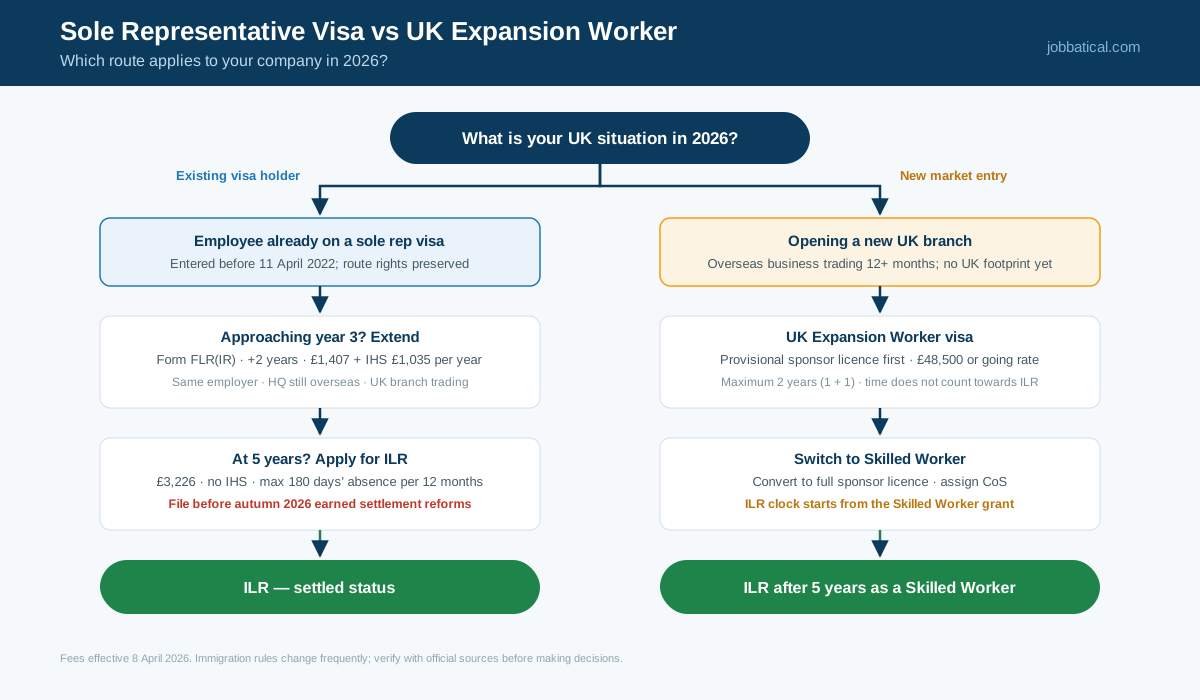
Sole Representative vs UK Expansion Worker
The settlement gap is the strategic point. An Expansion Worker who wants to stay long term must switch, usually into Skilled Worker sponsorship once the UK entity holds a full licence, and the ILR clock only starts then. Plan that switch into your expansion timeline from day one (most companies discover this constraint in year two, which is too late).
What Your Company Should Do Next
Map every Representative of an Overseas Business visa holder against two dates: their current visa expiry and their 5 year ILR eligibility date. Anyone eligible for settlement in 2026 should apply promptly, before earned settlement rules land. Anyone mid-route needs a clean extension file that proves the overseas HQ and UK trading picture. And for new UK market entries, build the Expansion Worker plus Skilled Worker switch into the plan and budget from the start.
Disclaimer: Immigration rules change quite frequently; please verify with official sources or contact us for the latest info before making any decisions.
Frequently Asked Questions : Representative of an Overseas Business Visa 2026
Can you still apply for the Representative of an Overseas Business visa in 2026?
Only Media Representatives working for overseas newspapers, news agencies, or broadcasters can make new applications in 2026. New applications as a sole representative have been closed since 11 April 2022. Existing sole representative visa holders can still apply for extensions and Indefinite Leave to Remain (ILR).
How long can a sole representative visa be extended for?
A sole representative visa can be extended once for an additional 2 years after the initial 3-year grant. The application is made using form FLR(IR), costs £1,407 from 8 April 2026, attracts the Immigration Health Surcharge of £1,035 per year, and must be submitted from within the UK before the current permission expires.
Does the Representative of an Overseas Business visa lead to ILR?
Yes. Existing sole representative visa holders can apply for Indefinite Leave to Remain after 5 years of continuous residence, provided they have worked full-time for the same overseas business, the UK branch has traded actively, and absences have not exceeded 180 days in any rolling 12-month period. From 8 April 2026, the ILR application fee is £3,226.
Will the earned settlement changes affect sole representative ILR applications?
Possibly. The UK Government’s earned settlement consultation proposed a 10-year baseline for settlement, but no changes have been implemented yet. The current 5-year ILR route remains available, so eligible sole representative visa holders reaching five years in 2026 should consider applying before any future rule changes take effect.
What replaced the sole representative visa?
The Global Business Mobility – UK Expansion Worker visa replaced the Sole Representative route for new overseas business expansion. Employers must hold a provisional sponsor licence, and the role must normally meet the minimum salary requirement of £48,500 or the applicable going rate in 2026. Unlike the former sole representative route, time spent on the UK Expansion Worker visa does not count towards settlement.
Can a UK Expansion Worker switch to a route that leads to settlement?
Yes. Once the UK business upgrades from a provisional to a full sponsor licence, the employee may switch into the Skilled Worker route if they meet the eligibility requirements. The Skilled Worker route can lead to ILR after 5 years, but the settlement qualifying period starts from the Skilled Worker grant and does not include time spent as a UK Expansion Worker.

.svg)
.svg)
