.svg)



KEY TAKEAWAYS
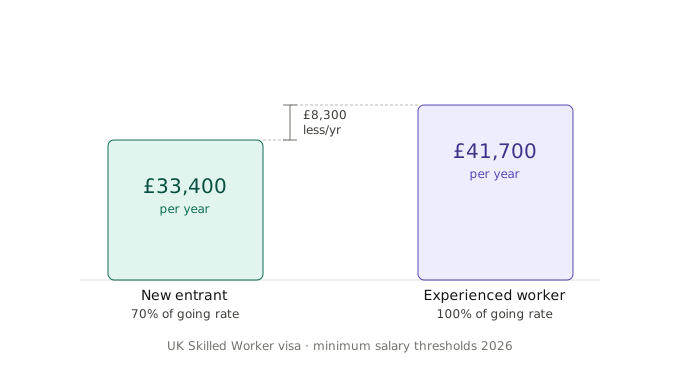
- New entrant status on a UK CoS reduces the minimum salary from £41,700 to £33,400/year (or 70% of the going rate if higher), making early-career sponsorship viable.
- Your employee must meet at least one qualifying criterion: under 26, on a Graduate visa, switching from a Student visa, or working towards a UK-regulated professional qualification.
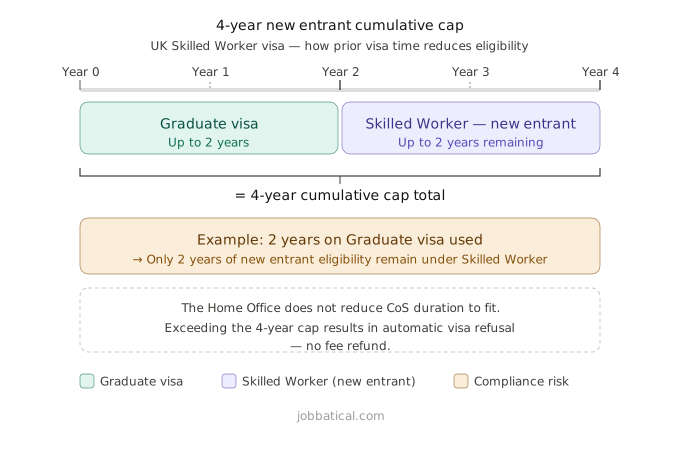
- The maximum new entrant period is 4 years total, including time already spent on a Graduate visa or previous Skilled Worker visas.
- Assigning a CoS for longer than the worker's remaining new entrant eligibility results in automatic visa refusal, the Home Office does not correct CoS duration. Common employer mistakes include not tracking prior Graduate visa time, applying the wrong going rate, and forgetting to mark new entrant status in the Sponsor Management System.
- Jobbatical manages complex CoS management cases, end-to-end with complete compliance.
New entrant status is one of the most common mistakes HR teams make under the Skilled Worker route.
- The Benefit: Applied correctly, it unlocks a lower salary threshold for early-career international talent.
- The Risk: Applied incorrectly, the application fails instantly, forcing you to restart the entire process from scratch.
This guide outlines exactly what you must verify before assigning a New Entrant in CoS to keep your onboarding on track.
What is a New Entrant in CoS?
A new entrant, on a UK Certificate of Sponsorship, is a sponsored worker considered to be at the beginning of their career. When your company declares this status in the Sponsor Management System (SMS) at the point of CoS assignment, the Home Office applies a reduced salary threshold to the visa application.
It is not automatic. You must check eligibility and mark it correctly in the SMS. For a full overview of the CoS process, see our UK Certificate of Sponsorship complete HR guide.
Who Qualifies as a New Entrant?
Your employee qualifies if they meet any one of these at the time the CoS is assigned:
- Under 26 years old on the CoS assignment date
- Switching from a UK Student visa (most recent visa, expired less than 2 years ago, studied at degree level or above)
- Currently on a Graduate visa, or held one as their most recent visa
- Working towards a UK-regulated professional qualification (e.g. solicitor, accountant, or medical trainee)
- Working towards full registration or chartered status in the role being sponsored
- In a postdoctoral research position
Only one criterion is needed. But the worker must remain eligible as a new entrant for the entire duration of the CoS, not just on the day it is assigned.
New Entrant Salary Threshold UK: 2026 Figures
Following the July 2025 Immigration Rules update, these thresholds now apply. You must pay whichever is higher; the general threshold or the going rate percentage for your SOC code:
2026 Salary Thresholds: New Entrant vs Experienced Worker
The £33,400 figure is the floor, not the number you automatically use. If 70% of the going rate for the SOC code is higher, that figure applies. Use our UK Skilled Worker salary threshold employer guide to check the going rate for your specific role.
How Does a New Entrant Affect a Certificate of Sponsorship?
When you assign the CoS in the SMS, new entrant status affects three things directly:
- Salary recorded on the CoS , must reflect the new entrant threshold, not the standard experienced worker rate
- Duration of the CoS , must not extend beyond the remaining new entrant eligibility period
- SMS notation , new entrant status must be explicitly marked; paying the lower salary without the notation creates a compliance flag
The CoS type, Defined (applying from outside the UK) or Undefined (switching from inside the UK), still applies as usual. See also, a full walkthrough around CoS allocation and assignment guide.
How Long Can a Worker Be Sponsored as a New Entrant?
The maximum is 4 years total , across all relevant routes. This includes time already spent on:
- A Graduate visa
- A previous Skilled Worker visa where new entrant status applied
- Any previous Tier 2 route with new entrant status
This is where the most expensive mistakes happen. Say your new hire spent 2 years on a Graduate visa. They have 2 years of new entrant eligibility remaining, not 4. If you assign a 3-year CoS under new entrant status, the Home Office will not reduce the visa period to fit. The application is refused.
Before assigning any CoS under new entrant status, ask your employee to confirm their full visa history.
New Entrant vs Experienced Worker: Key Differences
New Entrant vs Experienced Worker: UK Skilled Worker CoS Comparison
Benefits of Sponsoring a New Entrant in UK Immigration
There are real business reasons to use this route:
- Graduate visa holders already in the UK, a ready talent pool you can onboard faster than overseas hires
- Roles that become sponsorable, positions at £33,400 to £41,699 are accessible under new entrant status where they would not qualify at the standard rate
- Build long-term talent, once the new entrant period ends, transition to experienced worker status and retain people you have already trained
- Potentially lower upfront ISC, a shorter initial CoS can reduce the Immigration Skills Charge paid at assignment, particularly for small sponsors
For a full cost breakdown before you budget, see our UK CoS cost guide.
Common Mistakes Employers Make When Assigning New Entrant Status
These are the errors that lead to refusals and compliance flags:
Need Help Assigning a New Entrant CoS? Talk to our Immigration Specialist Today!
New entrant status is narrow, cumulative, and easy to miscalculate. The cost of getting it wrong, a refused CoS, a lost fee, a delayed start date, and a potential sponsor licence flag, is considerably higher than the cost of getting it checked first.
Jobbatical's immigration specialists:
Behind that is a platform with full visibility across all your sponsored workers, so nothing falls through the gaps.
Disclaimer: Immigration rules change quite frequently; please verify with official sources or contact us for the latest info before making any decisions.
Frequently Asked Questions : New Entrant CoS UK
Who qualifies as a new entrant for a UK Skilled Worker CoS?
A worker qualifies as a new entrant if they are under 26 years old when the CoS is assigned, are switching from a UK Student or Graduate visa, hold a current Graduate visa, or are working towards a UK-regulated professional qualification or chartered status in the sponsored role. Only one criterion needs to be met.
What is the new entrant salary threshold for a UK Skilled Worker visa in 2026?
In 2026, new entrants must be paid at least £33,400 per year or 70% of the standard going rate for their SOC code; whichever is higher. This compares to the standard threshold of £41,700 per year for experienced workers.
How long can a worker be sponsored as a new entrant?
The maximum new entrant period is 4 years in total. This includes any time already spent on a Graduate visa, a previous Tier 2 route, or earlier Skilled Worker visas where new entrant status applied. You must track remaining eligibility before assigning the CoS.
Can a worker over 26 still qualify as a new entrant?
Yes. Age under 26 is just one qualifying route. Workers over 26 can still qualify if they are switching from a UK Student or Graduate visa, hold a current Graduate visa, or are working towards a UK-regulated professional qualification or chartered status in their sponsored role.
What happens if I assign a CoS for longer than the worker's remaining new entrant eligibility?
The Home Office will refuse the visa application. They do not shorten the CoS to fit within the 4-year limit. The CoS fee is lost, the process must restart, and depending on circumstances, it may trigger a compliance review of your sponsor licence.
Does time on a Graduate visa count towards the 4-year new entrant limit?
Yes. Time on a Graduate visa counts fully towards the 4-year cap. If your employee spent 2 years on a Graduate visa, they have at most 2 remaining years of new entrant eligibility under the Skilled Worker route. Always confirm this before issuing the CoS.

.svg)
.svg)