

Trusted by 1000+ companies
17,000+ relocations
★ average satisfaction
AI powered platform
ISO 27001 certified

UK Right to Work: When Your Records and the UKVI Share Code Disagree

When internal HR records and an employee's UKVI Share Code show different visa expiry dates, employers face a live compliance gap. This page explains which source legally governs, who must act to resolve the error, and how to protect your statutory excuse in the interim.
Created
July 1, 2026
Last updated
July 2, 2026
Answered by:
Kritika Mirchandani
Kritika Mirchandani is a Global Mobility Expert at Jobbatical, specialising in German corporate immigration with a focus on Berlin and on relocations involving Indian talent. Trilingual in German, Hindi, and English, she brings 7+ years of immigration experience handling complex case escalations and direct coordination with German authorities. Her practice covers the EU Blue Card (Blaue Karte EU), Skilled Worker permits, change-of-employer cases, residence permit renewals at the Berlin Landesamt für Einwanderung (LEA), Business Immigration Service (BIS) submissions, Fiktionsbescheinigung interim certificates, and the Beschleunigtes Fachkräfteverfahren fast-track procedure. With 700+ cases handled at a 4.9-star satisfaction rating, she publishes operational guides for HR teams on Berlin Ausländerbehörde appointment processes and family residence permit submissions through the BIS system.
Read more

Executive Summary

  • The UKVI Share Code (eVisa) is the legally recognised evidence for UK right-to-work checks. Internal HR records, BRP copies, or previous visa documents cannot replace a valid digital status check.
  • If the expiry date shown on the UKVI Share Code is earlier than your internal records, employers should rely on the digital status until the discrepancy is resolved and a new right-to-work check is completed.
  • Employers cannot request corrections to an employee's digital immigration record on the employee's behalf. The employee must contact the UKVI Resolution Centre to have their eVisa details updated.
  • Because digital status corrections can take time, HR teams should plan for potential delays and complete follow-up right-to-work checks before the employee's current digital permission expires.

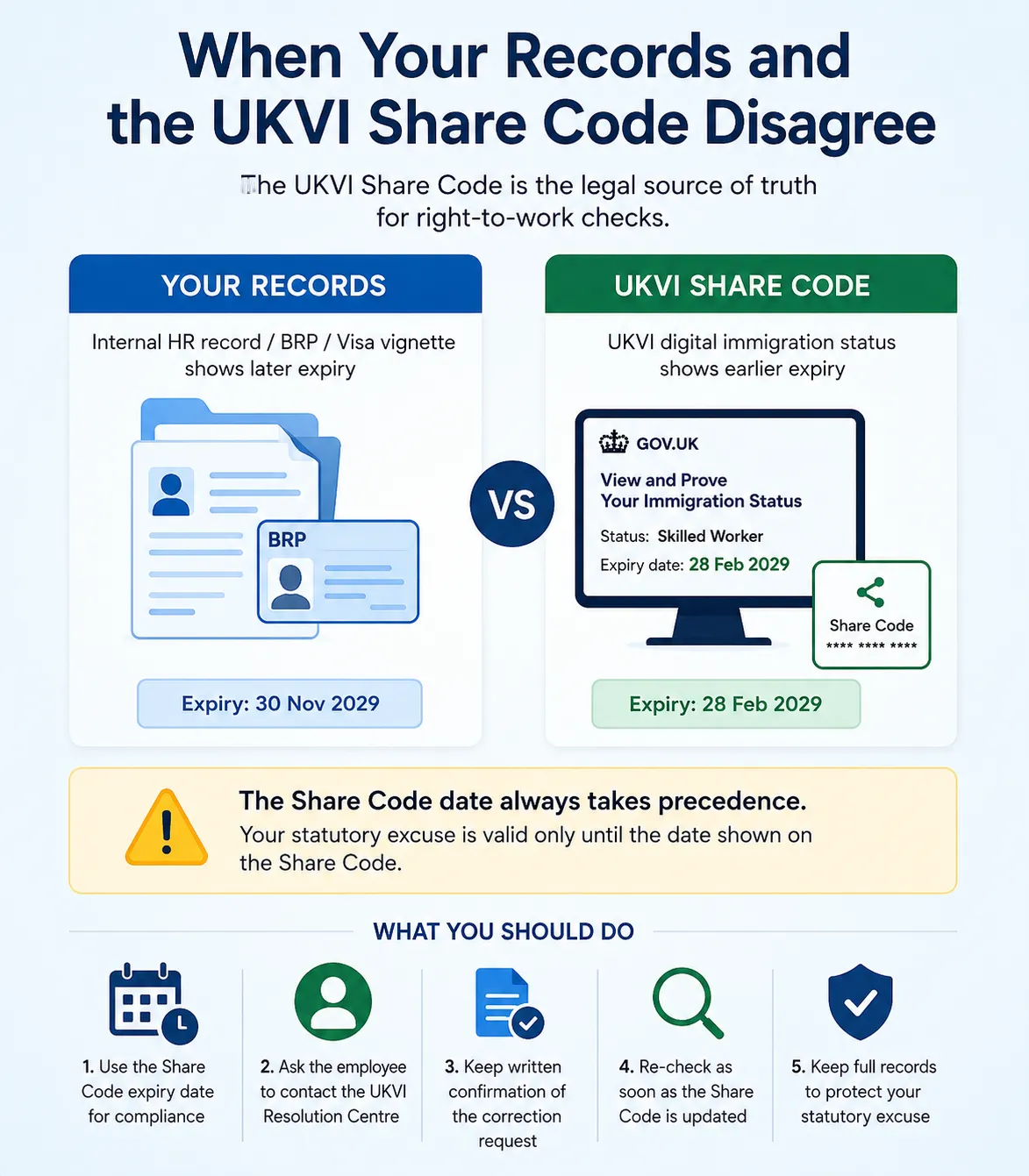
Our HR records show a visa expiry of November 2029, but the employee UKVI Share Code shows February 2029. Which date takes precedence for right-to-work purposes?

Answer:  The UKVI Share Code (e-Visa) is the legal source of truth for UK right-to-work verification. Employers must rely on it to establish a statutory excuse against illegal working, internal HR records, BRP copies, or CoS data carry no legal weight in this context.
If the employee believes the Share Code reflects an error, they must contact the UKVI Resolution Centre independently to correct their digital profile.
HR cannot raise this on the employee's behalf. Until the Share Code is corrected and a fresh employer check is completed, the statutory excuse for continued employment is at risk.

⚠️ Important: Always rely on the employee's UKVI Share Code (eVisa) as the authoritative record for right-to-work checks. If it differs from your internal records, verify the digital status before allowing continued employment.

At a Glance: Right to Work Discrepancy Scenario

Field Details
Destination United Kingdom
Permit Type eVisa (UKVI Digital Immigration Status)
Scenario An employee's UKVI Share Code shows an earlier visa expiry date than the date recorded in the employer's internal HR or payroll system.
Work Authorization Employment should be based on the immigration status confirmed through the employee's most recent UKVI Share Code right-to-work check.
Key Constraints Only the employee can request corrections to their UKVI digital immigration record. Employers cannot amend an employee's eVisa profile on their behalf.
Complexity High, as discrepancies between the UKVI Share Code and internal records require prompt action to maintain right-to-work compliance.
Onboarding Risk High, because unresolved discrepancies may delay onboarding or continued employment until the employee's digital immigration status is verified.
Timeline Risk High, since the time required to correct UKVI digital records varies and may affect recruitment or workforce planning.
Dependency Risks The employee must contact the UKVI Resolution Centre, and HR should complete a new right-to-work check once the digital record has been updated.
Typical Timeline Employee reports the issue to the UKVI Resolution Centre, receives confirmation once the record is updated, and HR immediately completes a fresh Share Code check.
Submission Authority UKVI Resolution Centre for digital status corrections; employers verify updated status using the UKVI online right-to-work checking service.
Key Challenges Resolving digital status discrepancies, maintaining a valid right-to-work record, tracking follow-up checks, and documenting compliance actions.
Example Scenarios A Skilled Worker visa extension is approved but the eVisa is not updated; an employee's digital immigration status shows an incorrect expiry date; historical BRP information differs from the current UKVI Share Code.
Expected Outcome The employee's digital immigration record is corrected, a new UKVI Share Code is generated, and the employer completes an updated right-to-work check with compliant records.

What the Law Requires and What HR Must Do Before the Share Code Date

The Legal Position - UK Share Code Discrepancy

The UKVI Share Code (eVisa) is the official source employers must use to verify an employee's right to work in the UK. If the information shown on the Share Code differs from internal HR records, employers should rely on the digital immigration status until the discrepancy is resolved.

  • Use the Share Code as the Source of Truth: The expiry date shown on the UKVI Share Code is the date employers should use for right-to-work checks.
  • Historical Records Carry No Legal Weight in a Discrepancy: Even if your HR system shows a later expiry date based on a previous Certificate of Sponsorship (CoS) or BRP record, that historical data does not protect your statutory excuse.
  • Maintain a Clear Compliance Record: Record when the discrepancy was identified, when the employee contacted the UKVI Resolution Centre, and when the updated Share Code was verified. This audit trail helps demonstrate compliance during a Home Office audit.
  • Review Expiry Dates Carefully: Any discrepancy between the Share Code and internal records should be investigated immediately.

The Corrective Rout - UK Share Code Discrepancye

If an employee believes their digital immigration status is incorrect, the correction must be initiated by the employee. HR should support the process by monitoring progress and updating records once the issue has been resolved.

  • Employee Must Contact UKVI: Only the visa holder can request corrections to their digital immigration record.
  • Keep Evidence of the Request: Ask the employee to retain confirmation that a correction request has been submitted.
  • Allow Time for Resolution: Updates to digital immigration records can take time, so plan for possible delays.
  • Recheck After Correction: Once the employee confirms the update, complete a new online right-to-work check and save the revised result.

HR Guidance - UK Share Code Discrepancy

Having a clear internal process helps reduce compliance risks when right-to-work records do not match. HR should act promptly and document each step until the discrepancy is resolved.

  • Record the Digital Expiry Date: Use the expiry date shown on the UKVI Share Code for compliance monitoring.
  • Notify the Employee Promptly: Ask the employee in writing to contact the UKVI Resolution Centre if a discrepancy exists.
  • Schedule a Follow-Up Check: Set reminders to complete another right-to-work check before the current digital permission expires.
  • Maintain Complete Records: Keep copies of Share Code checks and related correspondence in the employee's compliance file.

Key Risks - UK Share Code Discrepancy

Failing to resolve a discrepancy between internal records and the UKVI Share Code can create unnecessary compliance challenges. Early action helps protect both the employer and the employee.

  • A Valid Visa Alone Is Not Enough: If the Share Code is not corrected before its expiry date, employers may lose their statutory excuse even if the employee's visa remains valid. This can result in significant civil penalties.
  • Delayed Corrections: Slow resolution of digital immigration records can affect onboarding or ongoing employment planning.
  • Incomplete Documentation: Missing or outdated right-to-work records may be identified during a Home Office compliance audit.
  • Missed Follow-Up Checks: Failing to repeat the right-to-work check after a correction can leave compliance records incomplete.

Disclaimer
Immigration rules change quite frequently; please verify with official sources or contact us for the latest info before making any decisions.

About Jobbatical Expertise in the United Kingdom

Jobbatical has supported over 17,000+ international relocations across more than 45 countries, helping HR teams manage immigration operations, onboarding continuity, permit tracking, and compliance coordination. In the UK, our team supports sponsors navigating eVisa transitions, right-to-work compliance, and complex cases involving UKVI data discrepancies and Resolution Centre escalations.

Need help navigating complex immigration scenarios?

When onboarding timelines, work authorization, and permit compliance intersect, operational clarity matters. Get guidance from Jobbatical's immigration experts.

FAQs: UKVI Share Code Discrepancy and Right to Work Re-verification

Can we rely on our internal HR records if they show a later visa expiry than the employee's UKVI Share Code?

No. Employers should rely on the employee's UKVI Share Code when carrying out a right-to-work check. Internal HR records, copies of previous visas, BRPs, or Certificates of Sponsorship do not replace the digital immigration status used to establish a statutory excuse.

Can HR contact UKVI to correct an employee's eVisa or Share Code details?

No. Only the employee can request changes to their digital immigration record through the UKVI Resolution Centre. HR can explain the process, monitor progress, and retain supporting documentation, but cannot submit the request on the employee's behalf.

What should we do if the UKVI Resolution Centre has not corrected the record before the Share Code expiry date?

Monitor the case closely and obtain confirmation that the employee has requested the correction. If additional verification is required, consider using the Home Office Employer Checking Service where appropriate and seek specialist immigration advice before making employment decisions.

Does an incorrect UKVI Share Code affect an employee's visa status or future ILR application?

Not necessarily. A discrepancy in the digital immigration record does not automatically change the employee's underlying immigration permission. However, it should be corrected promptly to avoid complications during future visa extensions, right-to-work checks, or Indefinite Leave to Remain (ILR) applications.

What if we discover the discrepancy only after the Share Code expiry date has passed?

Take immediate action to verify the employee's immigration status. Ask the employee to contact the UKVI Resolution Centre without delay and consider whether a Home Office Employer Checking Service verification is appropriate while the issue is being resolved.

Do employees with EU Settled or Pre-Settled Status face similar Share Code issues?

Yes. Although EU Settlement Scheme status has always been digital, inaccuracies can still occur. If the online status is incorrect, the employee should request a correction through the UKVI Resolution Centre before a new right-to-work check is completed.

How long should employers retain updated UKVI Share Code records?

Employers should retain records of right-to-work checks for the duration of employment and for the required retention period after employment ends. Keep both the original and updated Share Code check results, together with notes explaining when the discrepancy was identified and resolved.

This covers the following use cases:

  1. What happens when the UKVI eVisa system shows a different expiry date than the visa vignette or BRP we have on file?
  2. Can an employer continue to employ a worker while a UKVI Share Code data error is being corrected?
  3. How do I contact the UKVI Resolution Centre on behalf of an employee with an incorrect digital profile?
  4. What is the UKVI Resolution Centre, and how long does it take to correct an eVisa error?
  5. Our Skilled Worker visa holder's Share Code shows they expired last month, but HR records say they have leave until next year. What should we do?
  6. How do we re-establish a statutory excuse after the Share Code expiry date has passed due to a UKVI data error?
  7. Does a BRP scan or internal HR record override an incorrect UKVI Share Code expiry date?
  8. What documentation should HR retain during a UKVI Resolution Centre correction period?
  9. Can the Home Office Employer Checking Service confirm immigration status while a Share Code discrepancy is being resolved?
  10. What is the right-to-work procedure for an Indian national on a Skilled Worker visa whose eVisa profile shows an error?
  11. Our employee from Nigeria has a UKVI profile mismatch after their Skilled Worker visa renewal. Who is responsible for resolving it?
  12. How does a Share Code discrepancy affect a sponsored worker's Indefinite Leave to Remain (ILR) qualifying period calculation?

Reviewed by:
Georgiy Serdiukov
Georgiy Serdiukov is a Global Mobility Expert at Jobbatical, specialising in German corporate immigration with active casework on UK Skilled Worker Visa cases. Trilingual in German, English, and Ukrainian, he manages the full case lifecycle to Germany from case assessment and visa filing through residence permit issuance, permanent residency, and settle-in support including home search. His practice covers the EU Blue Card (Blaue Karte EU), Skilled Worker permits under §18a and §18b AufenthG, residence permit renewals via the Berlin LEA ServicePortal, Anabin qualification recognition, and the EU Temporary Protection Scheme for Ukrainian nationals. With 200+ cases at a five-star rating and 1,500+ relocations supported, he regularly publishes employer guides on Germany's mandatory online application rules and UK sponsorship compliance.
Read more

In this use case

    Share

    Business immigration support in 45+ countries: Top locations

    Visas, work permits, renewals, and relocation services – complete immigration and global mobility support for HR teams across Europe and worldwide.
    Business immigration support in other countries
    Need immigration support in another country? —
    Contact us
    to explore seamless business immigration for your desired country