.svg)


KEY TAKEAWAYS : Sponsor Licence for Group Companies
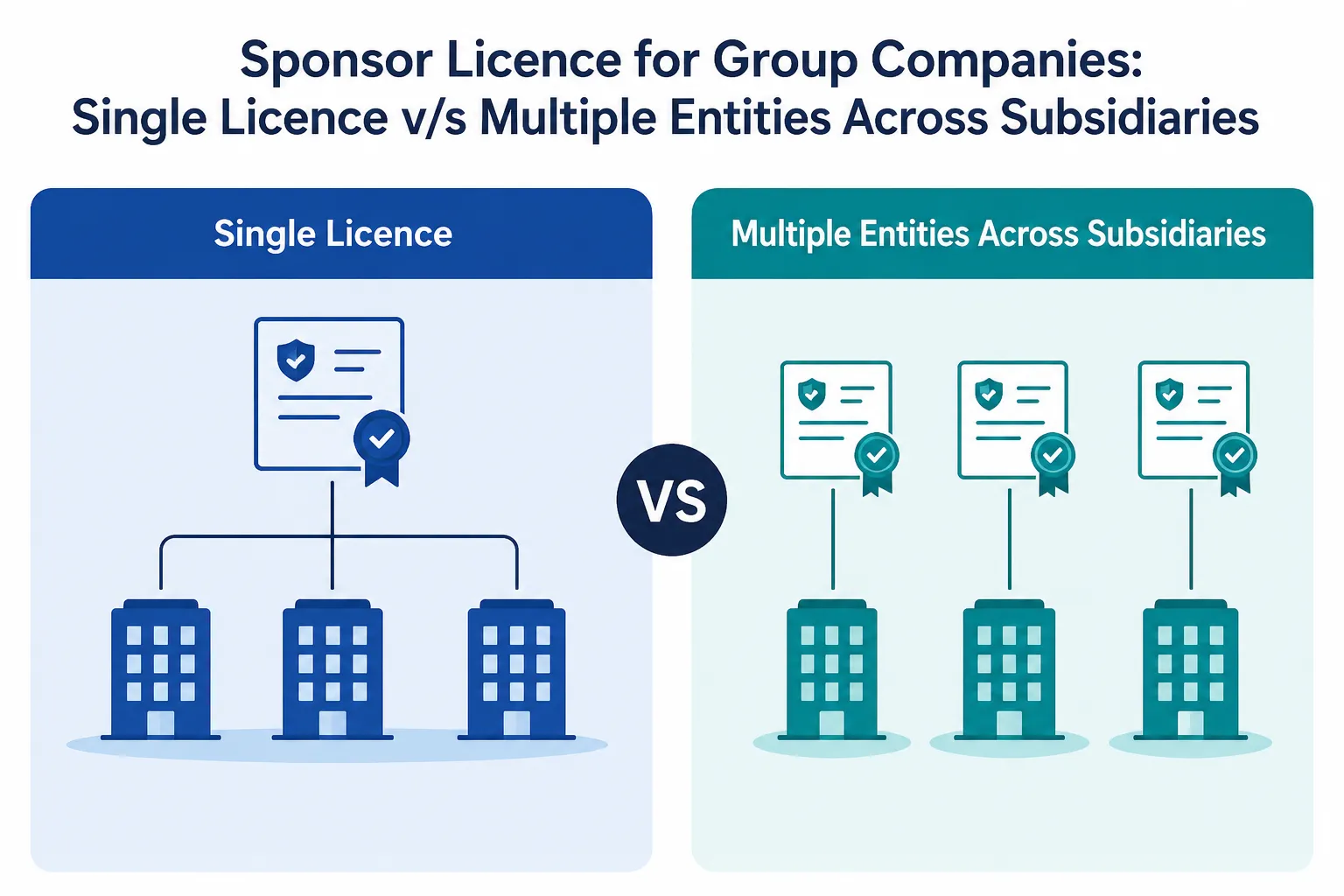
- A single group sponsor licence lets you cover a parent company and its UK subsidiaries as linked branches, provided you can evidence common ownership or control.
- Separate licences give each subsidiary its own compliance ringfence, so a breach in one entity does not automatically threaten the others.
- The Home Office never transfers a licence between legal entities, so acquisitions and restructures often force a fresh application regardless of your chosen model.
- A single licence lowers fees and simplifies intra-group transfers, but concentrates joint liability and cascading revocation risk across every linked entity.
- The right choice depends on how autonomous your operating units are, how often staff move between them, and how much compliance risk you can centralise.
When your parent company holds a UK sponsor licence and a newly established subsidiary begins hiring, a critical administrative question arises: should you add the new entity to the existing licence, or apply for a completely separate one?
While this may seem like a simple administrative choice, it fundamentally impacts your operational costs, compliance risk exposure, and the long-term mobility of your sponsored workforce. This guide directly compares both corporate group structures, providing the clarity you need to make an informed, strategic decision.
┈┈┈┈┈┈┈┈┈┈┈┈┈┈┈┈┈┈┈┈┈┈┈┈┈┈┈┈┈┈┈┈┈┈┈┈┈┈┈┈┈┈┈┈┈┈┈
What Are the UK Sponsor Licence Group Structure Options for Multiple Entities?
Corporate groups generally have two strategic routes for managing sponsorship: holding a single licence that covers multiple linked entities, or securing separate licences for each subsidiary. Both approaches are entirely valid, and the Home Office allows you to choose the structure that best aligns with your group’s corporate control and operational needs.
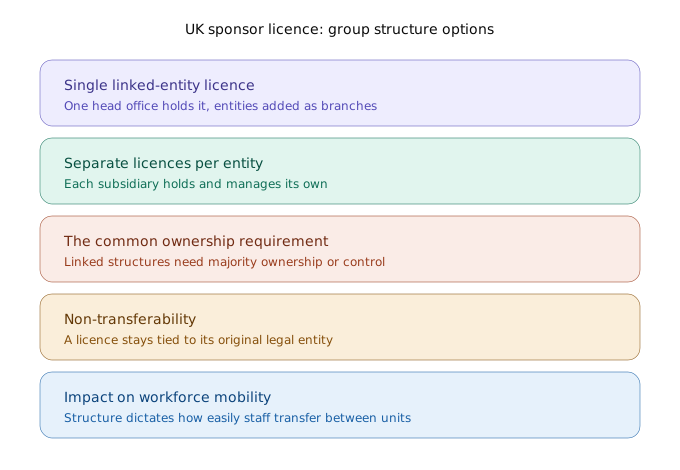
- Single Linked-Entity Licence: One primary company holds the sponsor licence (acting as the head office), and related UK entities are added as designated branches.
- Separate Licences Per Entity: Each subsidiary independently applies for, holds, and manages its own sponsor licence.
- The Common Ownership Requirement: Linked structures are only permissible if the entities share a majority ownership or a verifiable controlling interest.
- Non-Transferability: Sponsor licences cannot be transferred. A licence remains strictly tied to the legal entity it was originally granted to, even within the same corporate group.
- Impact on Workforce Mobility: Your chosen structure dictates how seamlessly sponsored employees can be transferred or relocated between your various business units.
Let Jobbatical UK sponsor licence service handle the complexities from mapping out your linked entities to managing your Home Office applications and ongoing compliance end-to-end
┈┈┈┈┈┈┈┈┈┈┈┈┈┈┈┈┈┈┈┈┈┈┈┈┈┈┈┈┈┈┈┈┈┈┈┈┈┈┈┈┈┈┈┈┈┈┈
What Does the Home Office Sponsor Licence Group Entities Guidance Say?
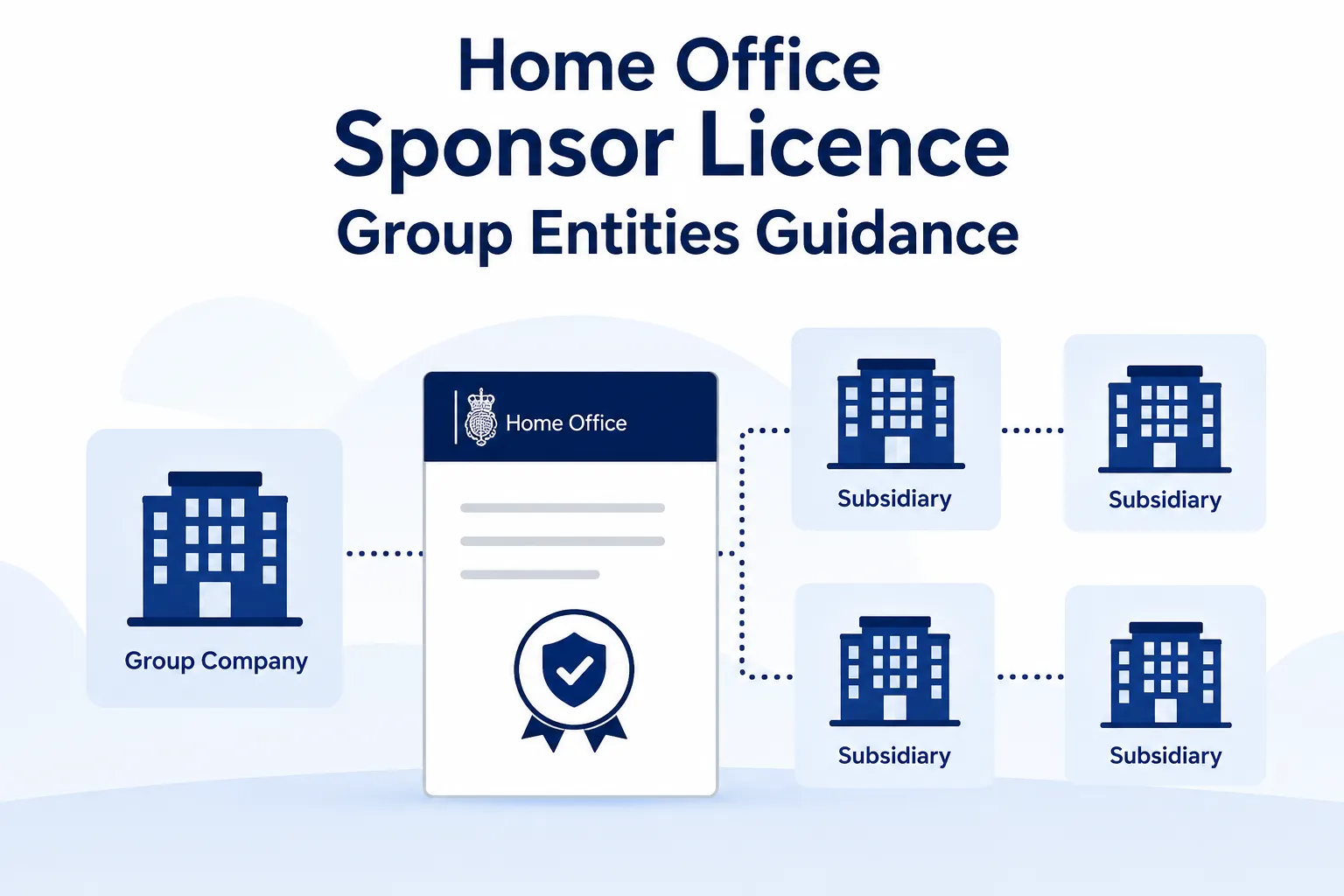
The Home Office clearly outlines the operational rules for multiple branches and linked entities in its official sponsor guidance (Part 1: Apply for a licence). Under these rules, one company successfully obtains the sponsor licence, after which group companies linked by common ownership or control can either join that existing licence as "branches" or apply independently.
- The Head Office Model: The primary licence holder operates as the head office, absorbing overarching responsibility, while linked UK entities are registered beneath it.
- Branch Registration via SMS: Additional group entities are added seamlessly through the Sponsor Management System (SMS) avoiding the need for a completely new licence application.
- Sector Independence: Linked companies do not have to operate within the same industry or trade to share a licence.
- Flexible Timing: You have the option to name linked entities during your initial application or add them to the SMS at a later date.
Before committing to a specific structure, it is crucial to understand the complete end-to-end application process.
Our comprehensive UK sponsor licence application guide for employers walks you through core eligibility requirements, mandatory Home Office documentation, and current processing times ensuring your business is fully prepared for exactly what a successful application demands.
┈┈┈┈┈┈┈┈┈┈┈┈┈┈┈┈┈┈┈┈┈┈┈┈┈┈┈┈┈┈┈┈┈┈┈┈┈┈┈┈┈┈┈┈┈┈┈
The Two Strategic Options Available for Corporate Groups for UK Sponsor Licence:
When establishing or managing sponsorship capabilities across a multi-entity business structure in the UK, corporate groups must carefully decide how to structure their relationship with the Home Office. Rather than taking a one-size-fits-all approach, UK immigration rules allow corporate entities to choose between two distinct operational models based on their legal structure, administrative setup, and risk tolerance.
- Option 1 (Centralized Group Licence): A single, unified licence held by a central head office that covers all eligible linked branches and subsidiaries.
- Option 2 (Independent Entity Licences): Separate, standalone licences applied for and maintained individually by each subsidiary or business unit.
┈┈┈┈┈┈┈┈┈┈┈┈┈┈┈┈┈┈┈┈┈┈┈┈┈┈┈┈┈┈┈┈┈┈┈┈┈┈┈┈┈┈┈┈┈┈┈
Option 1: How does a Single UK Sponsor Licence for Group Companies work?
A single group licence centralizes sponsorship authority within one head office for the entire linked network. While this is often the most cost-effective and streamlined model on paper, it does consolidate your compliance risk into a single point of failure.
- Unified Licence Holder: The designated head office holds the licence and assumes ultimate legal responsibility for compliance across the group.
- Adding Linked Branches: Subsidiaries are officially registered as branches once their common ownership is proven.
- Shared Key Personnel: A centralized Authorising Officer and designated Level 1 Users manage sponsorship duties across all entities.
- Single Public Register Entry: Your corporate group will appear as a single entry on the government’s public register of licensed sponsors.
What Are the Benefits of a Single Group Sponsor Licence?
Cost Efficiency and Shared Application Fees
- Consolidated Application Fee: You pay only one primary licence fee (£611 for small/charitable sponsors, £1,682 for large sponsors) instead of paying per subsidiary.
- Streamlined Renewals: You only need to track and process one renewal cycle, rather than juggling multiple expiration dates.
- Reduced Legal Spend: A single, unified submission generally requires only one round of professional legal or immigration support.
Centralised HR Management and Sponsor Duties
- Unified Compliance Framework: A single, standardized set of record-keeping and reporting procedures covers all entities.
- Centralised SMS Access: Your HR team can allocate and manage all Certificates of Sponsorship (CoS) from a single Sponsor Management System dashboard.
- Consistent Corporate Standards: Internal audits and staff training follow one uniform set of rules, minimizing the risk of patchy compliance across different offices.
Added Flexibility for Intra-Group Employee Transfers
- Frictionless Internal Mobility: Sponsored workers can be transferred between linked branches with significantly less administrative friction.
- Rapid Talent Deployment: You can assign skilled workers to critical projects across different business units without triggering change-of-employer barriers.
- Reduced Visa Churn: Internal moves within the linked group drastically reduce the need to submit fresh visa applications.
Explore Jobbatical's fully managed UK Intra-Company Transfer Visa services for completely frictionless internal mobility.
What Are the Key Risks and Compliance Drawbacks of a Single Licence?
Joint Liability and Cascading Revocation Across Entities: This is the primary operational trade-off. A severe compliance breach within just one linked branch can trigger a downgrade, suspension, or total revocation of the entire group licence. This immediately halts sponsorship capabilities across every linked entity, potentially leading to the curtailment of visas for all sponsored workers group-wide.
Risk Factors to Consider:
- Shared Fate: One non-compliant branch can compromise the compliant entities.
- Wider Exposure: A single Home Office audit failure impacts the entire group's right to sponsor talent.
- Reputational Damage: A public revocation affects every business associated with the shared licence.
The Authorising Officer's Responsibilities for Single Group Sponsor Licence
- Group-Wide Oversight: The single Authorising Officer bears the ultimate accountability for immigration compliance across every linked entity.
- Visibility Challenges: Effectively monitoring compliance across geographically dispersed sites requires highly robust centralized HR systems and clear reporting lines.
- Personnel Vulnerability: Relying on a single point of failure in key personnel exposes the entire corporate group if that individual departs or fails in their duties.
Read our guide on what happens if your sponsor licence is revoked to explore the immediate legal, operational, and reputational consequences of Home Office enforcement action.
┈┈┈┈┈┈┈┈┈┈┈┈┈┈┈┈┈┈┈┈┈┈┈┈┈┈┈┈┈┈┈┈┈┈┈┈┈┈┈┈┈┈┈┈┈┈┈
Option 2: When Should You Apply for Separate Sponsor Licences Across Multiple Entities?
Opting for separate licences creates an administrative "ringfence" around each subsidiary. While this approach is more expensive and administration-heavy, it successfully contains compliance risk within individual entities making it an ideal structure for corporate groups with highly independent operating units.
- Independent Applications: Every subsidiary must submit its own application and secure its own licence.
- Distinct Key Personnel: Each entity is required to appoint its own internal Authorising Officer and Level 1 Users.
- Isolated SMS Accounts: Every licence is managed through a completely separate Sponsor Management System portal.
- No Linking Required: You do not need to provide complex evidence of common ownership between the distinct entities.
What Are the Key Advantages of Independent Entity Sponsor Licences?
Insulating Entities from Group-Wide Revocation and Audits
- Contained Risk: A compliance failure or breach in one subsidiary will not endanger the sponsor licences of the other entities.
- Isolated Audits: A Home Office compliance visit or audit at one subsidiary remains strictly confined to that specific entity.
- Guaranteed Business Continuity: If one subsidiary’s licence is suspended, the rest of the corporate group can continue hiring and sponsoring workers uninterrupted.
Autonomy for Local HR Teams and Operating Units
- Local Ownership: Each subsidiary can tailor its compliance and HR processes to suit its specific market, sector, and workforce dynamics.
- Bespoke Processes: Record-keeping and reporting protocols can be scaled appropriately to each entity's unique size.
- Clear Accountability: Legal and operational responsibility sits directly with each subsidiary's internal management team.
What Are the Challenges of the Multi-Licence Approach for UK Sponsors?
Cumulative Fees and Administrative Overhead
- Multiplying Costs: Every single entity must pay its own initial application fees, renewal fees, and any associated legal costs.
- Duplication of Effort: Internal audits, compliance training, and HR record systems must be replicated across every separate licence.
- Complex Tracking: HR teams must juggle multiple disparate renewal dates and reporting deadlines simultaneously.
Multi-Company Group Rules Restrict Skilled Worker Mobility
- Change of Employer Requirements: Transferring a sponsored worker to a different subsidiary is legally classified as a "change of employer."
- Fresh CoS and Visas: The receiving entity must issue a brand-new Certificate of Sponsorship, and the employee must typically submit a new visa application.
- Delayed Redeployment: Because of the necessary application processes, internal staff moves can take weeks or months, rather than days.
┈┈┈┈┈┈┈┈┈┈┈┈┈┈┈┈┈┈┈┈┈┈┈┈┈┈┈┈┈┈┈┈┈┈┈┈┈┈┈┈┈┈┈┈┈┈┈
What Are the Key Eligibility Rules for Corporate Group Sponsorship?
To successfully implement a linked structure, you must satisfy two primary criteria: proving a genuine corporate connection between the entities and clearly understanding the Home Office's technical distinction between a "branch" and a "subsidiary."
How Do You Establish Common Ownership and Controlling Interest for a Sponsor Licence?
- Majority Shareholding: One company must own a majority of shares in the other, or a single individual must hold a majority stake in both entities.
- Documentary Evidence: Standard corporate documentation, such as Companies House filings, official share registers, and group corporate charts, are typically required to satisfy this test.
- Control Without Full Ownership: In complex corporate structures, demonstrable voting rights or board control can sometimes serve as sufficient evidence of a link.
- Holding Company Nuances: Because a dormant holding company often lacks active trading paperwork, an active, trading UK entity will frequently act as the primary applicant instead.
What Is the Sponsor Licence Branch vs. Subsidiary Distinction in UK Law?
For immigration licensing purposes, the Home Office uses the term "branch" broadly to encompass different physical sites, local offices, and linked corporate subsidiaries operating under a single licence. While a subsidiary remains a distinct legal entity in corporate law, once linked to the main licence, it functions administratively as a "branch."
Understanding this terminology is critical for compliance reporting. Our comprehensive guide to UK sponsor licence compliance, duties and penalties outlines the specific reporting obligations that apply to every branch you register, ensuring no linked entity falls out of compliance.
Our guide to UK sponsor licence compliance, duties and penalties explains the reporting obligations that apply to every branch you register, so no linked entity slips through the reporting net.
┈┈┈┈┈┈┈┈┈┈┈┈┈┈┈┈┈┈┈┈┈┈┈┈┈┈┈┈┈┈┈┈┈┈┈┈┈┈┈┈┈┈┈┈┈┈┈
Single vs Multiple Sponsor Licences: Which Group Structure Fits Your Business?
There is no universally "correct" answer. If your corporate entities are deeply integrated and employees frequently collaborate or move across units, a single licence typically wins on cost and operational agility. Conversely, if your subsidiaries operate independently, or if one specific unit carries a disproportionately high compliance risk, separate licences are the safest way to protect the wider group.
Whichever route you choose, maintaining rigorous ongoing compliance is non-negotiable.
Get the ongoing Sponsor Licence compliance right with our UK Sponsor Management System service, which keeps every sponsor licence you hold audit-ready and correctly reported.
┈┈┈┈┈┈┈┈┈┈┈┈┈┈┈┈┈┈┈┈┈┈┈┈┈┈┈┈┈┈┈┈┈┈┈┈┈┈┈┈┈┈┈┈┈┈┈
How Should Your Corporate Group Decide on the Right Sponsor Licence Structure?
Before submitting an application to the Home Office, carefully map out your corporate group’s ecosystem. Choosing the right sponsorship model requires evaluating your long-term operational goals rather than selecting the option that appears easiest on an initial application form.
Key factors to consider when making your decision include:
- Map Your Legal and Operational Connectivity: Assess how closely tied your UK entities are through shareholdings, common ownership, or direct corporate control to ensure you meet Home Office eligibility criteria for branch linking.
- Evaluate Workforce Mobility Requirements: Forecast how frequently sponsored talent will need to rotate, transfer, or work across different subsidiaries to determine whether you need frictionless internal moves or distinct employer boundaries.
- Assess Compliance Risk Across Entities: Honestly evaluate the risk profile of each subsidiary. If one operating unit carries higher risk or turnover, separate licences prevent a potential compliance breach from affecting the rest of the group.
- Plan Ahead for M&A and Corporate Restructures: Proactive planning is vital if an acquisition, merger, or group restructuring is on the horizon. Sponsor licences are non-transferable between legal entities, and obtaining new licences takes several weeks.
- Prioritise Long-Term Operational Protection: Align your decision with a structure that safeguards overall business continuity, even if it requires higher initial administrative investment or separate application fees.
Disclaimer: Immigration rules change quite frequently; please verify with official sources or contact us for the latest info before making any decisions.
┈┈┈┈┈┈┈┈┈┈┈┈┈┈┈┈┈┈┈┈┈┈┈┈┈┈┈┈┈┈┈┈┈┈┈┈┈┈┈┈┈┈┈┈┈┈┈
Frequently Asked Questions: UK Group Sponsor Licence Structures

.svg)
.svg)