


KEY TAKEAWAYS
- All Immigration Salary List entries expire 31 December 2026; only care worker codes 6135 and 6136 run to 22 July 2028
- The Temporary Shortage List replaces salary discounts with time-limited eligibility; TSL roles pay the full £41,700 threshold with no dependants
- Losing the £33,400 ISL discount adds up to £8,300 per worker per year; budget the uplift into 2027 compensation cycles now
- CoS eligibility is fixed at assignment date, so genuine hires assigned before the cutover keep current thresholds
- The revised TSL changes continuously; map SOC codes against the MAC's July 2026 recommendations and monitor list removals ongoing
Every entry on the Immigration Salary List shares the same expiry date; 31 December 2026 with just two care worker codes exempted. If your sponsorship strategy leans on the ISL's £33,400 general threshold, that discount disappears in a little over five months. And the list taking its place won't offer a replacement.
The MAC (Migration Advisory Committee)'s final Temporary Shortage List recommendations are due this month (July 2026), which means the shape of the post-2026 system is about to become concrete. Here's what's changing, what it will cost, and what your team should be doing before December.
The Expiry Timeline, occupation by occupation
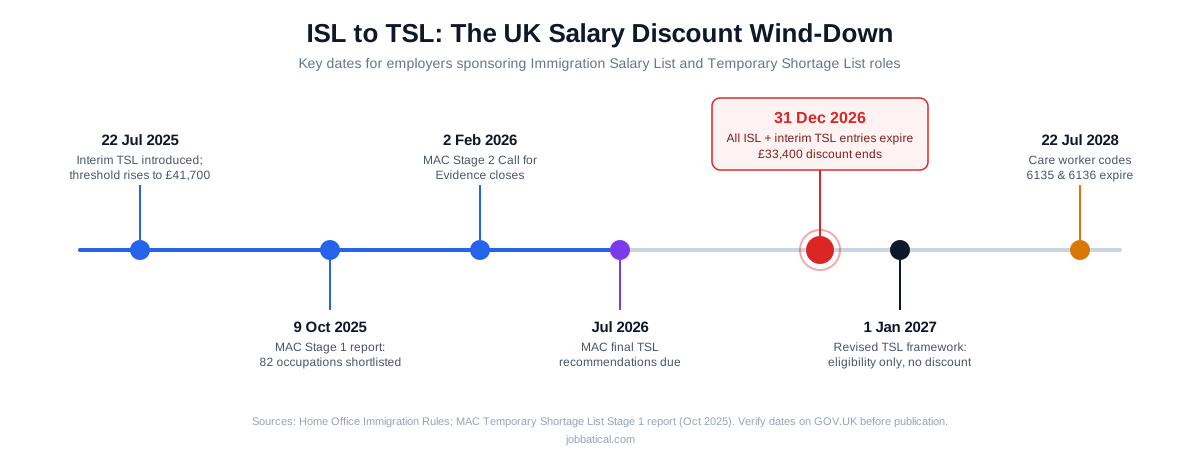
The Immigration Salary List gives around 25 occupations a reduced general salary threshold of £33,400 instead of £41,700 on the Skilled Worker route. That benefit is time-limited by design. Every ISL entry expires on 31 December 2026, with one carve-out: care worker codes 6135 and 6136 run until 22 July 2028.
The interim Temporary Shortage List, introduced on 22 July 2025 for around 50 RQF Level 3 to 5 occupations, carries the same 31 December 2026 expiry. The Home Office can also pull individual TSL codes earlier, without notice.
Key dates for the ISL to TSL transition
What the Temporary Shortage List changes structurally
The ISL and TSL solve different problems, and conflating them is where planning goes wrong.
The ISL is a pricing mechanism: it lowers the general salary threshold for shortage roles.
The TSL is an access mechanism: it lets RQF 3 to 5 occupations into a route that now requires degree-level roles, at full price.
- No salary discount: TSL roles must meet the full £41,700 general threshold or the going rate, whichever is higher.
- No dependants: workers sponsored in RQF 3 to 5 TSL roles cannot bring family members.
- No fee reduction: the lower visa application fee tied to ISL roles does not carry over.
- Time-limited by default: the MAC recommends occupations sit on the future TSL for three years, or just 18 months where a sector's Jobs Plan is weak.
- Removable at any time: codes can be added or withdrawn between rule changes, so eligibility is checked against the live list.
The MAC has been explicit that the final list will be shorter than the 82 occupations reviewed at Stage 2. We mapped which TSL roles are most at risk after the July 2026 MAC review using the MAC's own criteria.
What it Costs when the £33,400 Discount Ends
For any role where the going rate sits below £33,400, losing ISL status means finding up to an extra £8,300 per worker, per year, just to keep sponsoring them. Multiply that across a cohort of 2027 renewals and the budget impact stops being theoretical fast.
Salary threshold comparison: ISL vs TSL vs standard route
Verify the exact figures for each SOC code against our Skilled Worker salary threshold guide and the official GOV.UK Immigration Salary List before budgeting.
The Date that Actually Matters: CoS Assignment
Eligibility is assessed on the date the Certificate of Sponsorship is assigned, not the date you opened the vacancy or made the offer. That single rule creates the transition risk.
The assignment date decides everything at the cutover. Two identical hires can land on opposite sides of the rules:
- CoS assigned on 30 December 2026: the role is still on the ISL, so the £33,400 reduced threshold applies.
- CoS assigned on 2 January 2027: the ISL no longer exists, so the full £41,700 threshold or going rate applies.
- Occupation missing from the revised TSL: the role may not be sponsorable at all, regardless of salary.
- Pipelines straddling the cutover: add a checkpoint to every open requisition; confirm which threshold, and which list, applies on the likely assignment date.
Our guide to the CoS allocation and assignment process covers the mechanics.The December CoS assignment window is the only variable you fully control.
What your team should do before December
Five actions, roughly in order:
- Audit ISL-reliant roles. Pull every sponsored worker and open requisition against current ISL SOC codes, and tag each with its renewal or assignment date.
- Model the salary delta. Cost each affected role at £41,700 (or the going rate, if higher) and get that uplift into the 2027 compensation budget cycle now, not later.
- Bring forward borderline CoS assignments. Where a hire is genuine and ready to go, assigning the CoS before 31 December 2026 locks in the current eligibility.
- Track the MAC outcome closely. Once the Stage 2 report and the Home Office response land, map your SOC codes against the final TSL within days, not weeks list removals can happen mid-recruitment.
- Plan for the roles that fall off. Where an occupation drops off both lists, you'll need to choose between domestic recruitment, restructuring the role to RQF 6, or switching routes entirely much like what happened with the care worker visa closure.
Monitoring Does not Stop in January
The revised TSL is built to change. Occupations get three-year terms at best, 18 months where Jobs Plans are thin, and the Home Office keeps the power to remove codes between formal reviews. A one-off audit in December will not keep you compliant through 2027.
Disclaimer: Immigration rules change quite frequently; please verify with official sources or contact us for the latest info before making any decisions.
Frequently Asked Questions : ISL to TSL Transition
When does the Immigration Salary List expire?
Most Immigration Salary List (ISL) occupations expire on 31 December 2026. The exception is care worker occupation codes 6135 and 6136, which remain on the list until 22 July 2028. The Home Office is expected to replace the ISL with Immigration Rules based on the revised Temporary Shortage List before the 2026 expiry date.
Does the Temporary Shortage List offer a salary discount?
No. Occupations on the Temporary Shortage List (TSL) must still meet the full Skilled Worker salary requirement of £41,700 or the applicable going rate, whichever is higher. The reduced £33,400 salary threshold applies only to eligible Immigration Salary List occupations until the ISL expires.
What happens to a Certificate of Sponsorship assigned before 31 December 2026?
Eligibility is assessed on the date the Certificate of Sponsorship (CoS) is assigned. If a genuine application receives a CoS while the occupation is still on the Immigration Salary List, it may continue to qualify under the applicable ISL salary threshold for that application.
Can workers sponsored under the Temporary Shortage List bring dependants?
No. New Skilled Worker applicants sponsored in RQF Level 3 to 5 occupations listed on the Temporary Shortage List cannot bring dependant family members. Employers should consider the impact of this restriction when planning international recruitment.
How long will occupations stay on the future Temporary Shortage List?
The Migration Advisory Committee (MAC) has recommended that occupations normally remain on the Temporary Shortage List for up to three years, or around 18 months where sector workforce planning is considered insufficient. Occupations will also be reviewed regularly and may be removed earlier if labour shortages reduce or compliance concerns arise.
Which occupations will be on the final Temporary Shortage List?
The final Temporary Shortage List will be determined by the Home Secretary after considering recommendations from the Migration Advisory Committee. Employers should review the published list once it is released and compare it against the SOC codes used in their recruitment plans.
What should employers with Immigration Salary List roles do before December 2026?
Employers should review all sponsored workers and planned hires against current ISL occupations, budget for the higher Skilled Worker salary threshold where required, assign Certificates of Sponsorship for genuine eligible hires before the rules change where appropriate, monitor updates to the Temporary Shortage List, and prepare workforce plans for occupations that may no longer qualify.

.svg)
.svg)
