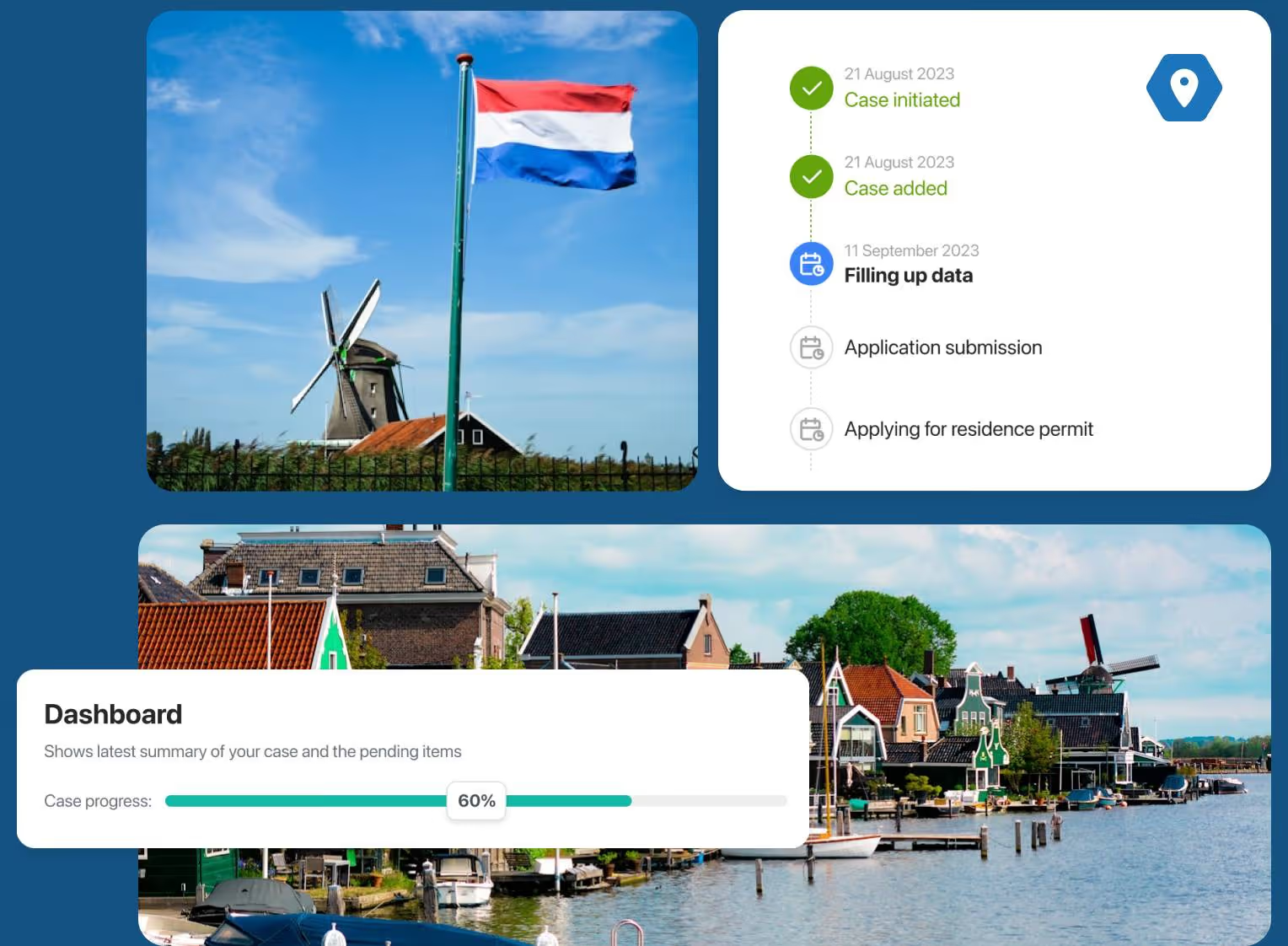


Personalised data request sent to your posting entity and worker
Notification details and A1 forms reviewed before filing
On-site document pack prepared for labour inspections

The Dutch Posted Worker notification also referred to as the WagwEU notification, Meldplicht WagwEU, or the Meldloket duty is the mandatory posted worker declaration employers must file before staff start temporary work in the Netherlands. Filed via the online Meldloket (postedworkers.nl) under the WagwEU (the Dutch implementation of the EU Posted Workers Directive), the duty to notify posted workers applies to every EU, EEA or Swiss employer posting staff EU or non-EU (third-country) nationals and to self-employed persons in listed sectors
File your WagwEU posted worker notification via the Meldloket before day one expert support on the duty to notify, client verification, and compliance for employers posting EU and non-EU staff to the Netherlands.
Duty-to-notify assessment (including exemptions and self-employed sector checks)
Appointing a contact person in the Netherlands (WagwEU Article 7)
Filing the posted worker registration via the Meldloket portal (postedworkers.nl)
Coordinating the Dutch client's mandatory verification of the notification
Preparing the on-site document pack (A1 forms, contracts, payslips, working-hours records)
Non-EU (third-country national) posting checks work-permit exemption and IND residence permit for postings over 90 days
Setting up a one-year notification (jaarmelding) where your postings qualify
Tracking changes, corrections and renewals across every posting
From the duty-to-notify assessment to Meldloket filing and Dutch client verification, we handle your Dutch Posted Worker notification end-to-end.
| Who must notify | When it applies | Deadline | Best for |
|---|---|---|---|
| EU/EEA/Swiss employer posting own staff | Any temporary posting to the Netherlands | Before work starts | Most cross-border postings |
| Multinational posting to a Dutch branch | Intra-group posting into a NL entity | Before work starts | Internal transfers & projects |
| Temporary employment / staffing agency | Workers placed on assignment in the NL | Before work starts | Agency placements |
| Posting non-EU (third-country) nationals | TCN lawfully employed by an EU/EEA/Swiss employer | Before work starts (no exemptions) | Non-EU staff on EU service contracts |
| Self-employed person (listed sectors) | Only if working in a notifiable SBI sector | Before work starts | Contractors in scope |
Personalised data request sent to your posting entity and worker
Notification details and A1 forms reviewed before filing
On-site document pack prepared for labour inspections

Thank you for reaching to us!
We will get back to you with more information and the meeting details very soon.

A Dutch Posted Worker notification under the WagwEU is the mandatory posted worker registration that EU, EEA and Swiss employers must file before staff start temporary work in the Netherlands. Submitted through the Meldloket portal (postedworkers.nl), it records the employer, the posted workers, the Dutch client, the work and its duration. Jobbatical files this posted worker declaration for your company and manages the whole duty to notify.
The duty to notify posted workers applies to employers from the EU, EEA and Switzerland who temporarily post their own staff to the Netherlands, to multinationals posting into a Dutch branch, to staffing agencies, and to self-employed persons working in listed sectors. The WagwEU notification also applies when posted workers are third-country nationals. The Dutch client must then verify the notification is correct.
The WagwEU notification must be submitted before the posted worker starts the assignment in the Netherlands there is no retroactive filing. Any change to the posting must also be updated in the Meldloket portal and re-verified by the Dutch client. Jobbatical files the posted worker registration ahead of day one so your posting is compliant from the first working day.
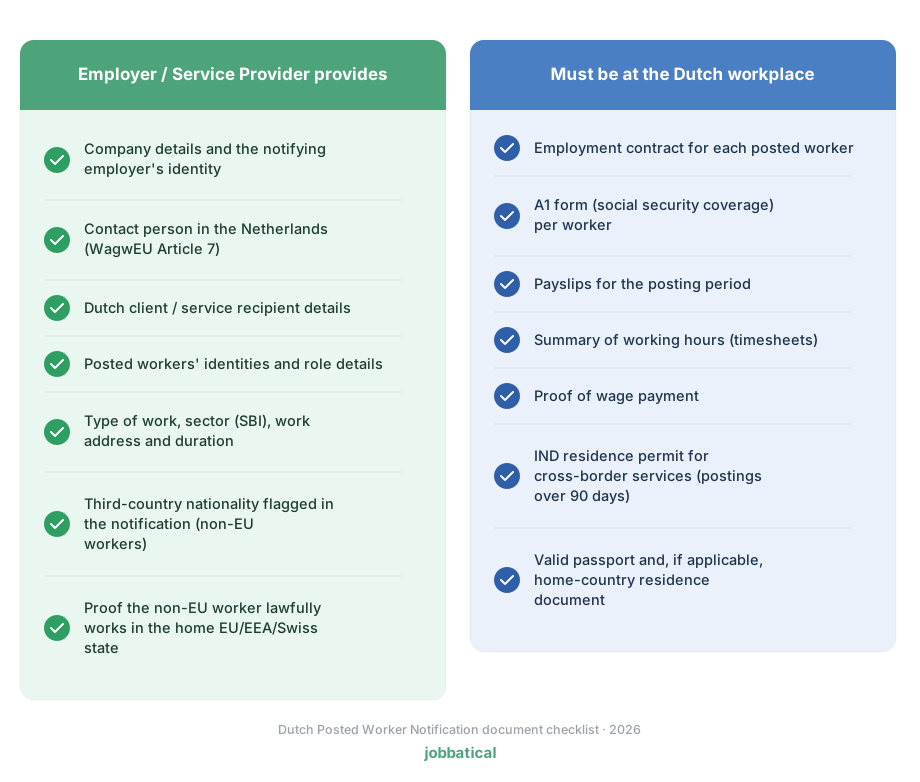
To start a posted worker notification, your company provides the posting details: the notifying employer, a contact person in the Netherlands (WagwEU Article 7), the Dutch client, the workers' identities, the type of work, the sector, the work address and the duration. On-site you must also keep A1 forms, contracts, payslips, working-hours records and proof of payment for inspection.
If a posted worker notification is missed, late or incorrect, the Netherlands Labour Authority can fine both the foreign employer and the Dutch client standard exposure is up to EUR 4,500 per posted worker, and wider WagwEU breaches such as underpayment can cost far more (verify current amounts before relying on them). Jobbatical prevents this by filing correctly and closing out the client verification step.
Yes a one-year notification (jaarmelding) can cover a year of postings if your company had at least three postings in the Netherlands the previous calendar year, though it is not available for the construction or temporary-employment sectors. Jobbatical assesses whether your posting pattern qualifies and sets up the correct WagwEU notification route, from single postings to annual filings.
Yes the Dutch Posted Worker notification covers non-EU (third-country) nationals as well as EU nationals, provided an EU, EEA or Swiss employer is doing the posting. For third-country nationals the WagwEU notification is always required (the incidental-work exemptions do not apply), and where the worker lawfully works in the home EU state it can replace the Dutch work permit. Postings over 90 days also need an IND residence permit for cross-border services. Jobbatical manages both.


From first permit to settled residency, hear from the HR teams and employees who've been through it with us.


Find Netherlands immigration services, calculators, guides, and compliance information in one place.
View Netherlands Country Page
By clicking “Accept All”, you agree to the storing of cookies on your device to enhance site navigation, analyze site usage, and assist in our marketing efforts. View our Privacy Policy for more information.