


The Scale-Up Sponsor Licence provides a streamlined, cost-effective alternative specifically designed for rapidly expanding British companies and VC-backed startups. This comprehensive guide covers eligibility pathways, pre-revenue options, costs, and compliance duties under current UK Visas and Immigration (UKVI) rules.
What is the UK Scale-Up Sponsor Licence?
The UK Scale-Up Sponsor Licence allows fast-growing UK businesses to recruit highly skilled global talent under a flexible, hybrid sponsorship model. Unlike standard routes, the Scale-Up licence bridges the gap between traditional sponsorship and full employment flexibility for the worker.
Key Benefits for Fast-Growing UK Businesses
- No Immigration Skills Charge (ISC): Under standard Skilled Worker routes, medium and large employers pay up to £1,320 per sponsored worker per year, while small businesses pay £480 per year. The Scale-Up route completely waives the ISC, saving growing companies thousands of pounds per hire.
- 6-Month Sponsorship Obligation vs 2-Year Standard Sponsorship: Sponsors are only required to sponsor and maintain reporting duties for the worker’s initial 6 months of employment. After 6 months, the worker transitions into an unsponsored status. They remain free to work for the business, change roles, or switch employers without requiring a new Certificate of Sponsorship (CoS) or additional visa applications.
Read more details about company cost breakdown for sponsor licence in our guide.
Scale-Up Sponsor Licence Validity and Terms (4-Year Cap)
Unlike a Skilled Worker sponsor licence which can be renewed indefinitely a Scale-Up sponsor licence is issued for a maximum, non-renewable 4-year term. Once the 4 years conclude, the licence lapses. If your business needs to sponsor new overseas workers after this period, you must transition to a standard Skilled Worker licence or another suitable immigration route.
Scale-Up Sponsor Licence Eligibility: Do You Qualify?
To qualify for a Scale-Up licence, your company must demonstrate genuine high-growth trajectory via one of two distinct pathways.
Pathway 1: The Standard HMRC Growth Pathway
This automated evaluation pathway relies directly on your company's historic PAYE and VAT submissions accessed securely by UKVI.
- The 20% Annualised Growth Requirement (Turnover vs Staff): Your company must show an annualised growth rate of at least 20% over the 3-year period preceding your application. This growth can be evidenced through either turnover OR staff headcount.
- Minimum 10 Employees at the 3-Year Baseline: At the start of the 3-year reference window (37 months prior to application), your business must have employed a minimum of 10 workers paying tax and National Insurance through your corporate HMRC PAYE scheme.
Pathway 2: The Endorsing Body Pathway (For Early-Stage & Pre-Revenue Firms)
Younger, fast-growing companies and pre-revenue startups that lack 37 months of HMRC history can apply via the Endorsing Body Pathway.
- Approved Endorsing Bodies: Endorsements must be issued by a Home Office-authorised body, such as:
- Global Entrepreneur Programme (GEP)
- Envestors
- Innovator International
- UK Endorsing Services
- Equity Funding & Financial Eligibility Criteria (£1M Single Round Rule): To qualify for endorsement, early-stage firms must have raised at least £1 million in qualifying equity finance within a single funding round in the 12 months immediately preceding the application to the endorsing body.
- Operational & Tax Footprint: The applicant company must:
- Have an HMRC PAYE footprint of no more than 4 years.
- Be registered for UK VAT and maintain a active UK corporate bank account.
- Employ at least 10 UK-based employees under PAYE at the time of endorsement.
- Demonstrate strong potential to meet standard Scale-Up growth criteria within 4 years.
Can Pre-Revenue Companies Get a Sponsor Licence in the UK?
Yes. Early-stage, pre-revenue technology, fintech, biotech, and deep-tech startups can obtain sponsorship privileges in the UK if they are properly structured and funded.
Overcoming Revenue Challenges for Pre-Revenue Startups
- Proving Commercial Viability Without Historical Revenue: Pre-revenue companies cannot qualify via the standard HMRC turnover check. Instead, they leverage the Endorsing Body Pathway or apply for a standard Skilled Worker Sponsor Licence by demonstrating market viability, valid IP, signed letters of intent, and robust operational frameworks.
- Cash Reserves, Venture Capital (VC), and Angel Investment Evidence: For both Scale-Up (Endorsing Body Route) and standard Skilled Worker licences, pre-revenue companies must provide detailed financial proof. This includes audited accounts, bank statements showing substantial cash runway, investment term sheets, cap tables, and pitch decks validating VC or institutional angel backing.
Scale-Up Sponsor Licence vs Skilled Worker Licence for Pre-Revenue Businesses
- When to Choose the Standard Skilled Worker Sponsor Route: If your pre-revenue startup has not raised a single £1M+ equity round, lacks 10 PAYE employees, or needs to retain long-term tied sponsorship control over key talent, the standard Skilled Worker licence is the appropriate choice.
- Salary Threshold Comparisons & Job Level Rules: Both routes mandate graduate-level roles rated at RQF Level 6 or higher. The Scale-Up route maintains a general minimum threshold of £39,100 (or going rate), whereas standard Skilled Worker sponsorship requires £41,700 per year (or going rate).
Step-by-Step Application Process for Scale-Up Sponsor Licences
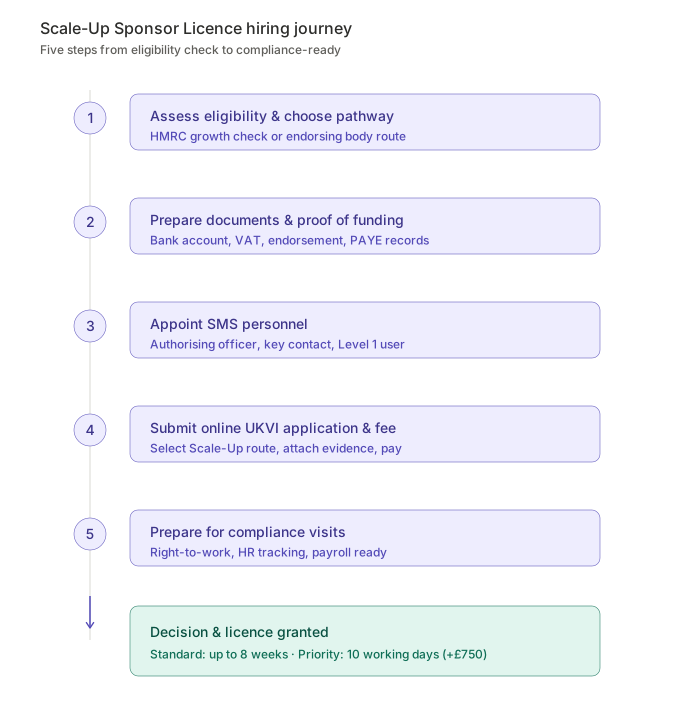
Step 1: Choosing Your Application Pathway & Assessing Eligibility
Determine whether your company satisfies the standard 3-year HMRC growth check (20% turnover/headcount growth + 10 employees baseline) or requires the Endorsing Body Pathway (£1M equity round + endorsement).
Step 2: Preparing Essential Supporting Documents & Proof of Funding
Gather standard Appendix A compliance documentation, including:
- Proof of UK corporate bank account.
- VAT registration and company registration details.
- Endorsement letter (if applying via Pathway 2).
- Investor agreements, bank balance statements, and PAYE records.
Read in detail our complete guide on Documents required for Sponsor Licence and Appendix A
Step 3: Appointing Key Personnel for the Sponsorship Management System (SMS)
You must assign internal personnel to hold responsible roles within the Home Office portal:
- Authorising Officer: Senior executive responsible for immigration compliance and organizational management.
- Key Contact: Main liaison between UKVI and your company.
- Level 1 User: Day-to-day administrator who issues Certificates of Sponsorship (CoS).
Step 4: Submitting the Online UKVI Application & Fee Payment
Complete the UKVI online portal form, selecting the Scale-Up route, attach supporting evidence, and submit the licence application fee.
Step 5: Preparing for UKVI Pre-Licence Compliance Visits
UKVI officials may conduct announced or unannounced pre-licence compliance audits. Ensure your HR tracking systems, right-to-work procedures, and payroll structures comply with Home Office guidelines.
Scale-Up Sponsor Licence Costs, Processing Times, and Fast-Tracking
- Standard Processing Timeframes: Standard online applications take up to 8 weeks to process.
- Priority Services: Employers can pay an additional £750 to request expedited processing, receiving an application decision within 10 working days.
Read in deatil about Priority processing in our guide.
Visa Fees Reimbursement Scheme for Scale-Ups (VFRS4SU)
High-growth businesses operating in Clean Energy, Life Sciences, and Digital & Technologies can significantly offset the financial cost of recruiting international talent through the Department for Business and Trade (DBT) grant initiative.
- Funding Support: Qualifying scale-ups can claim up to £5,000 per international hire (covering both the main applicant and their direct dependants), capped at a maximum of £25,000 per business per financial year.
- Covered Visa Routes: The scheme applies to international talent recruited through the Scale-Up Visa, Skilled Worker Visa, or Global Talent Route.
- Eligible Expense Categories: The grant reimburses primary visa application fees, the Health Surcharge (IHS), and official document translation costs.
- Strict Timing Requirement: You must submit your application to the DBT Grants Hub portal before incurring any visa costs. The Home Office and DBT will not grant retroactive reimbursements for applications, IHS fees, or legal costs paid prior to formal grant approval.
Compliance & Duties for Scale-Up Sponsors
Sponsor Obligations During the First 6 Months
During the worker's initial 6 months, scale-up sponsors must:
- Confirm the worker starts employment on the agreed start date.
- Track attendance and report unauthorized absences exceeding 10 consecutive working days.
- Maintain records of right-to-work checks, employment contracts, and PAYE slips.
- Ensure the worker receives at least £39,100 per annum or the SOC code going rate.
What Happens After 6 Months? (Unsponsored Status Transition)
Once the worker completes 6 months of sponsored employment, your formal sponsorship obligations automatically lapse. The worker is no longer tied to your licence and moves to an unsponsored status for the remaining 18 months of their 2-year visa. They can remain with your organization as a standard employee without further SMS reporting.
Avoiding Licence Refusal or Revocation: Cost-Passing Restrictions
UKVI strictly prohibits sponsors from passing on licence fees, CoS costs, or administrative legal expenses to sponsored employees. Attempting to deduct these expenses from a worker's wage or clawing them back via employment contracts will result in immediate licence revocation.
Legal Fee Regulations, IAA Guidelines & Cost-Passing Restrictions
When structuring relocation packages and handling immigration expenses, scale-up employers must navigate strict UK Visas and Immigration (UKVI) rules alongside regulations set by the Immigration Advice Authority (IAA).
- Mandatory Employer Expenses (Non-Transferable): The UK Home Office strictly classifies sponsor licence application fees and Certificate of Sponsorship (CoS) assignment charges as sole operational liabilities of the employer. Deducting these costs from a worker’s salary or adding clawback clauses into employment contracts violates sponsor compliance rules and results in immediate licence revocation.
- Reimbursing Employee Relocation & Visa Costs: Employers may choose to cover or reimburse an employee’s individual visa application fees, English language testing, or Immigration Health Surcharge. While clawback agreements are legally permissible for employee-side expenses if they resign early, these agreements must be transparently documented prior to employment.
- IAA Legal Service Standards: If your business or the candidate hires an IAA-regulated immigration advisor, all professional fees must be clearly agreed upon in a formal Client Care Letter. Note that professional advisory fees are non-refundable by governing authorities (such as the IAA or Home Office) in the event of visa refusal or voluntary application withdrawal.
Disclaimer: Immigration rules change quite frequently; please verify with official sources or contact us for the latest info before making any decisions.
Frequetly Asked questions for Scale Up Visa

.svg)
.svg)