


KEY TAKEAWAYS
- The 18b visa Germany is the academic skilled worker route for degree holders. Sponsor the EU Blue Card instead when the salary clears its threshold, because PR comes faster.
- The 18b visa has no fixed salary floor. The offer must match the local market rate and pass the Federal Employment Agency review.
- The over-45 catch: first-time applicants aged 45+ need €55,770 gross/year in 2026 or proof of retirement provision.
- Degree recognition via Anabin is the slowest step (3 to 6 months). Start it before you finalise the offer.
- Official fees are low (visa €75, permit €100). The real cost is time, so build a six-week buffer.
- Jobbatical team handles end-to-end process for Germany Skilled Worker visas
What is the 18b Visa in Germany?
The 18b visa Germany (§18b AufenthG) is the country’s main skilled worker visa for degree holders. Under Section 18b of the German Residence Act (AufenthG), this residence permit lets university graduates from non-EU countries live and work in Germany. It is the standard relocation track for degree holders whose salary falls below the high threshold set for an EU Blue Card. The 18a visa is the parallel route for workers with vocational training rather than a university degree.
18b Visa Germany Requirements
To sponsor a hire on the 18b visa Germany route, five things must be in place:
- A recognised degree. The university qualification must show as comparable in the Anabin database. Full recognition applies only to regulated professions.
- A qualified job offer. The role must be a genuine skilled job. Since 2024 it does not have to match the degree subject.
- A market-rate salary. The pay must meet the local rate for the role. The Federal Employment Agency checks this.
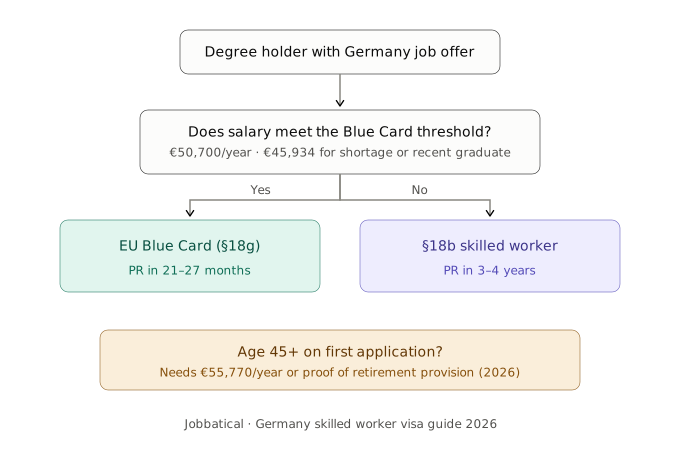
- The over-45 rule. First-time applicants aged 45 and over need €55,770 gross per year in 2026, or proof of retirement provision.
- A practice licence for regulated jobs. Healthcare, law, teaching and some engineering roles need a licence before the permit is issued.
18b Visa Germany vs EU Blue Card (2026)
Sponsoring an international candidate with a university degree brings HR teams to a critical compliance crossroad: EU Blue Card vs. §18b. This single operational choice dictates your onboarding timeline, structural paperwork, and the employee's path to permanent residency.
The 18b visa Germany under §18b of the Residence Act (AufenthG) is the default German work permit for non-EU university graduates.
Picking the wrong track is the costliest mistake HR makes. A Blue Card candidate processed as §18b can lose more than a year off their PR clock. If you are unsure, our guide to the differences between Germany's qualified employment permits breaks down every track.
Germany §18b vs EU Blue Card decision flow visual for degree holders
When to Use the §18b Academic Track Instead of a Blue Card
If your hire's salary clears the 2026 EU Blue Card thresholds, always opt for the Blue Card. It offers faster permanent residency and easier family reunification. However, you should deploy the §18b visa track if your candidate matches these scenarios:
- Salary Below the Blue Card Limit: The offered gross salary sits below the 2026 German Blue Card minimums (€50,700 for standard roles or €45,934 for recent graduates and shortage occupations).
- Cross-Field Employment: The job duties do not perfectly align with the candidate's exact university major. Modern German immigration guidelines allow degree holders to accept any qualified position.
- Entitlement to a Permit: The local immigration office (Ausländerbehörde) must legally issue the permit once all criteria are met, removing discretionary refusal risks.
18b Visa Germany Benefits for Employers
For degree holders who sit below the Blue Card salary bar, the 18b visa Germany (§18b Abs. 1 AufenthG) has clear benefits for employers:
- It is a legal entitlement. Once the criteria are met, the immigration office must issue the permit. There is no discretionary refusal.
- No fixed salary floor. The permit flexes to the market rate, so you can sponsor more roles than the Blue Card allows.
- No degree-to-job match. Since the 2024 reform, any qualified role counts.
- A fast route to PR. Settlement comes after 3 years with B1 German, or 2 years with a German degree.
- Family can join. Spouses gain immediate work rights.
- Employer fast-track. The accelerated procedure can cut the visa stage to a few weeks.
A quick note on terms. §18b Abs. 1 is the general academic skilled worker permit covered here. The EU Blue Card now sits under §18g AufenthG, not §18b Abs. 2 as it did before 2024.
German Degree Recognition and the Anabin Database
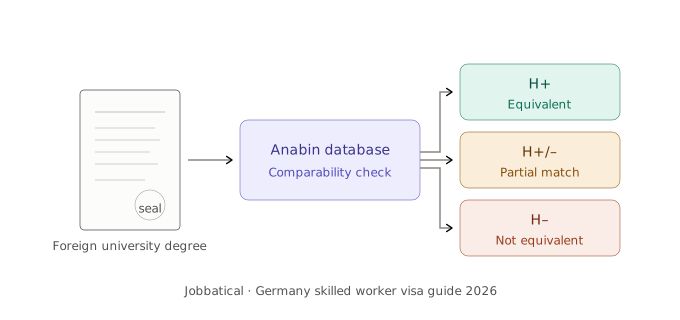
To qualify for the academic track, a candidate must hold a university degree that is officially recognized in Germany or verified as comparable via the online Anabin database. Unlike the vocational visa track, academic degree holders typically only require a positive comparability status on Anabin rather than a lengthy, full formal recognition procedure.
- Regulated professions: Fields like healthcare, education, law, and certain engineering roles still require a separate professional practice license before the visa can be issued.
- Onboarding timelines: Verifying university qualifications is often the slowest step in the global mobility process, so initiate the Anabin check before finalizing the job offer. Our guide to Germany's qualification recognition process walks through the timing.
18b Visa Salary Rules and the Over-45 Threshold
The 18b visa does not set a fixed statutory salary like the EU Blue Card. Instead, the Federal Employment Agency conducts a labor market review to ensure the employment contract matches customary local market rates for the specific role and region.
- The over-45 threshold: Non-EU professionals aged 45 or older applying for their first German work permit must earn a gross annual salary of at least €55,770 in 2026, or provide official proof of independent, adequate retirement provision. That figure equals 55% of the statutory pension contribution ceiling and is reset every December. This directly impacts your older senior hires.
- Collective bargaining agreements: If the position is covered by a collective agreement, the compensation package is automatically deemed compliant by immigration authorities as long as it adheres to the established pay scale.
One useful exception: roles covered by a collective agreement (Tarifvertrag) are treated as meeting salary standards when pay follows the agreement. Our Tarifvertrag work visa guide covers how that plays out.
The application process for 18b visa, step by step
The 18b visa Germany application follows a clear workflow. It works for university graduates applying from abroad or switching status inside Germany.
Want it faster? The accelerated skilled worker procedure (Beschleunigtes Fachkräfteverfahren) can cut months to weeks when the employer starts it.
See our fast-track procedure guide for the steps.
Timeline, fees, and cost breakdown
Government fees are modest; the real cost is time. Recognition and missing documents cause most delays, so build a buffer of at least six weeks before your target start date.
Germany §18b cost breakdown (2026)
Standard decisions land in roughly 4 weeks to 3 months. Recognition alone can run 3 to 6 months, which is why you start it first. You can gauge current wait times with Jobbatical's Germany residence visa processing time calculator.
Compliance and the road to permanent residence
Employer obligations and the pathway to a German settlement permit involve clear corporate duties despite the lack of an official sponsor license in Germany.
- Qualification verification: Validate that the candidate university degree is recognized as comparable via the Anabin database before making a firm job offer.
- Salary compliance: Align the employment contract with regional market-rate wages and ensure it satisfies the over-45 salary minimums.
- Mandatory counseling: Deliver the required paragraph 45c written labor law counseling notice to non-EU employees on their first day of work.
- Record keeping: Maintain precise compliance documentation for every international hiring case.
Navigating the Section 18b AufenthG track correctly maximizes employee retention. Qualified academic professionals can apply for a permanent German settlement permit after three years of employment with B1 language skills, or after just two years if they hold a university degree completed in Germany.
Before you draft the contract, run a quick check on the candidate: the salary you offer often decides the track. Jobbatical's Germany pre-hiring check takes under five minutes and flags blockers early, so you commit to a start date you can actually keep.
Disclaimer: Immigration rules change often, please verify with official sources or contact us for the latest info.
Frequently Asked Questions: 18b Visa Germany

.svg)


.svg)