.svg)



Key TakeAways
- Support Strategies: Offer workshops, resources, and financial aid to address test anxiety and cost barriers, especially with upcoming changes to settlement routes.
- Life in the UK Test: 24 questions, 75% pass mark (18/24 correct), £50 fee; based on the official handbook for ages 18–65.
- English Proficiency: CEFR B1 in speaking/listening via approved tests or degrees; exemptions for certain nationals. Note: Initial visa routes like Skilled Worker now require B2 from January 2026, indirectly raising standards for future ILR applicants.
- 2026 Updates: Full eVisa rollout by end-2026, B2 English for entry visas from January 2026, and the Earned Settlement model from April 2026 (extending ILR to 10 years with points-based reductions) require proactive HR planning.
For Learning & Development (L&D) teams and HR coordinators, supporting employees through the Indefinite Leave to Remain (ILR) application process remains a key responsibility. Two critical components of ILR eligibility in 2026 are the Life in the UK Test and English language proficiency requirements.
Overview of ILR Requirements : 2026
Indefinite Leave to Remain (ILR) allows non-UK nationals to live and work in the UK without visa restrictions, typically after 5 years on eligible visas like the Skilled Worker Visa (with potential extension to 10 years under April 2026 reforms). The Life in the UK Test and English language proficiency are mandatory for most applicants, ensuring integration into British society.
Life in the UK Test
The Life in the UK Test assesses an applicant’s knowledge of British history, culture, government, and values, ensuring they can integrate effectively.
Who Must Take the Life in the UK Test
Applicants aged 18–65 applying for ILR or British citizenship, unless exempt (e.g., due to medical conditions or long-term residency pre-2007) must take the test.
Test Format of the Life in the UK Test
- 24 multiple-choice questions.
- 45-minute duration.
- Passing score: 75% (18/24 correct answers).
Content of the Life in the UK Test
Based on the official Life in the United Kingdom: A Guide for New Residents (3rd Edition), covering:
- British values and principles.
- Historical events and figures.
- Government structure and legal system.
- Modern UK society and traditions.
Cost of the Life in the UK Test
£50 per attempt (as of 2026), non-refundable.
How to Book the Life in the UK Test
Tests are booked online via the Home Office’s approved provider (gov.uk/life-in-the-uk-test), with over 30 test centres across the UK.
Preparation Time for the Life in the UK Test
Typically 2–3 months, depending on familiarity with UK culture and study habits.
Exemptions of the Life in the UK Test
- Applicants under 18 or over 65.
- Those with long-term physical or mental conditions (requires medical evidence).
- Certain pre-2007 residents (consult Home Office guidance).
L&D Action: Provide employees with access to the official handbook (digital or physical copies) and recommend study schedules. Organize group study sessions or workshops to build confidence.ILR application services - Life in the UK test support.
English Language Proficiency
Applicants must demonstrate English proficiency at CEFR Level B1 (or higher for specific roles) in speaking and listening to qualify for ILR.
Accepted Evidence
- Approved English Language Test:
- Tests must be taken at a Home Office-approved provider (listed on gov.uk).
- Common tests include IELTS Life Skills (B1) or Trinity College London exams.
- Cost: £150–£200 per test, depending on provider and location.
- Academic Qualification:
- A degree or higher qualification taught or researched in English, verified by UK ENIC.
- Must include speaking and listening components (e.g., not purely research-based).
- Nationality Exemption:
- Nationals of majority-English-speaking countries (e.g., Australia, Canada, USA) are exempt.
- Full list available on gov.uk.
- Previous Proof:
- Applicants who met B1 proficiency for their initial visa (e.g., Skilled Worker) may reuse evidence, provided it remains valid. Note: From January 8, 2026, Skilled Worker visas require B2 level, meaning new entrants will exceed the ILR threshold.
Exemptions
- Applicants aged under 18 or over 65.
- Those with long-term physical or mental conditions (requires medical evidence).
- Certain pre-2013 visa holders (check Home Office rules).
HR Action: Verify employees’ existing English proficiency documentation. Guide those needing tests to approved providers and retain copies of results for audit purposes. Advise on the new B2 entry requirement for recent hires.
2026 Updates for Life in the UK Test
The 2025 Immigration White Paper continues to shape 2026 policies, with key changes impacting ILR preparation:
- Higher Entry Standards: From January 8, 2026, Skilled Worker, Scale-up, and High Potential Individual visa applicants must demonstrate B2 English proficiency (A-level equivalent) in all skills, up from B1. This does not yet alter the B1 ILR requirement but ensures future applicants meet a higher baseline.
- eVisa Full Transition: By the end of 2026, all physical visa stickers and Biometric Residence Permits (BRPs) will be phased out, with ILR applicants fully relying on digital eVisas. Digital accounts are now essential for storing test certificates and documents.
- Earned Settlement Model: Launching April 2026, this replaces the standard 5-year ILR route with a 10-year qualifying period for most routes, using a points-based system for reductions (e.g., for B2+ English, community involvement, or salary thresholds). The Life in the UK Test remains mandatory, but English may rise to B2 under the new framework.
- Tighter Compliance: Ongoing audits emphasize digital record-keeping; HR systems must integrate eVisa uploads and track progress toward extended timelines.
L&D Action: Update employee training programs to cover eVisa management, B2 preparation for new visas, and Earned Settlement points. Emphasize early planning for the 10-year route.
Read here UK ILR New Rules for Skilled Worker Visa in April 2026
Supporting Employees: Practical Steps for ILR Applicants
L&D teams and HR coordinators can streamline employee's preparation for the Life in the UK Test and English requirements with these strategies, adapted for 2026 reforms:
Develop Training Programs
- Offer workshops or e-learning modules on the Life in the UK Test, using practice questions from the official handbook.
- Provide English language support through conversation clubs, online courses, or partnerships with local language schools include B2 modules for those on new visas.
Resource Provision
- Distribute the Life in the United Kingdom handbook (available for £12.99 or free digitally via libraries).
- Share links to approved English test providers and sample tests on gov.uk.
Create Study Plans
- Recommend a 2–3 month preparation timeline for the Life in the UK Test, with weekly study goals.
- Suggest 4–6 weeks for English test preparation, focusing on speaking and listening skills; extend for B2 if applicable.
Financial Support
- Consider subsidizing test fees (£50 for Life in the UK, £150–£200 for English tests) as part of employee benefits.
- Offer flexible payment plans for employees facing financial constraints.
Compliance Tracking
- Use HR software to store test certificates, degree verifications, and exemption documents in eVisa-compatible formats.
- Monitor employees’ progress toward ILR eligibility, factoring in potential 10-year extensions.
Mock Tests and Feedback
- Organize mock Life in the UK Tests to familiarize employees with the format and reduce anxiety.
- Provide feedback on English speaking and listening skills through internal assessments.
HR Action: Integrate ILR preparation into onboarding and annual performance reviews. Communicate test requirements and 2026 reforms early to align with employees’ settlement timelines.

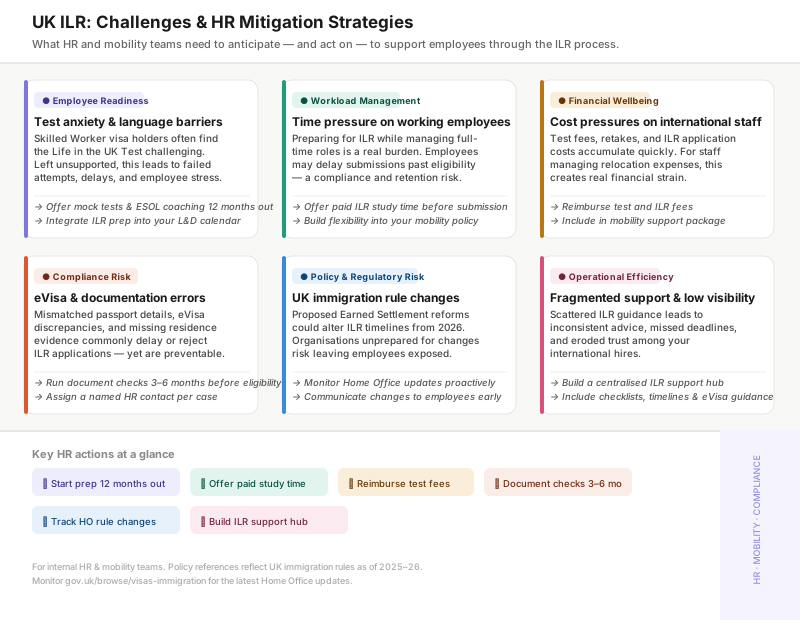
Challenges & Mitigation Strategies for UK ILR
Practical Tips for Passing the Life in the UK Test
- Use Official Study Material: The Life in the UK Test is based on the official handbook for new residents. Employees should focus on British history, UK values, government structure, and civic rights.
- Practice Under Real Exam Conditions: Online mock tests help applicants prepare for the 24-question, 45-minute format. Timed practice improves confidence and reduces exam-day stress.
- Study Consistently: Short daily revision sessions over 4–6 weeks are more effective than last-minute cramming. Consistent preparation improves retention and test performance.
- Target Weak Topics: Many applicants struggle with British political history, monarchs, and UK devolved governments. Reviewing incorrect answers from practice tests helps target weak topics faster.
- Understand Concepts, Not Just Facts: Life in the UK Test questions are often reworded, so understanding concepts is more effective than memorising dates alone. Applicants who understand context typically perform better.
- Prepare for Test Day: Applicants must bring valid photo ID and matching booking details to approved UK test centres. Checking requirements in advance helps avoid refused entry or rescheduling.
Disclaimer
Immigration policies may change. While we aim to keep this information accurate and up to date, please verify details with official sources or contact Jobbatical for the latest guidance.
Frequently Asked Questions About the 2026 Life in the UK Test for ILR Applicants

.svg)
.svg)