

KEY TAKEAWAYS
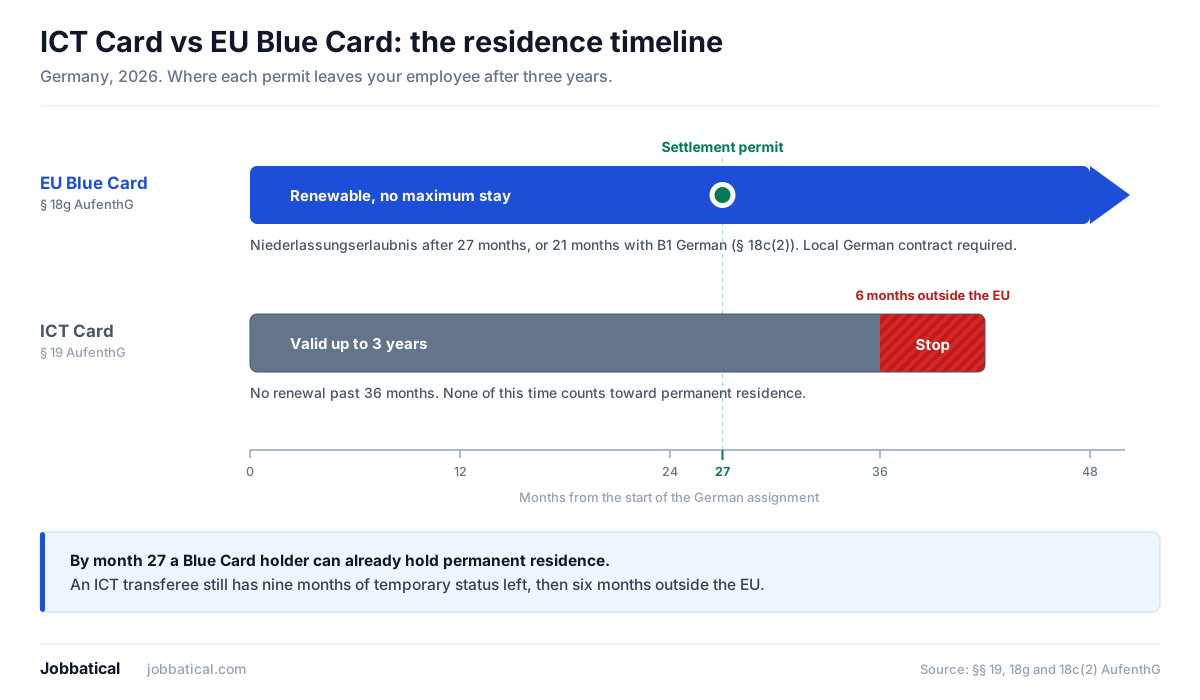
- The ICT Card caps out at 3 years with a 6-month cooling-off period, and none of that time counts toward permanent residence.
- Converting to an EU Blue Card requires a German local employment contract, not an extension of the existing permit.
- 2026 salary thresholds are €50,700 standard and €45,934.20 for shortage occupations, recent graduates and qualifying IT specialists.
- Start 4 to 6 months before ICT expiry; filing before expiry triggers the Fiktionsbescheinigung that protects work authorisation.
- Payroll, A1/CoC withdrawal and works council consultation must be sequenced alongside the permit application, not after it.
When a German intra-corporate transfer becomes a permanent role, HR teams need a reliable conversion strategy to transition the employee from an ICT Card to an EU Blue Card. Under German immigration law, the ICT Card (§ 19 AufenthG) is strictly temporary. It caps out at three years for managers and specialists with no extensions allowed. Without a status change, the employee must leave the EU for six months. Retaining your talent requires switching them to a local German employment contract, filing a new EU Blue Card application, and executing a complete payroll handover.
┈┈┈┈┈┈┈┈┈┈┈┈┈┈┈┈┈┈┈┈┈┈┈┈┈┈┈┈┈┈┈┈┈┈┈┈┈┈┈┈┈┈┈┈┈┈┈
Understanding the Basics: ICT Card vs. EU Blue Card
What is the German ICT Card (§ 19 AufenthG)?
The ICT Card is a temporary residence permit for non-EU employees seconded within the same corporate group to a German entity.
Your employee qualifies when:
- They have been with the group for at least six months before the transfer
- The sending entity sits outside the EU, in the same group as the German host
- The role is manager, specialist or trainee
Two limits shape planning under § 19 AufenthG:
- Three-year cap for managers and specialists, one year for trainees. Extensions cannot exceed it.
- No residence path. ICT time does not count toward permanent residence, as our Germany ICT Card guide explains.
┈┈┈┈┈┈┈┈┈┈┈┈┈┈┈┈┈┈┈┈┈┈┈┈┈┈┈┈┈┈┈┈┈┈┈┈┈┈┈┈┈┈┈┈┈┈┈
What is the EU Blue Card (§ 18g AufenthG)?
The EU Blue Card is a residence permit for highly qualified non-EU professionals on a local German contract.
What your employee gains:
- A settlement permit after 27 months, or 21 with B1 German (§ 18c(2) AufenthG)
- EU mobility and simplified family reunification
- No cooling-off period, no assignment cap
The 2026 requirements:
- €50,700 gross a year for standard occupations
- €45,934.20 for shortage occupations, recent graduates and qualifying IT specialists (see the 2026 salary thresholds)
- A recognised degree, or for IT specialists without one, three years of comparable experience in the last seven
Germany issues four Blue Card variants, and which one your transferee falls under decides the salary floor: EU Blue Card types in Germany and how they differ
┈┈┈┈┈┈┈┈┈┈┈┈┈┈┈┈┈┈┈┈┈┈┈┈┈┈┈┈┈┈┈┈┈┈┈┈┈┈┈┈┈┈┈┈┈┈┈
Comparison Table: ICT Card vs. EU Blue Card at a Glance
If the Blue Card thresholds do not work for the role, these are the other German routes worth checking: work permit alternatives to the EU Blue Card
┈┈┈┈┈┈┈┈┈┈┈┈┈┈┈┈┈┈┈┈┈┈┈┈┈┈┈┈┈┈┈┈┈┈┈┈┈┈┈┈┈┈┈┈┈┈┈
Why Convert an Employee from an ICT Card to an EU Blue Card in Germany?
Switching a non-EU transferee from a German ICT Card (§ 19 AufenthG) to an EU Blue Card (§ 18g AufenthG) protects long-term talent and simplifies immigration compliance. Transitioning from a temporary secondment to a local German contract delivers several key strategic benefits.
Overcoming the ICT 3-Year Maximum Stay Cap and Cooling-Off Period
It eliminates the mandatory 6-month EU cooling-off period required when an intra-corporate transfer ends.
For the permit your transferee currently holds and how we handle it: Germany intra-corporate transfer (ICT) permit services
Transitioning from Temporary Secondment to Permanent German Local Hire
Conversion removes shadow payroll, split reporting, and secondment risks by moving the employee directly onto German headcount.
No German entity to hire into yet? Compare the two routes here: EU Blue Card vs Employer of Record in Germany
Retaining Top Global Talent and Improving Employee Retention Rates
Employees on ICT Cards know there is an end date and no residence path. That pushes people to start looking, especially once children are in German schools. A Blue Card puts a settlement permit within reach in about two years and opens the route to citizenship. In a way it offers a fast-track pathway to German permanent residency in 21 to 27 months and eventual citizenship.
Streamlined Family Reunification and Spousal Work Rights
Spouses of Blue Card holders join through a simplified process and can work immediately, with no separate permit and no language proof at entry. Family renewals also stop depending on an assignment that expires. ICT card to EU blue card conversion enables immediate spousal work authorization in Germany without requiring German language proof prior to entry.
┈┈┈┈┈┈┈┈┈┈┈┈┈┈┈┈┈┈┈┈┈┈┈┈┈┈┈┈┈┈┈┈┈┈┈┈┈┈┈┈┈┈┈┈┈┈┈
When to Convert an ICT Card to an EU Blue Card in Germany?
Minimum Secondment Duration Requirements
There is no minimum secondment duration required to switch from an ICT Card to an EU Blue Card in Germany. Because the EU Blue Card (§ 18g AufenthG) is a distinct German work permit, eligibility depends entirely on meeting the new local employment contract requirements on the day of application.
Common triggers for HR to initiate this permit conversion:
- Permanent transition: The assignment passes 18 months and shifts into a permanent German role.
- Financial setup: A local German cost centre and payroll budget are established.
- Employee retention: The transferee requests a long-term pathway to German permanent residency.
The full eligibility picture, including the 2026 thresholds and the four Blue Card types: Germany EU Blue Card employer guide
Pre-Conversion HR Checklist for EU Blue Card Eligibility
Verify these four requirements before finalizing the German immigration transition:
- Degree recognition: Confirm the foreign university degree and institution hold an H+ rating in the Anabin database, or request a ZAB Statement of Comparability (allow 6 to 12 weeks).
- Minimum salary: Ensure the 2026 gross annual salary meets the standard threshold of €50,700 or the reduced shortage occupation limit of €45,934.20.
- Fair compensation: Verify pay parity with German colleagues in the same region, including any collective wage agreements (Tarifvertrag).
- Role alignment: Check that the daily job duties directly match the applicant's formal qualifications.
Run the eligibility check before you make the offer: Germany pre-hiring work permit check
Degree recognition (Anabin / KMK) vs. the IT specialist experience route
- Foreign degree: institution and qualification must appear in the KMK's Anabin database, normally with an H+ rating. If not, request a ZAB Statement of Comparability and allow 6 to 12 weeks.
- IT Specialist Visa Route Without a Degree:Non-EU tech professionals lacking a university degree can still secure an EU Blue Card in Germany under these conditions:
- Required experience: Document at least three years of academic-level IT experience gained within the last seven years.
- Salary limit: Meet the 2026 reduced minimum salary threshold of €45,934.20.
- Official consent: Obtain mandatory approval from the Federal Employment Agency.
If the degree is not listed in Anabin, recognition counselling is the next step: Germany qualification recognition and Anerkennungsberatung for HR
┈┈┈┈┈┈┈┈┈┈┈┈┈┈┈┈┈┈┈┈┈┈┈┈┈┈┈┈┈┈┈┈┈┈┈┈┈┈┈┈┈┈┈┈┈┈┈
Timing the Application: Avoiding Gaps in Work Authorization in Germany
When converting an employee from an ICT Card to an EU Blue Card in Germany, HR teams must manage timelines carefully to prevent work authorization gaps. The local Foreigners' Authority (Ausländerbehörde) often experiences heavy application backlogs, making early preparation essential for a smooth immigration process.
The same lead-time logic applies to every German permit your team tracks: Germany work permit renewal guide
Recommended lead times for the Ausländerbehörde (Foreigners' Authority)
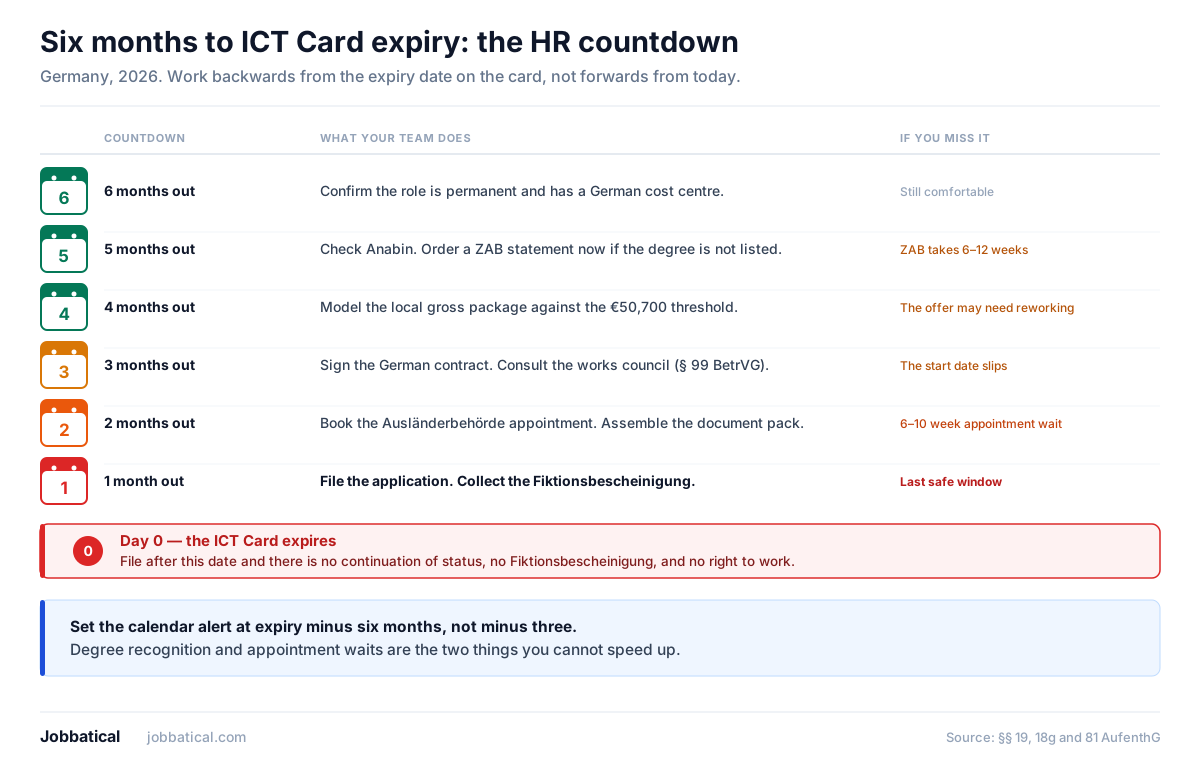
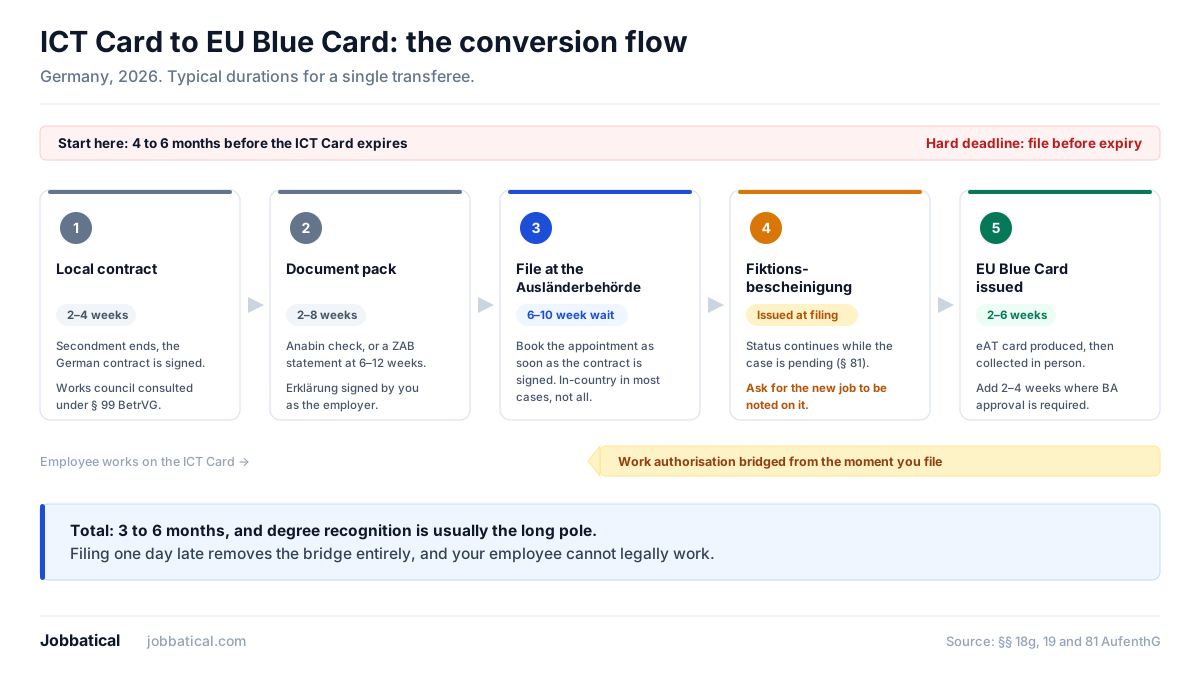
- Strategic HR timeline: Begin preparing the EU Blue Card application 4 to 6 months prior to the German ICT Card expiration date.
- Proactive appointment booking: Schedule the Ausländerbehörde appointment immediately once the permanent German employment contract is signed.
- City-specific processing delays: Anticipate routine wait times of 6 to 10 weeks for appointments in major economic hubs like Berlin, Munich, and Frankfurt.
- Strict permit filing deadline: Always submit the complete EU Blue Card application before the ICT Card expires to legally maintain continuous work authorization under German immigration law.
- Compliance risk management: Initiating the conversion process at the three-month mark often leads to last-minute firefighting. Planning with only a six-week lead time is a high-risk compliance gamble, not a secure buffer.
┈┈┈┈┈┈┈┈┈┈┈┈┈┈┈┈┈┈┈┈┈┈┈┈┈┈┈┈┈┈┈┈┈┈┈┈┈┈┈┈┈┈┈┈┈┈┈
How to Convert ICT Card to EU Blue Card: Step-by-Step HR Guide
┈┈┈┈┈┈┈┈┈┈┈┈┈┈┈┈┈┈┈┈┈┈┈┈┈┈┈┈┈┈┈┈┈┈┈┈┈┈┈┈┈┈┈┈┈┈┈
Step 1: Transitioning the Employment Relationship (Secondment to Local Contract)
The Blue Card needs an employment relationship with the German entity. The secondment ends, a German contract begins.
- End or suspend the assignment letter and home contract
- Agree the effective date with payroll, tax and the receiving manager
- Confirm whether seniority, notice and pension rights carry across
Drafting a German-compliant employment contract (Nachweisgesetz)
The Nachweisgesetz obliges you to give written essential terms, some on day one. Case officers read this contract closely.
- Gross annual salary as a fixed figure, not a bonus-dependent total
- Job title, duties, place of work, start date
- Working hours, notice periods, holiday
- Unlimited term where possible; a fixed term shortens the permit
┈┈┈┈┈┈┈┈┈┈┈┈┈┈┈┈┈┈┈┈┈┈┈┈┈┈┈┈┈┈┈┈┈┈┈┈┈┈┈┈┈┈┈┈┈┈┈
Step 2: Preparing the Required Application Document Package
Checklist: passport, local contract, degree recognition and Erklärung zum Beschäftigungsverhältnis
- Valid passport and the current ICT Card
- Signed German employment contract
- Degree certificate plus Anabin printout or ZAB statement
- Erklärung zum Beschäftigungsverhältnis, signed by you
- Meldebescheinigung, health insurance proof and biometric photo
- CV and references if using the IT experience route
Print-ready version of this list: Germany EU Blue Card document checklist
┈┈┈┈┈┈┈┈┈┈┈┈┈┈┈┈┈┈┈┈┈┈┈┈┈┈┈┈┈┈┈┈┈┈┈┈┈┈┈┈┈┈┈┈┈┈┈
Step 3: Submitting the Application to the Local Ausländerbehörde
In-country conversion vs. consular application requirements
Usually your employee applies inside Germany, at the office covering their registered address, while the ICT Card is still valid. Some offices treat a change of purpose this large as a case for a new D visa from abroad. Confirm before fixing the start date.
Berlin runs its own appointment system, and it is the tightest of the major cities: how to get a Berlin Ausländerbehörde appointment
Handling the Federal Employment Agency (Bundesagentur für Arbeit) approval process
- Salary at or above €50,700: no approval needed
- Lower threshold cases: approval required, adding 2 to 4 weeks
- The agency checks conditions against comparable German staff, so the Erklärung and contract must agree exactly
Check whether the role sits on the shortage list before you assume the lower threshold applies: Germany shortage occupations and the EU Blue Card
┈┈┈┈┈┈┈┈┈┈┈┈┈┈┈┈┈┈┈┈┈┈┈┈┈┈┈┈┈┈┈┈┈┈┈┈┈┈┈┈┈┈┈┈┈┈┈
Step 4: Managing Bridge Work Authorization During the Transition Period
The role of the Fiktionsbescheinigung (§ 81 AufenthG)
File before the card expires and your employee's status continues until the authority decides. The office issues a Fiktionsbescheinigung as proof.
Here is the trap. The certificate carries the rights of the old permit, which was tied to a transfer. If the employee has already moved onto the local contract, ask the office to note the new employment on it.
┈┈┈┈┈┈┈┈┈┈┈┈┈┈┈┈┈┈┈┈┈┈┈┈┈┈┈┈┈┈┈┈┈┈┈┈┈┈┈┈┈┈┈┈┈┈┈
Key Legal, Tax, and Payroll Considerations for Employers
Switching from Home Country Payroll / Shadow Payroll to Local German Payroll
- German payroll setup: Register the employee on local German payroll on their official start date and immediately close shadow payroll operations.
- Tax equalization closure: Reconcile outstanding tax equalization arrangements and review assignment premiums, as local hires lose tax-preferred secondment allowances.
- Split-year tax filing: Issue the annual wage tax certificate (Lohnsteuerbescheinigung) correctly to reflect the split-tax year transition.
Wider context on running payroll across entities: how to pay your international team
Social Security Integration (Sozialversicherung) and Ending A1 / CoC Certificates
- A1 certificate withdrawal: Cancel the home country A1 certificate or Certificate of Coverage (CoC) on the effective date to avoid double-coverage social security audits.
- Social security enrollment: Register the transferee for mandatory German statutory health, pension, unemployment, and long-term care insurance.
- Social security number: Secure the employee's German social security number (Sozialversicherungsnummer) before executing the first local payroll run.
Works Council (Betriebsrat) Involvement and Co-Determination Rights
- Legal hiring classification: Classify the status change from seconded worker to local employee as a formal hiring (Einstellung) under § 99 BetrVG.
- Co-determination consultation: Submit the role description, salary band, and job grading to the local works council 1 to 2 weeks prior to the start date.
- HR compliance risk: Verify works council involvement early, as smaller German corporate entities frequently overlook this mandatory step during ICT conversions.
┈┈┈┈┈┈┈┈┈┈┈┈┈┈┈┈┈┈┈┈┈┈┈┈┈┈┈┈┈┈┈┈┈┈┈┈┈┈┈┈┈┈┈┈┈┈┈
Common Pitfalls and How HR Can Avoid Them
Avoid these frequent HR mistakes when converting non-EU transferees from a German ICT Card to an EU Blue Card:
Misaligning the Local Salary with Statutory EU Blue Card Limits
Transferees paid at market rate often land just below €50,700 once assignment premiums fall away. Model the base local package early to ensure gross compensation meets statutory German EU Blue Card salary limits after secondment allowances end.
Model the package against the thresholds before the offer goes out: Germany salary threshold comparison tool
Applying Too Close to the ICT Expiration Date
Submit the conversion request before ICT expiration to maintain continuous work authorization and receive a legal continuation permit (Fiktionsbescheinigung). Set the alert at expiry minus six months.
Tracking expiries manually is how this gets missed: automated work permit renewals in Germany
Missing Qualification Recognition Proofs Prior to Submission
Anabin gaps stall more of these files than anything else. ZAB statements take weeks and cannot be rushed. Verify university equivalence in the Anabin database early or request a ZAB Statement of Comparability to prevent unexpected immigration delays.
Pull your ICT Card population into one list this quarter, sort by expiry date, and flag everyone whose role has become permanent. This will help translate into a conversion pipeline for the next twelve months.
For candidates with experience but no degree: hiring on Germany's experience pillar
┈┈┈┈┈┈┈┈┈┈┈┈┈┈┈┈┈┈┈┈┈┈┈┈┈┈┈┈┈┈┈┈┈┈┈┈┈┈┈┈┈┈┈┈┈┈┈
How Jobbatical Simplifies ICT Card to EU Blue Card Conversions in Germany
- End-to-end process management: Jobbatical handles the complete ICT Card to EU Blue Card conversion in Germany, navigating salary threshold checks, Anabin degree verification, and Ausländerbehörde appointments.
- Advanced immigration platform: Jobbatical's AI-powered platform integrates seamlessly with your HRIS to automate work visa compliance, track permit expirations, and simplify corporate immigration management.
- Dedicated local expertise: A named Germany immigration specialist reviews all critical employer documents, guaranteeing accurate submissions and preventing legal delays during the transition.
- 4.8-star rated delivery: Trusted by over 1,000 global companies, the tech-enabled service consistently delivers a 4.8-star client satisfaction rating and maintains a 99.9% visa approval rate.
- Fast-track visa processing: The platform coordinates the accelerated skilled worker procedure to expedite German work permit approvals, completely preventing work authorization gaps when an intra-corporate transfer expires.
Case study:
A real ICT case we ran end to end: ICT relocation for a German engineering company
Talk to us to see how we track expiries and run Germany EU Blue Card conversions.
Disclaimer: Immigration rules change quite frequently; please verify with official sources or contact us for the latest info before making any decisions.
┈┈┈┈┈┈┈┈┈┈┈┈┈┈┈┈┈┈┈┈┈┈┈┈┈┈┈┈┈┈┈┈┈┈┈┈┈┈┈┈┈┈┈┈┈┈┈
Frequently Asked QuestionsICT Card to EU Blue Card Conversion in Germany

.svg)
.svg)