.svg)


Key Take aways for Germany Work Permit Renewal/ Extension
- Apply for a work permit extension at least three months before the current permit expires to prevent employment or residency interruptions.
- The extension process depends on whether you continue with the same permit type or switch to another (e.g., Skilled Worker to EU Blue Card).
- For all permit types, keep the degree recognition valid, ensure the job position aligns with the degree or qualifications, and meet the latest salary threshold at the time of submission.
- Early preparation-especially confirming degree recognition, employment fit, salary compliance, and documentation-ensures a smooth and timely renewal process.
IIn order to continue working and residing legally in Germany, you must renew or extend your German residence permit for employment (work permit). The process varies slightly depending on the type of permit (e.g., EU Blue Card, skilled worker under §18b, etc.), but here’s a general overview of the renewal/extension process.
When to Start the Extension Process
→ It is strongly recommended to apply for an extension at least three months before your current permit expires. This provides enough time for processing and prevents any gaps in your employment or residency status.
→ Depending on your current permit and qualifications, you can extend with the same type or switch to a different one (e.g., from skilled worker to EU Blue Card) if you meet all requirements.
Key Scenarios for Work Permit Extension / EU Blue Card Focus
Here are the key requirements for degree recognition, job fit, and salary thresholds in common scenarios (updated for 2026). Salary thresholds are tied to the annual pension contribution assessment ceiling and are adjusted yearly.
- EU Blue Card (recognized degree) to EU Blue Card (recognized degree)(No change in permit type)
- Recognition of the degree: The original recognition (via ZAB/Anabin) from your first application is usually sufficient.
- Employment position fits the degree: Minor changes in job title/role are typically fine. Significant changes could, in the worst case, lead to a downgrade to a skilled worker permit under §18b AufenthG.
- Salary threshold is achieved: Your salary must meet the current year's threshold at the time of application (as of 2026: at least €50,700 gross annual for standard occupations; €45,934.20 for shortage occupations like IT, engineering, healthcare, or if you're a young professional with degree obtained <3 years ago).
- EU Blue Card (skilled worker / career starter / experienced IT professional) to EU Blue Card (recognized degree)
- Recognition of the degree: The degree must be recognized by the Central Office for Foreign Education (ZAB/Anabin).
- Employment position fits the degree: Minor changes are usually acceptable. Major shifts could result in a downgrade to §18b skilled worker permit.
- Salary threshold is achieved: Must meet the 2026 threshold (€50,700 standard; €45,934.20 for shortage occupations/young professionals).
- Skilled Worker (§18b AufenthG) / Experienced Employee (§19c(1)) to EU Blue Card
- Recognition of the degree: If not already done, obtain recognition from the Central Office for Foreign Education (ZAB).
- New employment position fits the degree: The university degree must align with the new role.
- Salary threshold is achieved: Must meet the current 2026 threshold (€50,700 standard; €45,934.20 for shortage occupations).
- IT Specialist without a Degree (§6 Employment Regulation) to EU Blue Card
- Provide proof of at least 3 years of relevant work experience in the last 7 years (experience letters, certificates, etc.).
- In 2026, IT specialists (as shortage occupation) can qualify for the lower threshold of €45,934.20 with sufficient experience, even without a formal degree.
- Degree recognition not required if qualifying via experience.
Some permits cannot be extended at all. For intra-corporate transfers, see converting an ICT Card instead of extending it.
Germany work visa extension vs renewal: what's the difference?
In Germany, "renewal" and "extension" are often used interchangeably - but there's a technical distinction.
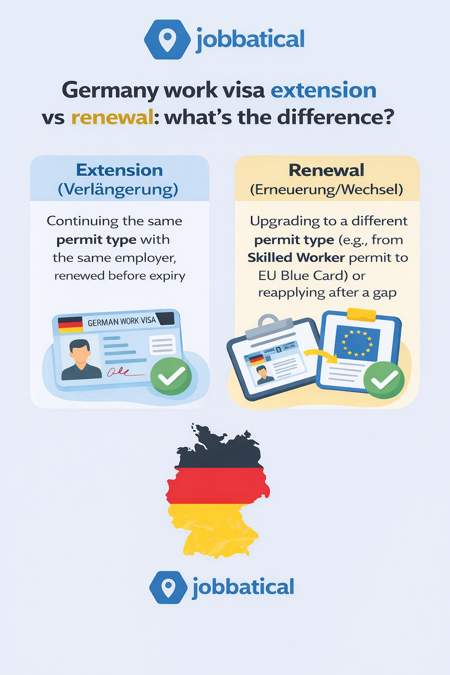
- Extension (Verlängerung): Continuing the same permit type with the same employer, renewed before expiry-
- Renewal (Erneuerung/Wechsel): Upgrading to a different permit type (e.g., from Skilled Worker permit to EU Blue Card) or reapplying after a gap.
This guide covers both. The process at the Ausländerbehörde is largely the same - the key differences are in eligibility, salary thresholds, and documents required.
Steps to extend German work permit
By starting early, ensuring your salary meets the 2026 thresholds (especially for EU Blue Card holders), and preparing complete documents, you can make the extension process smooth and secure your continued stay in Germany.
Tracking individual permit expiry dates, chasing documents, and booking Ausländerbehörde appointments across a team is a compliance risk. Jobbatical's renewal management service handles it automatically -deadline alerts, document coordination, and authority submissions in one platform.
Renewing in Berlin
The Berlin Ausländerbehörde (LEA Berlin) has specific online booking requirements and has introduced new digital biometric photo rules since May 2025. Book your appointment at service.berlin.de .Slots fill 6–8 weeks out. See our Berlin residence permit extension guide.
CONTACT US for a seamless employee permit extension process and to learn how to manage employee renewal permit tracking automatically via the Jobbatical Smart platform.
Frequently Asked Questions About Germany Work Permit Extensions and Renewals
How do the 2026 EU Blue Card salary threshold changes affect permit renewals?
From January 1, 2026, salary thresholds increased by around 5% to reflect pension insurance ceilings. For renewals, applicants must prove that their current employment meets the updated 2026 level—€50,700 for standard roles or €45,934.20 for shortage occupations. This requirement applies even if the original Blue Card was issued under earlier thresholds. Any job change during renewal must also comply with qualification and salary rules, and non-compliance may lead to permit downgrades or refusal.
When should I start the renewal process in 2026, and has anything changed?
Applicants should begin the renewal at least three months before expiry, ideally earlier due to potential backlogs. The process remains largely unchanged: submit via the local Ausländerbehörde with updated payslips proving 2026-compliant salary, employment contract, health insurance, and degree recognition where relevant. A confirmation letter usually allows continued work during processing. New 2026 employer duties mainly concern new hires and do not retroactively affect existing permits.
What if my job or salary doesn't meet the 2026 requirements during renewal—can I switch permit types?
Switching is possible depending on circumstances. Moving between Skilled Worker (§18b) and EU Blue Card requires recognized qualifications, job fit, and compliance with 2026 salary thresholds. IT specialists without degrees must rely on experience proofs. If salary gaps occur, negotiating an increase or exploring alternatives such as the Opportunity Card may help. Early appointments and updated documents (e.g., ZAB/Anabin confirmations) are essential to avoid residency gaps.
Are there any new 2026 rules or fees that impact the renewal process?
Core renewal steps and fees remain stable in 2026, though authorities now place stronger emphasis on salary compliance. Processing continues at the local foreigners’ office, and extensions usually match contract duration (up to four years). Fast-track settlement routes for EU Blue Card holders—21 months with B1 or 27 months with A1—remain unchanged. Applicants should follow official updates on make-it-in-germany.com and avoid delays or incomplete salary evidence.

.svg)

.svg)