


KEY TAKE AWAYS:
- Germany’s EU Blue Card minimum salaries increased again in 2026 to €50,700 for general occupations and €45,934.20 for shortage roles.
- Recent graduates and eligible IT specialists without a university degree can still access the Blue Card on the lower shortage threshold, giving employers flexibility to hire junior and non-traditional talent profiles.
- The Skilled Immigration Act reforms expanded shortage-occupation categories and eased rules on qualifications and experience, making it easier for companies to fill critical roles while maintaining clear salary safeguards.
- HR and mobility teams must regularly review salary bands, job classifications, and contract templates for Blue Card hires to remain compliant and avoid refusals, while leveraging advisory partners or platforms to keep up with annual changes.
In 2026, Germany has once again adjusted its EU Blue Card program as part of the wider reforms under the Skilled Immigration Act, with higher salary thresholds now in force from 1 January 2026. The changes are designed to keep Germany attractive for international talent while safeguarding wage levels for local workers in sectors facing persistent shortages, such as IT, engineering, healthcare, and construction.
Blue Card in Germany : An Overview of 2026 Updates
The EU Blue Card is a residence permit for highly qualified non-EU citizens who want to live and work in Germany in a skilled position that matches their qualifications. The 2026 rules continue the 2023–2025 reform trend: more flexible eligibility for certain profiles, continued recognition of practical IT experience, and updated salary thresholds that track Germany’s social-security ceilings and wage growth.
Blue Card Germany Minimum Salary: Official 2026 Thresholds
Blue Card minimum salaries are recalculated each year using a statutory formula tied to the national pension insurance contribution assessment ceiling. For 2026, the nationwide thresholds have increased, meaning HR teams must adjust job offers and contracts for new and pending hires to avoid underpayment and permit refusals.
Minimum Salary for General Occupations (Standard Threshold)
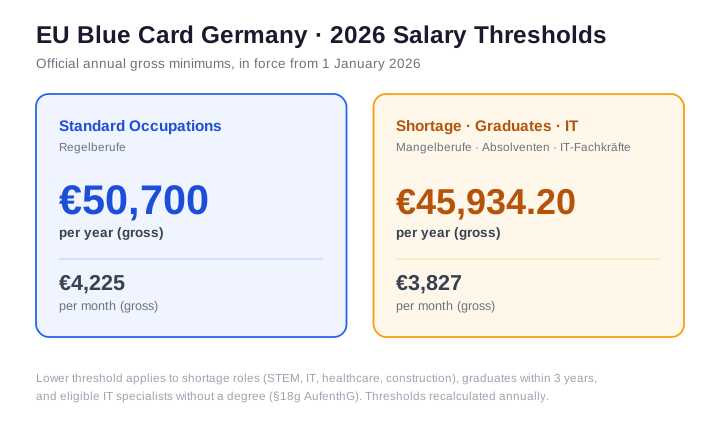
For 2026, the minimum gross annual salary for EU Blue Card applicants in general (non-shortage) occupations is €50,700 (about €4,225 per month).
- This is an increase from €48,300 in 2025, reflecting roughly a 5% rise in line with the underlying social-security ceiling.
- Employers must ensure the employment contract or binding offer clearly meets or exceeds this figure for the specific working-time arrangement (e.g., full-time hours) to remain compliant.
Reduced Blue Card Salary Threshold for Shortage Occupations
For shortage (bottleneck) occupations, the lower salary threshold in 2026 is €45,934.20 gross per year (around €3,827.85 per month). This amount applies to roles in fields with the highest labour-market demand, including:
- Science, Technology, Engineering, and Math (STEM)
- Information Technology (IT) and other ICT roles
- Healthcare professions
- Certain construction and technical trades
The shortage list is defined by German authorities and has been expanded under the Skilled Immigration Act reforms, so HR teams should verify whether a role qualifies for the reduced threshold before drafting an offer.
How thresholds are calculated
Germany sets Blue Card salary floors at a fixed percentage of the annual social-security contribution ceiling (Beitragsbemessungsgrenze). Standard roles require 50% of that ceiling; shortage roles require roughly 45.3%. When the ceiling rises, the thresholds rise with it.
For HR teams, this means you cannot treat last year's numbers as a reliable baseline. Build an annual review of Blue Card offer letters into your January compliance cycle.
EU Blue Card Germany Eligibility and Requirements in 2026
In addition to meeting the relevant 2026 salary threshold, Blue Card applicants must still satisfy core conditions relating to qualifications, job match, and a concrete job offer. Typical requirements include a recognized university degree or equivalent qualification, a German or comparable foreign employment contract, and employment in a role appropriate to the candidate’s skills and education.
Related Reads:
Candidates without an offer yet can enter on the Opportunity Card and convert to a Blue Card once the salary clears: Converting a Chancenkarte to a German work visa (Arbeitsvisum)
Special EU Blue Card Rules for New Graduates
Germany continues to offer more flexible conditions for recent graduates as part of its talent-attraction strategy. Under the 2026 framework:
- Graduates from foreign or German universities who completed their degree within the last three years can qualify under the lower 2026 threshold of €45,934.20, provided their job is suitably qualified and aligned with their field of study.
- This “young professional” facilitation applies across sectors, but the role must still be considered skilled employment and meet all other Blue Card criteria.
For HR teams, this creates an opportunity to bring in high-potential junior talent at a slightly lower salary floor than for standard Blue Card applicants, while still remaining compliant.
Blue Card Eligibility for IT Specialists Without a Degree
Germany’s reforms maintain a specific route for experienced IT specialists who do not hold a formal university degree. Under Section 18g of the Residence Act, IT professionals may obtain an EU Blue Card without an academic diploma if they can demonstrate:
- Several years (typically at least 3) of relevant professional experience at a level comparable to degree-qualified work in information and communication technology.
- Proven theoretical knowledge equivalent to a university degree (for example through industry certifications, structured training, or examinations), plus a job that meets at least the shortage-occupation threshold of €45,934.20 in 2026.
For employers hiring senior developers, architects, or other high-level IT specialists from non-EU countries, this pathway remains an important alternative to traditional degree-based eligibility, but salary and documentation standards are strictly enforced.
EU Blue Card Germany Salary Progression: 2023–2026
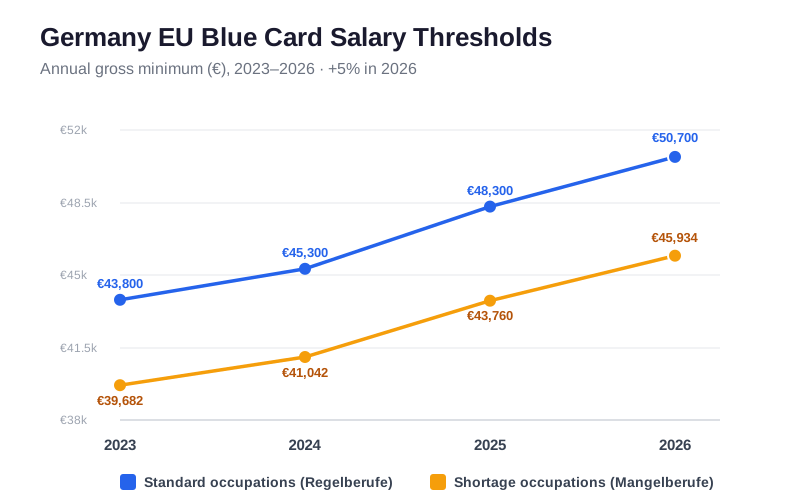
The minimum salary levels for EU Blue Cards have risen steadily over recent years, reflecting both inflation and the political goal of avoiding wage dumping while still attracting global talent. For HR and global mobility teams, this means that offers which met the threshold two or three years ago may now sit below the required level, especially in competitive fields like IT and engineering.
A simplified view of the recent progression is:
- 2023–2024: Increases aligned with early Skilled Immigration Act reforms and the expansion of bottleneck occupations.
- 2025: Standard threshold at €48,300, reduced threshold at about €43,760, alongside expanded access for graduates and IT specialists.
- 2026: Standard threshold now €50,700, reduced threshold €45,934.20, applying to shortage occupations, qualifying young graduates, and eligible IT specialists without a degree.
HR teams should review salary bands for all roles where the EU Blue Card is used or planned, and build in headroom above the threshold to accommodate future annual updates.
Employer Liability for Falling Below the Salary Threshold
Non-compliance with the EU Blue Card salary thresholds under § 18g AufenthG is treated strictly by German authorities as a safeguard against wage dumping. The 2026 thresholds must be met in the binding job offer or employment contract at the time of application and maintained throughout the Blue Card’s validity.
At Application Stage
If the stated gross annual salary falls below the applicable 2026 threshold (calculated for the agreed working time, usually full-time), the Ausländerbehörde will reject the Blue Card application outright. Employers face:
- Recruitment delays of 2–6 months.
- Wasted costs (relocation support, legal fees, candidate travel).
- Potential civil claims from the candidate for breach of the job-offer commitment.
Seconded employees often fall below the threshold once assignment premiums drop away: salary planning when localising an ICT transferee.
During Employment and at Renewal
The salary must continue to meet or exceed the current-year threshold (recalculated annually). A material reduction (e.g., due to part-time conversion, bonus restructuring, or salary cuts) can trigger revocation of the Blue Card under § 52 AufenthG if the original issuance conditions are no longer fulfilled.
Notification Obligation
Within the first 12 months of Blue Card employment, the holder must inform the local Ausländerbehörde without delay of any change affecting eligibility, including salary reductions (§ 82 (1) sentence 6 AufenthG). Employers should proactively remind the employee of this duty and report material changes themselves to avoid joint liability.
Penalties if the Blue Card Is Revoked and Work Continues
The employee is then working without a valid residence and work permit, constituting illegal employment of a third-country national. Under § 404 (2) No. 3 SGB III, the employer faces:
- Administrative fines of up to €500,000 per case.
- In cases of repeated or intentional violations: criminal liability under the Act to Combat Undeclared Work and Unlawful Employment (Schwarzarbeitsbekämpfungsgesetz), with possible imprisonment of up to three years.
Additional risks include:
- Entry of the fine in the Central Trade Register (for fines > €200).
- Temporary or permanent restrictions on future Blue Card sponsorships.
- Reputational damage and complications for family reunification visas.
How to Protect Your Organisation
- Build a contractual safety buffer of 5–10 % above the minimum threshold.
- Include an automatic indexation clause tied to the annual pension-insurance ceiling updates.
- Conduct salary-threshold compliance checks before every extension or material contract change.
- Document all notifications to the Ausländerbehörde.
- Consult immigration counsel before any restructuring affecting Blue Card holders.
Frequently Asked Questions About 2026 Germany EU Blue Card Salary Thresholds
What is the minimum salary I must offer for a Germany EU Blue Card in 2026?
For 2026, the minimum salary required for a Germany EU Blue Card is €50,700 per year for standard roles. For shortage occupations, the reduced threshold is €45,934.20. Employers must ensure that the offered gross annual salary meets or exceeds the applicable threshold at the time of application.
What salary threshold applies if I'm hiring for an IT or engineering role?
IT and engineering roles typically fall under Germany’s shortage occupations list. This means employers can apply the reduced EU Blue Card salary threshold of €45,934.20 for 2026, provided the role is correctly classified and meets all eligibility criteria defined by German authorities.
Will a salary offer that met 2025 requirements still qualify in 2026?
Not necessarily. Salary thresholds are updated annually, and the 2026 thresholds are higher than in 2025. If a job offer only met the 2025 minimums, it may fall below the 2026 requirements. Employers should review and, if needed, adjust salary offers to meet the updated thresholds before submitting new applications or renewals.
What happens if an employee's salary drops below the Blue Card threshold during employment?
If an employee’s salary falls below the required EU Blue Card threshold, it may result in non-compliance with immigration regulations. This can affect the validity of the residence permit and create risks for both the employer and employee. Employers should proactively manage salary adjustments and notify authorities if required to avoid penalties or permit issues.
Can I sponsor a Blue Card for an IT specialist without a university degree?
Yes, under Germany’s §18g provision, employers can sponsor EU Blue Cards for IT specialists without a formal university degree. Candidates must demonstrate relevant professional experience (typically several years in IT) and meet the applicable salary threshold. This pathway is particularly useful for hiring highly skilled tech professionals with non-traditional educational backgrounds.

.svg)



.svg)
