



Key Take Aways: UK Sponsorship Costs for 2026
- Visa sponsorship costs for UK work visas in 2026 range from approximately £5,500 to £18,500 per hire for medium/large sponsors, factoring in sponsor licence fees (£1,682), Certificate of Sponsorship (£525), elevated Immigration Skills Charge (£1,320/year large sponsors from Dec 2025/Jan 2026), visa fees (£819–£1,865), and Immigration Health Surcharge (£1,035/year). Hidden expenses like legal fees, compliance audits, and processing delays continue to inflate total budgets by 20–50%, especially with stricter Home Office scrutiny.
- Each UK visa route maintains strong ROI potential in 2026: Skilled Worker (~1,077%), Innovator Founder (~2,856%), Global Business Mobility (~9,170%), and Scale-up (~1,480%), fueled by revenue growth, innovation, and scaling despite higher fees.
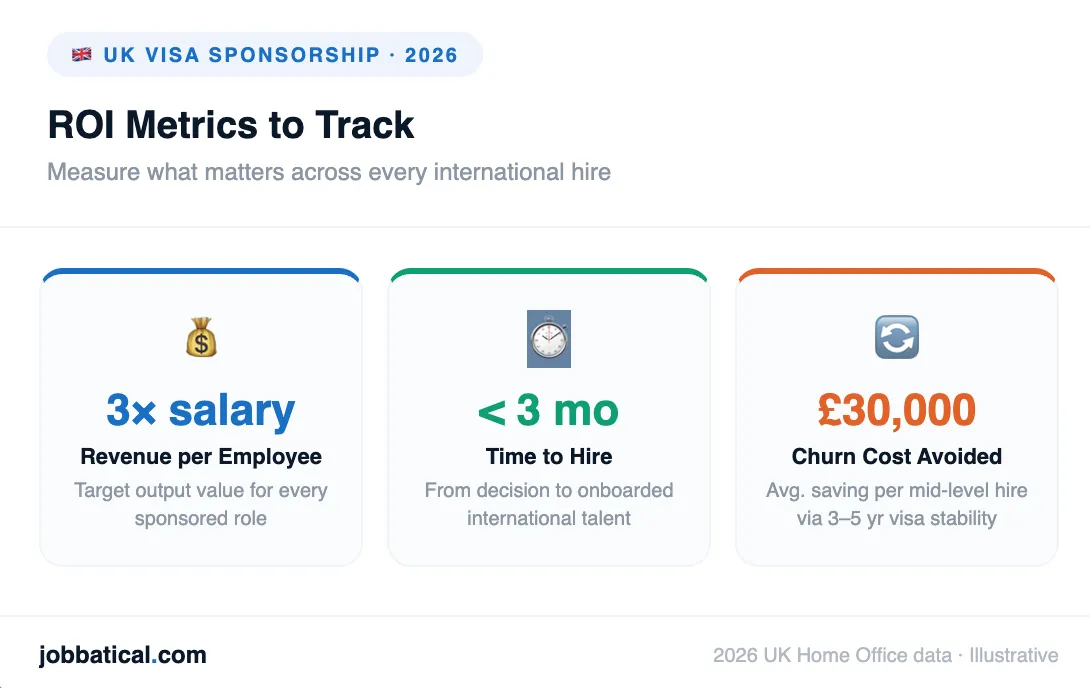
- Revenue per employee remains the top KPI at 3x salary, tracking sponsorship effectiveness through direct business contributions.
- Fee hikes and salary thresholds (£41,700 general for Skilled Worker, up to £73,900+ for some routes) in 2026 elevate rejection risks to 20–40%, with civil fines now reaching £45,000–£60,000 per breach for non-compliance or illegal working.
- Allocate 30% above base costs for contingencies, prioritizing automated tools for record-keeping to mitigate audit risks under intensified 2026 enforcement.
Introduction
For UK employers, the true cost of sponsorship extends beyond government fees, with total employer costs often reaching £8,000–£20,000+ per hire when compliance, relocation, and administration are included.
This guide covers:
- The full cost of UK visa sponsorship in 2026, including application fees, Immigration Skills Charges (ISC), compliance, and hidden costs.
- ROI comparisons across key visa routes, including the Skilled Worker, Global Business Mobility, Innovator Founder, and Scale-up visas.
- HR metrics for measuring sponsorship success, such as time-to-hire, retention, productivity, and cost-per-hire.
- Practical ways to reduce costs and compliance risks while improving the value of your global hiring programme.
Understanding Visa Sponsorship Costs
Sponsorship costs include direct and hidden expenses, varying by visa route and sponsor size. Base costs (single applicant, small sponsor, approximate 2026 rates, 3 years where applicable) are:
How the £3,105 changes with visa length and dependants: UK Immigration Health Surcharge (IHS) Fees 2026
Hidden Costs
ROI Framework for Visa Sponsorship
ROI is calculated as:ROI (%) = [(Benefits – Costs) / Costs] × 100
Benefits include tangible (revenue, productivity) and intangible (innovation, diversity) outcomes. Below is the updated framework with KPIs, benefits, and risks.
Skilled Worker Visa: Filling Skill Gaps
Benefits:
- Revenue Impact: A software engineer (£50,000+ salary) generates £150,000–£300,000 in project value annually (3–6x salary multiplier in tech).
- Productivity: Fills critical roles, reducing vacancy costs (£10,000–£50,000 per unfilled post).
- Retention: 5-year ILR path (subject to potential extensions) boosts loyalty (80% retention vs. 60% for domestic hires).
- Diversity: Enhances team innovation (15% higher patent filings in diverse teams).
Innovator Founder Visa: Driving Innovation
Benefits:
- Market Impact: Startups contribute significantly to UK GDP; one successful founder can create 5–10 jobs (£100,000+ revenue).
- Brand Value: Attracts investment (average £1M seed funding for endorsed startups).
- Settlement: Fast ILR (3 years, pending changes) ensures founder commitment.
- Innovation: Drives sector growth (e.g., AI, green tech).
Global Business Mobility (GBM) Visa: Market Expansion
Benefits:
- Revenue Growth: Supports inward investment; one manager can drive £1M+ in new contracts.
- Speed to Market: Establishes UK presence in 6–12 months.
- Flexibility: Switch to Skilled Worker extends stay.
Scale-up Visa: Fueling High-Growth
Benefits:
- Scalability: Supports high-volume hires; drives 20–50% revenue growth.
- Flexibility: Unsponsored phase (after 6 months) reduces costs.
- Retention: 5-year ILR path; 85% retention in tech scale-ups.
Maximizing ROI: Strategies for 2026
- Cost Control:
- Budget 40%+ above base for hidden/ISC hikes (£3,000–£12,000).
- Use priority services (£350–£750) for critical hires to minimize delays (£5,000–£25,000).
- Leverage exemptions (e.g., Health/Care IHS adjustments).
- Compliance: Invest in tools (£1,000–£2,500/year) and training (£500–£1,000/staff) to avoid fines (£20,000+) and rejections (20–40% rate amid B2 rules).
- Talent Value: Prioritize high-impact roles (e.g., engineers vs. admin; 5x+ vs. 1x ROI).
- 2026 Updates: Factor in ISC increases, CoS £525, B2 English, stable £41,700 thresholds, and employer-pay rules. Monitor potential ILR extensions.
- Jobbatical’s Role: Automates cost-benefit analysis, compliance audits, and workflows, reducing rejections by 25%+ and saving £6,000–£30,000 per case.
ROI Calculation Example (Skilled Worker, Tech Engineer)
- Costs: £15,000 (incl. hidden/updated ISC).
- Benefits: £150,000 revenue (year 1) + £10,000 vacancy savings + £5,000 diversity value = £165,000.
- ROI: [(£165,000 – £15,000) / £15,000] × 100 = 1,000%.
- With Jobbatical: Costs drop to ~£11,000; ROI rises to ~1,400%.
Strategic Considerations
- Alignment with Goals: Skilled Worker for skill gaps; Innovator Founder for innovation; GBM for market entry; Scale-up for growth.
- Long-Term Value: Prioritize ILR-eligible routes for retention (watch for potential 10-year changes).
- Risk Management: Buffer 25% for rejections; audit licences quarterly.
- Scalability: Multi-hire ROI (e.g., 10 engineers: £1.5M revenue vs. £150,000 costs ≈ 900% ROI).
- Jobbatical Support: Provides ROI dashboards, compliance tracking, and visa strategy alignment, enhancing returns by 15–30%.
The ROI models above assume a five-year ILR path. If proposals raise the baseline to ten years, sponsorship costs recur across roughly twice as many cycles . See earned settlement and what it would change for employers.
Financial Investment: The True Cost of Sponsorship
To calculate ROI, you must first understand the total capital expenditure. In 2026, the Home Office fees remain a significant part of the "Cost" side of the equation.
- Direct Financial Costs: These include the Sponsor License application fee (£611 for small/charitable, £1,682 for medium/large), the Certificate of Sponsorship (CoS) fee (£525), and the Immigration Skills Charge (ISC). Note that post-December 2025, the ISC for large sponsors remains approximately £1,320 per year of sponsorship.
- Compliance & Admin Overheads: Beyond government fees, factor in the "hidden" costs of administrative time for Level 1 users, legal consultation fees, and the implementation of digital record-keeping systems to manage eVisas.
- Financial Planning Do's and Don'ts:
- Do: Budget for the Immigration Health Surcharge (IHS) if your company covers this for talent.
- Don't: Forget to factor in the potential 20% clawback of the ISC if a worker leaves early—this can improve your net ROI.
Measuring Value: Calculating ROI and Retention
Once costs are established, employers must measure the "Return." This is often seen in the bridge between immediate productivity and long-term talent stability.
- Calculating the Sponsorship ROI: Use the formula: (Value of Output - Total Sponsorship Cost) / Total Sponsorship Cost. Value of output is typically measured by the revenue generated by the sponsored role or the cost saved by not leaving a critical vacancy open for months.
- Retention and Long-term Value: Sponsored workers often have higher retention rates than local hires due to the stability provided by the visa term. A 3-to-5-year visa commitment significantly reduces the "churn cost" (recruitment, onboarding, and training) which averages £30,000 per mid-level employee in the UK.
- ROI Metrics to Monitor: Track the "Time-to-Productivity" for international hires versus local hires and the "Cost-per-Hire" including all UKVI fees to see where your sponsorship strategy is most efficient.
Risk Mitigation: Compliance as Financial Protection
In UK immigration, ROI isn't just about what you gain—it's about what you don't lose. Compliance is your primary insurance policy against financial catastrophe.
- Compliance Risks and Financial Implications: The Home Office has increased civil penalties for illegal working to up to £60,000 per worker. A single administrative error in record-keeping can lead to license revocation, which effectively wipes out the ROI of your entire international workforce as they would be forced to leave the country.
- Sector-Specific ROI:
- Tech/Engineering: High ROI due to the scarcity of RQF Level 6 skills in the local market.
- Healthcare: ROI is often driven by the "Shortage Occupation" (now Immigration Salary List) discounts on application fees, which lower the initial investment.
Strategic Outlook: Final Thoughts on ROI
To maximize the ROI of UK Visa Sponsorship, employers must view it as a long-term talent acquisition strategy rather than a quick fix for labor shortages.
- Think beyond initial costs: Sponsorship expenses are often outweighed by the value of securing hard-to-find talent.
- Leverage digital processes: eVisas and digital compliance tools can reduce administrative effort and improve efficiency.
- Track ROI with clear metrics: Measure outcomes using retention rates, time-to-hire, productivity, and revenue per employee.
- Prioritize compliance: Strong compliance processes reduce risk, prevent costly disruptions, and protect your sponsor licence.
- Focus on long-term growth: For many UK employers, the business benefits of global talent significantly exceed sponsorship costs.
Disclaimer
Immigration laws and policies change frequently and may vary by country or nationality.Jobbatical is not responsible for decisions made based on the information provided.
Frequently Asked Questions about UK Visa Sponsorship ROI and International Hiring
What are the estimated costs for a UK Skilled Worker visa in 2026?
In 2026, total costs for a Skilled Worker visa typically range from £10,289 to £19,000, factoring in base fees and hidden expenses like legal advice and compliance.
How does Jobbatical improve the ROI of UK visa sponsorship?
Jobbatical enhances returns by 15–30% by automating workflows and reducing visa rejection rates by more than 25%, potentially saving businesses up to £30,000 per case.
What is the typical return on investment for hiring a tech engineer via the UK Skilled Worker route?
Hiring a software engineer through the Skilled Worker route in 2026 can yield an ROI of approximately 1,000%, with the employee generating up to £300,000 in annual project value.
What are the new compliance requirements for UK sponsorship?
Key updates include a 32% hike in the Immigration Skills Charge for large sponsors, a Certificate of Sponsorship fee of £525, and a mandatory B2 English requirement for new applicants.
What are the risks of non-compliance in UK visa sponsorship?
Failure to meet strict compliance standards can result in significant financial penalties, with fines often exceeding £20,000 per violation.

.svg)
.svg)
