
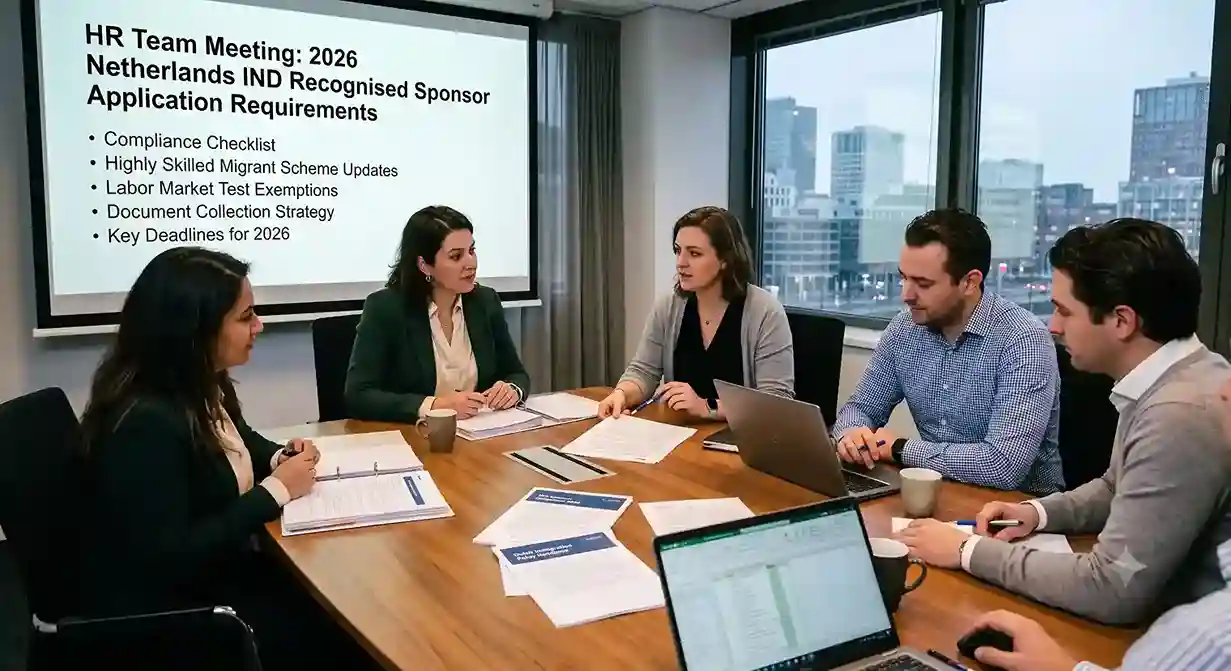
PUNTOS CLAVE - Patrocinador reconocido de los Países Bajos
- Es obligatorio contar con la condición de patrocinador reconocido (erkend referent) para poder patrocinar a migrantes altamente cualificados, titulares de la Tarjeta Azul de la UE o traslados de personal en el marco del procedimiento acelerado del IND.
- La tasa de reconocimiento del IND para 2026 es de 5.080 € para las empresas estándar y de 2.539 € para las empresas con 50 empleados o menos; la tasa por permiso HSM/Tarjeta Azul es de 423 €.
- Los umbrales salariales del HSM para 2026 son de 5.942 € brutos al mes para mayores de 30 años, 4.357 € para menores de 30 años y 3.122 € (importe reducido) para recién titulados, todos ellos sin incluir la paga de vacaciones del 8 %.
- A partir del 1 de enero de 2026, deberás conservar los extractos bancarios o los justificantes de pago colectivo que demuestren que cada salario se ha ingresado en la cuenta propia del empleado, y conservarlos durante cinco años tras la finalización del patrocinio.
- El plazo de inactividad se ha reducido: si no te acoges al programa HSM durante dos años consecutivos, el IND podrá empezar a revocar tu estatus.
¿Qué es el patrocinio reconocido por los Países Bajos?
El «patrocinio reconocido» (erkend referent) es una designación oficial del Servicio de Inmigración y Naturalización (IND) que permite a su empresa patrocinar a ciudadanos extranjeros para la obtención de permisos de residencia neerlandeses. Este estatus, que constituye una licencia fundamental para la contratación internacional, es esencial para acceder a vías de inmigración aceleradas.
Este estatuto, regulado por la Ley de Extranjería neerlandesa, otorga un privilegio legal que va acompañado de obligaciones de cumplimiento estrictas y exigibles. El IND supervisa de cerca a los patrocinadores para garantizar que se cumplan de forma sistemática estas obligaciones reglamentarias.
Características principales del patrocinio reconocido
- Una designación única y permanente: aunque el reconocimiento se concede de forma indefinida, exige el cumplimiento continuo de los requisitos y está sujeto a auditorías periódicas. Las solicitudes deben presentarse en el marco de categorías específicas de inmigración, como el trabajo, los estudios, la investigación o los programas de intercambio.
- Requisito obligatorio para los permisos de trabajo clave: su organización debe contar con el reconocimiento de categoría laboral para patrocinar a migrantes altamente cualificados, titulares de la Tarjeta Azul de la UE, trabajadores trasladados dentro de la misma empresa (ICT) y titulados universitarios en su año de orientación a través de la vía simplificada.
- Ventajas del trámite acelerado: A cambio de asumir las obligaciones propias del patrocinio, los patrocinadores reconocidos se benefician de una resolución acelerada de las solicitudes de permiso —normalmente en un plazo de dos semanas—, así como de requisitos de documentación reducidos y de la exención de las pruebas del mercado laboral local para los puestos que cumplan los requisitos.
- Estado verificable públicamente: El IND mantiene un registro público abierto en el que figuran aproximadamente 10 000 patrocinadores reconocidos, lo que permite a los posibles candidatos y socios comerciales verificar fácilmente las credenciales de su organización antes de aceptar una oferta.
- Un marco basado en la confianza y orientado a las auditorías: La IND funciona según un modelo de alta confianza, en el que se llevan a cabo controles administrativos simplificados durante la fase inicial de solicitud. No obstante, esto se compensa con rigurosas inspecciones posteriores a la aprobación para verificar que el promotor sigue cumpliendo con todas las obligaciones legales.
Para garantizar el proceso definitivo que permita obtener este estatus, nuestro servicio de patrocinio reconocido en los Países Bajos («erkend referent») se encarga de gestionar íntegramente la solicitud ante el IND y de garantizar el cumplimiento normativo desde el primer día.
¿Cuáles son las ventajas del patrocinio reconocido en los Países Bajos?
El patrocinio reconocido ofrece importantes ventajas en cuanto a rapidez de tramitación y simplicidad administrativa. Para las organizaciones que contratan personal a nivel internacional de forma habitual, esta condición elimina las dificultades sistémicas y ofrece beneficios claros y acumulativos tanto para la empresa como para el personal trasladado.
¿Cuáles son las ventajas para las organizaciones?
- Tramitación acelerada de permisos: Las solicitudes para migrantes altamente cualificados (HSM) suelen tramitarse en un plazo de dos semanas, en lugar de varios meses, lo que garantiza que los nuevos empleados se incorporen rápidamente y que las operaciones de la empresa se mantengan según lo previsto.
- Reducción de la carga administrativa: La simplificación de los trámites reduce considerablemente la documentación necesaria para cada solicitud, lo que alivia la carga de trabajo habitual de tus equipos de recursos humanos y de movilidad internacional.
- Acceso directo al Portal Empresarial del IND: Los patrocinadores pueden presentar las solicitudes de forma digital a través del Portal Empresarial del IND, evitando así, en la mayoría de los casos, los procedimientos tradicionales de las embajadas, que requieren mucho tiempo.
- Mejora de la imagen de marca como empresa: un estatus reconocido transmite credibilidad jurídica y cumplimiento normativo a los posibles candidatos, lo que supone una ventaja competitiva fundamental a la hora de contratar talento internacional muy codiciado.
- Cobertura versátil en materia de inmigración: el reconocimiento de una única categoría laboral abarca diversos tipos de permisos, entre los que se incluyen los migrantes altamente cualificados, los investigadores, los titulares de la Tarjeta Azul de la UE y los trabajadores trasladados dentro de la misma empresa (ICT), lo que elimina la necesidad de volver a cumplir los requisitos para las diferentes vías de contratación.
¿Cuáles son las ventajas para el talento internacional?
- Plazos de reubicación acelerados: La agilización de la concesión de permisos permite a los profesionales internacionales trasladarse a los Países Bajos y comenzar a trabajar mucho más rápido de lo que permiten las vías de inmigración habituales.
- Mayor seguridad jurídica: el traslado mediante una vía de patrocinio segura y aprobada por el IND proporciona a los empleados estabilidad y tranquilidad durante una transición importante en sus vidas.
- Reagrupación familiar simplificada: Los empleados patrocinados pueden patrocinar fácilmente a sus parejas e hijos a cargo que cumplan los requisitos para que se reúnan con ellos, en el marco del amplio sistema neerlandés de reagrupación familiar.
- Una vía clara hacia la residencia permanente: la residencia legal ininterrumpida como empleado patrocinado cuenta directamente para la residencia a largo plazo en la UE y, en última instancia, para poder optar a la ciudadanía neerlandesa.
- Integración cívica inmediata: Los trabajadores y sus familias obtienen, desde el primer día, un acceso inmediato y legítimo a los servicios básicos de los Países Bajos, como la sanidad, la educación y los servicios sociales.
Para saber cómo se aplican estas ventajas a un puesto concreto, nuestro servicio de tramitación del permiso de migrante altamente cualificado (kennismigrant) en los Países Bajos muestra el proceso exacto que siguen los patrocinadores autorizados para cada contratación.
¿Quién puede optar al patrocinio reconocido en los Países Bajos?
La elegibilidad depende de que se demuestre que su organización es auténtica, solvente desde el punto de vista financiero y sostenible desde el punto de vista operativo. El IND exige pruebas concretas de su capacidad para cumplir con las obligaciones de patrocinio antes de conceder el acceso a los canales de inmigración acelerados. Si bien las empresas consolidadas suelen cumplir estos criterios sin dificultad, las de reciente creación están sujetas a un escrutinio financiero más riguroso.
Criterios básicos de elegibilidad para el patrocinio reconocido
- Entidad jurídica neerlandesa en activo: Su organización debe estar constituida legalmente en los Países Bajos o operar como una sucursal registrada que mantenga una inscripción vigente en la Cámara de Comercio neerlandesa (KvK).
- Estabilidad financiera demostrada: La empresa debe estar totalmente libre de procedimientos pendientes de quiebra, insolvencia o liquidación. Cabe destacar que las empresas que lleven menos de 18 meses en funcionamiento están sujetas a una evaluación obligatoria de solvencia por parte de la Agencia Empresarial de los Países Bajos (RVO), lo que prolongará el plazo estándar de presentación de la solicitud.
- Requisito de patrocinio genuino: El IND exige que exista una necesidad empresarial legítima y continuada para contratar a ciudadanos extranjeros con fines laborales o académicos. Este estatus está destinado a un uso activo y no puede mantenerse de forma pasiva como reserva.
- Historial de cumplimiento normativo impecable: La organización no debe haber cometido infracciones graves de la legislación neerlandesa en materia laboral, fiscal o de seguridad social, y sus directivos no deben haber sido objeto de sanciones administrativas recientes en virtud de la Ley de Extranjería neerlandesa.
- Representante designado para el cumplimiento normativo: Su organización debe nombrar oficialmente a una persona de contacto interna que asuma la responsabilidad directa de cumplir con las obligaciones permanentes del IND en materia de cumplimiento normativo, presentación de informes y mantenimiento de registros administrativos.
Las empresas emergentes también pueden cumplir los requisitos, aunque el procedimiento es diferente. Nuestra guía sobre el permiso combinado de trabajo y residencia de la GVVA en los Países Bajos explica un procedimiento específico para puestos que no entran dentro de la categoría de alta cualificación.
.svg)
¿Cuáles son los requisitos para obtener un patrocinio reconocido en los Países Bajos?
Los requisitos se dividen en dos fases diferenciadas: la documentación inicial necesaria para obtener la autorización y las obligaciones de cumplimiento continuo que se derivan de ella. Es en esta última fase donde las organizaciones se enfrentan al mayor riesgo de incumplimiento, ya que estas obligaciones siguen vigentes a lo largo de todo el ciclo de vida de cada permiso que se tramita.
¿Qué documentos se necesitan para presentar la solicitud?
- Formulario de solicitud de IND cumplimentado: Debe rellenarse minuciosamente y estar firmado por un representante autorizado de la empresa. Las inexactitudes u omisiones en esta fase son la causa principal de los retrasos en la tramitación.
- Documentos constitutivos de la sociedad: un extracto reciente de la Cámara de Comercio de los Países Bajos (KvK), expedido en los últimos tres meses, junto con los estatutos sociales o la escritura de constitución certificados.
- Prueba de viabilidad financiera: cuentas anuales auditadas de los dos últimos ejercicios fiscales, o una evaluación obligatoria del plan de negocio por parte de la RVO para las empresas que lleven en funcionamiento menos de 18 meses.
- Certificado de cumplimiento tributario: Confirmación oficial de la Administración Tributaria y Aduanera de los Países Bajos (Belastingdienst) que acredita que la organización no tiene deudas tributarias pendientes.
- Poder notarial: Si se colabora con una empresa especializada en inmigración, como Jobbatical, se requiere un mandato firmado que autorice explícitamente al representante a actuar en nombre de su organización ante el IND.
¿Cuáles son las obligaciones de cumplimiento que deben respetarse de forma continua?
- Plazo estricto de cuatro semanas para la notificación: Debe informar de forma proactiva a la IND, en un plazo de cuatro semanas, de cualquier cambio significativo en las circunstancias de un empleado patrocinado, incluyendo la rescisión del contrato, los cambios de puesto, los ajustes salariales o las modificaciones de domicilio.
- Seguimiento administrativo exhaustivo: Las empresas deben mantener expedientes de personal meticulosamente organizados y de fácil acceso para cada ciudadano nacional al que patrocinen, garantizando así que estén preparados para una auditoría en cualquier momento.
- Cumplimiento continuo del umbral salarial: Debes garantizar que la remuneración del empleado se mantenga igual o superior al umbral legal establecido por el IND durante toda la vigencia de su permiso, y no solo en el momento de la contratación.
- Conservación de documentos durante cinco años: La organización está obligada por ley a archivar de forma segura el expediente completo de patrocinio durante cinco años a partir de la finalización del periodo de patrocinio del empleado.
- Cooperación obligatoria en materia de auditoría: Los promotores están obligados a garantizar una transparencia total, el acceso inmediato a la documentación y una cooperación plena durante las solicitudes de información relacionadas con la IND o las inspecciones in situ sin previo aviso.
Para cumplir con todos los plazos, nuestro módulo de cumplimiento normativo para la renovación de visados y permisos realiza un seguimiento de los plazos de presentación de informes y de los cambios en los umbrales salariales de toda tu plantilla patrocinada.
¿Cuáles son los umbrales salariales del visado IND para 2026 en el caso de los patrocinadores reconocidos?
El salario es el requisito más difícil de cumplir, ya que varía cada año. Para las solicitudes recibidas a partir del 1 de enero de 2026, los umbrales aumentaron aproximadamente un 4,4 %. La cifra que se aplica es la vigente en la fecha de presentación de la solicitud, por lo que el momento en que se presente es importante.
Umbrales salariales para el HSM y la Tarjeta Azul de la UE en los Países Bajos en 2026 (bruto mensual, sin incluir el 8 % de la paga de vacaciones)
- Importe bruto antes de la norma del 30 %: El IND calcula los umbrales sobre el salario bruto antes de aplicar la ventaja fiscal del 30 %, por lo que la norma no reduce el salario que debes estipular en el contrato.
- No incluye la paga de vacaciones: Todas las cifras no incluyen la paga de vacaciones del 8 %, por lo que el salario base por sí solo debe superar el umbral.
- La fecha de presentación de la solicitud determina la cuantía: las solicitudes recibidas antes del 1 de enero de 2026 se evalúan según las cuantías de 2025; las recibidas después, según las de 2026.
- Las renovaciones también se ven afectadas: los titulares actuales de HSM cuyos permisos se renueven con arreglo a la nueva normativa podrían necesitar un ajuste salarial para seguir cumpliendo con la normativa.
- La conformidad con el mercado sigue siendo aplicable: la remuneración también debe ajustarse a las normas del sector, por lo que un salario que cumpla el umbral pero que esté por debajo del nivel de mercado para el puesto puede seguir siendo objeto de impugnación.
Consulta el desglose completo por grupos de edad en nuestra guía sobre los umbrales salariales para migrantes altamente cualificados en los Países Bajos para 2026, actualizada con las cifras oficiales del IND.
¿Qué justificantes de pago de salarios deben conservar los patrocinadores en 2026?
El 1 de enero de 2026 entrará en vigor una importante modificación normativa que muchos patrocinadores subestiman. Ya no basta con cumplir sobre el papel el umbral salarial establecido por ley; ahora, las empresas deben aportar pruebas concretas de que los fondos se han ingresado correctamente y de forma directa al empleado, ya que las nóminas por sí solas ya no serán suficientes para las auditorías del IND.
Nuevos requisitos de verificación salarial para 2026
- Justificante obligatorio de la recepción efectiva: Los patrocinadores deben conservar sistemáticamente la documentación financiera que demuestre que el salario mensual exigido se ha ingresado correctamente en una cuenta bancaria a nombre exclusivo del propio empleado.
- Criterios probatorios sencillos: se aceptan como prueba los extractos bancarios oficiales de la empresa o los resúmenes habituales de pagos en bloque, siempre que acrediten de forma clara que la transacción se ha completado.
- Visibilidad crítica de datos concretos: cada documento probatorio conservado debe mostrar claramente tres elementos esenciales: la fecha de ejecución, el importe exacto transferido y el nombre completo del destinatario junto con su número de cuenta personal.
- Aceptación de documentación digital: Las capturas de pantalla de la banca digital o los archivos CSV exportados por tu proveedor de nóminas corporativo se aceptan sin problema, siempre y cuando los datos de las transacciones requeridos sean totalmente legibles.
- Integración perfecta con la gestión automatizada de nóminas: es probable que las organizaciones que realizan pagos por lotes SEPA estándar con datos completos de los destinatarios ya cumplan con esta nueva normativa, lo que significa que, a menudo, es posible mantener el cumplimiento con un esfuerzo administrativo adicional mínimo.
Los patrocinadores que ya realizan pagos por lotes SEPA automatizados con los datos completos de los destinatarios suelen cumplir esta norma sin apenas trabajo adicional. Para conocer las cifras salariales que deben cumplir estos registros, consulta nuestra guía sobre los umbrales salariales para migrantes altamente cualificados en los Países Bajos para 2026.
¿Cuánto cuesta el patrocinio reconocido en los Países Bajos en 2026?
A la hora de prever los gastos de patrocinio, las organizaciones deben presupuestar dos costes distintos: una cuota de reconocimiento única y una cuota periódica por permiso para cada empleado patrocinado. Ambas cuotas aumentaron aproximadamente un 4,4 % en 2026 debido a la indexación anual habitual. Es fundamental tener en cuenta los costes por contratación en la planificación financiera inicial, ya que los equipos financieros suelen pasar por alto estos gastos recurrentes hasta que se tramita el primer permiso.
Tasas de patrocinadores reconocidos y permisos de los Países Bajos para 2026
- Tasa de reconocimiento, estándar: 5.080 € para las entidades jurídicas con más de 50 empleados, lo que supone un aumento de 214 € respecto a 2025.
- Tasa de reconocimiento, reducida: 2.539 € para empresas más pequeñas con 50 empleados o menos y para startups reconocidas, lo que supone un aumento de 107 €.
- Tasa por permiso: 423 € por cada primera solicitud, cambio de finalidad o prórroga de un HSM o una Tarjeta Azul de la UE. Diez contrataciones suponen 4.230 € solo en tasas de permiso.
- El patrocinador se hace cargo de los gastos: es tu empresa la que cubre estos gastos, no el empleado, por lo que deben incluirse en tu presupuesto de contratación.
- No reembolsable: Las tasas no se devuelven si se rechaza una solicitud, por lo que presentar la solicitud correctamente a la primera supone un ahorro directo en los costes.
¿En qué consiste el proceso de solicitud del patrocinio reconocido por los Países Bajos?
El proceso de solicitud se centra fundamentalmente en la documentación, más que en aspectos jurídicos complejos, lo que significa que el principal riesgo para tu calendario es presentar una solicitud incompleta. Para mitigar posibles retrasos, se recomienda encarecidamente iniciar el proceso al menos tres o cuatro meses antes de la fecha prevista para el primer patrocinio. Este margen estratégico permite afrontar con holgura cualquier solicitud de información adicional sobre la IND o las visitas obligatorias al centro, sin que ello afecte a tu estrategia global de contratación.
¿Cuáles son las fases de la solicitud, paso a paso?
- Confirmar los requisitos y determinar la categoría: Comienza por identificar la categoría de patrocinador reconocida adecuada —normalmente, la categoría laboral— y verifica minuciosamente que tu organización cumpla todos los criterios básicos de elegibilidad.
- Recopilar y preparar la documentación: Recopilar de forma sistemática los documentos necesarios, entre los que se incluyen el extracto del Registro Mercantil (KvK), los estados financieros auditados, un certificado de cumplimiento fiscal y los documentos internos de la empresa. Asegurarse de que se faciliten traducciones juradas siempre que sea obligatorio por ley.
- Presentar la solicitud y abonar las tasas: Presenta tu solicitud completa directamente ante el IND, preferiblemente de forma digital a través del Portal Empresarial del IND o por correo postal. La tasa de reconocimiento obligatoria debe abonarse al mismo tiempo que se presenta la solicitud.
- Responde con prontitud a las consultas del IND: si el IND solicita documentación complementaria, debes facilitar la información concreta dentro del plazo establecido, que suele ser de cuatro semanas. Asimismo, debes cooperar plenamente en caso de que se te seleccione para una visita de cumplimiento in situ.
- Recibir la resolución definitiva e inscribirse: Una vez obtenida la aprobación, su organización quedará inscrita oficialmente en el registro público de patrocinadores reconocidos, lo que le otorgará la facultad inmediata para comenzar a presentar solicitudes de permisos por vía rápida.
¿Dónde hay que presentar la solicitud y cuánto tiempo tarda el trámite?
- Canales de presentación: Las solicitudes se presentan directamente ante el IND. Lo más recomendable es hacerlo en línea a través del Portal Empresarial (para lo cual es necesario disponer de un acceso a eHerkenning ) o, alternativamente, por correo postal a una oficina de tramitación del IND designada.
- Plazos para empresas ya consolidadas: Las organizaciones que demuestren un historial comercial sólido y verificable suelen recibir las resoluciones de su evaluación en un plazo de entre dos y cuatro semanas.
- Plazos para las empresas de reciente creación: Las empresas que lleven en funcionamiento menos de un año y medio deben someterse a una evaluación financiera exhaustiva por parte de la RVO, lo que puede alargar el plazo total de tramitación hasta seis meses.
- Plazo máximo legal de tramitación: Por ley, el IND dispone de un plazo máximo de 90 días para emitir una resolución formal sobre una solicitud de patrocinador reconocido. No obstante, las solicitudes completas y elaboradas con esmero suelen resolverse mucho antes de que venza este plazo legal.
- Activación de la condición: Tras una decisión de aprobación, su condición de patrocinador oficial reconocido se activa en los sistemas de la IND, normalmente en el plazo de una o dos semanas, lo que permite su uso inmediato.
Para evitar la configuración del portal y los errores en la documentación, que son la causa de la mayoría de los retrasos, nuestro equipo de servicios de inmigración en los Países Bajos se encarga de todo el proceso de alta en el IND y de la presentación de la solicitud de principio a fin.
¿Cuáles son los riesgos de incumplimiento normativo para los empresarios en 2026?
El Servicio de Inmigración y Naturalización (IND) ha endurecido notablemente su marco de aplicación de la normativa para 2026, realizando inspecciones de cumplimiento con mayor frecuencia y mostrando una tolerancia significativamente menor ante las discrepancias administrativas. Si bien obtener la condición de patrocinador reconocido es un hito fundamental, mantenerla exige una gestión sólida y continua; los incumplimientos normativos en esta fase pueden poner directamente en peligro los derechos de residencia legal de su plantilla internacional actual.
Medidas de control más estrictas y sanciones
- Umbral de inactividad reducido: si una organización pasa dos años consecutivos sin utilizar activamente el programa de migrantes altamente cualificados (HSM), el IND podrá iniciar un procedimiento para revocar la condición reconocida, lo que supone una reducción drástica con respecto al anterior periodo de gracia de tres años.
- Auditorías rigurosas de comprobación de salarios: El IND exige ahora de forma habitual acceso directo e inmediato a los registros bancarios de las empresas para verificar de forma definitiva los pagos de salarios. Los patrocinadores deben asegurarse de que estos registros financieros se mantengan meticulosamente y puedan consultarse al instante durante una auditoría.
- Multas administrativas cuantiosas: El incumplimiento del deber legal de diligencia o de la obligación de informar puede acarrear sanciones económicas importantes, con multas que pueden alcanzar hasta 1.500 € para las personas físicas y 3.000 € para las personas jurídicas por cada infracción.
- Advertencias formales progresivas: Una advertencia formal de cumplimiento emitida por el IND mantiene su validez durante 24 meses. Cualquier reincidencia registrada dentro de este periodo de prueba dará lugar automáticamente a multas progresivas o a medidas disciplinarias más severas.
- Suspensión o retirada total: En caso de incumplimientos graves, generalizados o reiterados, la IND se reserva la autoridad definitiva para suspender o retirar por completo su patrocinio reconocido. Además, la agencia puede imponer una prohibición punitiva que impida a la organización volver a presentar una solicitud durante un máximo de cinco años.
¿Qué documentos que acrediten los salarios deben conservar los equipos de RR. HH. para una auditoría del IND?
Las auditorías sobre la justificación de los salarios son actualmente el motivo más frecuente de actuación por parte del IND, por lo que saber exactamente qué documentación hay que conservar y cómo almacenarla marca la diferencia entre una inspección sin incidencias y una multa. La página de obligaciones del IND deja claro que las nóminas por sí solas ya no son suficientes: hay que demostrar que el dinero ha llegado al empleado.
- La normativa exacta del IND: en el caso de los inmigrantes altamente cualificados y los titulares de la Tarjeta Azul de la UE, el IND exige documentos que demuestren que el salario se ha percibido cada mes y se ha ingresado en una cuenta de pagos a nombre del propio empleado; tanto un extracto bancario de la empresa como un resumen de pagos agrupados cumplen este requisito.
- Los tres documentos que hay que conservar son: el contrato de trabajo o la resolución de nombramiento (en la que se indique el importe del salario y la periodicidad de los pagos), las nóminas mensuales o los recibos de salario, y el justificante de la transferencia efectiva para cada contratación de titulares de HSM y de la Tarjeta Azul patrocinada.
- Qué debe indicar el justificante de la transferencia: cada registro debe mostrar claramente la fecha del pago, el importe, el nombre completo del destinatario y el número de cuenta bancaria del destinatario a nombre del propio empleado. Se aceptan capturas de pantalla de la banca online o un archivo CSV de nóminas exportado, siempre que estos datos sean legibles.
- Una convención de nomenclatura que permita la búsqueda: almacena los justificantes en un archivo digital seguro utilizando un formato coherente, como «N.º de empleado_AAAA-MM_Justificante de salario.pdf», y realiza una comprobación aleatoria trimestral de una muestra de expedientes activos para confirmar que se cumple la norma de las cuentas identificadas.
- Archivar el expediente completo al finalizar la relación laboral: cuando un empleado abandona la empresa o cambia de patrocinador, se debe archivar inmediatamente el expediente completo correspondiente a los cinco años, ya que el plazo de conservación se extiende durante cinco años a partir del momento en que tu empresa deja de ser el patrocinador reconocido.
Incorpora el cumplimiento normativo, listo para una auditoría, en tu flujo de trabajo con nuestra plataforma de gestión de expedientes de inmigración, que centraliza los registros y te avisa de las obligaciones antes de que caduquen.
Conclusión: ¿Merece la pena el patrocinio reconocido en 2026?
Si los Países Bajos se están convirtiendo en un centro neurálgico para tu equipo, un patrocinio reconocido se amortiza a partir de tres a cinco contrataciones al año, gracias a una tramitación más rápida y una menor carga administrativa. Los cambios de 2026 aumentan las exigencias en materia de cumplimiento normativo, pero no alteran el valor fundamental: sigue siendo la forma más transparente de contratar directamente a personal altamente cualificado.
El siguiente paso es muy sencillo. Confirma qué categoría necesitas, comprueba que tus datos financieros se ajustan a los criterios del IND e incorpora el hábito de comprobar los salarios en la nómina antes de tu primera contratación, no después de tu primera auditoría. Habla con nuestros expertos para obtener un presupuesto claro y un calendario para tu organización.
Aviso legal: Las normas de inmigración cambian con bastante frecuencia; por favor, consulte fuentes oficiales o póngase en contacto con nosotros para obtener la información más reciente antes de tomar cualquier decisión.
Preguntas frecuentes - Patrocinio reconocido en los Países Bajos 2026

.svg)
.svg)