.svg)



PUNTOS CLAVE
- Una empresa de gestión de personal (EOR) no puede patrocinar legalmente visados de trabajador cualificado del Reino Unido si sus empleados trabajan bajo su dirección y no bajo la de la EOR.
- El criterio del «control efectivo» del Ministerio del Interior es el factor decisivo; lo que importa no son las denominaciones contractuales, sino la realidad.
- La revocación de la licencia es un riesgo real: la EOR pierde su licencia de patrocinador y los visados de sus empleados pueden verse restringidos.
- Existen tres vías que cumplen con la normativa: tu propia entidad y licencia en el Reino Unido, un acuerdo de EOR verdaderamente integrado o Jobbatical como tu proveedor de servicios de inmigración.
- Aclara todos los detalles de tu configuración antes de que tu EOR asuma compromisos de patrocinio en tu nombre.
Your EOR handles payroll, contracts, and onboarding. So it handles UK visa sponsorship too, right? Generally, no. The Home Office requires the sponsor to be the organisation the worker genuinely works for and which controls their duties. A standard EOR arrangement usually fails this genuineness test. Employers who need sponsored hires in the UK typically need their own sponsor licence. Getting this wrong puts your employees' right to work, and the EOR's sponsor licence, at serious risk.
What Does the UK Home Office Require for Employer of Record (EOR) Sponsorship?
El sistema de licencias de patrocinador del Reino Unido tiene una norma ineludible: la empresa patrocinadora debe ejercer un control efectivo sobre las funciones, los resultados y las tareas cotidianas del trabajador. No se trata de lo que diga el contrato, sino de quién dirige realmente el trabajo.
The Home Office is explicit in its Sponsor Guidance (Part 3). A sponsor must not:
- Patrocinar a un trabajador con la intención de cederlo a otra organización
- Assign a Certificate of Sponsorship (CoS) where they do not have genuine control over the worker's role
If your employees work under your company's direction while being formally employed by an EOR, the Home Office treats that as labour supply. Labour supply is prohibited for sponsorship purposes.
Why Does EOR Sponsorship Usually Fail the Home Office’s Genuine Control Test?
Most EOR arrangements are built for one job: employ someone locally so you can pay them without a legal entity. That structure runs straight into the genuine control test.
Three things usually break the arrangement at once:
- Direction of work. Your managers set tasks, deadlines, and performance expectations. The EOR never touches the actual work.
- Outputs and reporting lines. The worker reports into your org chart, uses your systems, and delivers to your clients. The EOR has no visibility into any of it.
- Commercial substance. The EOR's only economic interest in the worker is a service fee. It has no stake in what the person actually produces.
In practice, the EOR is a payroll pass-through wearing a sponsor's hat. A Home Office compliance officer reviewing evidence, appraisals, Slack messages, reporting lines, will usually spot this within a single audit.
When Is EOR Sponsorship Not Legal Under UK Immigration Rules?
La situación que da lugar a un incumplimiento normativo es más habitual de lo que se podría pensar. Tu empresa contrata a un ingeniero de software en la India y quiere que trabaje desde el Reino Unido. Utilizas tu proveedor de servicios de empleador (EOR) actual, que cuenta con una licencia de patrocinador del Reino Unido, para emitir el certificado de empleo (CoS). A continuación, el ingeniero depende de tus responsables en el Reino Unido, trabaja en tus sistemas y cumple con tus plazos.
In practice, that worker is yours. The EOR is just the paper employer. The Home Office sees this and treats it as labour supply. Consequences can include:
- Denegación, suspensión o revocación total de la licencia de patrocinador del EOR
- Curtailment of your employees' visas, they may have to stop working or leave the UK
- Una prohibición de 12 meses antes de que la EOR pueda volver a solicitar una licencia de patrocinador
Read our cautionary case study on UK sponsor licence revocation to see how quickly this can go wrong.
Are There Any Situations Where EOR Sponsorship Can Be Compliant?
The rule is strict, but it is not absolute. A small number of arrangements do pass the genuine control test, because the EOR is not just processing payroll for someone else's hire.
Scenarios worth checking with immigration counsel before you rule anything out:
- The EOR is building its own delivery team. Some EORs run staffing or managed-service arms where the worker genuinely delivers EOR-branded services to multiple clients, not just yours. Here the EOR sets the role, the appraisal process, and the workload.
- A joint venture or co-employment structure. Rare, but where a UK entity and an EOR share genuine, documented control (not just paper control) of a role, some arrangements have survived scrutiny. This needs a formal agreement, not a verbal understanding.
- Internal EOR staff, not client-assigned workers. An EOR's own compliance, sales, or account management hires, people who work for the EOR itself, are sponsored the same way any other employer sponsors staff. That's not an edge case; it's ordinary sponsorship.
What Is the Narrow Exception That Allows an EOR to Sponsor a Worker?
Existe una versión de este acuerdo que cumple con la normativa. Un EOR puede patrocinar legalmente a un trabajador si se cumplen todas las condiciones siguientes:
- El trabajador desempeña un papel fundamental dentro de la propia empresa del EOR
- El EOR supervisa las tareas y los resultados diarios de los trabajadores
- The employment is substantive, not a paper arrangement designed to access a sponsor licence
- Tu empresa no dirige las tareas ni los resultados del trabajador
En la práctica, se trata de un listón muy alto. La mayoría de los acuerdos de contratación transfronteriza no lo alcanzan.
What Are Your Compliant Alternatives to EOR Sponsorship in the UK?
1. Obtén tu propia entidad en el Reino Unido y tu licencia de patrocinador
This is the cleanest and most future-proof solution. A UK entity lets you hold a sponsor licence directly, sponsor your own employees, and build a compliant UK workforce. Setting up a UK legal entity is less onerous than most companies expect, and you keep full control. See our step-by-step UK sponsor licence application guide to understand what's involved.
2. Utiliza la vía de los trabajadores de expansión del Reino Unido (GBM)
Si se encuentra en las primeras fases de su expansión en el Reino Unido, el visado de movilidad empresarial global (para trabajadores de expansión) permite a las empresas extranjeras enviar hasta cinco empleados clave para constituir una entidad en el Reino Unido. Es necesario tener la intención de establecer una presencia en el Reino Unido, no una ya consolidada. Importe mínimo del salario: 44 400 £ o el salario habitual en el mercado. Duración: hasta 2 años.
3. Trabaja con Jobbatical como tu asesor en materia de inmigración
If you are not ready to hold your own licence, Jobbatical handles the full immigration process alongside your EOR. Your EOR manages payroll and HR contracts; Jobbatical manages sponsor licence applications, CoS issuance, SMS compliance, and Home Office reporting, all compliantly and with genuine employer accountability. See how this works in our EOR immigration partnership guide.
EOR vs own sponsor licence: side-by-side comparison
How Do You Transition From an EOR to Your Own UK Sponsor Licence?
If the comparison above tips you toward your own licence, here's the order that actually works.
Which UK Sponsorship Option Is Right for Your Business?
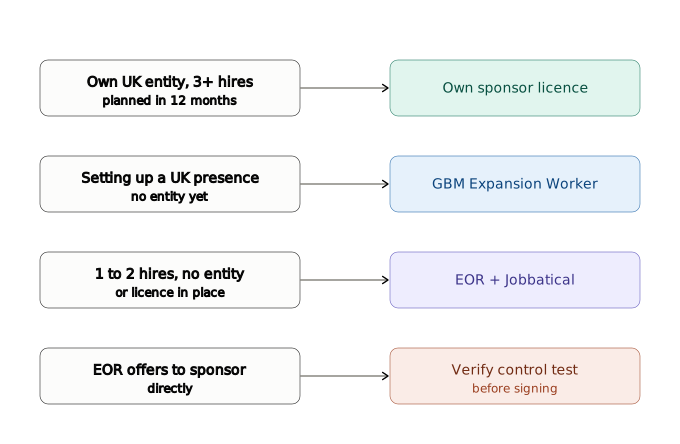
Work through these in order. The first one that applies is usually your answer.
- Do you already have (or plan) a genuine UK trading entity, with 3 or more sponsored roles expected in the next 12 months? Get your own sponsor licence. The upfront cost pays for itself once you're past a handful of hires.
- Are you sending a handful of senior people to set up a UK presence, with no entity yet? Use the GBM Expansion Worker route. It's built exactly for this, capped at five people and up to two years.
- Do you need one or two sponsored hires now, with no appetite yet to run a UK entity or a licence yourself? Keep your EOR for payroll and bring in Jobbatical as the immigration layer, rather than asking the EOR to sponsor directly.
- Is your EOR already telling you it can sponsor the worker itself? Stop and ask the three questions below before you sign anything. This is the scenario most likely to end in a revoked licence.
Tres preguntas que debes hacer a tu EOR antes de firmar
- Who will genuinely control our employee's day-to-day duties? If the answer is your company, EOR sponsorship is non-compliant.
- Have you had a Home Office compliance visit in the past 2 years? A clean audit record matters if your employees' visas depend on their licence.
- Can you show us your current A-rating on the sponsor licence? An A-rating is mandatory to issue new Certificates of Sponsorship. A B-rating means they cannot sponsor new hires.
¿No sabes muy bien en qué situación se encuentra tu empresa? Utiliza la evaluación gratuita de Jobbatical sobre el cumplimiento de la licencia de patrocinador en el Reino Unido para identificar los riesgos antes de que lo haga el Ministerio del Interior.
EOR sponsor: main things to remember
- EORs are excellent for payroll, local HR, and fast market entry
- UK visa sponsorship is a different legal obligation, and most EOR arrangements do not meet the Home Office's genuine control test
- Genuine edge cases exist, but they need case-by-case legal verification, not assumption
- Weigh setup time, 3-year cost, and compliance ownership before choosing a route, not just which option is fastest to start
- Understand your setup before your EOR makes commitments on your behalf; the consequences for your employees are too serious to leave to assumptions
Talk to Jobbatical experts for a free assessment
Aviso legal: Las normas de inmigración cambian con bastante frecuencia; por favor, consulte fuentes oficiales o póngase en contacto con nosotros para obtener la información más reciente antes de tomar cualquier decisión.
Preguntas frecuentes: EOR como patrocinador de visados en el Reino Unido

.svg)
.svg)