.svg)



PUNTOS CLAVE
- La norma de los 180 días se aplica como un periodo de 12 meses consecutivos, no como un límite por año natural. Un periodo de muchos viajes que se produzca a mitad del ciclo puede hacer que se pierda el derecho a solicitar el ILR años antes de presentar la solicitud.
- Los viajes de negocios se consideran ausencias a efectos de la solicitud de residencia indefinida (ILR) para trabajadores cualificados, salvo que se ajuste a alguna de las excepciones específicas del Ministerio del Interior (investigación autorizada, labor humanitaria o razones humanitarias de peso).
- El Ministerio del Interior evalúa todos los periodos posibles de 12 meses dentro del periodo de referencia de 5 años; dos viajes con 11 meses de diferencia pueden estar ambos comprendidos en el mismo periodo móvil.
- Las alertas ámbar, con un plazo de 130 días en un periodo móvil, dan tiempo al departamento de Recursos Humanos para reorganizar los viajes; las alertas rojas, a partir de 150 días, requieren la intervención del departamento de inmigración antes de reservar el siguiente viaje.
Viajes de negocios: el riesgo de responsabilidad civil laboral que se esconde en los registros de viaje de tus empleados
La solicitud se rechaza. Se pierden las tasas, la permanencia corre peligro y el plazo de patrocinio se reinicia. Esta guía explica cómo funciona la norma, qué patrones de viajes de negocios inhabilitan para la solicitud y cómo crear un sistema de seguimiento de ausencias. Para consultar la documentación completa sobre el establecimiento, consulta nuestra guía para empleadores sobre el permiso de residencia indefinido (ILR) en el Reino Unido.
Cómo funciona realmente la norma de los 180 días
Esta norma se recoge en las directrices sobre residencia continua del Ministerio del Interior y se aplica a las vías de residencia indefinida (ILR) para trabajadores cualificados, trabajadores sanitarios y asistenciales, talento global, empresas en expansión y la mayoría de las demás vías de residencia indefinida basadas en el trabajo.
Mecánicas básicas:
- Su empleado no debe haber pasado más de 180 días completos fuera del Reino Unido en ningún periodo de 12 meses consecutivos durante los años de referencia.
- El plazo de 12 meses es un periodo móvil, no un año natural fijo.
- Las ausencias anteriores a la entrada física del empleado en el Reino Unido (el periodo comprendido entre la fecha de inicio del visado y su llegada) también se tienen en cuenta en el primer periodo de referencia.
- Basta con una sola interrupción en cualquier ventana móvil para que se interrumpa la residencia continuada.
- Las ausencias de menos de 24 horas no se contabilizan; cualquier ausencia que se prolongue hasta pasada la medianoche se considera un día completo.
Dos viajes separados por 11 meses pueden estar comprendidos en el mismo periodo móvil de 12 meses. Si cada viaje dura 100 días, la vista del calendario se ve bien, pero la comprobación del periodo móvil muestra 200 días y la aplicación da un error.
Comprueba tu calendario de residencia en el Reino Unido con la calculadora de requisitos para el permiso de residencia indefinido (ILR) y averigua cuál es la fecha más temprana en la que puedes presentar la solicitud.
Vista continua frente a vista de calendario
Los cuatro patrones de viajes de negocios que impiden cumplir los requisitos
Si alguna de estas situaciones te resulta familiar, tu riesgo de ausencia ya está aumentando.
- Apoyo a productos o lanzamientos en el extranjero. Un ingeniero sénior o un gestor de proyectos se integra en un equipo en el extranjero durante un periodo de entre 3 y 4 meses. A nivel interno, se considera trabajo habitual de proyecto; en lo que respecta a la inmigración, se trata de un pico de actividad de duración variable.
- Asignaciones en las instalaciones del cliente. Los puestos relacionados con la consultoría, las tecnologías de la información y las tareas de ejecución que requieren una fuerte presencia sobre el terreno implican el desplazamiento del personal a las instalaciones del cliente durante semanas seguidas. Los viajes repetidos dentro de un periodo de tiempo variable se acumulan rápidamente.
- Asignaciones relacionadas con las TIC con un visado inadecuado. Titulares de visados de «trabajador cualificado» enviados en traslados temporales informales en lugar de a través del programa «Global Business Mobility». Los viajes son reales; el seguimiento, a menudo, no lo es. Consulta nuestra guía sobre la diferencia entre las actividades de visitante y las de trabajo en el Reino Unido.
- Conferencias y ferias comerciales una tras otra. Cadas una de por sí breve, pero que, en conjunto, suponen una carga considerable. Un comercial con experiencia que participe en ocho eventos regionales repartidos por dos continentes puede llegar fácilmente a acumular entre 60 y 80 días al año, sin contar los viajes personales.
¿Qué se considera una ausencia y qué no?
El Ministerio del Interior considera que la mayoría de los desplazamientos por motivos laborales constituyen una ausencia ordinaria. No existe una exención automática para los viajes de negocios. En el Reglamento de Inmigración se establece un conjunto limitado de excepciones.
Ausencias que no se tienen en cuenta a efectos del límite de 180 días
Los viajes de negocios habituales no entran en ninguna de estas categorías. Supongamos que cuentan.
Sistema de seguimiento de ausencias de ILR: Realiza un seguimiento de las ausencias de tus empleados
La mayoría de los equipos de RR. HH. empiezan a llevar un seguimiento riguroso de las ausencias en el cuarto año, cuando surgen las conversaciones sobre la solicitud de residencia indefinida (ILR). Para entonces, el daño ya está hecho. El seguimiento debe comenzar el primer día de vigencia del visado de trabajador cualificado y prolongarse hasta el día de la presentación de la solicitud de residencia indefinida (ILR). Consulta nuestro registro de ausencias para la solicitud de residencia indefinida (ILR).
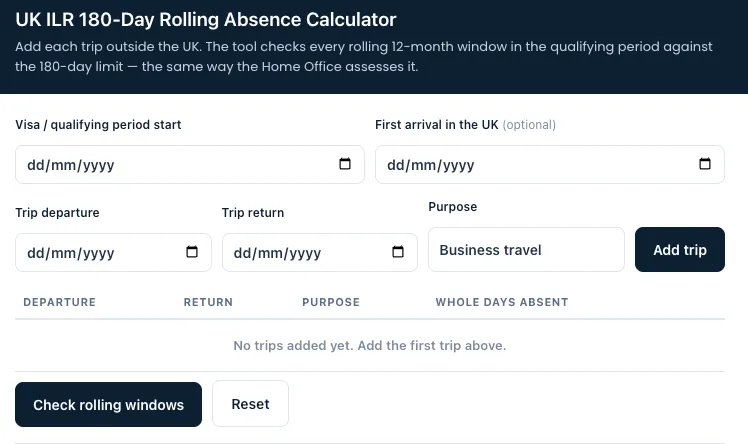
Consulta también nuestra calculadora gratuita de requisitos para el permiso de residencia indefinido (ILR) en el Reino Unido, que realiza otras comprobaciones.
Umbrales de alerta para la intervención de RR. HH.
Si tu empleado ya ha superado los 180 días
No des por hecho que la solicitud ha quedado en nada. Hay tres vías que vale la pena explorar antes de descartar el plazo de admisión.
- Comprueba los motivos de excepción. Si alguna ausencia estuvo relacionada con una investigación aprobada por el patrocinador, el fallecimiento de un familiar o una situación de crisis reconocida por el Ministerio del Interior, recopila las pruebas y prepara una solicitud de aplicación discrecional.
- Vuelve a calcular a partir de la fecha de inicio más favorable. El Ministerio del Interior permite a los solicitantes contabilizar el período de referencia de forma retroactiva a partir de la fecha de solicitud, hasta un máximo de 28 días después de esta, o a partir de la fecha de la resolución, lo que resulte más favorable. El plazo de 28 días para presentar la solicitud puede, en ocasiones, hacer que un incumplimiento quede totalmente fuera del período de referencia.
- Planifica un reinicio. Si no se da ninguna excepción, el patrocinio se prorroga. Prevé en tu presupuesto otro ciclo de la Tasa de Competencias de Inmigración, un Certificado de Patrocinio actualizado y un nuevo plazo de cinco años. Dado que el periodo de cualificación podría pasar a ser de 10 años según el modelo de residencia por méritos, el coste de un reinicio no hará más que aumentar.
Y recuerda que los empleados que viajan con frecuencia no pueden salir del Reino Unido mientras su solicitud de permiso de residencia indefinido (ILR) esté pendiente; los servicios prioritarios y superprioritarios reducen ese plazo de prohibición de viajar de meses a días.
Aviso legal: Las normas de inmigración cambian con bastante frecuencia; por favor, consulte fuentes oficiales o póngase en contacto con nosotros para obtener la información más reciente antes de tomar cualquier decisión.
Preguntas frecuentes: La norma de los 180 días del permiso de residencia indefinido (ILR) en el Reino Unido y los viajes de negocios

.svg)
.svg)