

Points clés à retenir – Obligations de l'employeur concernant le permis de travail en France
- Les sanctions constituent désormais un risque budgétaire direct : les amendes administratives s'élèvent à 20 750 € par travailleur non autorisé, et peuvent atteindre 62 250 € en cas de récidive, tandis que les sanctions pénales peuvent aller jusqu'à 30 000 €. Une seule erreur dans la gestion d'un recrutement peut entraîner un risque financier cumulé supérieur à 80 000 €, ce qui rend indispensables les audits proactifs et la vérification en ligne.
- Trois cas susceptibles d'entraîner une amende : une amende administrative est infligée lorsque vous embauchez un salarié sans titre de séjour valide, que vous maintenez en poste un salarié dont le titre de séjour a expiré ou a été révoqué, ou que vous embauchez un salarié pour un poste, une profession ou une zone géographique non autorisés par son titre de séjour. L'ancienne contribution spéciale à l'OFII a été remplacée par ce système unifié.
- Le dépôt numérique est une obligation réglementaire : toutes les demandes, tous les renouvellements et toutes les mises à jour doivent passer par la plateforme ANEF-Emploi ; les dépôts sur support papier sont désormais supprimés. Le non-respect d'un délai de dépôt numérique ou l'absence de mise à jour d'adresse constitue en soi un risque, et non un simple retard administratif.
- Les inspections ont doublé : en vertu de la loi de 2025 sur l'immigration et l'intégration, la fréquence des inspections sur les lieux de travail a doublé et les inspecteurs du travail ont désormais un accès direct aux bases de données relatives à l'immigration et aux salaires. La responsabilité solidaire étend également le risque de non-conformité à l'ensemble de votre chaîne de sous-traitance.
- Les renouvellements dépendent du salaire et du calendrier : les renouvellements sont refusés si le salaire d'un salarié parrainé passe en dessous du seuil de référence pendant plus de trois mois. Le traitement par l'ANEF prend en moyenne deux à quatre mois ; veillez donc à signaler tout permis arrivant à échéance dans les 120 jours et à déposer votre demande suffisamment à l'avance.
- Les parcours de talents allègent la charge administrative, sous certaines conditions : le « Passeport Talent Monde » garantit un délai de traitement de 30 jours et une exemption des nouvelles règles d’intégration, tandis que le permis « Travail en Tension » couvre les métiers en pénurie. Ces deux dispositifs accélèrent la procédure de parrainage, mais sont soumis à des conditions de conformité que vous devez respecter en permanence.
Quelles sont les implications des réformes de 2026 relatives aux permis de travail en France pour la mise en conformité des employeurs ?
La France a réformé son système de permis de travail par le décret n° 2025-539, et ces réformes s’étendent désormais jusqu’en 2026, parallèlement à de nouvelles règles d’intégration qui entreront en vigueur le 1er janvier 2026. Chaque changement a des répercussions pour les employeurs. La déclaration en ligne est obligatoire, les seuils salariaux sont vérifiés lors du renouvellement et les sanctions en cas d’embauche non conforme ont fortement augmenté. Pour votre équipe, le respect de la réglementation exige désormais un suivi actif des titres de travail, plutôt qu’une simple formalité administrative ponctuelle lors de l’embauche.
- Les sanctions à l'encontre des employeurs occupent désormais le devant de la scène : les amendes administratives s'élèvent désormais à 20 750 € par salarié non déclaré, pouvant atteindre 62 250 € en cas de récidive, tandis que les sanctions pénales peuvent aller jusqu'à 30 000 €. Le non-respect de la réglementation est passé d'un risque mineur à une menace directe pour le budget.
- Le dépôt numérique est une obligation réglementaire : toutes les demandes, tous les renouvellements et toutes les mises à jour doivent passer par la plateforme ANEF-Emploi ; les dépôts sur support papier sont désormais supprimés. Le non-respect d'une échéance numérique ou d'une mise à jour constitue en soi un risque, et non pas seulement un retard administratif.
- Vérification du respect du salaire lors du renouvellement : les renouvellements sont refusés si le salaire d'un salarié parrainé passe en dessous du seuil de référence pendant plus de trois mois. Vous devez veiller à ce que la rémunération respecte les conditions du permis tout au long de la relation de travail.
- Les voies « Talent » et « Pénurie » facilitent le recrutement : le « Passeport Talent Monde » garantit un délai de traitement de 30 jours, tandis que le permis « Travail en Tension » couvre environ 80 métiers en pénurie. Ces deux dispositifs accélèrent la procédure de parrainage, mais chacun comporte ses propres conditions de conformité que vous devez respecter.
- Les règles d'intégration imposent de nouvelles obligations : un examen civique obligatoire et des seuils linguistiques plus élevés s'appliquent désormais aux premières demandes de nombreux permis. Les voies réservées aux talents et aux travailleurs qualifiés restent exemptées ; le choix de la voie à suivre a donc désormais une incidence directe sur votre charge administrative.
Pour avoir une vue d'ensemble des catégories de titres de séjour auxquels vos salariés peuvent prétendre, consultez notre guide « France Passeport Talent » destiné aux employeurs, qui présente en détail chaque catégorie de travailleurs qualifiés, les seuils de rémunération applicables et les obligations des employeurs en matière de parrainage.
┈┈┈┈┈┈┈┈┈┈┈┈┈┈┈┈┈┈┈┈┈┈┈┈┈┈┈┈┈┈┈┈┈┈┈┈┈┈┈┈┈┈┈┈┈┈┈
Quelles sont les nouvelles amendes administratives infligées aux employeurs en France ?
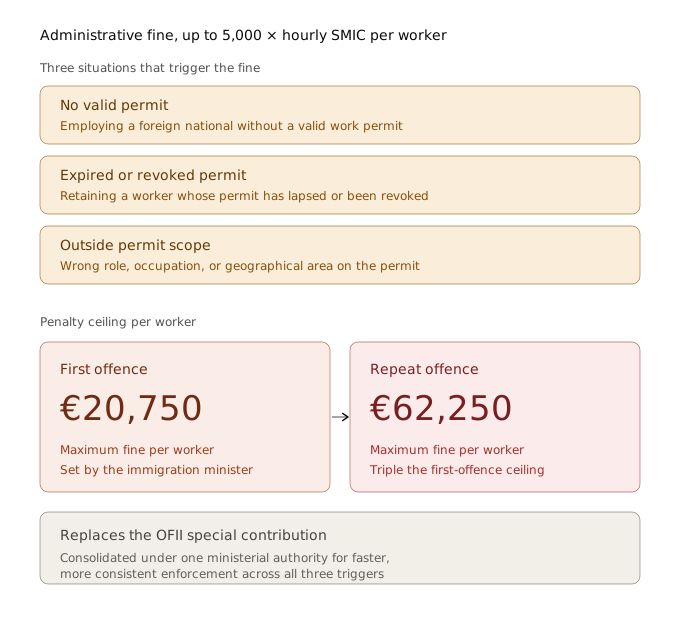
La loi de 2024 sur l’immigration et l’intégration (loi n° 2024-1555) a remplacé l’ancienne contribution spéciale versée à l’OFII par un système d’amendes administratives unifiées. Il ne s’agit pas d’une simple note de bas de page relative à la conformité, mais d’un coût important que vous devez prendre en compte au même titre que la masse salariale et les renouvellements de contrats. L’amende est infligée directement par le ministre chargé de l’immigration, qui examine votre situation avant de fixer le montant exact. Un seul embauche non autorisée peut encore entraîner une dette à six chiffres pour une petite équipe.
- Remplacement des cotisations à l'OFII : la redevance forfaitaire qui était auparavant versée à l'Office français de l'immigration et de l'intégration a été supprimée. Elle est remplacée par une amende administrative unique, placée sous l'autorité d'un seul ministère, ce qui permet une application plus rapide et plus cohérente de la réglementation.
- Mode de calcul : L'amende est calculée à hauteur de 5 000 fois le salaire minimum interprofessionnel de croissance (SMIC). Aux taux actuels, cela représente un montant maximal de 20 750 € par salarié pour une première infraction.
- Plafond en cas de récidive : si votre entreprise est reconnue en infraction pour la deuxième fois, le plafond augmente fortement pour atteindre 62 250 € par salarié. Les infractions répétées concernant plusieurs embauches se traduisent rapidement par un risque financier considérable.
- Trois situations donnant lieu à une amende : celle-ci s'applique lorsque vous embauchez un salarié sans titre de séjour valide, que vous maintenez en poste un salarié dont le titre de séjour a expiré ou a été révoqué, ou que vous embauchez un salarié en dehors de la catégorie professionnelle, du métier ou de la zone géographique indiqués sur son titre de séjour.
- Pouvoir discrétionnaire du ministère : Le montant exact dépend de la situation et des antécédents de l'employeur. Le fait de démontrer l'existence de contrôles internes rigoureux et d'efforts de mise en conformité de bonne foi peut influencer le montant fixé.

Résumé des amendes administratives infligées aux employeurs en France
Pour gérer les démarches à effectuer après l'arrivée des nouveaux employés et garantir leur conformité dès le premier jour, utilisez notre liste de contrôle pour la validation OFII après l'arrivée, qui répertorie tous les délais et toutes les exigences auxquels les employeurs doivent se conformer.
┈┈┈┈┈┈┈┈┈┈┈┈┈┈┈┈┈┈┈┈┈┈┈┈┈┈┈┈┈┈┈┈┈┈┈┈┈┈┈┈┈┈┈┈┈┈┈
Pourquoi les amendes pénales ont-elles doublé pour atteindre 30 000 € par salarié : respect des règles en matière de permis de travail en France ?
Outre l'amende administrative, la France a doublé la sanction pénale applicable en cas d'emploi d'un ressortissant étranger sans permis de travail valide. Le montant est passé de 15 000 à 30 000 euros par salarié, et le champ d'application de l'infraction a été considérablement élargi. La responsabilité pénale incombe désormais à l'employeur et, dans certains cas, aux dirigeants à titre individuel. Combinée aux amendes administratives, une seule embauche non conforme peut entraîner une exposition financière totale supérieure à 80 000 euros.
- Doublement du montant de l'amende : l'amende pénale encourue en cas d'emploi d'un salarié sans titre de séjour valide est passée de 15 000 € à 30 000 € par salarié. Cette disposition s'applique à chaque personne concernée ; ainsi, des infractions multiples entraînent une multiplication du montant de l'amende.
- Élargissement du champ d'application de l'infraction : l'amende pénale s'applique désormais aux travailleurs titulaires d'un permis mais employés en dehors du poste, du secteur ou du lieu autorisés par celui-ci. Les équipes décentralisées et les promotions internes sans modification du permis créent de nouveaux risques.
- Responsabilité individuelle des responsables : la responsabilité peut s'étendre au-delà de l'entreprise pour concerner les responsables qui ont pris la décision d'embauche. Cela renforce l'enjeu personnel pour les responsables des ressources humaines et de la mobilité.
- Risque financier cumulé : les sanctions administratives et pénales s'ajoutent les unes aux autres. Une seule erreur dans le cadre d'un recrutement peut faire grimper le risque total à plus de 80 000 €, une fois que les deux régimes s'appliquent.
- Motif de la réforme : La loi de 2024 visait à renforcer la responsabilité des employeurs tout en ouvrant davantage de perspectives aux talents dans les secteurs en pénurie de main-d’œuvre. Le regroupement des compétences en matière d’application de la loi sous une seule autorité permet une action plus rapide et plus cohérente.
Pour connaître en détail les délais de renouvellement et les sanctions applicables en cas de permis périmé, consultez notre guide sur les règles de renouvellement des visas de travail en France et les sanctions encourues par les employeurs, qui détaille chaque étape de la procédure de renouvellement.
┈┈┈┈┈┈┈┈┈┈┈┈┈┈┈┈┈┈┈┈┈┈┈┈┈┈┈┈┈┈┈┈┈┈┈┈┈┈┈┈┈┈┈┈┈┈┈
Comment évoluent les inspections sur le lieu de travail en France en matière de conformité des employeurs ?
Les mesures de contrôle se sont intensifiées tout autant que les sanctions. En vertu de la loi de 2025 sur l’immigration et l’intégration, le gouvernement a doublé la fréquence des inspections sur les lieux de travail. Les inspecteurs du travail ont désormais un accès direct aux bases de données numériques relatives à l’immigration et aux salaires, ce qui rend les contrôles inopinés plus rapides et mieux étayés par des données. La probabilité de faire l’objet d’une inspection aléatoire est plus élevée qu’à tout autre moment de la dernière décennie.
- Doublement de la fréquence des inspections : Le gouvernement a renforcé la cadence des inspections sur les lieux de travail dans le cadre de la loi de 2025. Des contrôles plus fréquents permettent de détecter plus rapidement les irrégularités et de toucher un plus grand nombre d'employeurs.
- Accès direct aux bases de données : les inspecteurs peuvent consulter en temps réel les dossiers relatifs à l'immigration et aux salaires. Cela permet d'éliminer les délais qui, auparavant, donnaient aux employeurs le temps de régulariser leur situation avant tout contrôle.
- Responsabilité solidaire vis-à-vis des sous-traitants : le droit français impose aux maîtres d'œuvre une responsabilité solidaire en cas d'infractions au droit de l'immigration commises au sein de leur chaîne d'approvisionnement. Si un sous-traitant emploie un travailleur en situation irrégulière sur votre chantier, votre entreprise peut être tenue financièrement responsable.
- Risque accru de détection : les contrôles basés sur les données, associés à des outils numériques de mise en application, permettent d'identifier plus rapidement les cas de non-conformité, ce qui entraîne des coûts plus élevés. Le suivi manuel des autorisations n'est plus adapté, quelle que soit la taille des équipes.
- Des conséquences plus larges que les simples amendes : les employeurs en situation de non-conformité s'exposent également au remboursement des subventions publiques, à l'exclusion des marchés publics, à une atteinte à leur réputation et, dans les cas graves, à des poursuites pénales à l'encontre des personnes responsables.
Pour valider rapidement l'autorisation de travail lors de l'intégration, consultez notre guide pratique sur la vérification de l'autorisation de travail des salariés via un code QR, qui présente en détail et de manière concrète les outils de vérification numériques disponibles en France.
┈┈┈┈┈┈┈┈┈┈┈┈┈┈┈┈┈┈┈┈┈┈┈┈┈┈┈┈┈┈┈┈┈┈┈┈┈┈┈┈┈┈┈┈┈┈┈
Quelles sont vos principales obligations en tant qu'employeur en 2026 ?
La France impose désormais aux employeurs des responsabilités accrues en matière de validité des titres de séjour et de conformité tout au long de la relation de travail. Vos obligations englobent désormais les déclarations en ligne, l’affiliation à l’assurance maladie, la vérification des documents et les déclarations auprès de la préfecture. Les entreprises de taille moyenne sont exposées à un risque accru, car la moindre erreur administrative peut entraîner une amende ou un contrôle. L’intégration de ces obligations dans votre processus RH standard constitue la protection la plus fiable.
- Dépôt en ligne via ANEF-Emploi : toutes les demandes, les renouvellements et les changements d'adresse doivent être effectués via la plateforme ANEF-Emploi. Les candidatures au titre du programme « Talent » doivent également être accompagnées d'un justificatif attestant de leur impact économique ou innovant.
- Affiliation à l'assurance maladie : les employeurs doivent affilier leurs salariés à la CPAM dans les trois mois suivant leur arrivée. Le non-respect de ce délai constitue un manquement distinct aux obligations réglementaires.
- Vérification préalable à l'embauche : le portail « Contrôle Travail » et l'application mobile « France-Auth » permettent de vérifier l'authenticité des titres de séjour et des certificats d'autorisation de travail. Enregistrez l'attestation de vérification et conservez-la pendant au moins cinq ans.
- Déclaration auprès de la préfecture avant le début de la mission : la déclaration d'embauche doit parvenir à la préfecture au moins deux jours ouvrables avant la date de début de la mission. Depuis février 2025, celle-ci est transmise par voie électronique via Contrôle Travail, remplaçant ainsi l'ancienne procédure par lettre recommandée.
- Soutien aux demandes de régularisation : les employeurs doivent apporter leur soutien sans entrave aux demandes déposées dans le cadre du dispositif « Travail en Tension ». Vous ne pouvez pas vous opposer à une demande émanant d'un salarié, mais vous êtes tenu de coopérer à la procédure.
Pour avoir une vision plus globale de votre budget, incluant les frais de parrainage et le risque de sanctions, consultez notre ventilation des coûts liés à l'embauche de salariés étrangers en France, qui vous aidera à planifier avec précision vos dépenses en matière de conformité.

┈┈┈┈┈┈┈┈┈┈┈┈┈┈┈┈┈┈┈┈┈┈┈┈┈┈┈┈┈┈┈┈┈┈┈┈┈┈┈┈┈┈┈┈┈┈┈
Quelles mesures les équipes RH doivent-elles prendre dès maintenant : conformité des employeurs ?
Ces réformes récompensent les employeurs qui agissent rapidement et pénalisent ceux qui attendent. Dans la pratique, la plupart des entreprises entament trop tardivement l’examen des autorisations et ne se rendent compte de leur vulnérabilité qu’au moment d’une inspection. Une routine trimestrielle structurée permet de combler cette lacune et de donner à votre équipe une longueur d’avance sur les contrôles. Les trois priorités ci-dessous permettent de traduire les nouvelles règles en un processus de mise en conformité reproductible.
- Vérifier chaque trimestre tous les titres de séjour en cours de validité : contrôler le titre de séjour de chaque salarié non ressortissant de l'UE au regard de trois critères : la date d'expiration, la fonction autorisée et la zone géographique autorisée. Un salarié ayant déménagé dans une nouvelle ville ou ayant été promu à une autre catégorie professionnelle sans modification de son titre de séjour constitue un risque au regard de l'élargissement du champ d'application des amendes pénales.
- Signaler les expirations anticipées : lancez les démarches de renouvellement pour tout permis arrivant à échéance dans les 120 jours. Le traitement des demandes par l'ANEF prend en moyenne deux à quatre mois ; attendre les dernières semaines comporte donc un risque évitable.
- Vérifier les documents avant le premier jour : vérifiez la validité du permis de travail de chaque nouvelle recrue auprès de Contrôle Travail ou de France-Auth avant sa date d'entrée en fonction. Conservez l'attestation de vérification pendant au moins cinq ans.
- Étendre la conformité aux sous-traitants : exiger des preuves trimestrielles de conformité aux autorisations de la part des principaux fournisseurs et inclure des droits d'audit dans les contrats de service. La responsabilité solidaire signifie que leurs infractions peuvent devenir votre problème financier.
- Intégrez des outils numériques à votre SIRH : reliez les processus ANEF-Emploi à vos systèmes RH pour automatiser les rappels et les déclarations. Un suivi structuré permet de réduire à la fois la charge administrative et le risque d'amendes.
Pour obtenir des conseils détaillés sur le renouvellement, en complément de ces audits, consultez notre service de renouvellement des titres de séjour en France, qui se charge pour votre équipe des démarches auprès de l'ANEF, du respect des délais et de la préparation des documents requis.
┈┈┈┈┈┈┈┈┈┈┈┈┈┈┈┈┈┈┈┈┈┈┈┈┈┈┈┈┈┈┈┈┈┈┈┈┈┈┈┈┈┈┈┈┈┈┈
En quoi « Jobbatical » simplifie-t-il la mise en conformité des employeurs en matière d'immigration en France ?
La gestion manuelle du dispositif de conformité en France n’est plus viable lorsque les sanctions et les contrôles se multiplient. La plateforme de Jobbatical automatise le suivi des autorisations, signale les échéances à venir et gère de bout en bout les déclarations à l’ANEF. Il en résulte une réduction de la charge administrative et une diminution significative du risque d’amendes. Pour les équipes de taille moyenne, cette solution permet de préserver à la fois le budget et la réputation.
- Suivi automatisé des autorisations : la plateforme surveille les dates d'expiration, les rôles autorisés et la zone géographique couverte pour l'ensemble de votre personnel. Des alertes automatisées signalent les risques bien avant qu'ils ne se transforment en responsabilités.
- Gestion complète de l'ANEF : les demandes, les renouvellements et les mises à jour sont traités pour votre compte via la plateforme ANEF. Cela vous évite les tâches manuelles et réduit le risque d'erreurs de saisie.
- Réduction des risques liés à la conformité : les équipes chargées de la mobilité internationale réduisent ces risques jusqu’à 90 % grâce à un suivi structuré et à la supervision d’experts. Le risque d’amendes diminue à mesure que la vérification et la documentation deviennent systématiques.
- Aide au recrutement dans les secteurs en pénurie de main-d'œuvre : des viviers de talents présélectionnés et des conseils « Travail en Tension » vous aident à pourvoir plus rapidement les postes très recherchés. Un accompagnement familial et des conseils en matière d'intégration complètent cette offre destinée aux transferts de personnel qualifié.
- Conçu pour les entreprises de taille moyenne : des tarifs abordables, de véritables experts en droit de l'immigration et une expertise éprouvée dans plus de 45 pays, adaptés aux entreprises comptant entre 200 et 10 000 salariés. Parmi nos réalisations récentes, on compte plus de 1 000 recrutements menés à bien, avec un taux de conformité de 98 %.
Avertissement : les règles en matière d'immigration changent assez fréquemment ; veuillez vous renseigner auprès de sources officielles ou nous contacter pour obtenir les dernières informations avant de prendre toute décision.
┈┈┈┈┈┈┈┈┈┈┈┈┈┈┈┈┈┈┈┈┈┈┈┈┈┈┈┈┈┈┈┈┈┈┈┈┈┈┈┈┈┈┈┈┈┈┈
Foire aux questions sur la réforme des permis de travail en France
Quelles seront les conditions d'intégration pour les titulaires d'un permis de travail en France en 2026 ?
À compter du 1er janvier 2026, de nombreux titulaires de permis devront passer un examen civique obligatoire et satisfaire à des niveaux de maîtrise de la langue plus élevés, tels que le niveau A2 pour les permis pluriannuels et le niveau B1 pour les cartes valables 10 ans.
Quelles sont les sanctions financières encourues par un employeur français en cas de non-respect de la réglementation ?
Les employeurs s'exposent à des amendes administratives pouvant atteindre 20 750 € par travailleur en situation irrégulière, montant qui peut grimper jusqu'à 62 250 € en cas de récidive.
Combien de temps faut-il pour traiter une demande de passeport « Talent Monde » en France ?
Le permis phare destiné aux professionnels hautement qualifiés propose une procédure de demande en ligne simplifiée, avec un délai de réponse garanti de 30 jours.
La procédure de régularisation dans le cadre du dispositif « Secteurs en pénurie » est-elle toujours disponible ?
Oui, le dispositif « Travail en tension », qui concerne environ 80 professions à l'échelle nationale, a été prolongé jusqu'au 31 décembre 2026.
Quel est le salaire minimum requis pour le programme « Passeport Talent Monde » en France ?
Les travailleurs qualifiés doivent généralement percevoir un salaire annuel brut d'au moins environ 39 582 €, tandis que les titulaires d'une Carte bleue européenne doivent atteindre un seuil plus élevé, de l'ordre de 59 373 €.

.svg)
.svg)