


PUNTOS CLAVE
- Tu empleado no podrá empezar a trabajar con un nuevo empleador hasta que la Ausländerbehörde apruebe el cambio; no hay periodo de gracia ni un plazo automático de movilidad de 12 meses como en el caso de la Tarjeta Azul de la UE.
- La nueva función debe corresponder a la cualificación reconocida (Anerkennung) en la que se basaba la autorización original en virtud del artículo 18b o del artículo 18a; un cambio significativo de ámbito puede retrasar o impedir la aprobación.
- Siempre se requiere la autorización de la Agencia Federal de Empleo (BA) para los titulares de formación profesional según el artículo 18a y para las escalas salariales de las profesiones con escasez de mano de obra; en el caso de los puestos de titulación universitaria estándar según el artículo 18b, depende del salario y de las circunstancias.
- Tras la pérdida del empleo, se aplica un periodo de gracia de tres meses en virtud de la Ley de Inmigración de Trabajadores Cualificados de 2023, pero debes notificarlo a la Ausländerbehörde en un plazo de cuatro semanas desde la finalización del contrato.
- Si el nuevo salario alcanza el umbral de la Tarjeta Azul de la UE para 2026 (50 700 €, o 45 934,20 € para profesiones con escasez de mano de obra), plantéate ampliar el permiso para acelerar la obtención de la residencia permanente.
La gestión del cambio de empleo para los trabajadores no comunitarios titulares de un permiso de trabajo cualificado alemán (QEP) / visado de trabajador cualificado (§ 18a o § 18b de la AufenthG) exige el cumplimiento estricto del procedimiento legal. A diferencia de la Tarjeta Azul de la UE, no existe un margen de flexibilidad automático; cada cambio de empleador requiere una nueva evaluación formal antes de que el trabajador pueda comenzar a trabajar.
Esta guía trata sobre el cambio de empresa en el caso de los titulares de un permiso de empleo cualificado en virtud de los artículos 18b (título académico) y 18a (cualificación profesional) de la Ley de residencia (Aufenthaltsgesetz). Si su empleado es titular de una Tarjeta Azul de la UE, la normativa es diferente; consulte nuestra guía sobre el cambio de empresa para titulares de la Tarjeta Azul de la UE.
A quién va dirigido
El permiso de empleo cualificado (Qualifizierte Beschäftigung) es un permiso de residencia alemán destinado a trabajadores de fuera de la UE que posean una titulación reconocida. Existen dos modalidades:
- Artículo 18b de la Ley de Residencia (AufenthG), para trabajadores con un título académico reconocido cuyo salario sea inferior al umbral establecido para la Tarjeta Azul de la UE.
- Artículo 18a de la Ley de residencia (AufenthG), para trabajadores con una cualificación profesional reconocida (Berufsausbildung), como enfermeros, electricistas y técnicos en mecatrónica.
Este permiso no es la Tarjeta Azul de la UE (art. 18g), que exige un salario más elevado y conlleva derechos de movilidad automáticos. Los términos «visado para trabajadores cualificados» y «permiso de empleo cualificado» se utilizan indistintamente en el lenguaje coloquial; ambos describen la vía prevista en los artículos 18b y 18a que se trata aquí.
En la práctica, estos titulares siguen un proceso más lento para obtener la residencia permanente (de 3 a 5 años, frente a los 21 meses de los titulares de la Tarjeta Azul con un nivel B1 de alemán), pero se enfrentan a menos barreras salariales de acceso. Utiliza nuestra herramienta de elegibilidad para visados previos a la contratación en Alemania para confirmar qué categoría de permiso te corresponde antes de continuar.
Requisitos para optar al nuevo puesto
Para que se apruebe la enmienda, deben cumplirse tres condiciones.
1. Partido de clasificación
El nuevo puesto debe pertenecer al mismo ámbito profesional que la titulación reconocida. En el caso de los puestos no regulados, la Ley de Inmigración de Trabajadores Cualificados de 2023 amplió los criterios de compatibilidad aceptables, por lo que un ingeniero de software con una titulación en informática suele poder pasar a ocupar un puesto relacionado con el desarrollo de productos sin necesidad de una reevaluación completa. Las profesiones reguladas (médicos, enfermeros, determinados ingenieros) requieren que se haya completado el proceso de Anerkennung para cada nuevo contexto profesional. Un cambio importante de ámbito, por ejemplo, de la ingeniería a las finanzas, se examina minuciosamente y puede requerir un nuevo procedimiento de reconocimiento.
Utiliza la herramienta de verificación de requisitos para el visado previo a la contratación en Alemania antes de hacer una oferta de trabajo y consulta nuestra guía sobre el reconocimiento de titulaciones en Alemania para conocer el proceso de «Anerkennung».
2. Participación de la Agencia Federal de Empleo
Que la Bundesagentur für Arbeit (BA) tenga que autorizar el nuevo puesto de trabajo depende del tipo de permiso y del salario:
- §18a (formación profesional): Siempre es necesaria la autorización de la BA. La BA comprueba que el salario y las condiciones se ajusten a los niveles del mercado alemán.
- §18b (título universitario, salario estándar): Por lo general, no se requiere la autorización de la Junta de Administración cuando el salario es igual o superior al nivel de mercado correspondiente al puesto.
- §18b (puesto en situación de escasez de personal / escalón salarial reducido): Se requiere la aprobación de la BA. El plazo puede prolongarse entre 2 y 4 semanas.
La intervención de la BA se produce a nivel interno entre la oficina de inmigración y la propia BA; su empleado no tiene que presentar ninguna solicitud por separado. Cuando se requiera una aprobación, la BA debe responder en el plazo de una semana, y la falta de respuesta se considera una aprobación, lo que supone una protección útil para los plazos de RR. HH.
3. Cumplimiento de las normas salariales y de los precios de mercado
A diferencia de la Tarjeta Azul, no existe un salario mínimo legal fijado. La remuneración ofrecida debe ajustarse a los niveles salariales habituales en el mercado alemán (ortsübliche Bezahlung) para el puesto, el sector y la ubicación. La BA verifica este aspecto cuando procede. Si la remuneración es inferior a lo establecido, la solicitud se rechaza o se devuelve para su revisión.
¿Puede tu empleado cambiar de empresa?
Sí, pero no de forma libre. El permiso es específico para cada empresa y se expide junto con una «Zusatzblatt» (hoja complementaria) que lo vincula a una empresa y un puesto de trabajo concretos.
- No existe un período mínimo durante el cual tu empleado deba trabajar con su actual empleador antes de que se permita un cambio.
- No pueden dimitir el viernes y empezar a trabajar contigo el lunes. Hay que actualizar el permiso antes de que comience la relación laboral.
- A diferencia de la Tarjeta Azul de la UE, no existe un plazo automático de 12 meses que permita la libre circulación. Es necesario obtener una autorización cada vez.
- El plazo de transición entre la oferta y la fecha de incorporación permitida por la ley suele ser de entre 6 y 12 semanas, aproximadamente.
El proceso se asemeja en muchos aspectos a la solicitud de un nuevo permiso. La Ausländerbehörde vuelve a evaluar si el nuevo puesto se ajusta a la titulación reconocida, si es necesaria la autorización de la Agencia Federal de Empleo y si el salario cumple con la normativa vigente. Las solicitudes pueden presentarse mientras el empleado siga trabajando en otra empresa, y puede expedirse un «Fiktionsbescheinigung» para confirmar que la solicitud está pendiente de tramitación.
Dado que el tiempo de espera para la cita es la variable más importante en las grandes ciudades, compruébalo para el consulado de tu empleado con la calculadora del tiempo de espera para la cita del visado de residencia en Alemania.
Umbrales salariales para 2026
No existe un salario mínimo único para los artículos 18b y 18a. Lo que importa es la adecuación al mercado. Dicho esto, los umbrales de la Tarjeta Azul de la UE sirven como puntos de referencia útiles y son importantes si se quiere plantearse una mejora salarial.
Puntos de referencia salariales clave para 2026
Si el salario del nuevo puesto cumple el umbral de la Tarjeta Azul y tu empleado tiene un título universitario, detente a considerar la posibilidad de dar el paso. La Tarjeta Azul ofrece una vía de 21 meses para obtener la residencia permanente (con el nivel B1 de alemán), frente a los 3 a 5 años que se requieren según el artículo 18b. Esa diferencia es importante para la retención del personal.
Cómo tramitar un cambio de empresa
Cambio de empresa: marco de decisión
Utiliza esta guía de decisión para determinar la vía más adecuada para tu empleado
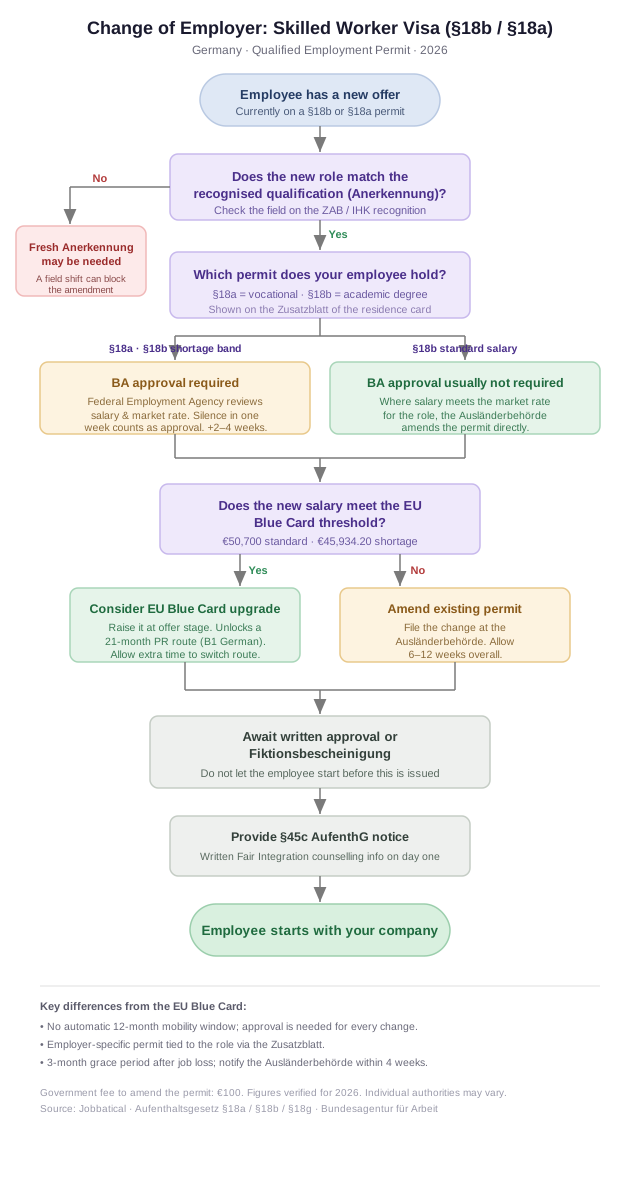
Guía paso a paso del proceso de solicitud
JobbaticalEl servicio «Cambio de empleador » de Alemania se encarga de la coordinación con la Ausländerbehörde y la BA, lo que reduce el riesgo de retrasos debidos a solicitudes incompletas.
¿Qué documentos se necesitan para tramitar el cambio de empresa?
Lista de comprobación de documentos para la solicitud de cambio de empleador
Es posible que algunas oficinas de extranjería soliciten documentación adicional. Confirma siempre la lista completa de documentos con la oficina correspondiente o utiliza la herramienta «Germany Employer Change Checker» antes de presentar la solicitud.
Tiempo de tramitación y tasas
Los plazos y las tasas varían en función de la ciudad y de la carga de trabajo de las autoridades locales.
- Berlín: entre 8 y 12 semanas aproximadamente a partir de principios de 2026.
- Múnich y Hamburgo: suele ser más rápido, entre 4 y 8 semanas aproximadamente.
- Fráncfort y Düsseldorf: normalmente de gama media.
- Tasa administrativa estándar para modificar el permiso: 100 €.
- Certificado de ficción: entre 10 y 25 euros aproximadamente.
- Traducciones juradas, cuando sean necesarias: de 40 a 120 € por documento.
El «Fiktionsbescheinigung» permite a tu empleado trabajar legalmente mientras se tramita la nueva tarjeta. Asegúrate de que te lo expidan en la cita para presentar la solicitud. Sinceramente, la mayoría de las empresas esperan demasiado para poner en marcha este trámite; ocho semanas es el margen mínimo que debes prever, y el tiempo de espera para la cita es la variable más importante en las grandes ciudades.
La tramitación del cambio de empleador varía entre 4 y 12 semanas según la ciudad; obtén primero una estimación específica para tu caso con la calculadora de plazos de tramitación del visado de residencia en Alemania.
¿Qué ocurre si un empleado pierde su trabajo?
La Ley de Inmigración de Personal Cualificado de 2023 introdujo un periodo de gracia de tres meses para los titulares de un permiso de trabajo cualificado que se queden sin empleo. Durante ese periodo, el permiso sigue siendo válido y el empleado puede buscar un nuevo empleo que cumpla los requisitos en Alemania.
Como empleador saliente, sus obligaciones son las siguientes:
- Notifica a la Oficina de Extranjería en un plazo de 4 semanas a partir de la finalización de la relación laboral, utilizando el formulario oficial («Mitteilung über die Beendigung des Beschäftigungsverhältnisses»).
- Si para la contratación original se requirió la autorización del BA, notifícaselo también al BA.
- Facilita una carta de referencia (Arbeitszeugnis); tu empleado la necesita para demostrar que cumple los requisitos para su próximo permiso.
- Infórmeles del plazo de gracia y de su derecho a inscribirse como demandantes de empleo en la Agentur für Arbeit.
Esto difiere de la Tarjeta Azul de la UE, que también cuenta con un periodo de gracia de tres meses, pero que, además, permite una mayor movilidad dentro de la UE durante ese plazo. En este caso, la búsqueda se limita a Alemania, salvo que el trabajador tenga otra condición que le permita acceder a otros países.
¿Podría esto dar lugar a una mejora de la Tarjeta Azul de la UE?
Cada cambio de empresa es un buen momento para comprobar si tu empleado cumple ahora los requisitos para obtener la Tarjeta Azul de la UE. Si el nuevo puesto requiere un título universitario ya reconocido en Alemania y ofrece un salario de al menos:
- 50 700 € brutos al año para puestos estándar, o
- 45.934,20 € brutos al año para profesiones con escasez de personal (TI, ingeniería, asistencia sanitaria, STEM),
En ese caso, es posible solicitar una Tarjeta Azul en lugar de la modificación, o junto con ella. Las ventajas son reales: residencia permanente en tan solo 21 meses con un nivel B1 de alemán, condiciones de desempleo más favorables y derechos de movilidad dentro de la UE. Plantee esta cuestión en la fase de la oferta. Una vez presentada la solicitud según el artículo 18b, cambiar el tipo de permiso conlleva más tiempo y complejidad. Nuestra página de servicios sobre el permiso de trabajo cualificado en Alemania y la guía para el cambio de empresa con la Tarjeta Azul de la UE abordan ambas vías.
Notas sobre cumplimiento normativo para RR. HH.
Artículo 45c de la Ley de Residencia (AufenthG), Obligación de integración justa: A partir del 1 de enero de 2026, todo empresario que contrate a un trabajador cualificado de fuera de la UE deberá informarle por escrito, antes de su primer día de trabajo, sobre los servicios gratuitos de asesoramiento en materia laboral y de seguridad social (por ejemplo, la red «Faire Integration»). Esto se aplica también a los empleados que cambian de empresa. Documenta esta información. Consulta nuestra guía sobre las obligaciones de los empresarios en virtud del artículo 45c.
Reconocimiento de títulos durante la transición: Si la Anerkennung original era condicional (reconocimiento parcial con una medida compensatoria pendiente), comprueba que se haya cumplido la condición antes de presentar la solicitud. Una medida compensatoria pendiente puede bloquear la modificación.
Obligaciones continuadas de BA: El permiso se expide para un puesto específico. El ascenso de un empleado a un puesto significativamente diferente, sobre todo si se trata de un cambio de sector, puede requerir un nuevo proceso de cambio de empleador.
Aviso legal: Las normas de inmigración cambian con bastante frecuencia; por favor, consulte fuentes oficiales o póngase en contacto con nosotros para obtener la información más reciente antes de tomar cualquier decisión.
Preguntas frecuentes: Cambio de empresa en el visado para trabajadores cualificados en Alemania

.svg)
.svg)